
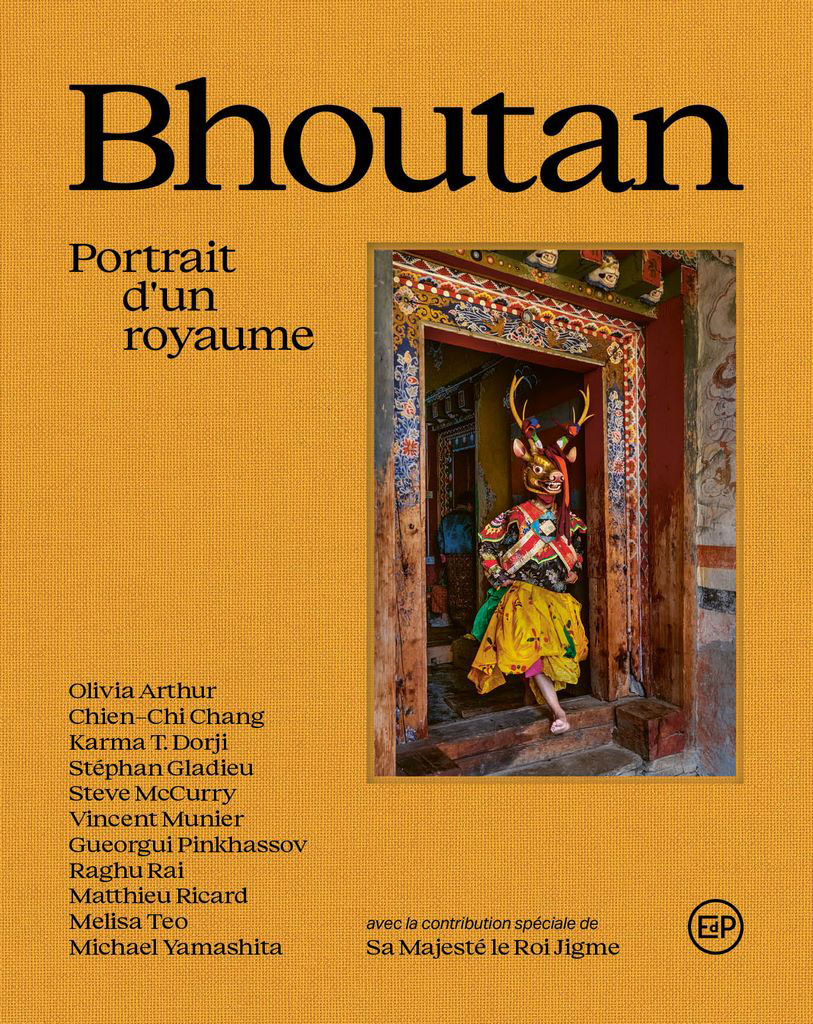
With Bhutan, Portrait of a Kingdom, Éditions du Pacifique is publishing one of those rare books where image and text work together to create something more than a simple travel album: a real immersion, slow, contemplative, almost initiatory, in one of the last Himalayan kingdoms to have preserved a way of life deeply rooted in spirituality.
Table of Contents
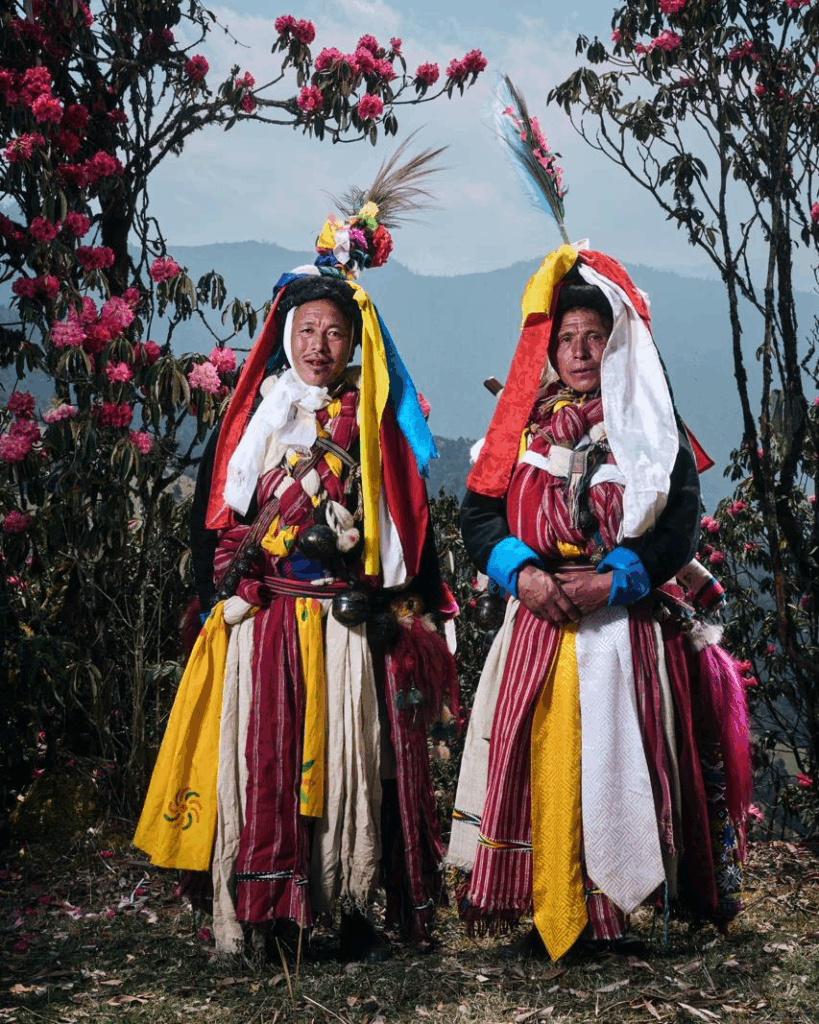
The book's challenge is an ambitious one. To bring together eleven international photographers, each of whom has visited Bhutan to capture a season, a light, a fragment of life. The names speak for themselves: Steve McCurry, Vincent Munier, Raghu Rai, Michael Yamashita, Matthieu Ricard... So many different sensibilities, combining documentary, visual poetry and a humanist outlook. The result is a body of images of great diversity, which avoids the pitfall of a single viewpoint to create a visual mosaic of rare richness.
The work was commissioned by Her Majesty Queen Jetsun Pema Wangchuck. « These artists have given their all, and I am grateful to them for that. « she explains. You will also find among their pictures photographs taken by the King himself, who is passionate about this art. The Queen added: » In a world prone to forgetfulness and dissension, these photographs remind us of this:
gentleness is strength,
love is protection,
kindness is passed down for generations "
A Buddhist heritage
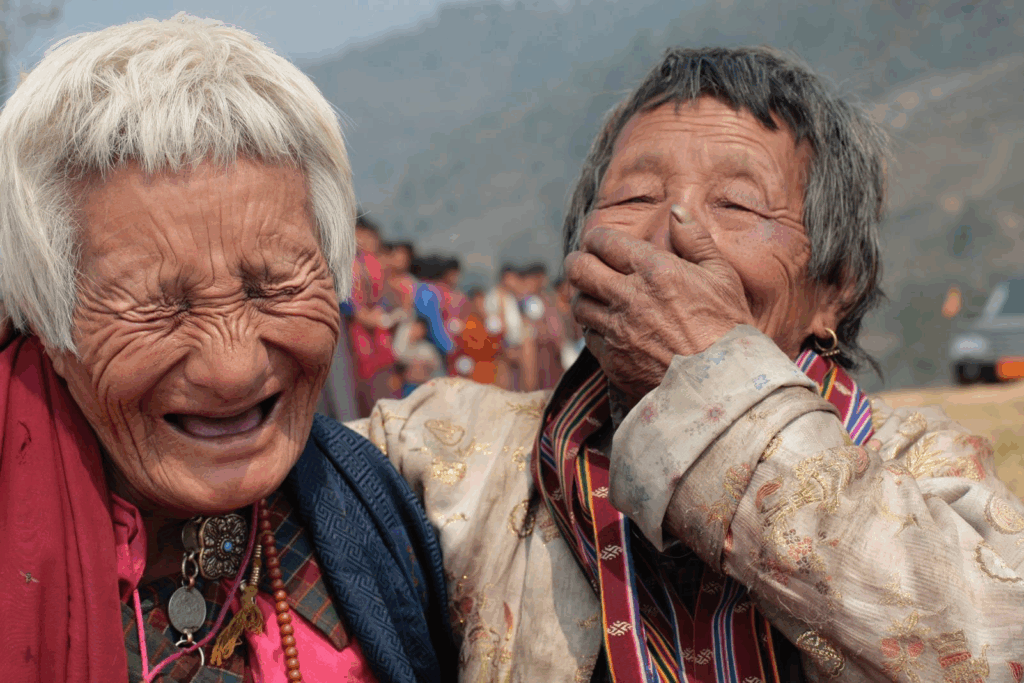
Bhutan stands out for its cultural singularity, its Buddhist heritage and its balance between heritage and contemporary development. Introduced to Buddhism by Guru Rinpoche in the VIIIᵉ century, unified by Zhabdrung Ngawang Namgyel in the XVIIᵉ century, the country was then modernised by the Wangchuck dynasty, which established a constitutional monarchy and, in 2008, a parliamentary democracy. Today, under the reign of the fifth king, Jigme Khesar Namgyel Wangchuck, Bhutan continues on its path, reconciling modernity, tradition and respect for nature.
Rich in exceptional biodiversity and with a strong cultural identity, the «Land of the Thunder Dragon» has chosen sustainable development over material growth, becoming a model of governance and a nation with a negative carbon footprint. The Gross National Happiness Index, created by the fourth king Jigme Singye Wangchuck, is the embodiment of this philosophy, placing human and environmental well-being at the heart of national policies.
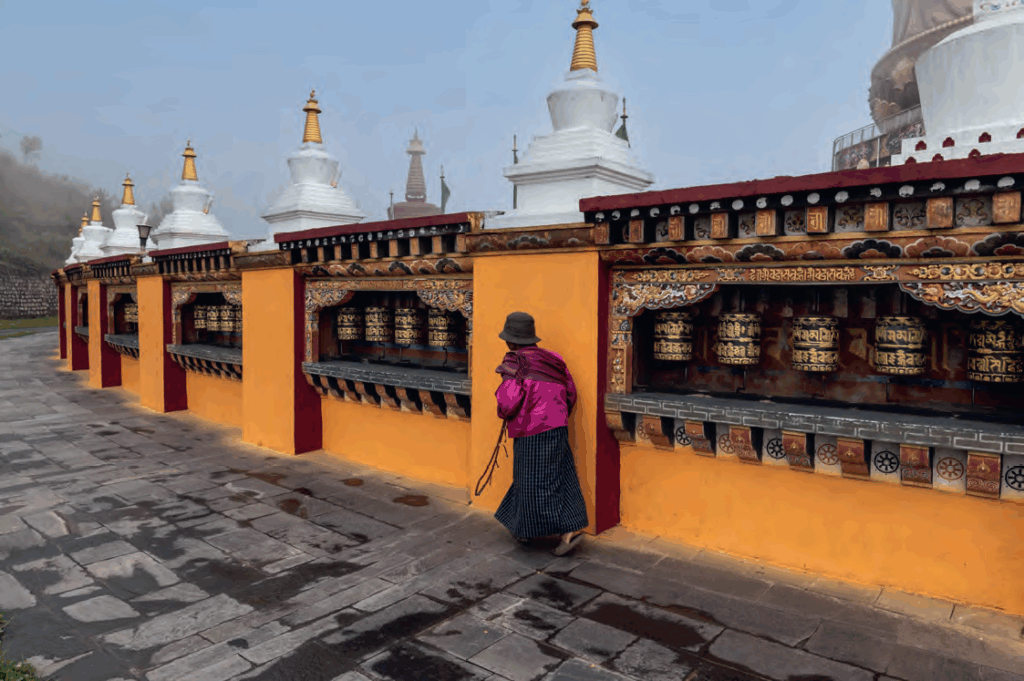
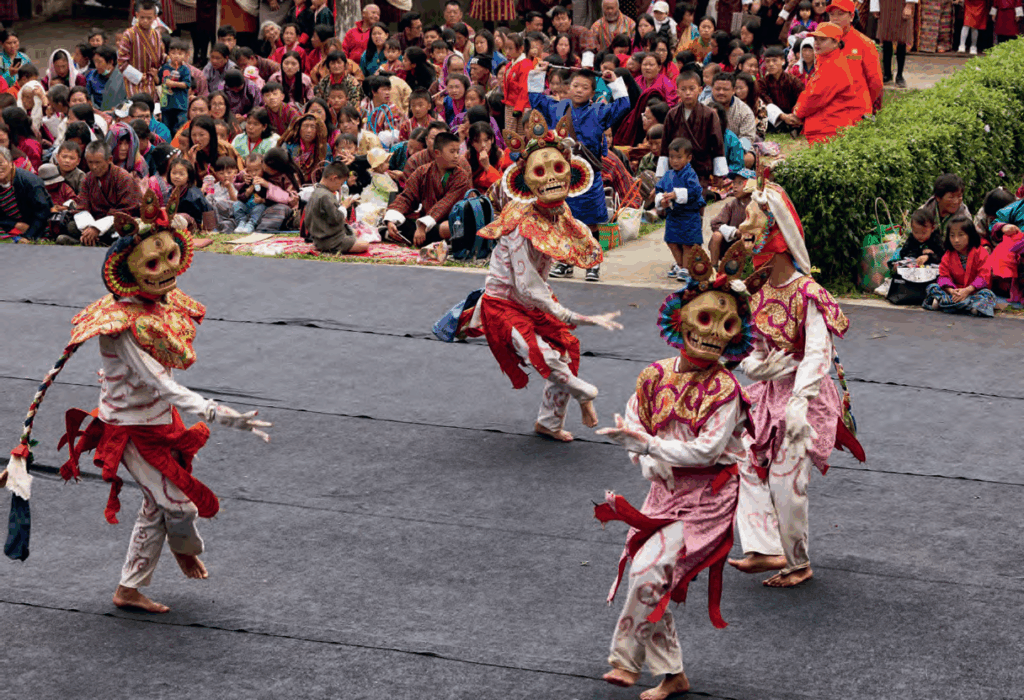
As demonstrated by Steve McCurry, Bhutan reveals its deep Buddhist identity through daily life and spiritual rituals. The prayers floating in the wind, the philosophical debates of the monks and the gestures of compassion towards the lamas illustrate a living, embodied piety. Religious festivals, such as the tshechu with their dances cham, These events strengthen community ties while celebrating spirituality. Circumambulation and prostration, practised by all, bear witness to a joyful and persevering faith, where religious discipline is combined with humanity and optimism.
For Matthieu Ricard, it's a country where « the earth is Buddhist, the air is Buddhist »It's a place where every valley, rock and stream has its own legend and sacredness.
A unique blend of harmony, silence and depth
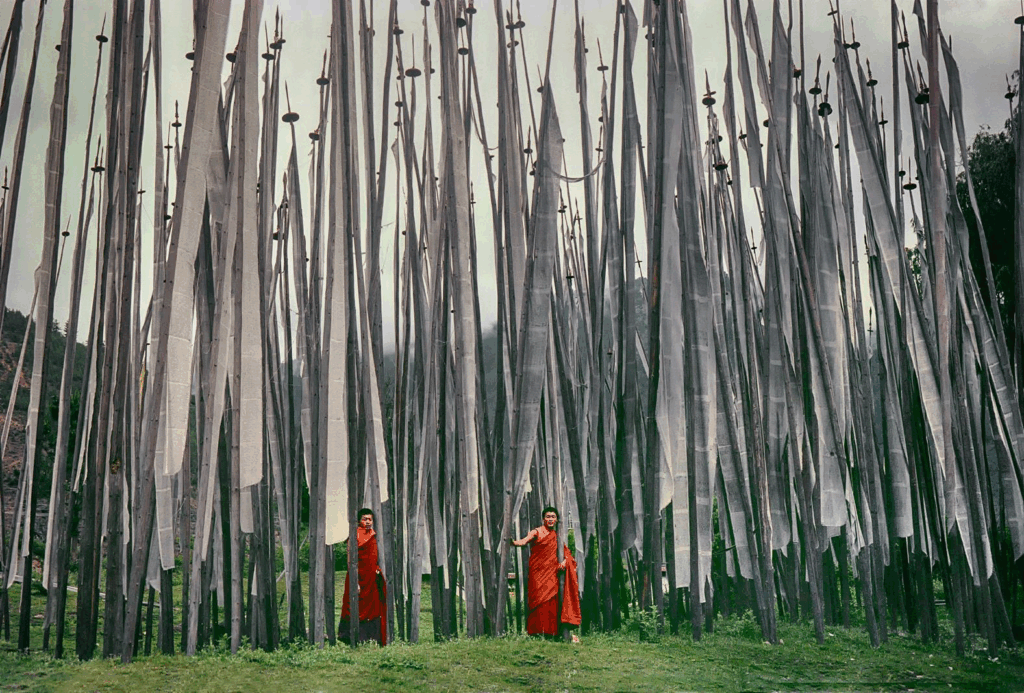
The story opens with a text by the writer Pico Iyer in which he recalls Bhutan in 2016, almost thirty years after his first visit. As soon as he landed in Paro, he was struck by the still beauty of the country: mountains crowned with temples, silent valleys, traditional villages. Despite a few signs of modernity - trendy bookshops, foreign restaurants - Thimphu, the capital, retains its serene atmosphere, its lively temples and the gentleness of its people. The city is revealing a new face, cosmopolitan and charming, without losing its deep-rooted calm. Outside the capital, the country retains an unspoilt, almost sacred beauty, an impression that the author has never found anywhere else in the world. He recalls his first trip in 1988: an even more isolated kingdom, almost out of time, with no television or press, where there were barely 1,500 tourists a year. At the time, Thimphu was an extended village, with a rhythm of customs: kora (circumambulations) around the stupas, archers practising their skills, simple and hospitable daily life. His travels through the dzong, The monasteries and mountains had left him with the memory of an indestructible land, imbued with spirituality and peace. Bhutan, he says, is a place of purification and regeneration, where nature and ancient wisdom inspire kindness and peace.
Today, there have certainly been some changes: young people are connected, technological innovations have been introduced and the world has opened up, but Bhutan remains true to its soul: not a single traffic light in town, omnipresent serenity and close links with tradition. At the end of his account, the narrator celebrates this kingdom that knows how to open up to the world while preserving what is essential: a peaceful rhythm, a rare depth, a human and spiritual warmth that has never wavered in thirty years.
Bhutan through the seasons
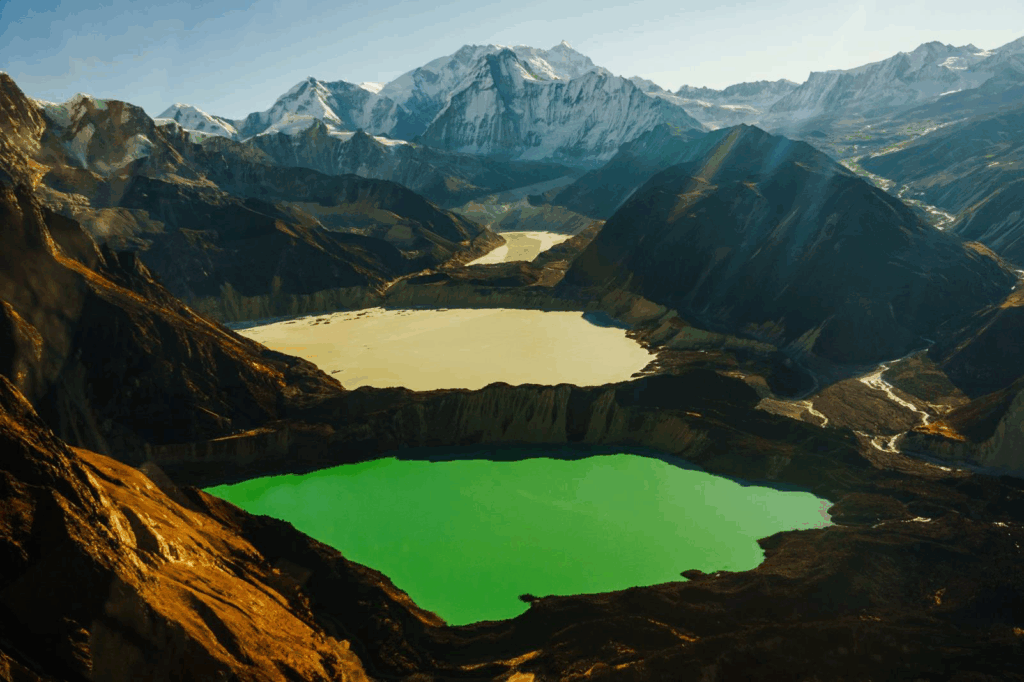
The book then unfolds images in the order of the seasons, creating an almost cinematic rhythm. Spring is bursting with colour and festivities; summer breathes the fervour of the valleys; autumn offers its gold to ceremonies and winter reveals the silhouettes of monasteries suspended in silence. The reader is taken on a journey through a country that seems to unfold in layers rather than as a succession of postcards.
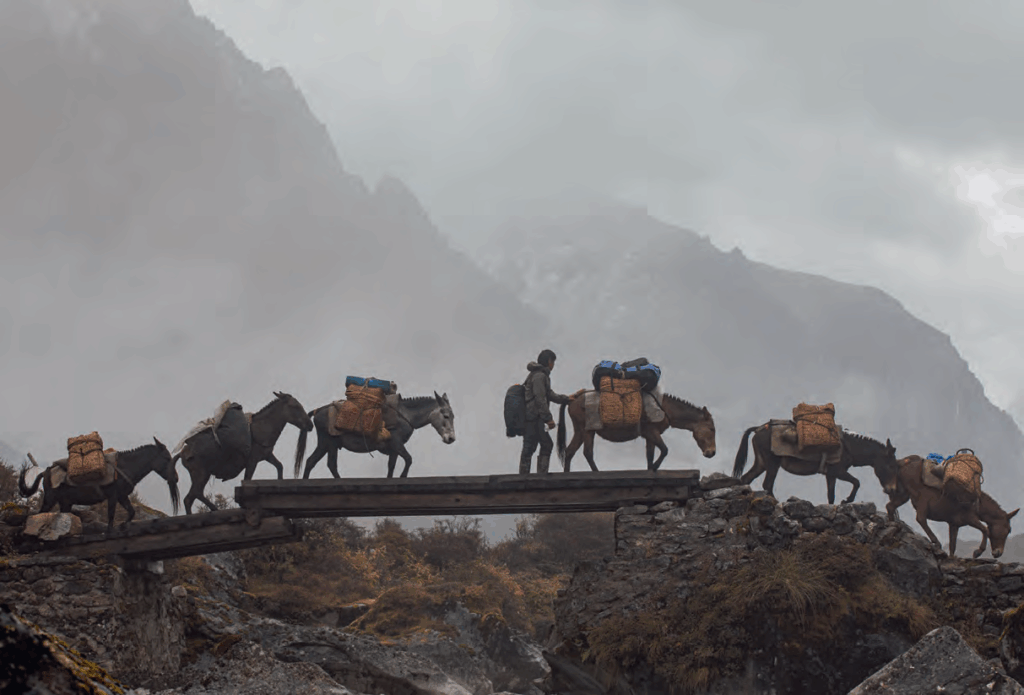
These magnificent images are matched by Matthieu Ricard's text. His role here is not that of a guide but of a privileged witness to Himalayan culture. His gentle, precise and meditative writing gives the book an inner dimension that goes far beyond photographic commentary. Matthieu Ricard not only describes, he enlightens. He reminds us, for example, of this fundamental idea of Bhutanese spirituality: « In Bhutan, the boundary between everyday life and spiritual life is thin, almost imperceptible. The temples do not dominate the landscape, they inhabit it, just as the prayers inhabit the breath. "
This tone, both simple and profound, runs through the whole book. The monk-photographer never seeks to idealise the country, but to restore the coherence of a people for whom the relationship with the sacred remains structuring, even in the age of modernity. In this way, his eye accompanies the images rather than explaining them, giving the book a sensitive reading. During eleven years in Bhutan, Matthieu Ricard witnessed the country's intense spiritual life: from ceremonies drupchen, These include the sacred Cham dances, real moving meditations designed to purify the spirit and transmit blessings. The humour of atsara, These ritual clowns strike a balance between solemnity and gaiety, reflecting the deeply pious yet joyful Bhutanese soul.
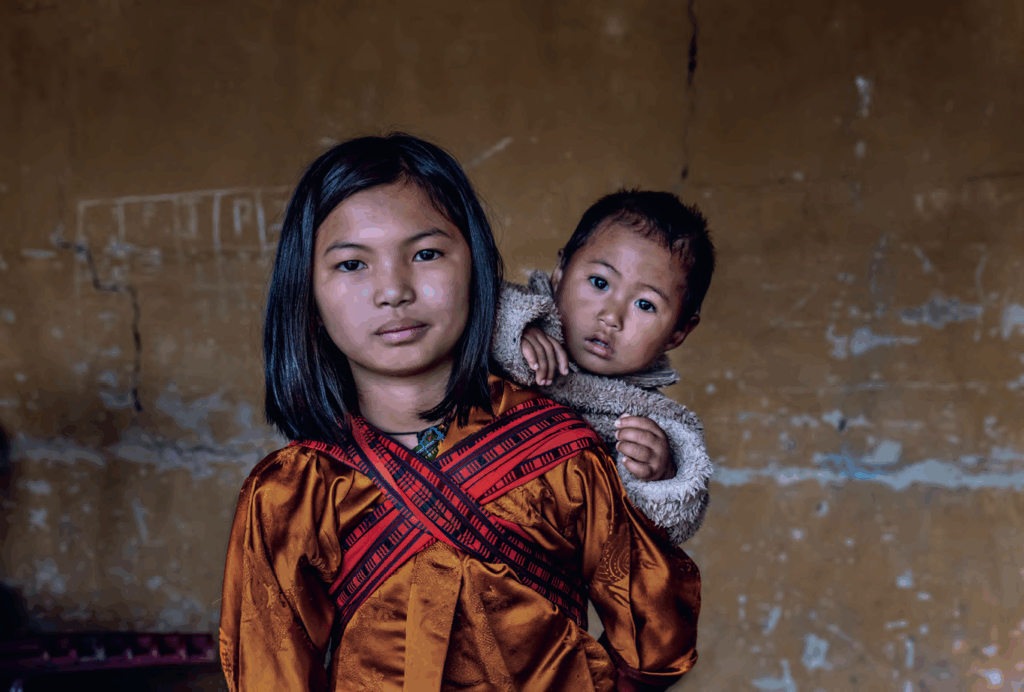
One of the great merits of this book is that it combines the spectacular with the intimate. The large images of Himalayan landscapes are matched by portraits of great modesty: a child monk bent over a sacred text, an old woman adjusting her traditional dress, a group of men preparing an agricultural rite. It is also these modest scenes that give the book its sincerity. For despite its luxurious format and artistic ambition, Bhutan, Portrait of a Kingdom does not give in to exoticism. It is a living, breathing country, full of contradictions, but still shaped by a tenacious spiritual memory.
The book itself is as good as its contents: large format, impeccable printing, quality colours and paper. A book clearly intended to be leafed through, given as a gift, passed on. A window onto a world where nature, spirituality and everyday life remain intimately linked. In this sense, and thanks in particular to the accuracy of Matthieu Ricard's text, it stands out as one of the finest visual tributes to this singular country.
It's not just a book to «look at»: it's a book to contemplate.
Photographs by Olivia Arthur ● Chien-Chi Chang ● Karma T. Dorji ● Stéphan Gladieu ● Steve McCurry ● Vincent Munier ● Gueorgui Pinkhassov ● Raghu Rai ● Matthieu Ricard ● Melisa Teo ● Michael Yamashita
Special contribution of His Majesty King Jigme
Texts by Pico Iyer, Kinley Dorji, Carina Fisher, Matthieu Ricard and Madeline Drexler.
Review : Brigitte Postel
Bhutan: Portrait of a Kingdom https://leseditionsdupacifique.com/produit/bhoutan-portrait-dun-royaume/
- Twelve months, ten photographers, a sacred land
- Each copy features one of 12 covers created by 12 different photographers, allocated at random.
- 69 euros.