
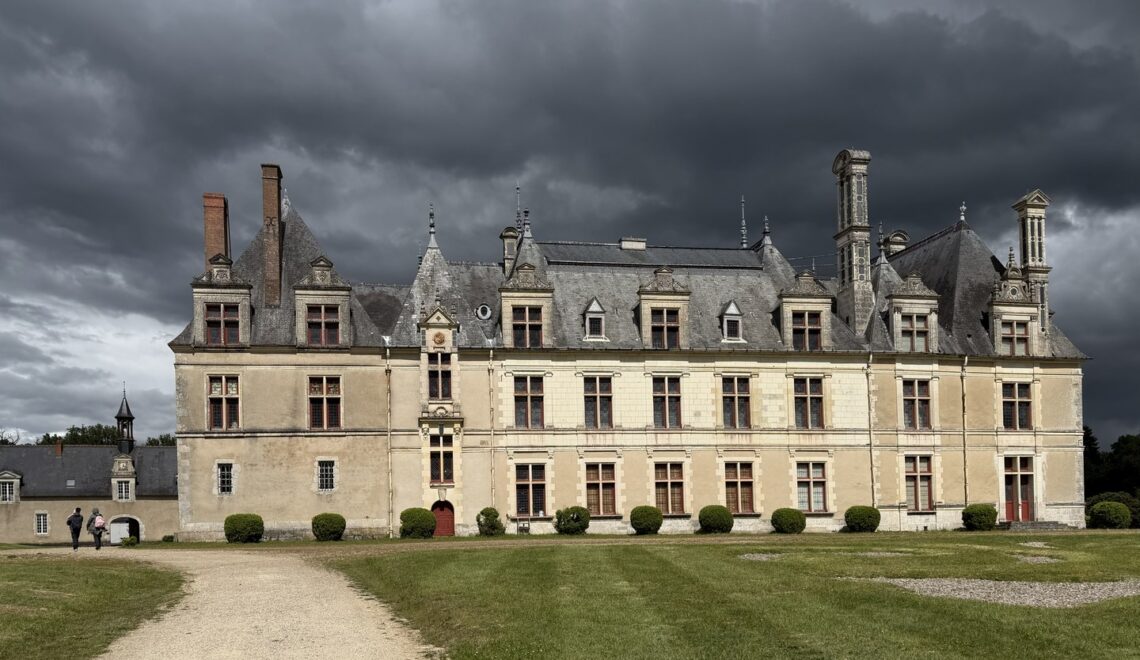
Between Blois and Chambord, the Château de Beauregard stands out as one of the most unique testimonies of the Loire Valley. The former hunting lodge of Francis the First, and later the residence of ministers in the 16th and 17th centuries, it truly entered history with its gallery of «Illustrious Figures», conceived in the early 17th century by Paul Ardier. With its 327 portraits organised chronologically, this vast collection offers a novel perspective on power in Europe, where monarchs, diplomats and major political figures create a continuous panorama of three centuries of history.
Table of Contents
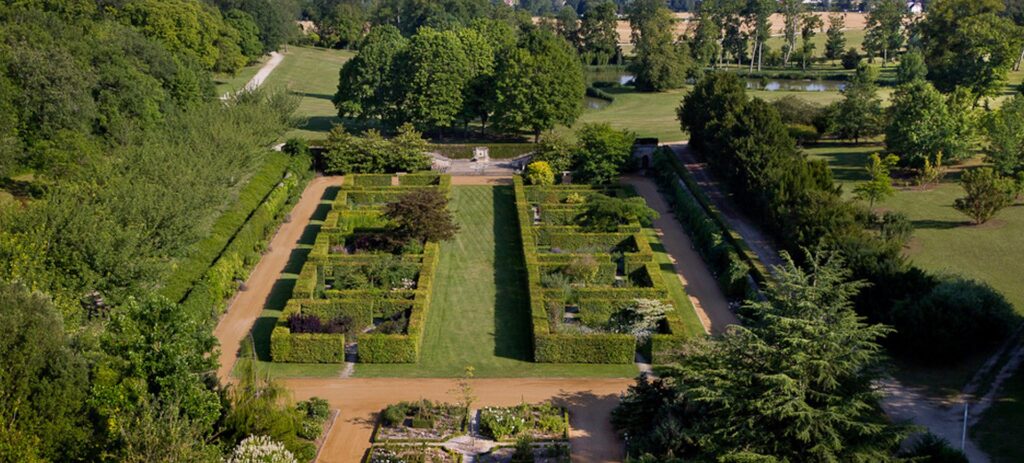
The Beauregard estate is situated within what could, without exaggeration, be called the golden square of the Loire Valley, between Blois, Chambord, Chaumont-sur-Loire, and Cheverny. Within this prestigious ensemble, Beauregard does not seek to compete; it distinguishes itself through its sobriety and discretion.
Ranked among the first historic monuments, from those years when Prosper Mérimée (1803-1870) began to inventory French heritage, the castle carries within it a more thoughtful than triumphant memory. Originally, a simple hunting lodge of Francis the First (1494-1547), he could have remained in this minor role. But history, as is often the case, decided otherwise.
The castle where history comes alive
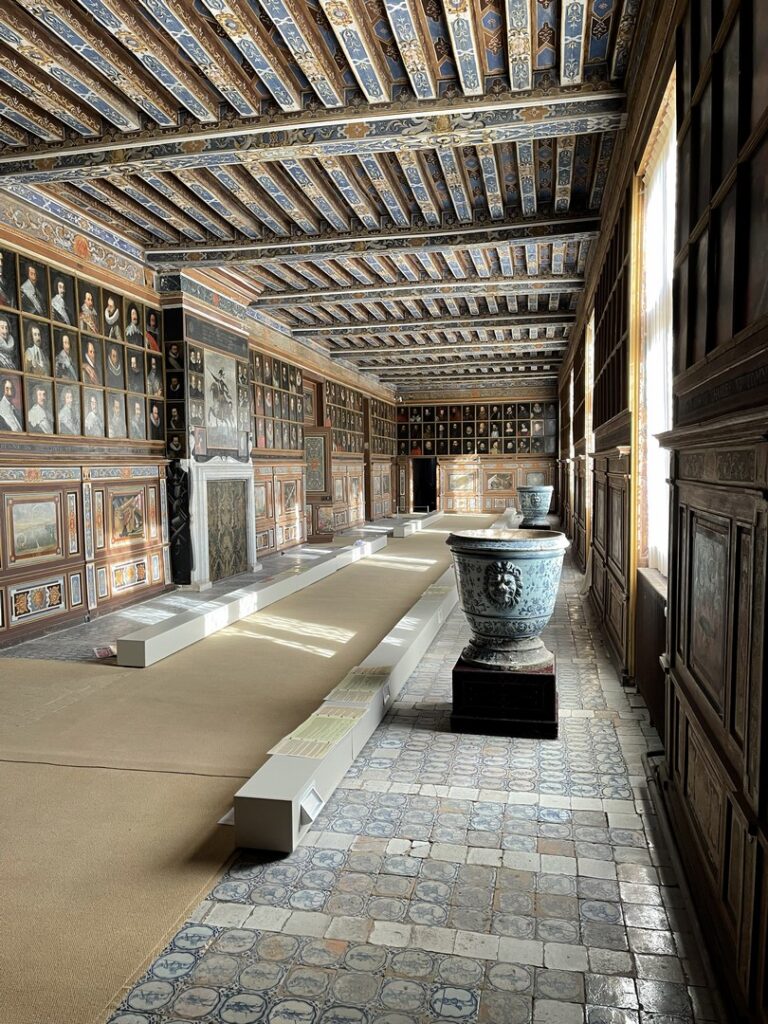
In the 16th and 17th centuries, powerful men settled there. Beauregard then became the residence of ministers, those intermediary figures, neither entirely sovereign nor entirely erased, who held the unseen workings of the State in their hands. They governed there without fanfare, but not without influence.
In 1617, one of them, Paul Ardier – a minister under the reigns of Henry III, Henry IV, and Louis XIII – undertook what would make the place unique: its decoration. Gallery of the Illustrious. Measuring 26 metres long by 6 metres wide, this gallery is designed as a vast space for strolling, where the architecture showcases the harmony of proportions and the richness of the décor.
In 1925, the château was purchased by Mrs. de Gossellin, whose descendants, the du Pavillon family, still live there.
Europe's memory in 327 portraits
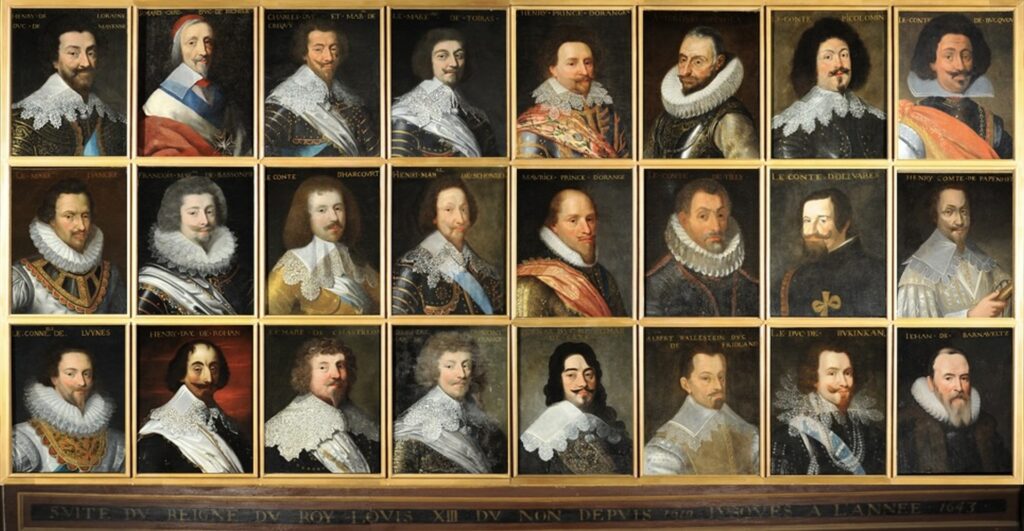
A total of 327 portraits, delivered between 1617 and 1638, adorn the gallery. Almost thirty nationalities: Europe, Turkey and beyond, captured in the French mirror. A less decorative than intellectual gesture, it is not about adorning, but about ordering the world. Here, the defining figures of history are not summoned to be admired, but to be aligned, compared, almost put to the test of scrutiny.
Here, one encounters a remarkable diversity: French and foreign monarchs, emperors, popes, diplomats, military leaders and prominent political figures, industrialists… Bertrand Duguesclin, Marie de« Medici, Selim I »the Fierce', Pope Clement VII, Philip II of Spain, Jeanne d'Albret, Francis, Duke of Guise, the Turkish pirate Oruç Reis, Louis XIII, Suleiman the Magnificent…….
What is striking is the European openness. Paul Ardier does not seek to glorify France alone, but to place his history within a broader interplay of influences, an early “geopolitical” vision.
A structure emerges, but without ostentation. Nothing of the apparent randomness of accumulated collections: here, everything proceeds from a design. Each figure fits into a continuity. It is no longer just a portrait: it is a position. Alliances formed, rivalries hidden, inheritances disputed, all this surfaces from one gaze to the next. We progress thus, from one reign to the following, with the strange sensation of flicking through a silent book. The faces suggest; they allow us to guess at strategies, doubts, and sometimes vanities.
Discreet pedagogy accompanies the visitor. Above each portrait, an inscription: name, role, sometimes a succinct indication, provides essential reference points; it guides reading without imposing it and illuminates without confining interpretation. Nothing forced, nothing demonstrative.
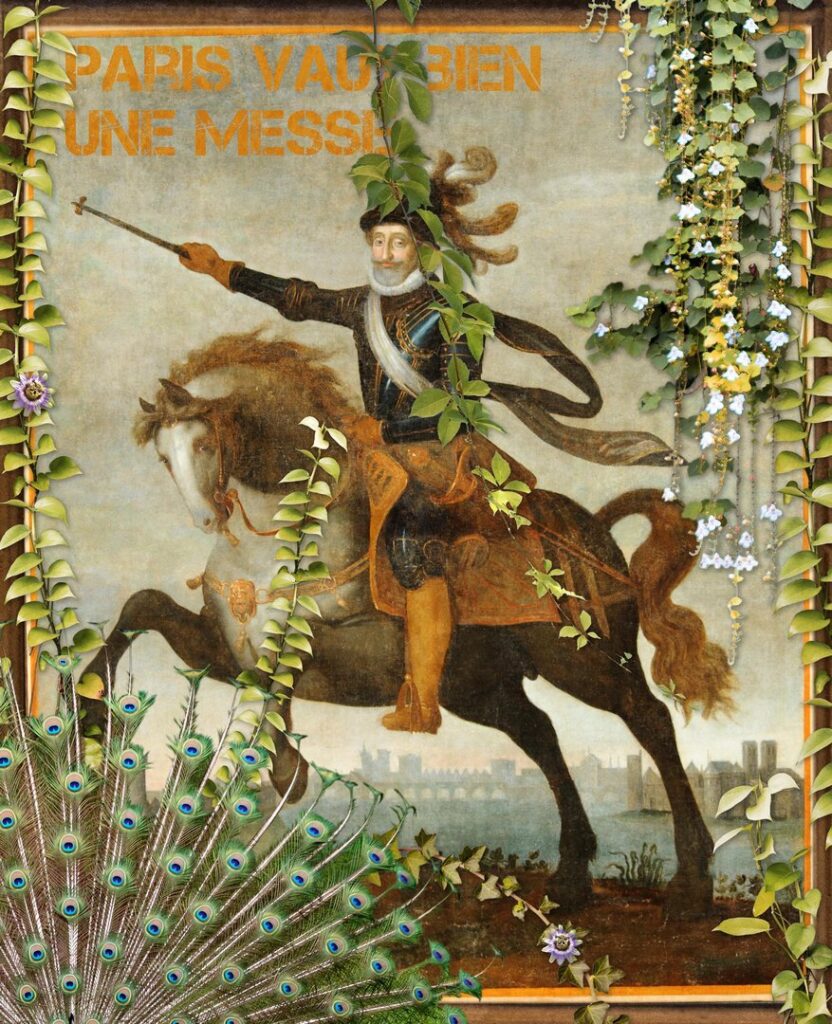
Paul Ardier places the first of the Bourbons, Henri IV, above the fireplace. This is the dynasty reigning at the time of the patron; it is they who must be flattered. His portrait is the centrepiece of the entire gallery. While the other 326 characters are almost all depicted as busts, Henri IV appears in majesty, on horseback, in an imposing equestrian portrait that immediately draws the eye.
He wears richly chiselled armour, its metallic gleam highlighting his status as a war leader. A white sash, an emblem of the royal party during the Wars of Religion, crosses his chest. In his right hand, Henri IV holds a baton of command, rather than a brandished weapon. His face is serene and determined. We recognise his famous upturned moustache, his pointed beard and his high forehead, features that have become emblematic of his iconography.
Portrait revisited by Chris Morin-Eitner.
An artificial sky
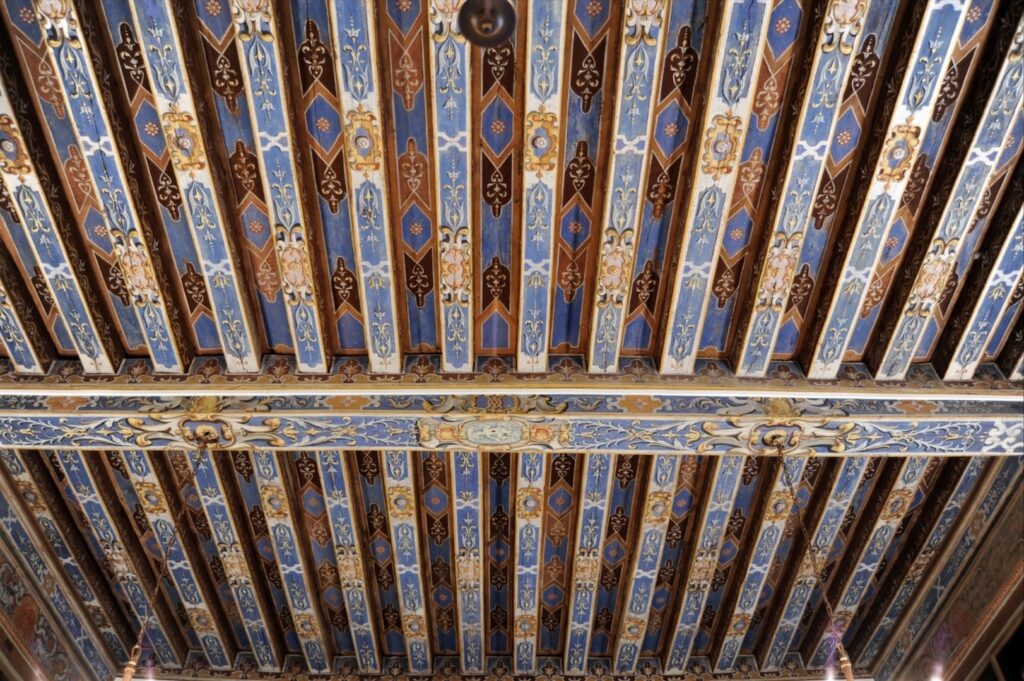
The ceiling of the Gallery of the Illustrious is one of the most spectacular elements of the Château de Beauregard. Executed in the French style, it is structured by a network of exposed beams and joists adorned with painted motifs and decorative fillets. Designed to impress visitors, it is distinguished by an exceptionally intense blue, obtained through the use of lapis lazuli powder. This semi-precious stone, mainly imported from the mountains of Afghanistan, was among the most expensive materials in Europe in the 17th century. Its deep blue colour was associated with the sky, royalty, and the divine.
The desired effect is enhanced by the natural light that filters through the gallery's high windows. As it diffuses across the ceiling surfaces, it reveals the full richness of this deep blue, the shades of which seem to vary throughout the day. This subtle interplay between light and lapis lazuli gives the visitor the impression of a celestial vault. One understands why several art historians speak of a « Artificial sky »This ceiling does not merely aim to decorate; it transforms the gallery into a symbolic space. Below, the history of mankind scrolls by; above, a timeless sky stretches out, evoking the permanence of the monarchy and of Providence.
Paving: a treasure of Dutch tiles
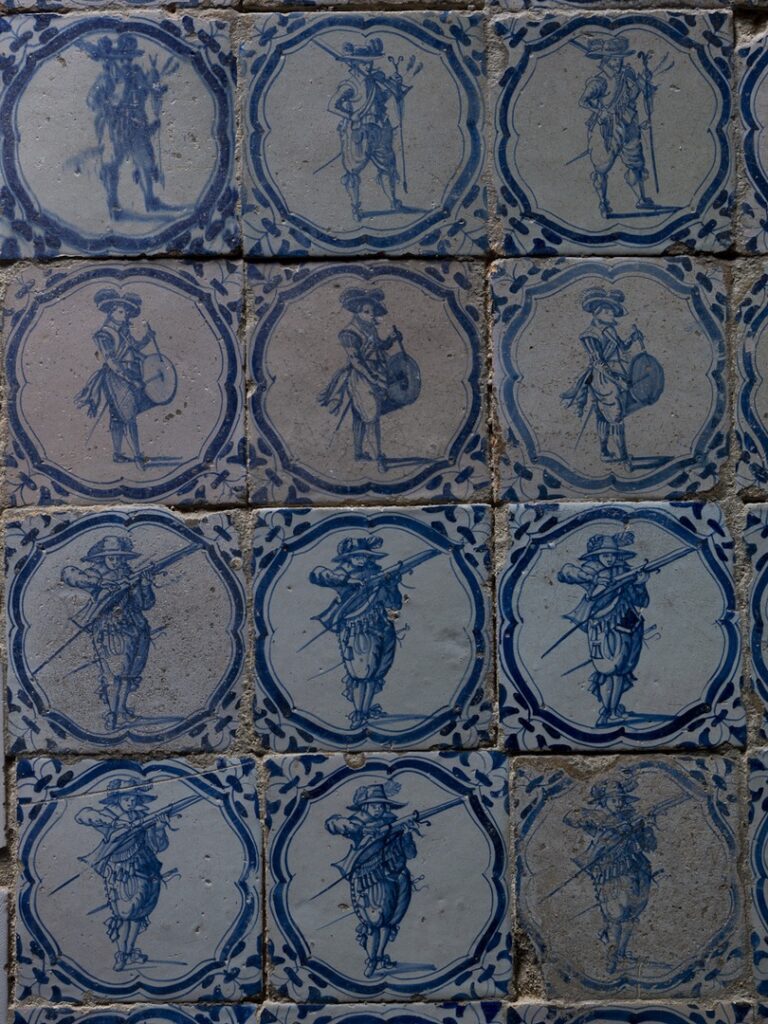
The floor of the Gallery of the Illustrious is made up of a carpet of 5,600 Delft earthenware tiles. Created in the 17th century, this tiling forms a vast composition representing the different corps of an army on the march during the reign of Louis XIII: infantrymen, cavalrymen, drummers, officers, cannons, and equipages follow one another along the entire length of the gallery. This exceptional decoration interacts with the 327 historical portraits adorning the walls, transforming the very floor into a visual narrative of monarchical power. Inspired by blue and white Chinese porcelain, these tiles were immensely successful in Europe in the 17th and 18th centuries and became a symbol of the refinement of great aristocratic residences. The Beauregard tiling is today considered one of the largest and best-preserved of its kind in France.
The Cabinet of Small Bells
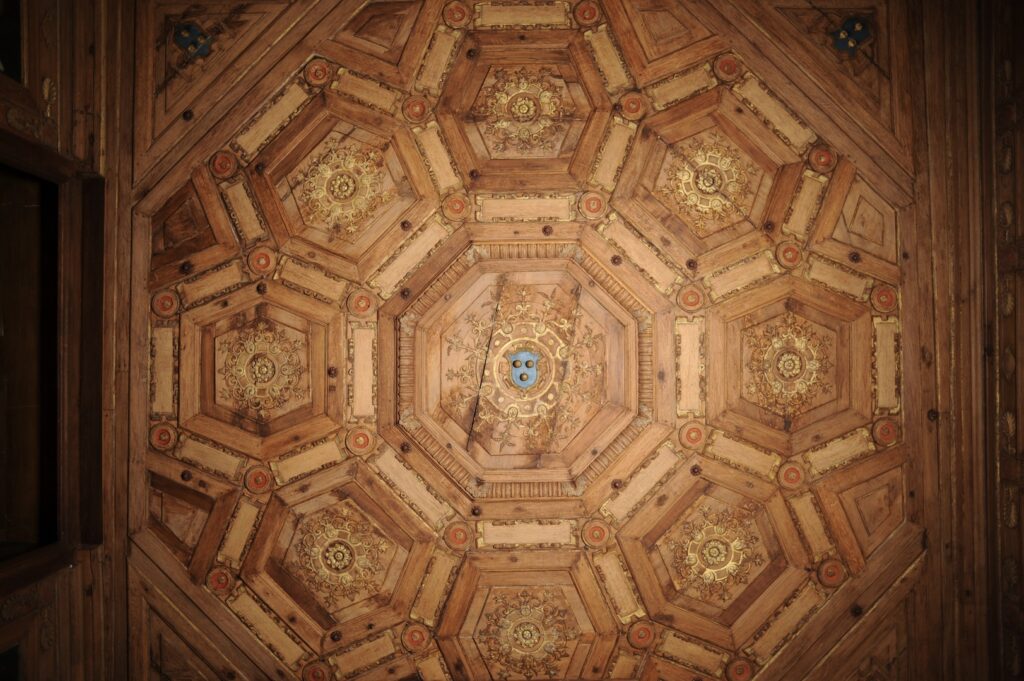
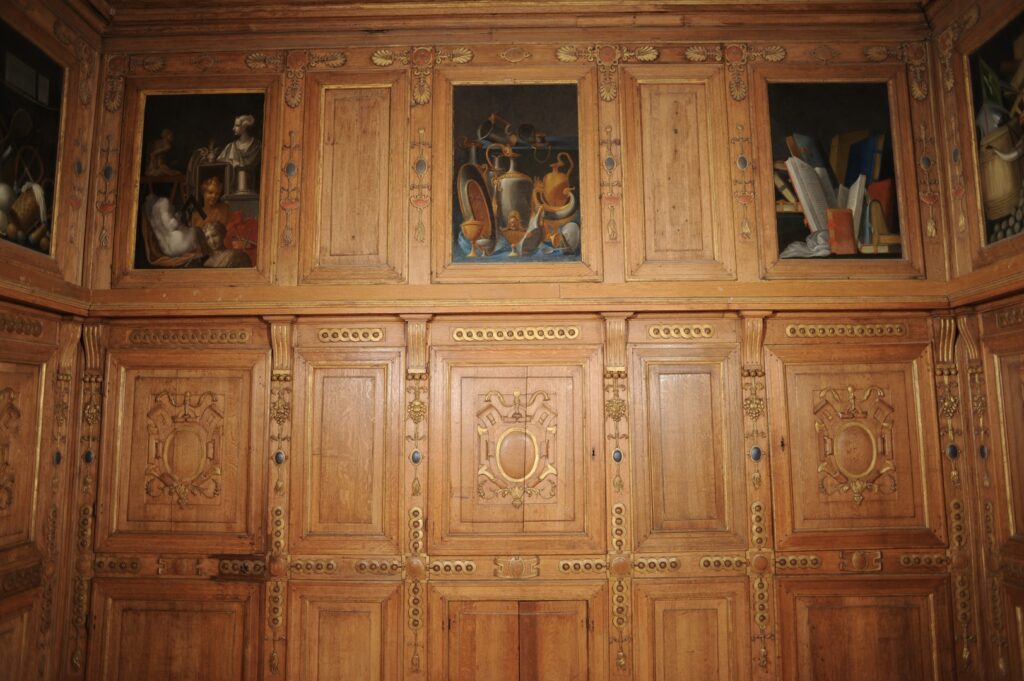
The Château de Beauregard also houses a true Renaissance jewel: the Cabinet des Grelots (Bell Cabinet), the former study of Jean du Thier. Its name refers to its owner's coat of arms, adorned with three gold bells on a blue background, a motif that can be found sculpted throughout the room. Created in 1554 by the Italian cabinetmaker Francesco Scibec, called Scibec of Carpi, who also worked at Fontainebleau and the Château d'Anet, this remarkable studiolo is a masterpiece of 16th-century decorative art. Its finely carved wood panelling and elegant coffered ceiling showcase a series of painted panels illustrating the ideal activities of a humanist gentleman: music, painting, sculpture, reading, goldsmithing, but also hunting, real tennis and military exercises. This small cabinet alone encapsulates the spirit of the Renaissance, where a taste for the arts, knowledge, and physical exercise formed the ideal of the accomplished man.
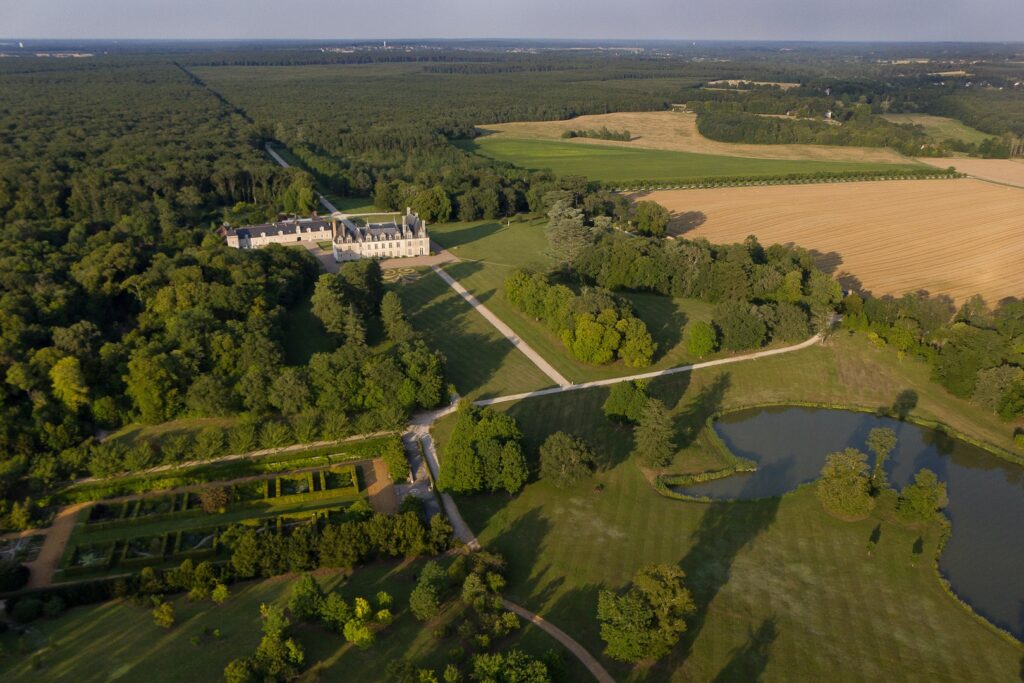
Beauregard recounts less a story of power than a story of transmission. He succeeds in transforming a collection into reflection. Each element is part of the same project: to make art, history and power dialogue. Four centuries after Paul Ardier, this ambition remains intact. Beauregard offers the visitor far more than a simple castle visit: a reading of Europe through those who shaped it and a meditation on power, memory and perhaps, on the illusion of lasting.
Text : Michèle Lasseur
Photos : Château de Beauregard
Address
Beauregard Park and Château
41 120 Cellettes – France
Tel: 02 54 70 41 65
info@beauregard-loire.com
www.beauregard-loire.com