
Table of Contents
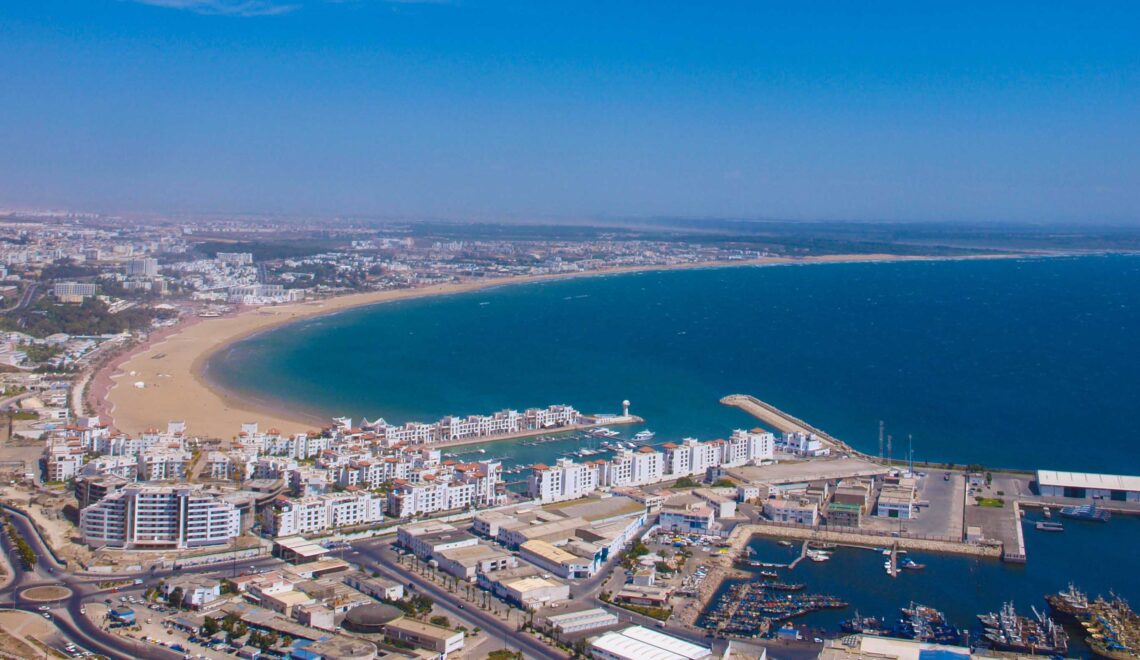
Set on the Atlantic coast, Agadir's long sandy beach is a luminous crescent more than ten kilometres long. Under the sun, the sand sparkles, while the bluish silhouette of the High Atlas rises to the horizon.
To walk through Agadir is to feel the breath of the sea and the weight of history. On the hill overlooking the town, the motto of Morocco is written in Arabic " Allah, al-Watan, al-Malik "("God, country, king").
The Kasbah of Agadir Oufella
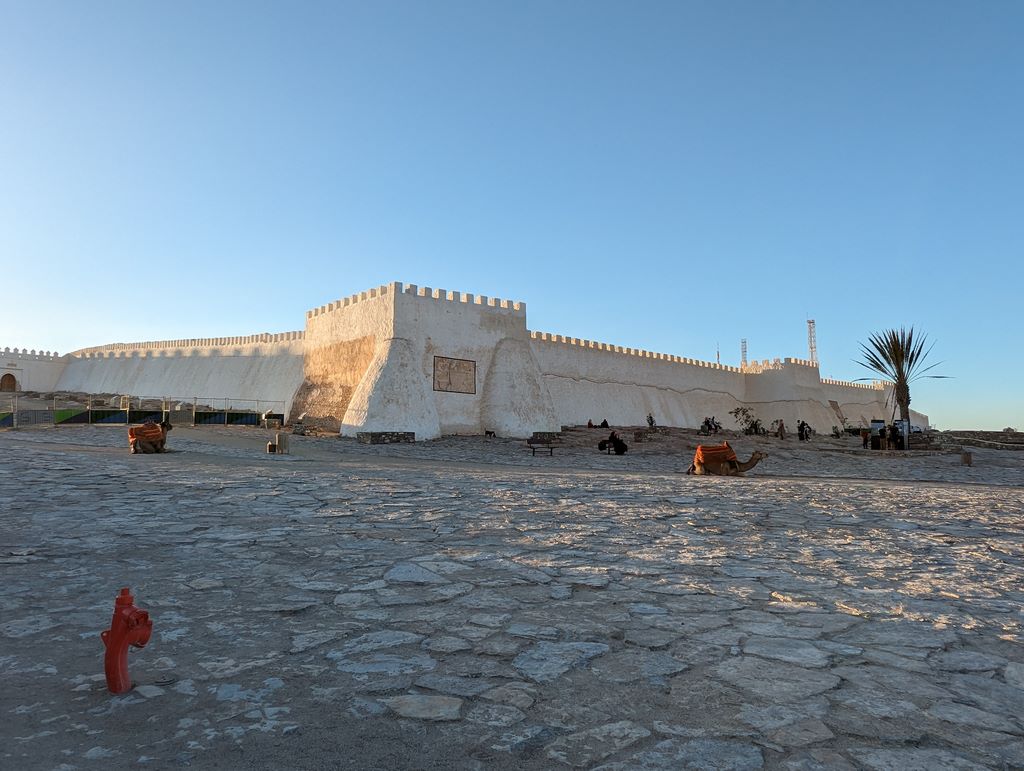
Perched on a hill 236 m high, the Kasbah has been a fortification since 1540: its privileged position allowed it to keep watch over the surrounding area. A sturdy wall was built to protect soldiers and inhabitants alike. Today, these restored walls offer spectacular views over the city and the ocean. It takes 20 minutes to walk up from the marina. The most intrepid arrive by camel at the gate of the fortress. It looks like a holiday setting, yet every stone, every alleyway, every breath of air still carries the memory of a fateful night, that of the earthquake on February 29, 1960. The collapsed walls, charred beams and and scattered roof tiles form a shapeless carpet on which silence reigns almost completely.
At the foot of the ancient Kasbah, the modern city pulsates. Agadir is astonishing for the density of its movement and the brilliance of its colours. The sea glistens, the hotels welcome travellers. On the café terraces lining the promenade and marina, life is bustling. Moroccan families, German and French tourists, all enjoying the simple pleasures of the salty breeze and grilled fish.
The El Had souk: the soul of the town
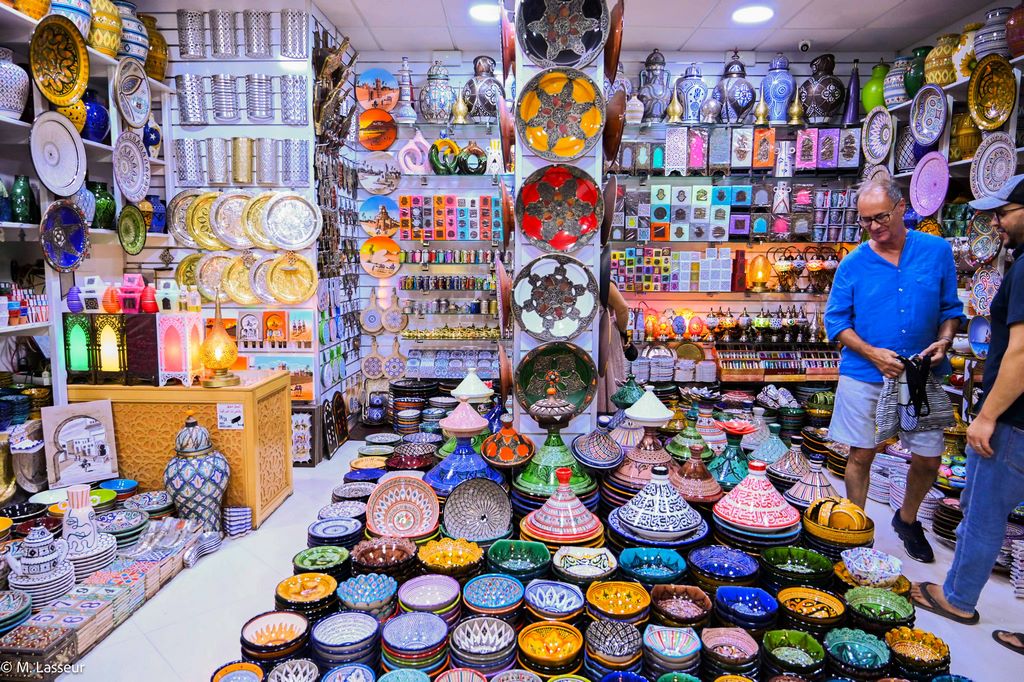
The El Had souk is one of the most popular and largest markets in Morocco. It is home to over 3,000 shops. It's right in the heart of Agadir and sells everything from meat and spices to fabrics, furniture, shoes and cosmetics.
At dawn, when the air is still cool and the Atlantic is sending out its salty puffs, the El Had souk opens: the iron shutters rise with a metallic creak and suddenly everything comes alive. Fruit rolls out of the crates, bright oranges, split pomegranates and already the voices are raised, deep, guttural, echoing under the still shaded canvases, while the smells mingle: hot bread, fresh mint, fish, enveloping the visitor in a sensual and dense tumult. The merchants display their wares, and already the air is saturated with fragrances.
Sitting on his rickety crate, the wrinkled, patient olive merchant arranges his fruit like a general deploying his troops. Each gesture is ritualistically slow; each olive held out is a silent promise: these dark mountains will feed families for a few dirhams. The vendors shout their prices, the spices perfume the air and modern commerce blends with Berber tradition. Women pass by, heads in scarves, selling spices surrounded by pyramids of paprika and cumin. Here is the civil servant in search of dried fruit, the tourist amused by the dazzling diversity of fabrics. Here, the spice becomes a political manifesto, the carpet a declaration of identity, and the final handshake a promise of a shared future. As if in an oriental orchestra where the instruments are throwing replicas at each other, the conversation of the merchants responds to the exclamations of the customers. The fragrance of saffron olives is superimposed on the scent of leather. There's a glint in the merchant's eyes: more than a transaction, it's a story, in which the buyer finds himself cast as a secondary character in a play. It's a permanent theatre, without staging, whose actors play their part every morning.
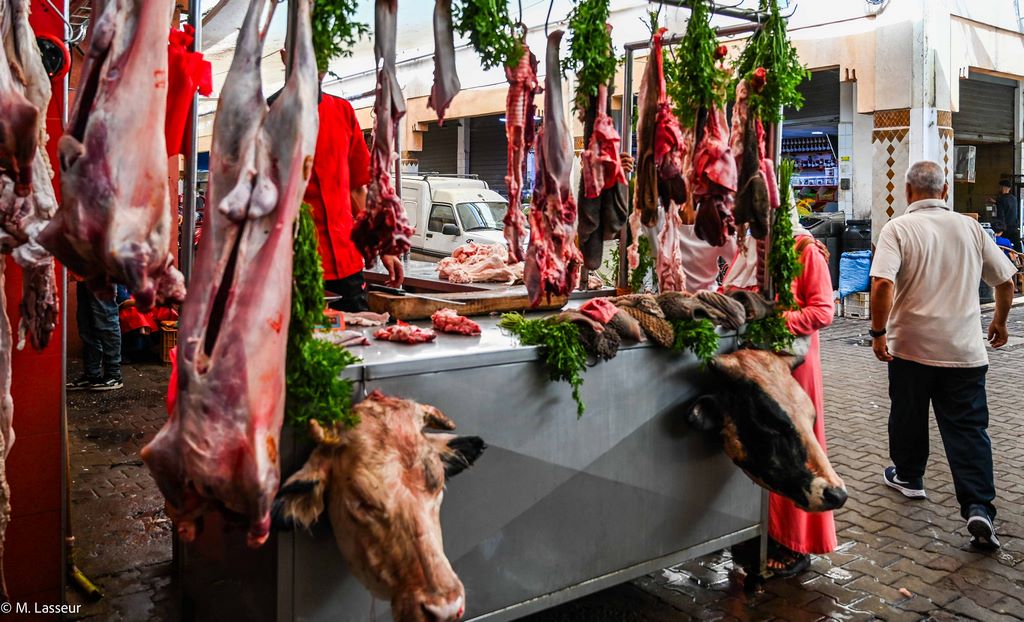
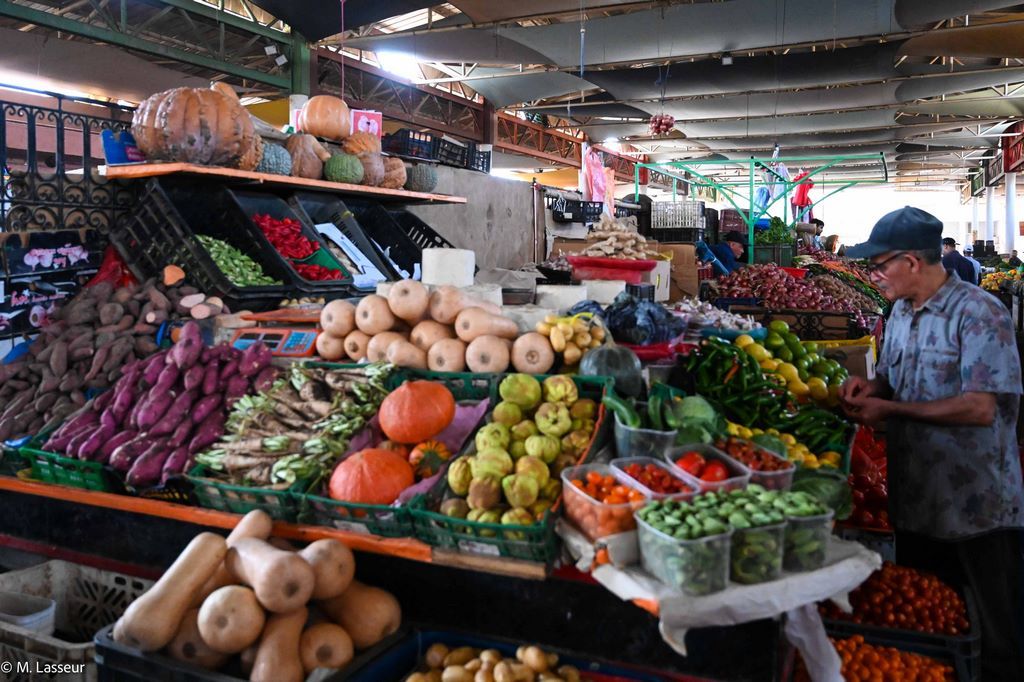
A woman in a red scarf arranges her pyramids of spices. She orders, almost religiously, each colour, each grain of cumin, each hint of saffron. She watches the customers come and go, reading their hesitations, guessing their desires before they open their mouths.
A little further on, in the shadow of a leather stall, the old craftsman counts his babouches and belts with an almost ritual precision. His henna-spotted hands carry the memory of centuries of trades, repeated gestures and modest but dignified lives.
A colourful crowd bumps into each other, crosses paths and weaves its way through. And as evening falls and the iron shutters gently clap, and the souk falls silent like a theater after the performance. But the scents persist, and the souk breathes more slowly.
The Polizzi medina: an architect's dream
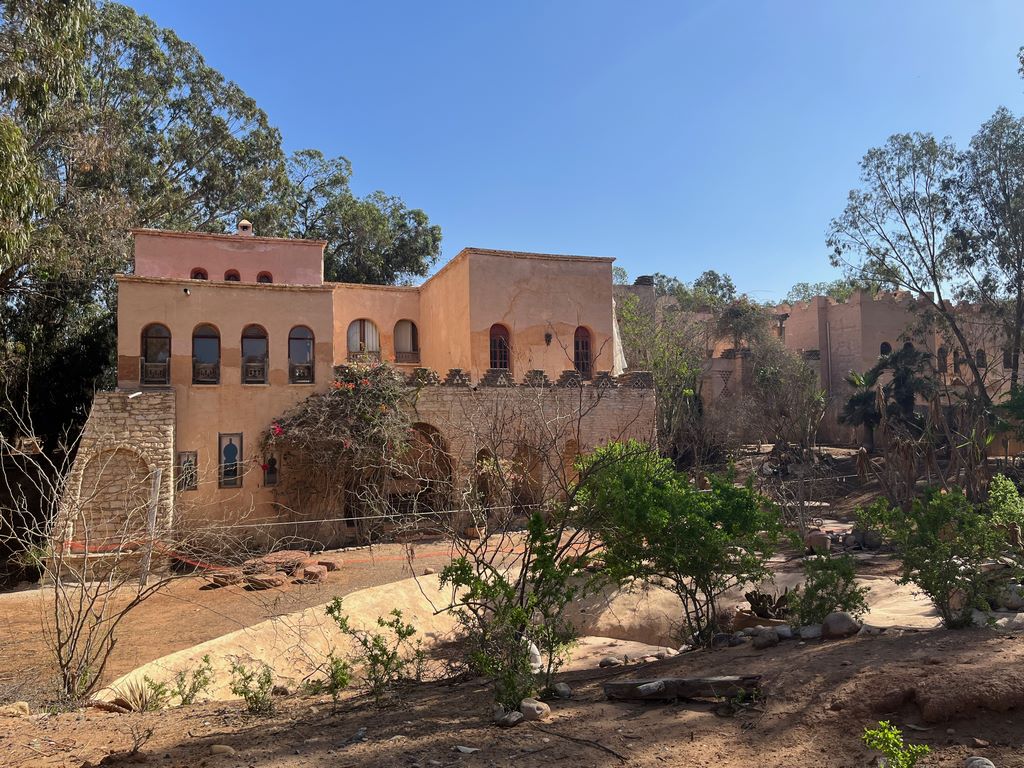
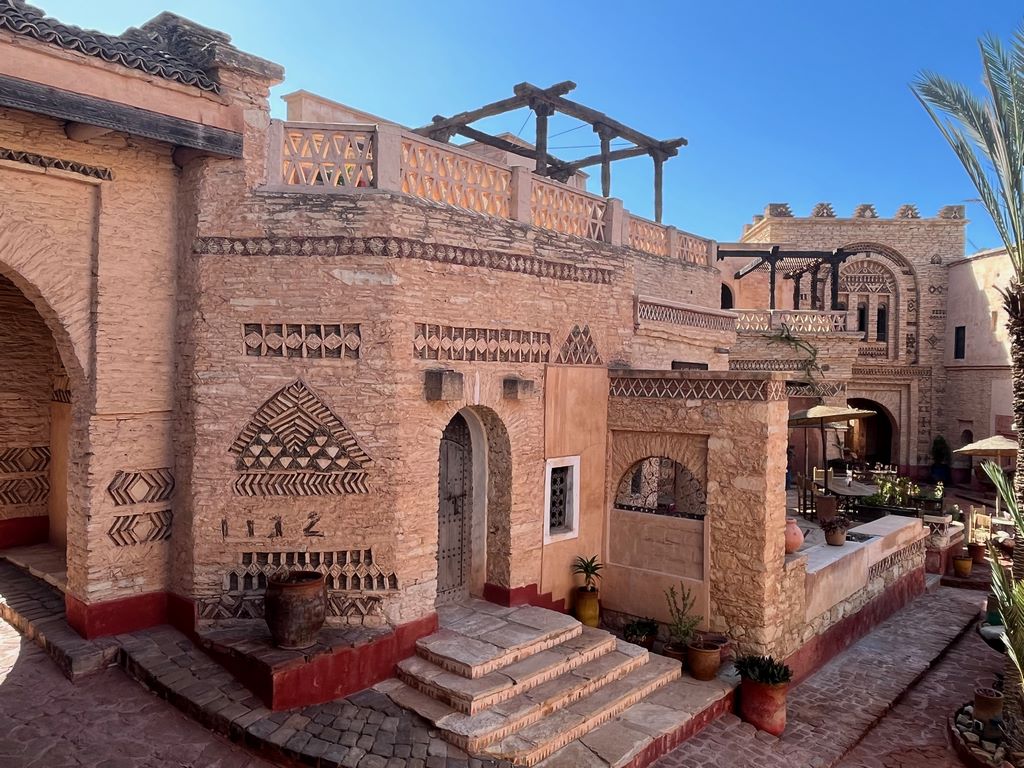
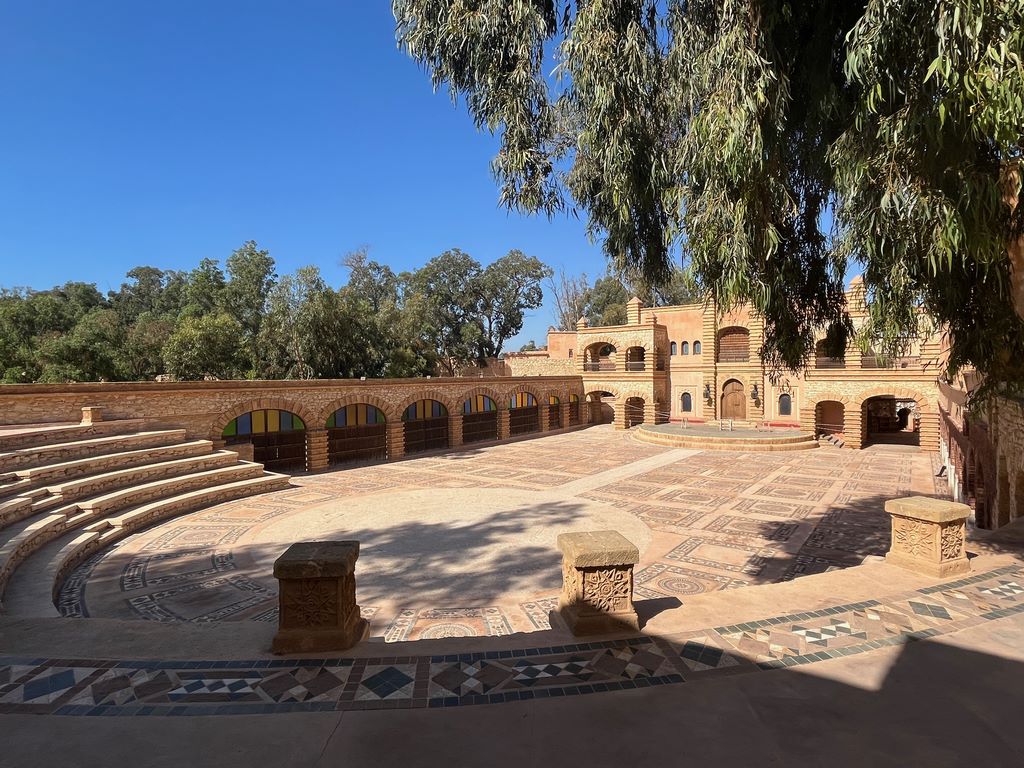
After the 1960 earthquake, Agadir's old medina disappeared. In the 1990s, the architect Beato Salvatore Polizzi, alias Coco Polizzi, a Sicilian born in Morocco, is passionate about Moroccan craftsmanship and has set about recreating an "ideal medina": not a copy of the past, but a living tribute to the medinas of the South. Built from unbaked earth and traditional materials, the site celebrates the ancestral skills of Moroccan craftsmen: ironwork, zellige, sculpted plaster, cedar woodwork... It's a place for art, history and walking.
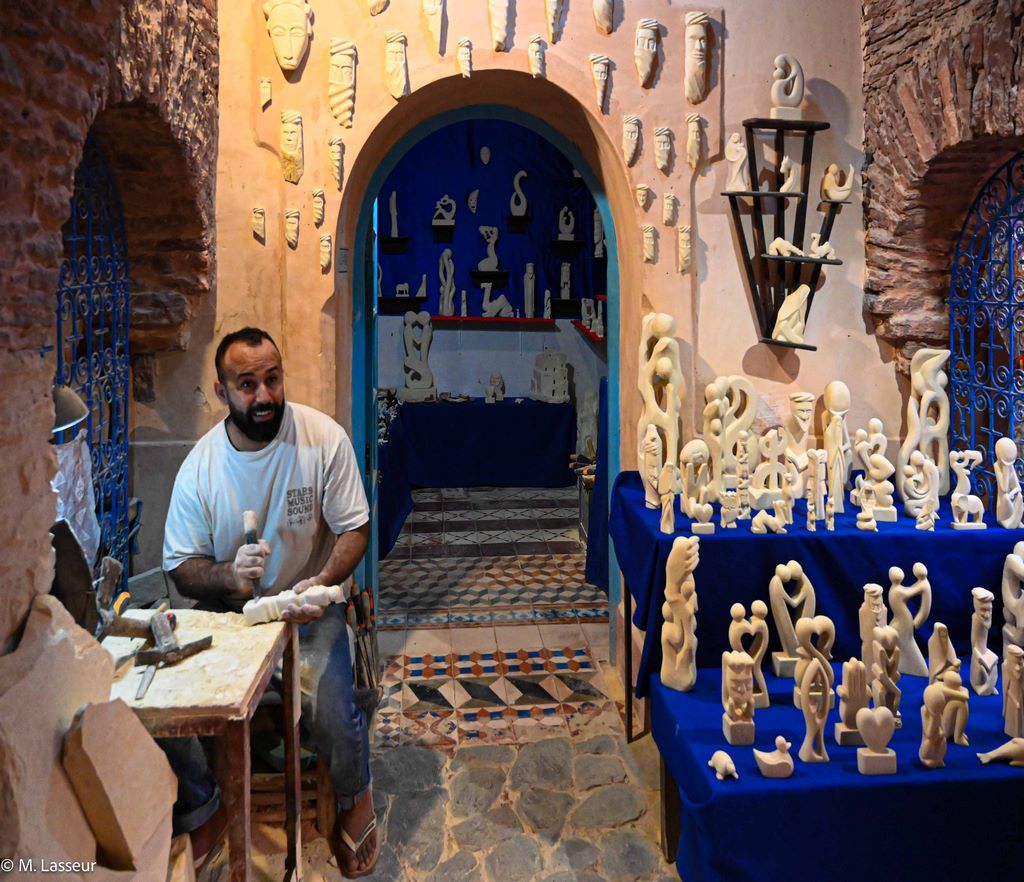
It covers an area of 12,000 square metres. It's like a film set: winding lanes, shady squares, fragrant patios, towers, fountains, souks... Its architect has tried to give the complex a medieval feel by decorating it with a host of traditional Moroccan motifs. Ideal for strolling around, taking photos, buying crafts and savouring traditional Moroccan dishes.
Gardens to cool off in
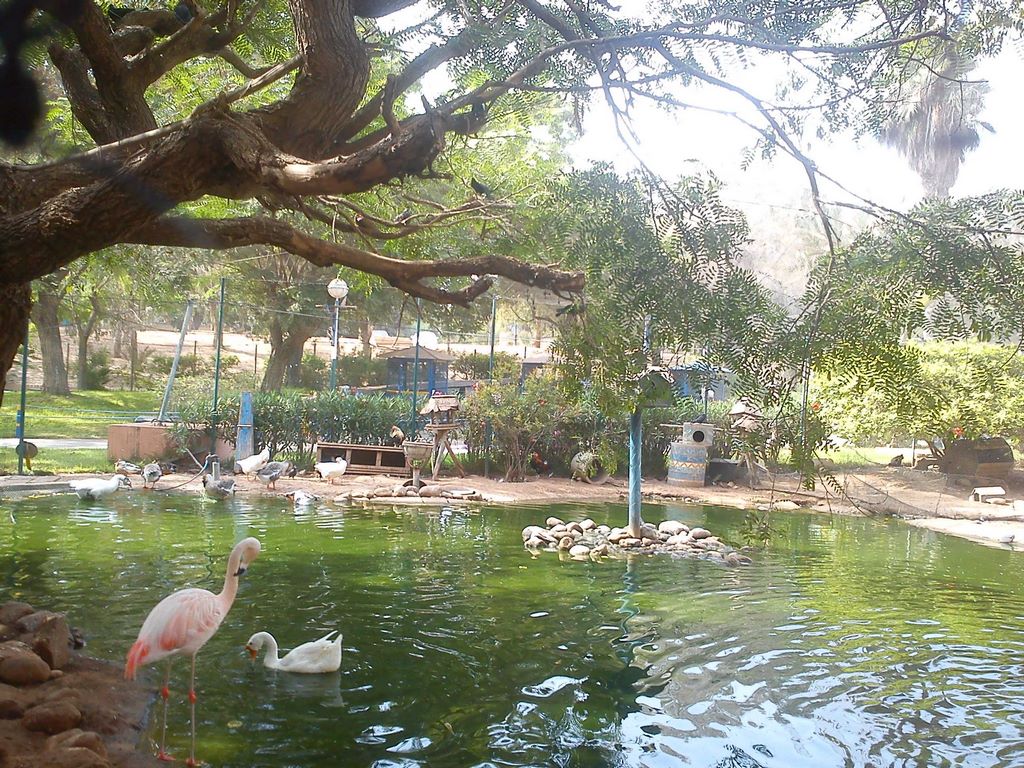
Amid the new avenues and white facades, Agadir offers green refuges where time seems to slow down. In the Valley of the Birds, a green corridor between the beach and the town centre populated by exotic birds, the murmur of the fountains answers the call of the parakeets; children run under the palm trees, couples stroll in the shade of the bougainvilleas.
Further on, the Olhao Garden, inaugurated in 1992 to celebrate the Moroccan-Portuguese friendship, retains a soft Mediterranean feel, with elegantly arched pavilions, tranquil pools and the light scent of jasmine. Here, the city remembers - a small museum recounts the 1960 earthquake, as if to remind us that Agadir's beauty was born of reconstruction and patience.
Accommodation and eat
The View Agadir
Boulevard du 20 Août, Agadir
www.theviewhotels.com
See our report on The View Agadir hotel
https://universvoyage.com/en/the-view-agadir-5-a-contemporary-oasis-on-the-atlantic/
Moroccan Tourist Office
https://www.visitmorocco.com/
www.medina-agadir.com
Text : Michèle Lasseur