
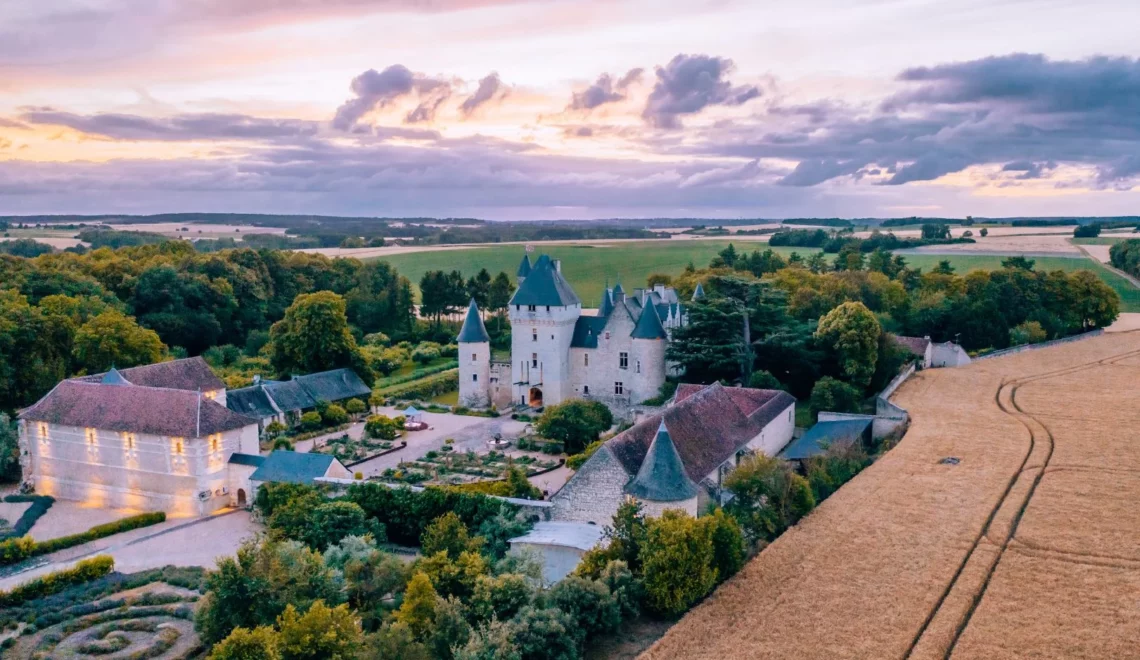
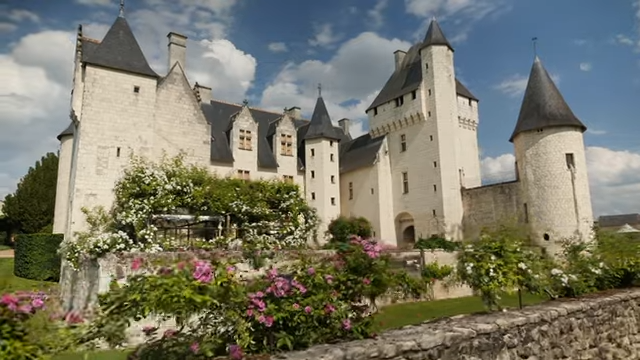
Leaving Chinon along a winding road that seems to be trying to avoid the tumult of the Loire, you enter a land of vines and dreams. In the heart of Rabelais country, Le Rivau stands out: a fortress on a human scale, looking more like a watchman than a conqueror. With its pepperpot-roofed towers and moat spanned by a stone bridge, the Château du Rivau combines medieval and Renaissance architecture, the art of gardening, contemporary design and the art of living..
The estate comprises a 13th-century seigniorial fortress and a Renaissance dwelling, all of which are listed historic monuments. Bought by the Laigneau family in 1992, the estate has been restored to its former glory thanks to an extensive renovation programme.
Let's push open the door of this residence. The creaking of the wood is that heard five centuries ago by the soldiers of the lord Pierre de Beauvau. To protect his lands, he had the castle rebuilt in 1442 with approval of the king Charles VII, in gratitude for his loyal service.
The Grand Logis room
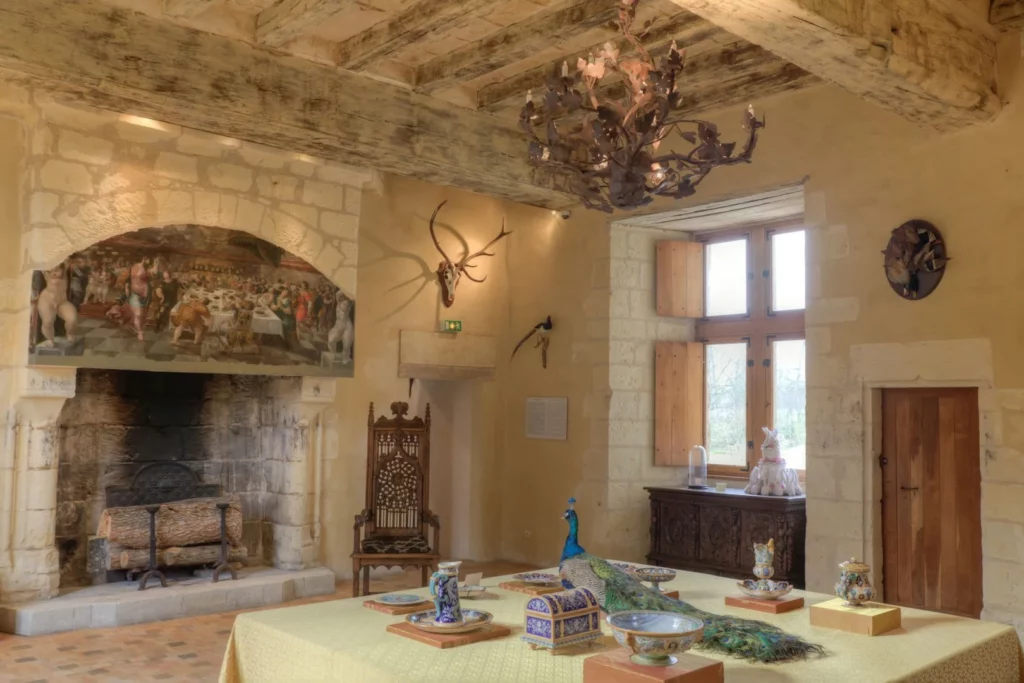
The Grand Logis room is home to a heritage collection of taxidermy works, set against a backdrop of contemporary art. Once witness to the passage of knights and diplomats, the old beams now house the creations of Julien Salaud, Object-oriented art (Marion Laval-Jeantet and Benoît Mangin), Marnie Weber, Nicolas Darrot, or even Jeff Koons, whose bold irony is set against an 18th-century hunting trophy. The contrast? It's deliberate. The hostess, Patricia Laigneau, likes to create a dialogue between past and present. Between an 18th-century hunting trophy and a unicorn made of glass beads, the eye hesitates: past or fantasy? Here, the taxidermy doesn't smell of mothballs, but of provocation! Now let's climb the spiral staircase. Touch the stone: it's been polished by centuries of footsteps.
La Salle des Dames
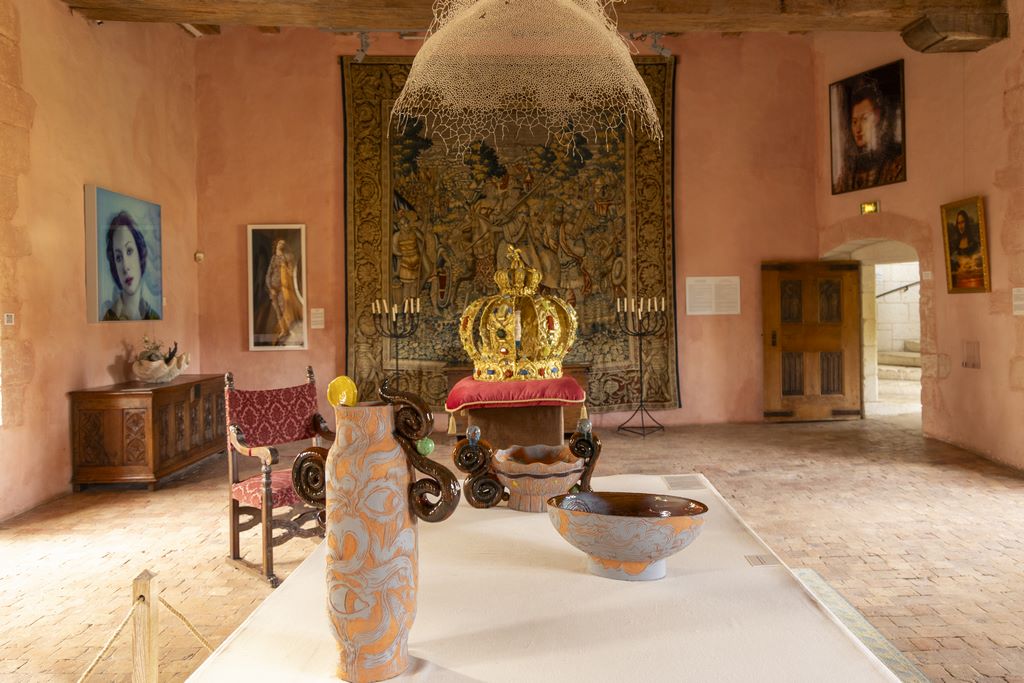
with female portraits of the most famous beauties of
Renaissance. In the foreground, an installation of engraved and painted ceramics.
enamelled duo Lamarche-Ovize and the crown of Vincent Olinet. © P. Laigneau.
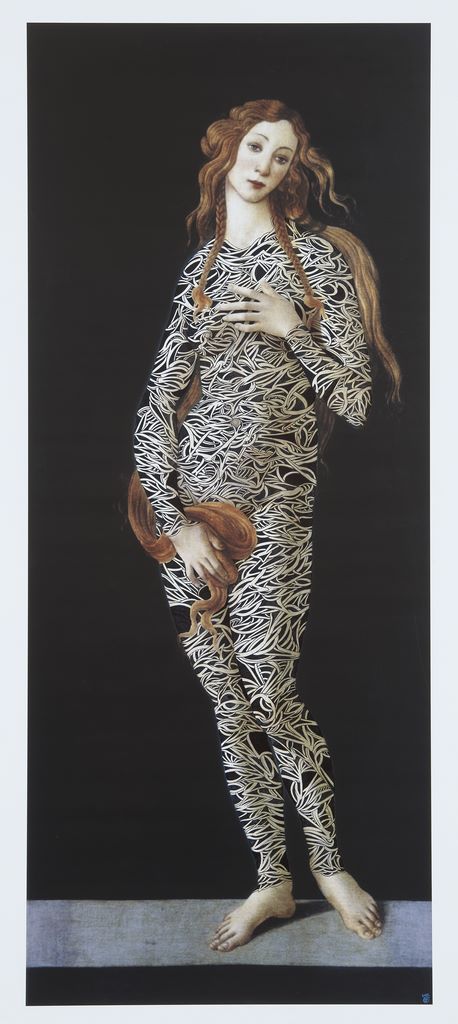
ORLAN and Botticelli's Venus
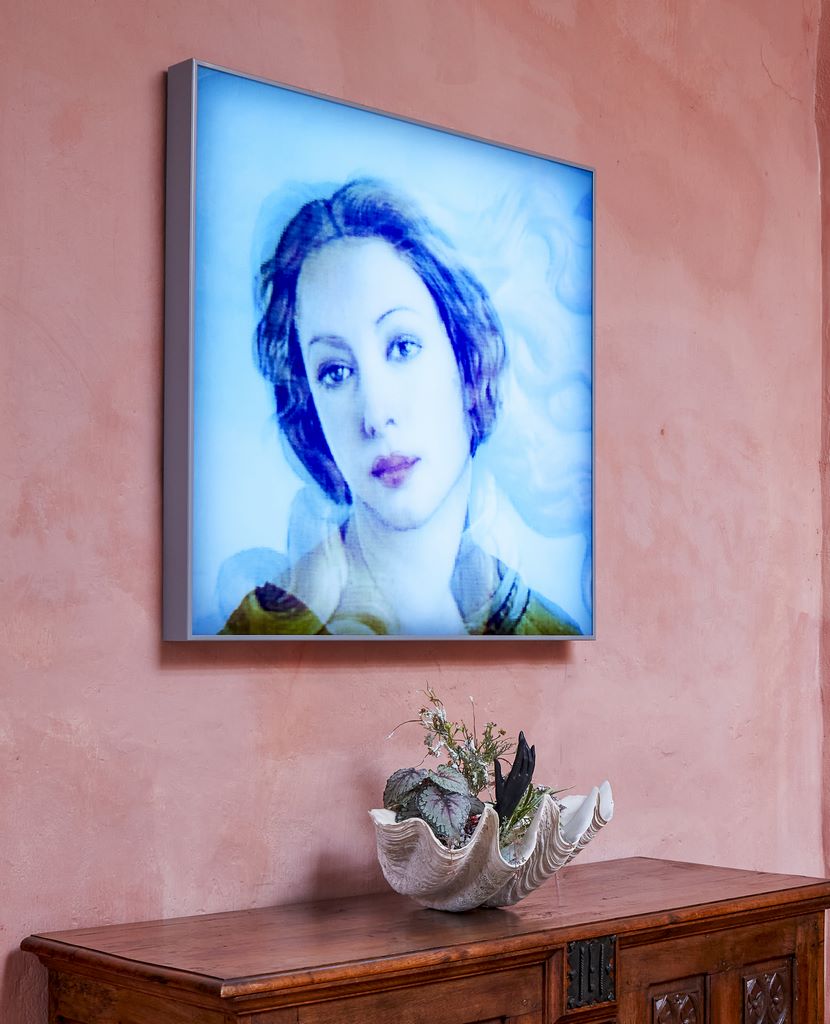
We also discover the Botticelli's Venus in a new light. ORLAN and Bianca Bondi offer their interpretation of this iconic painting. ORLAN using morphing: with this photographic software, the artist selected points on the image painted by Botticelli and matched them to her own image through the lightbox. Bianca Bondi proposes a new reading of the stoup that gives birth to Venus using a crystallisation process.
The Mona Lisa reinterpreted by Ange Leccia and Pierre Ardouvin
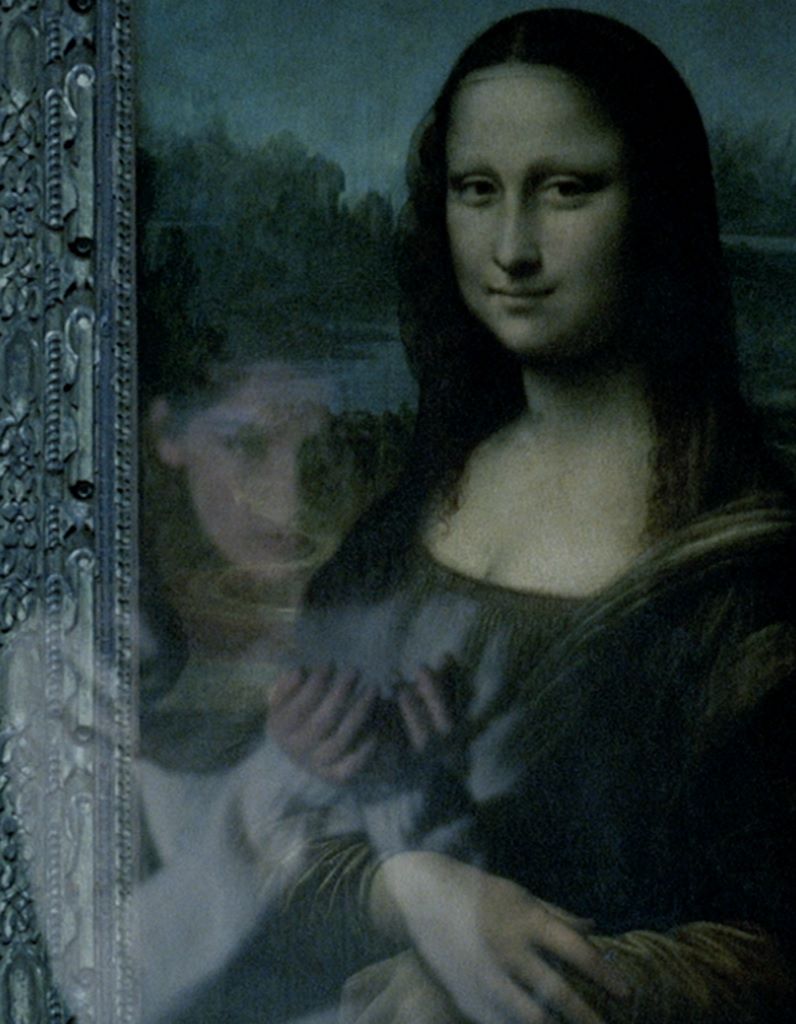
Ange Leccia and Pierre Ardouvin reconsider the iconic Mona Lisa, both through innovations in photography and the computer " A screensaver is both a reference to what computers automatically generate when you stop using them and a reference to the images they retrieve from their memory ", says Pierre Ardouvin.
The Lady with the Unicorn
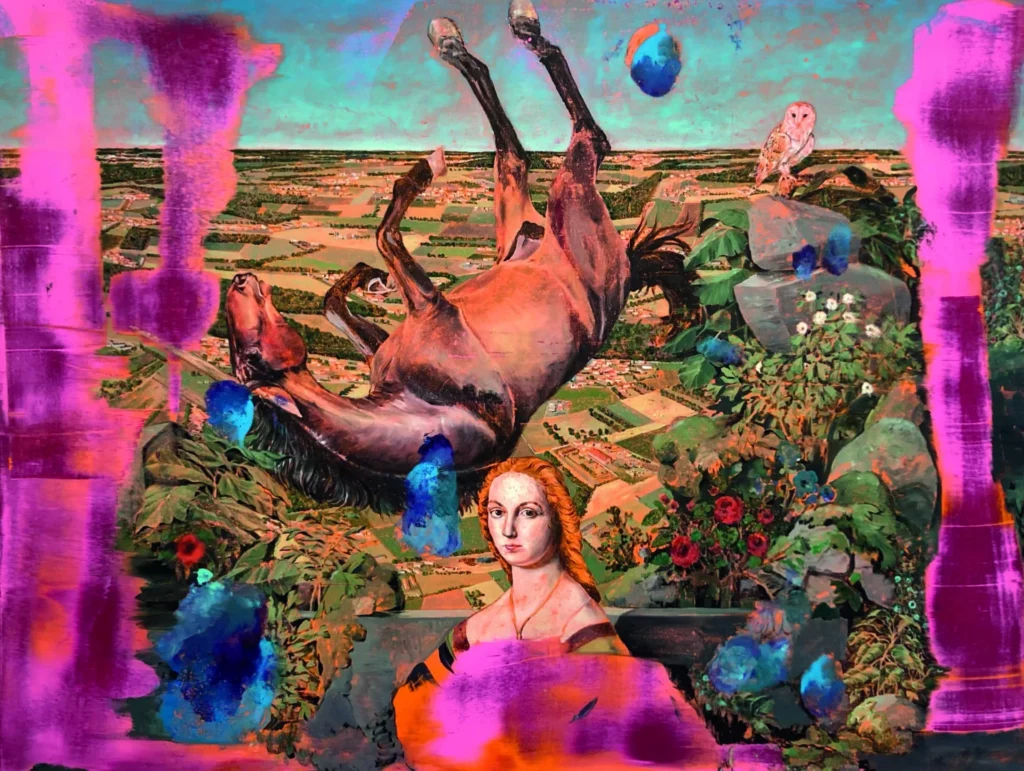
© Château du Rivau collection.
As for Julien des Monstiers, he freely evokes The Lady with the Unicorn by Raphael. The artist likes to experiment with the painting medium in his pictures, which include the surrounding rural landscape, the flowers of the Mille-fleurs Tapestries, and the unicorn, not white but berry-coloured, frozen in an interminable fall, as if rejecting the myth and freeing the Lady.
The Salle du Festin
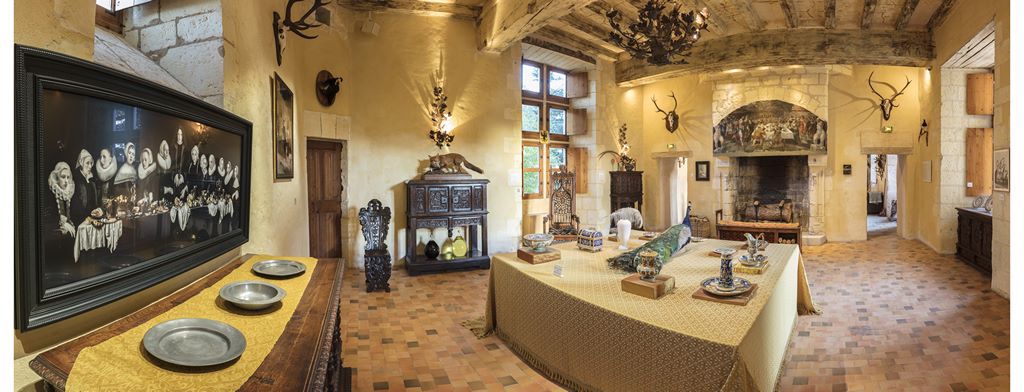
conviviality. On the left of the image, Dutch Last Supper restaurant at Sabine Pigalle.
Château du Rivau collection. © Château du Rivau.
Further on, the Feasting Room explores the theme of meals. Here, " The dutsh last supper "of Sabine Pigalle dances anachronistic faces in a Flemish composition, a parody of the Last Supper painted by Leonardo da Vinci. But the ladies of the Dutch Golden Age replaced the apostles. We are reminded of those meals where the guests shouldn't be getting along and yet are enjoying themselves. And just opposite, "Balthazar's Feast" where Rembrandttells of the pride of kings. A nod to the eternity of meals.
Hall of Portraits
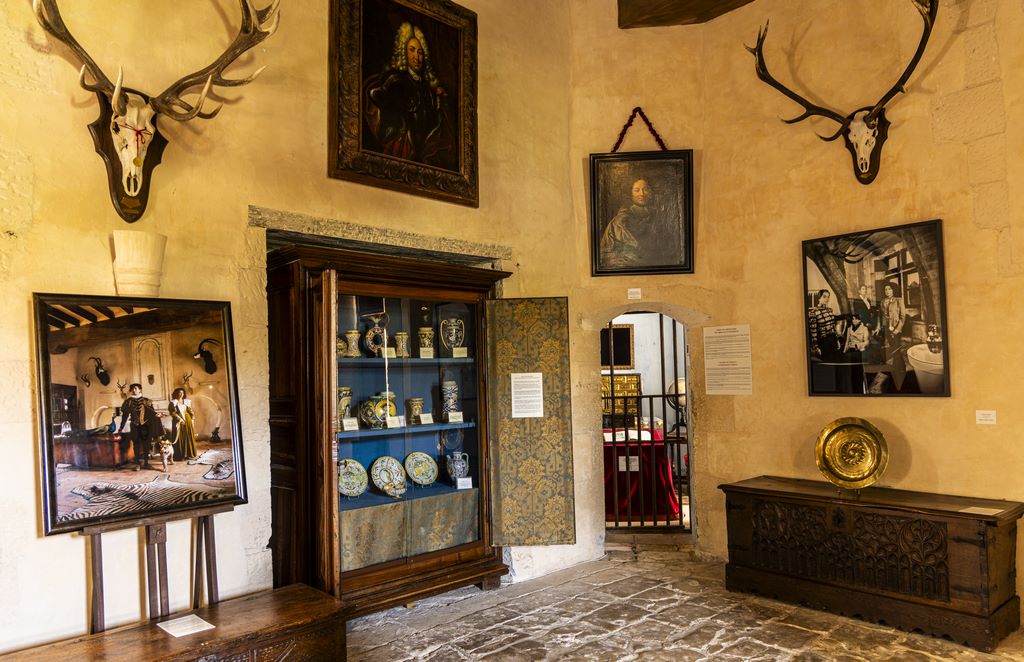
We enter the portrait room: the faces of the former lords of Le Rivau converse with those of the current family photographed by Valérie Belin, Delphine Balley's family scenes blend reality and fiction, Orlan's facetious transformations... We witness a dialogue between the centuries.
In this gallery of female figures, personifying in turn courage, the fabulous, beauty and mystery, slips an extraordinary object: the oversized crown by artist Vincent Olinet, adorned with stones with enchanting names. Lapis lazuli, tiger's eye and turquoise set this royal headdress, evoking treasures linked to the imagination of the marvellous.
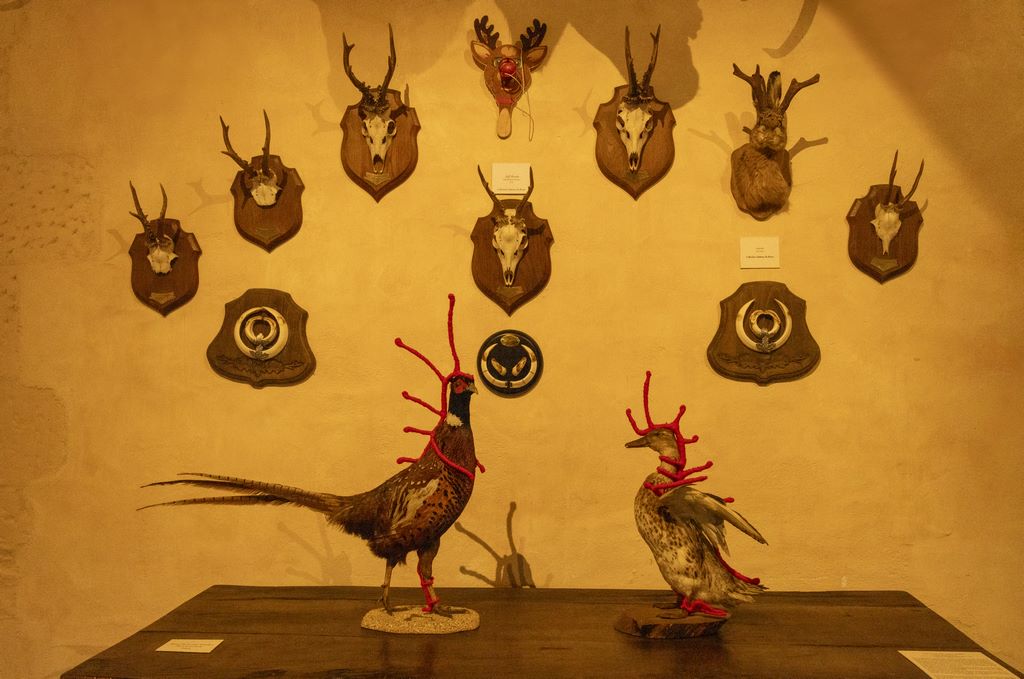
Above the chest, the American artist Jeff Koons has transformed a table tennis racket into Rodolf the Red-Nosed Reindeer, the hero of an Anglo-Saxon Christmas tale. The artist expresses the analogy between children's play and the animal figure. Jeffs Koons shows his obsession with the fetish animals of childhood and the role of the animal in the child's affect.
Fifteen outstanding gardens
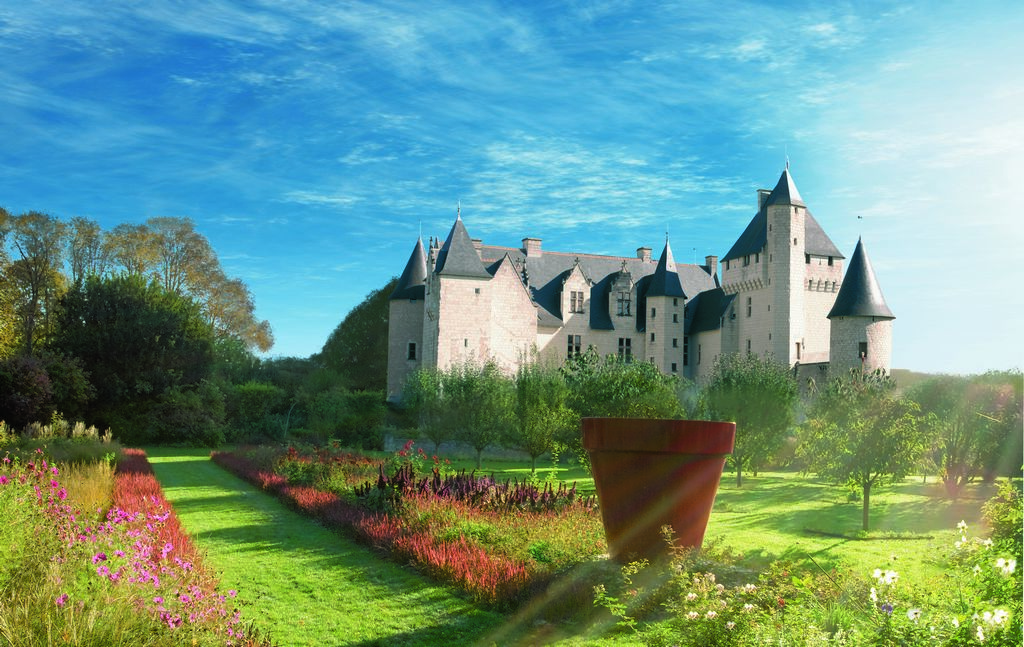
Labelled Remarkable gardenThis garden features fifteen tableaux vivants punctuated by monumental sculptures that plunge visitors into a dreamlike world inspired by fairytales, while preserving the horticultural heritage of the Loire Valley. These include Gargantua's kitchen garden, where ancient vegetables with forgotten names grow. The Unicorn Garden, with its mysterious white plants. Or the Petit Poucet garden, with its tall ornamental grasses.
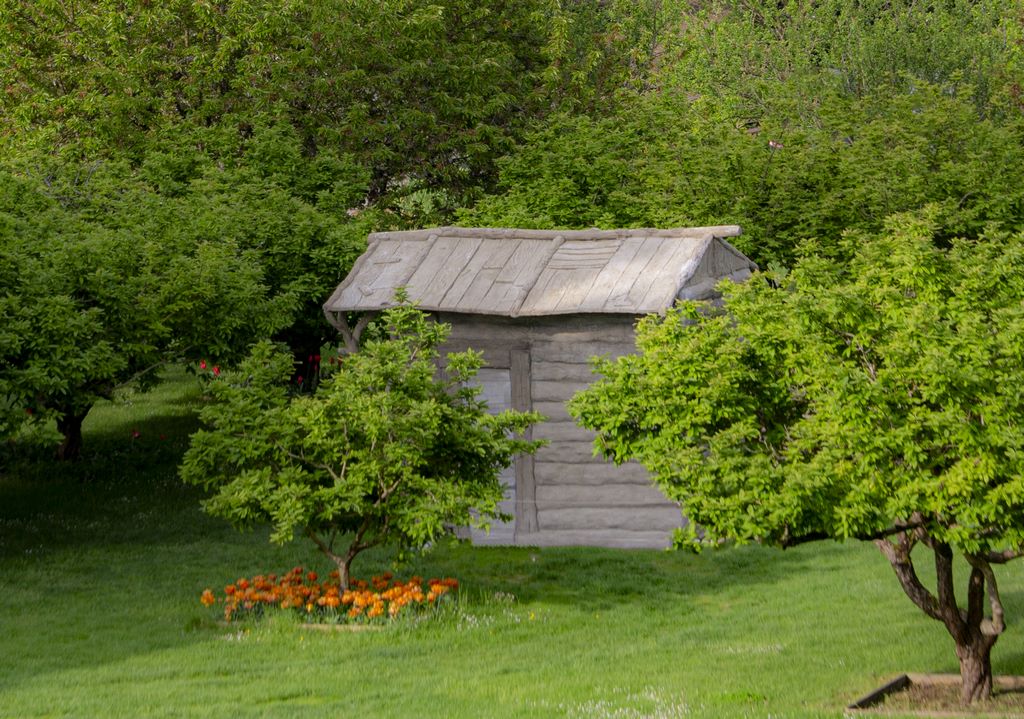
Further on, among the trees in the orchard, a hut of Julien des Monstiers, with one side which features a door in the shape of a goods container, a symbol of globalised trade, from the craftsmanship of yesteryear. Julien des Monstiers blurs the boundaries between fantasy and reality.
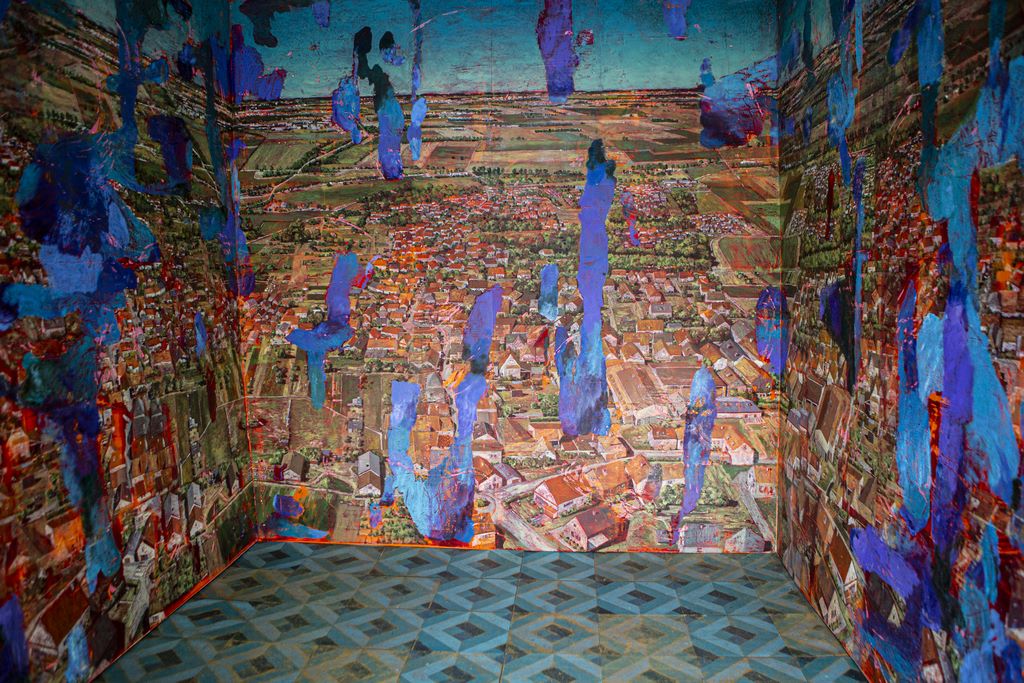
Each year, new pieces are added to the rooms on the two levels of the Château that house the exhibition. In this way, each season sees a renewal of plantations and works installed in the park or exhibited in the Château.
Equestrian jousting at Le Rivau
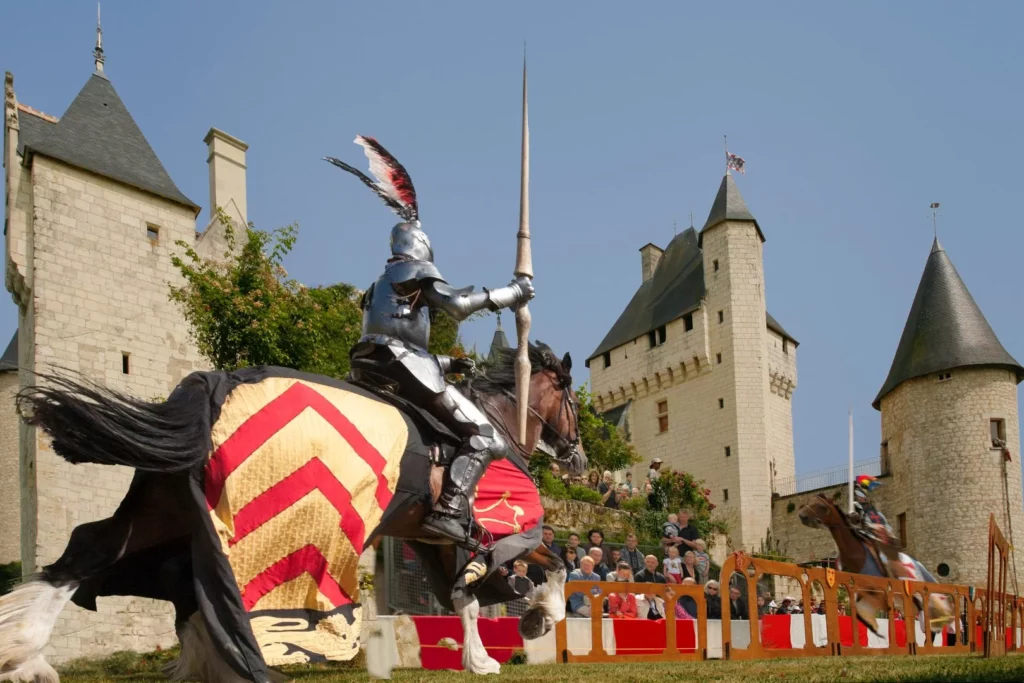
Every year, during a weekend in August, equestrian jousts and a medieval festival are held in the castle's moat and outbuildings. Here, the past doesn't sleep under a blanket of dust; it gallops, sings, blazes and invites everyone to sample the life and dreams of the Middle Ages thanks to the medieval festivals. Between centuries-old walls and gardens of legends, these festivities transport young and old alike in a whirlwind of equestrian jousting, craft markets and colourful shows.
Shining armour, outstretched spears, horses ready. The tournament begins. The two lords, of Rivau and Langeais, test their mettle in the golden dust of the moat. The riders galvanise the crowd. The clash of lances resounds, dry and vibrant, in a measured smash. It's a day of entertainment, but also a day of sharing: the public is just a stone's throw away, encouraged to choose a side, to thrill to the sound of multicoloured banners floating in the summer morning.
When the sun rises, the Scénoféerie de Semblançay, dressed in Medieval and Renaissance garb, glides through the avenues of the gardens, silky costumes, delicate gestures. The passers-by of legends play out their lively fable, like an ode to the imagination.
Sweets of yesteryear
In the gardens, campsites are springing up all over the place. A medieval market is set up in the courtyard of the outbuildings, the orchard and the wine press: 30 exhibitors, experts in the materials, colours and flavours of yesteryear.
A small kingdom has sprung up under a light canvas tent, perfuming the air with sweet and spicy scents. Here, the market's pastry chef is busy, the guardian of forgotten recipes, of honeys, dried fruits and spices from the Orient - cinnamon, cloves, nutmeg - that transform rare sugar into a feast. Her cakes, pastries and tarts are nothing like modern sweets: they are treasures of authenticity, tasty bridges between yesterday and today.
On the table, apple and walnut pies sit alongside honey crisps and dates stuffed with almonds. Lightly browned gingerbread glistens in the sunshine, while rose-scented cakes evoke the distant gardens of Arabia.
Visitors approach, drawn by the scent that tickles the nostrils and the warm welcome of the confectioner. She readily recounts the history of her recipes, handed down from mother to daughter, evoking the feasts of the lords as well as the simple meals of the villagers, where each sweet was a rare gift. In this medieval market, the confectioner is more than just a shop assistant: she is a transmitter of memory, a craftswoman who, through her hands and her dishes, tells the story of time, gives substance to the tastes of the past and melds the present with the echo of tradition.
Light at the Rivau medieval market
Under a canopy finely decorated with banners, the morning light is already playing with the colours. Here, seated behind a table covered with small tools, Céline works in silence. Her slender hands, stained with glass dust, manipulate tiny coloured fragments with almost religious precision.
She is a glass artist, heir to a skill that the masters of the Middle Ages reserved for church windows and the windows of princely residences. But here, at the market, she's turning this art form on its head to create decorative objects in Tiffany stained glass : Translucent medallions with stylised dancing flowers, tinted lamps diffusing a warm light, mirrors bordered by small chivalrous scenes.
Each piece is born of patience: choosing the glass, tracing, cutting. His movements are precise, almost choreographed. When a ray of sunlight grazes one of her stained-glass windows, the colours burst out onto the table, onto her hands and onto the amazed faces of onlookers. Passers-by stop, intrigued by this combination of tradition and novelty. Some leave with a small coloured pendant, others order a stained-glass window for their home, aware that this art requires a rare mastery.
Patricia Laigneau, the soul of Le Rivau
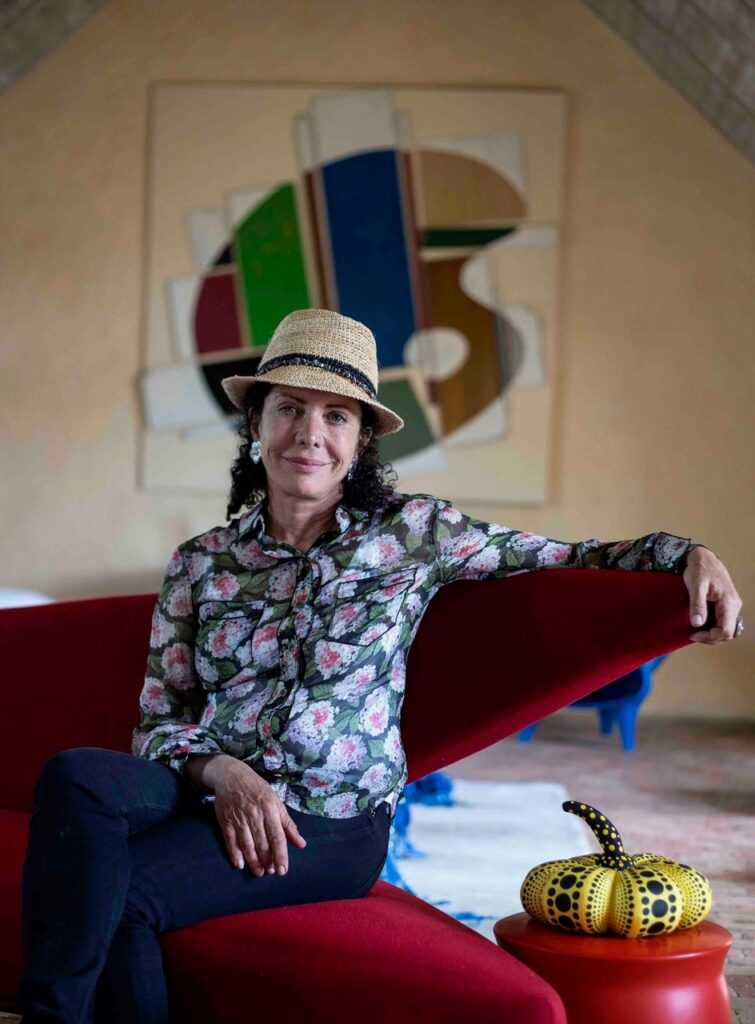
Patricia Laigneau has turned this château in Touraine into a unique setting where heritage and contemporary creation come together. For over twenty years, she has been presenting part of her collection, which brings together nearly eighty international and emerging artists. The approach of this passionate collector is characterised by a particular focus on the place of women in art and the issues of our time. Sculptures, installations and paintings weave their way through the fairytale gardens and gothic halls, creating a lively journey full of surprises. Patricia is a passionate advocate of contemporary art, and defends the independent spirit of this collection, which is often marked by a touch of humour and a sense of the marvellous.
In 2025, Le Rivau is full of surprises, with more than eighty astonishing works exploring historical themes through a scenography inspired by cabinets of curiosities and castle life. The theme of this year's exhibition at Château du Rivau is : Surprises at Château du Rivau.
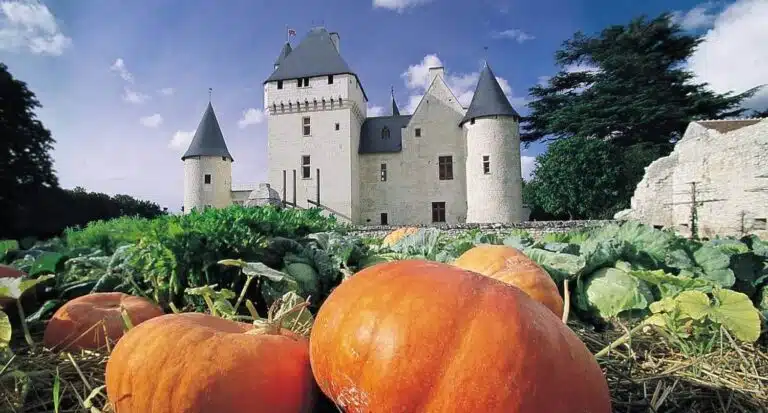
Next up: the Pumpkin Festival on 11 and 12 October 2025 in Gargantua's kitchen garden, where you can enjoy a colourful experience with pantagruelian pumpkins!
A 4-star hotel in the heart of a historic monument
In the Logis Renaissance, seven luxury double rooms have also been restored to their former glory, allowing visitors to stay and experience both château life and the ambience of a private collection of contemporary art.
Château du Rivau
9 rue du Château
37120 Lémeré
33 (0)2 47 95 77 47
Text: Michèle Lasseur