


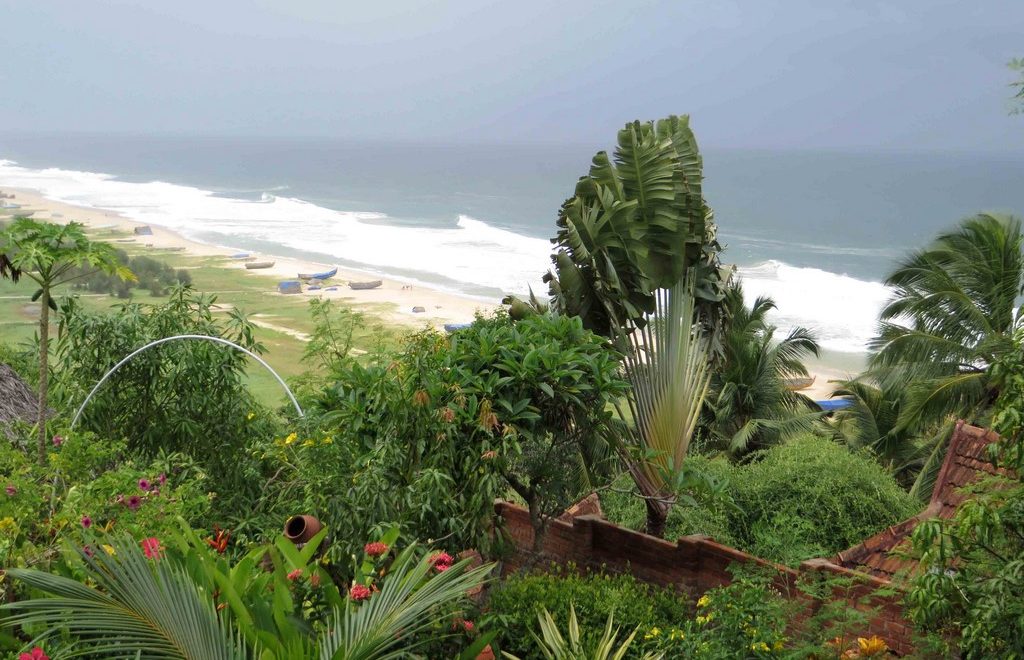
We went to Kerala, the cradle of Ayurveda, for an Ayurvedic cure. Three weeks of total immersion in a specialised centre: Somatheeram Ayurvedic Health Resort.
Table of Contents
After a 12-hour flight, we were plunged into a peaceful and enchanting world. A fresh coconut and a jasmine necklace as a sign of welcome, and we are escorted to our room in a Kerala-style house.

Traditional homes of the aristocracy of southern India, the wooden houses are open to nature. They are furnished with antique furniture.
A few hours' rest lulled by the rolling waves and we're ready for our first medical consultation. The treatment centre is wide open to nature (it's 30°C). In the waiting room, we meet other spa visitors from all over the world, as well as the doctors and therapists.
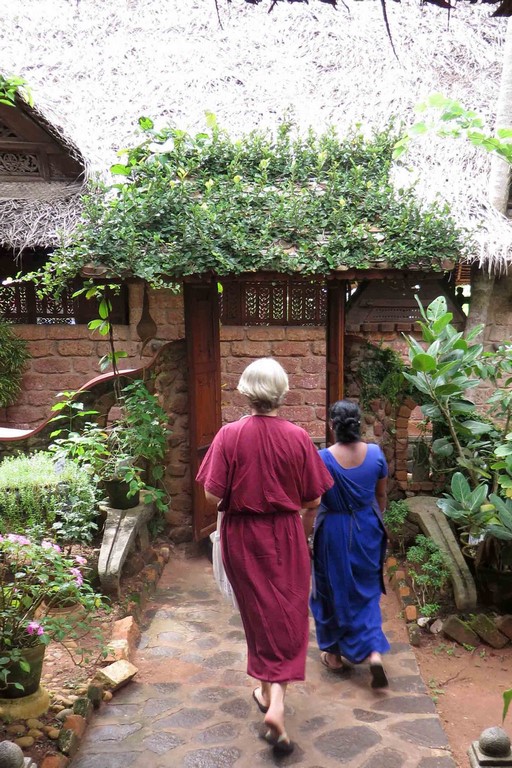
You can recognise everyone by their colour: the patients have a burgundy cotton bathrobe, the female therapists wear a blue sari and the male therapists wear trousers and a sand shirt.
Two doctors, one young and one more experienced, see each patient. Until recently, this ancestral knowledge was passed on orally in Sanskrit, from master to pupil. Today, aspiring doctors follow a curriculum that teaches them medical knowledge, how to cultivate and recognise plants and, of course, the principles of Ayurveda, the oldest medicine in the world (Ayurveda means the science of life; Ayur: life, Veda: science). In India, six years of study after the baccalaureate, followed by two years of internship, and at least two more years of practice are necessary before being declared an Ayurvedic doctor. It should be noted that some practitioners also hold degrees in 'conventional' medicine.
Determining the Prakruti
Before we are seen, we are given a booklet explaining the main foundations and philosophy of Ayurveda. The purpose of the first consultation is to determine our Prakruti, our basic natural constitution determined at the moment of conception from the five eternal elements (ether, air, fire, water, earth) that exist in the male and female gametes. We are thus endowed at birth with three fundamental energies, the doshas, which govern all our vital functions. Known by the Sanskrit names of vata (space and air), pitta (fire) and kapha (water and earth), they coexist in each of us in a unique combination, signalling our specific physical, emotional, intellectual and spiritual make-up. When their balance is preserved, the result is health, longevity and well-being. When this balance is disrupted (by our lifestyle, our diet, stress, the change of season, etc.), physical and psychological problems and illness(es) can occur.
According to Ayurveda, there are seven different types of Prakruti: three with a predominant dosha (pitta, kapha, vata), three that are a mixture of two doshas (vata/pitta, vata/kapha, pitta kapha) and one in which the three doshas seem to have an equal influence. What is treated as an illness in traditional Western medicine is considered, according to Ayurvedic teachings, to be a symptom and the consequence of an imbalanced dosha.
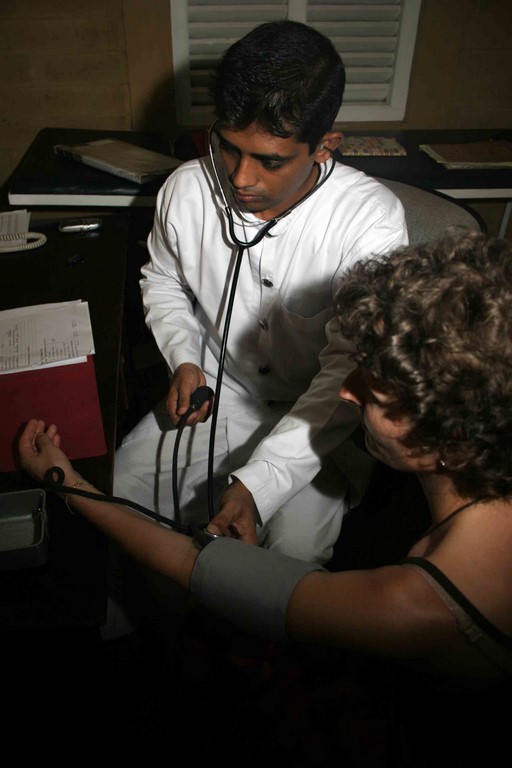
This young doctor begins the examination by taking the patient's blood pressure.
To establish a diagnosis and highlight any imbalance in the doshas, the practitioner relies on three methods: auscultation, observation of various physical signs and symptoms and a questionnaire on our state of mind and spiritual (not religious) practices. To establish our constitutional type, doctors first carry out a long and thorough auscultation: pulse, blood pressure, weight, tongue examination, heart examination, skin tone, eye size and colour, teeth and gums (normal-sized yellowing teeth are a Pitta attribute, large white teeth and strong gums are in favour of Kapha, for example), quality of appetite, digestion and transit, skin, nails, hair, strength of voice (weak, trembling voice and rapid elocution are in favour of Vata), and so on. For the pulse and heart, the head doctor checks the results announced by our young doctor.
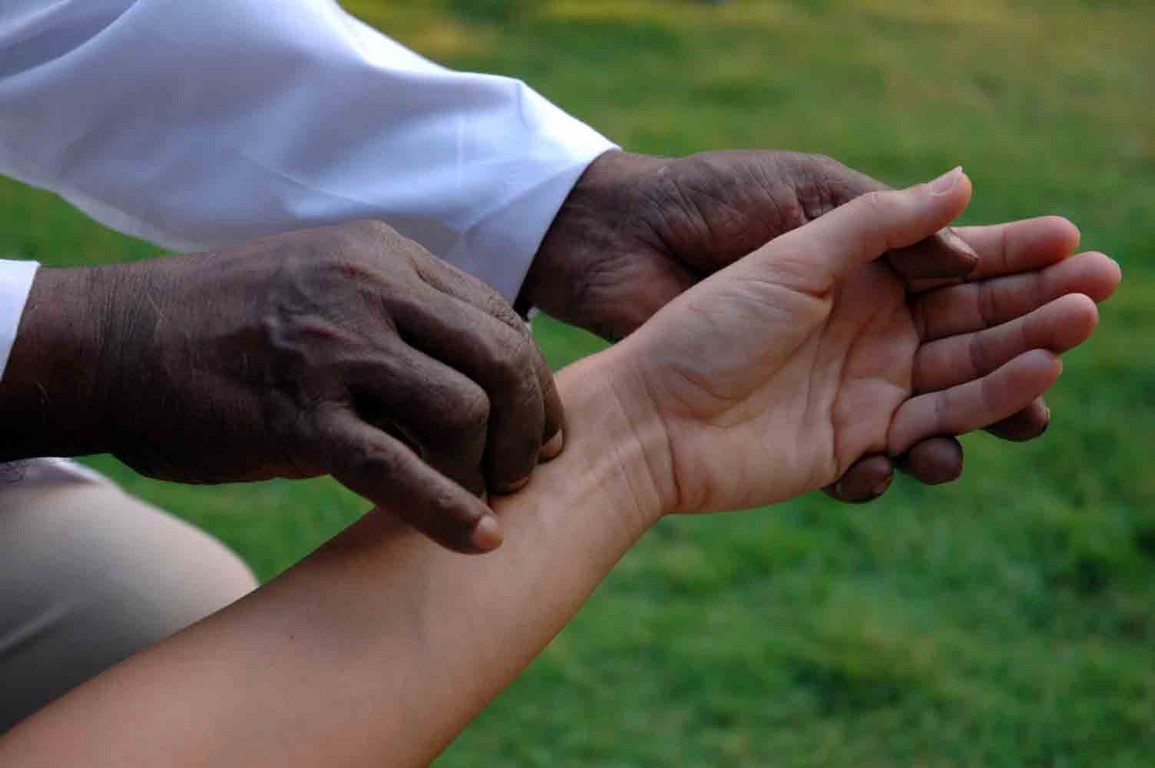
The diagnosis of the pulse (Nadi Pareeksa) is very important in Ayurveda," explains the Ayurvedic doctor. With experience, we can deduce the patient's inner physical state.
The constitution of the mind
This is followed by a questionnaire on family history, lifestyle, my dreams, my favourite tastes (acid, sweet, salty, bitter, spicy, astringent)? A few questions, sometimes quite unexpected, are used to assess my state of mind: am I optimistic or pessimistic, what are my reactions to failure, do I get angry easily, do I tend to express myself clearly or confusedly, am I anxious, is my memory good?
In Ayurvedic medicine, it's not just the three doshas that come into play. The mind too has its own constitution. The patient is always considered and treated as a whole.
A person's spirit is classified into three properties or qualities specific to the spirit, the Triguna: Satva, essence; Rajas, energy; Tamas, matter. Satvic is the highest and purest state of mind, which is very rare! But Ayurveda aims to guide us towards this state. This is why we are encouraged to practise meditation and yoga during the treatment. Ayurveda considers the body, mind and karma, and not just internal or external factors, as the cause of illness. Our practices require an equal relationship between ourselves and the people we treat," explains our doctor. We listen to what they have to say, and we don't think we know what they need to know!
Detox therapy
At the end of the first consultation I know that I am vata/pitta. An appointment is made on the same day to begin a detox cure and prepare the body for the complete detoxification treatment or Panchakarma. This treatment protocol aims to restore balance to the body and purify it in depth (Pancha means five and karma action, meaning the five original purifications (shodanas) which form the five stages of the treatment, but which today are no longer applied in their entirety due to a lack of time on the part of those taking the waters).
I am then entrusted to the expert hands of two therapists who will carry out my treatments throughout my stay. Up until the day of purgation, the ritual is always the same: after the daily medical check-up, I am given a glass of hot ghee to drink, clarified butter that some curists find difficult to swallow, but which in fact has a slightly nutty taste. The toxins accumulated in your body disturb the balance of your doshas," my therapist explains. Oleation with ghee removes impurities and liquefies them to facilitate their evacuation".
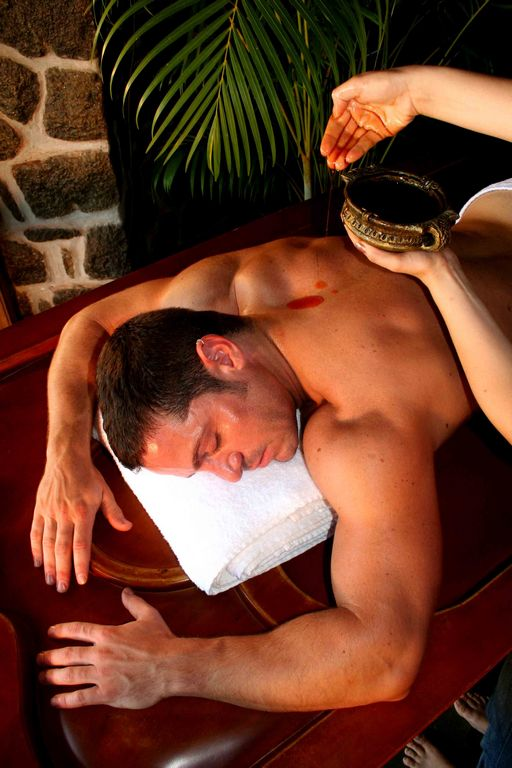
Although massages require complete nudity, they are carried out by therapists who respect the modesty of those taking the waters.
This is followed, for a week, by two to three hours of massage in a row every day with personalised oils made from plants chosen according to each person's constitution and specific needs. I used no fewer than 14 plants, including ginger, Asparagus racemosusThe exquisite fragrance and expert hands make these moments delightful. But it's not always a relaxing experience, because these massages (from the top of the skull to the toes) are not just pampering. The oils must penetrate deep into all the body's tissues to dislodge toxins, allowing them to migrate to the digestive tract for expulsion.
After each massage session, you should rest for an hour without taking a shower to allow the oils to penetrate your body properly. Of course, throughout your stay, smoking, tea, coffee, alcohol, television, radio, sea bathing and sunbathing are not recommended. Totally vegetarian meals and Ayurvedic medicines are part of the medical treatment.

Somatheeram buffet. The dishes depend on our nature and the reasons why we are taking a course of treatment.
Apart from the raw vegetables and herbal water available to every guest, the menu is individual but varied and prepared according to the traditional texts of Ayurveda. It's not always easy to change your diet from one day to the next. But the enchanting surroundings, the fact that you are following a cure with a defined goal, and the attention of the therapists, quickly put things into perspective. You let go and forget your bad habits. Little by little, we discover the art of taking care of ourselves.
Purging and regeneration
After a 15-20 minute herbal steam bath to liquefy toxins (ama) (subject to medical advice, as not recommended for people with heart or circulatory problems), and after this crucial stage of preparing the body, comes the famous purgation day (contraindicated for pregnant women), the subject of many amusing conversations between curists. In principle, this procedure only lasts a day, and is used to eliminate the impurities that have accumulated in the intestines. It starts early in the morning, around 7am, so as not to cut into a night's sleep. The purgative consists of castor oil combined with various plants. Once everything has been evacuated and the stools are nothing but water (which takes between 4 and 8 hours, depending on the individual), you can gradually eat again. First by drinking coconut water, which is very rich in trace elements, then by eating a very light rice porridge.
After purification, regeneration is necessary to stabilise the doshas. The aim of this stage is to restore the body and mind to a state of harmony with nature, and to prevent illness. Meditation plays an important role here. It helps to eliminate the mental ama created by negative emotions. It's important to remember that Ayurveda focuses on the physical, emotional and spiritual levels, while diet and lifestyle remain essential.

Navarakizhi is a full-body massage performed using small cloth bags containing a preparation made from narva rice (Kerala rice) and milk.
Over the next two weeks, we will be given a variety of massages using vegetable oils, plant-based powders, medicated goat's or cow's milk and medicinal oils derived from plant macerates. To name just a few: Udvarthanam (energetic massage performed with medicinal herbal powders by two therapists in cases of obesity and rheumatism) or lepanam (body wrap with a paste of medicinal herbs, very effective in inflammatory diseases). It's worth noting that different massages can be performed in the same session.
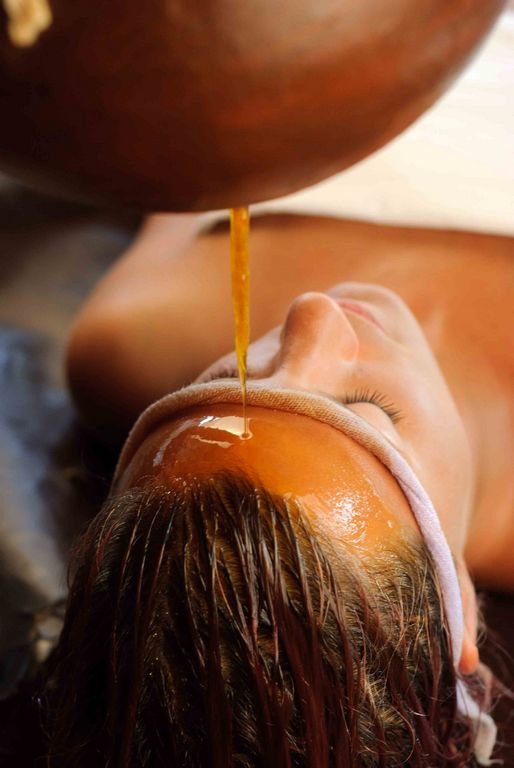
Shirodara (a slow, steady stream of warm oil macerated with herbs on a specific point on the forehead) provides intense relaxation.
As well as slimming and detox programmes, the centre offers cures for psoriasis, back and neck pain, and even a beauty programme... Is a cure on its own really useful? Yes, I'd say so, because it helps to eliminate toxins that may have accumulated over years. Western culture doesn't teach us to do this on a daily basis. Session after session, muscular and nervous tensions are released. In the end, you leave with a real sense of physical and psychological well-being. What's more, the cure gives you the keys to making gentle changes to your eating habits and lifestyle.

Bungalows and villas are scattered around a superb tropical garden overlooking the ocean.
The Somatheeram Ayurvedic Centre has been awarded the title of "Best Ayurvedic Centre" by the Kerala government for the quality of its treatments every year since it opened. http://www.somatheeram.org
 Three doshas: VATA, PITTA, KAPHA :

- VATA is the element of air and space or ether, the principle of movement, breathing, circulation and thought.
- PITTA is the fire element and water controls metabolism and digestion.
- KAPHA is the element of water and earth controls the structure of the body.
The three doshas are present in every cell of the human body. They link the human being to nature and the universe. Good health depends on the balance of the three doshas.
Text: Brigitte Postel
Photos: Brigitte Postel and Somatheeram (Men's massage and Shirodara photos).
Contact
Anne Kanjookkaran Vanackere + 33 6 30 34 53 28
amsha@amshakerala.com
www.amshakerala.com

Hello. Could you tell me the price of the cure in India?
Hello, you can find the rates by following this link: https://somatheeram.org/images/downloads/somatheeram-tariff-en-2017-2018.pdf