
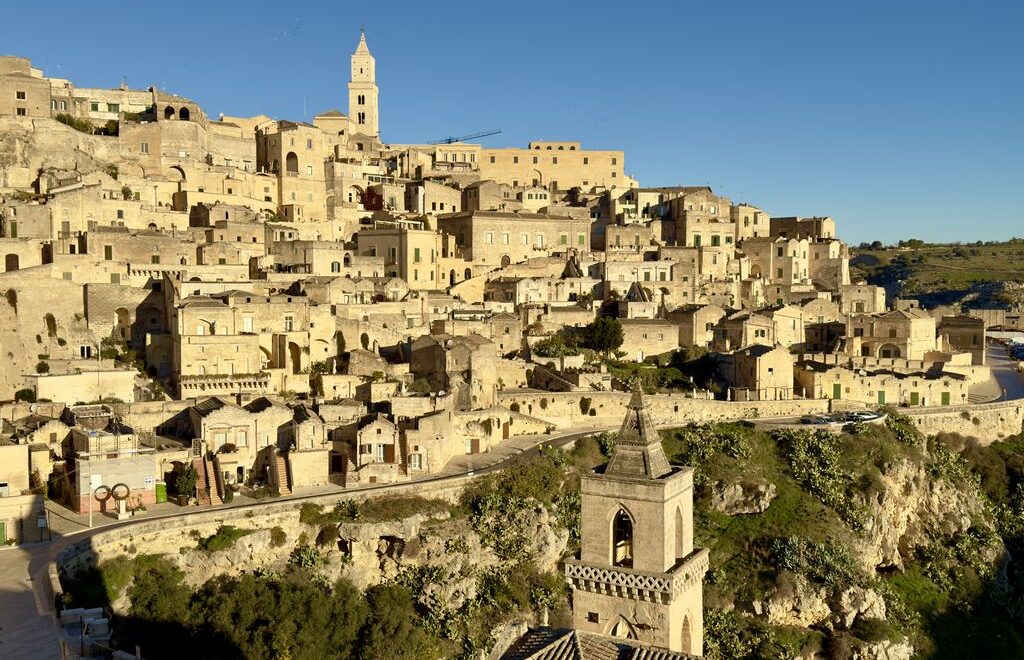
Far from the crowds of Venice or Tuscany, let's set off to discover Basilicata, one of Italy's most mysterious regions. Between the limestone magic of Matera and the antique elegance of Venosa, We explored this neglected region, where stone is art and hospitality is a time-honoured tradition. A moving immersion between glorious past and cultural renaissance. Surprisingly, France's provinces have left their mark here...
Table of Contents
The soul of Matera. Watch the video below The Soul of Matera by STEFANO RICCI .
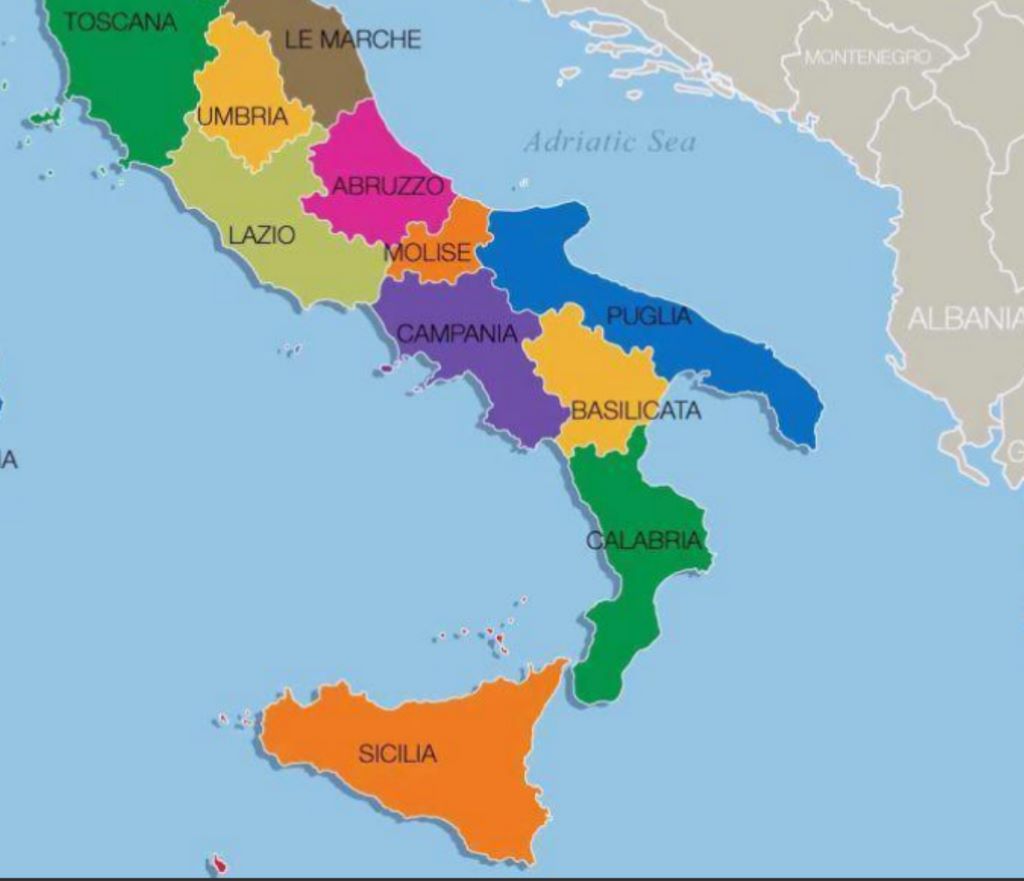
The history of the Italian region of Basilicata, formerly known as Lucanie, named after the Lucanian people, spans thousands of years. Marked by its status as a strategic region between two seas, it has also known isolation and destitution. Inhabited as early as 1300 BC by the Greeks, who established colonies here to form «Magna Graecia» or Magna Grecia, Then, around 800 BC, it was colonised by the Romans.
The name Basilicata comes from the Greek word Basilikos , During the period of Byzantine domination in the 11th century, the town came under the control of the Byzantine kings and governors. In the 11th-12th centuries, it came under Norman control, then in the 13th century under the House of Swabia with Frederick II, which will promote cultural development, before giving way to the ... Angevins who came from France to found a dynasty by marriage, which was itself replaced by the Aragonese from the Iberian Peninsula. Until Italian unification in 1861, Basilicata was part of the Kingdom of Naples, and Kingdom of the Two Sicilies. Considered a remote and impoverished region, it served as a place of exile for opponents of the Fascist regime, including Carlo Levi, author of the famous Christ stopped at Eboli , in which he describes the misery of the Mezzogiorno and the extreme destitution of the inhabitants of Matera, holed up in insalubrious troglodyte dwellings.
Matera: 9,000 years of history carved in stone
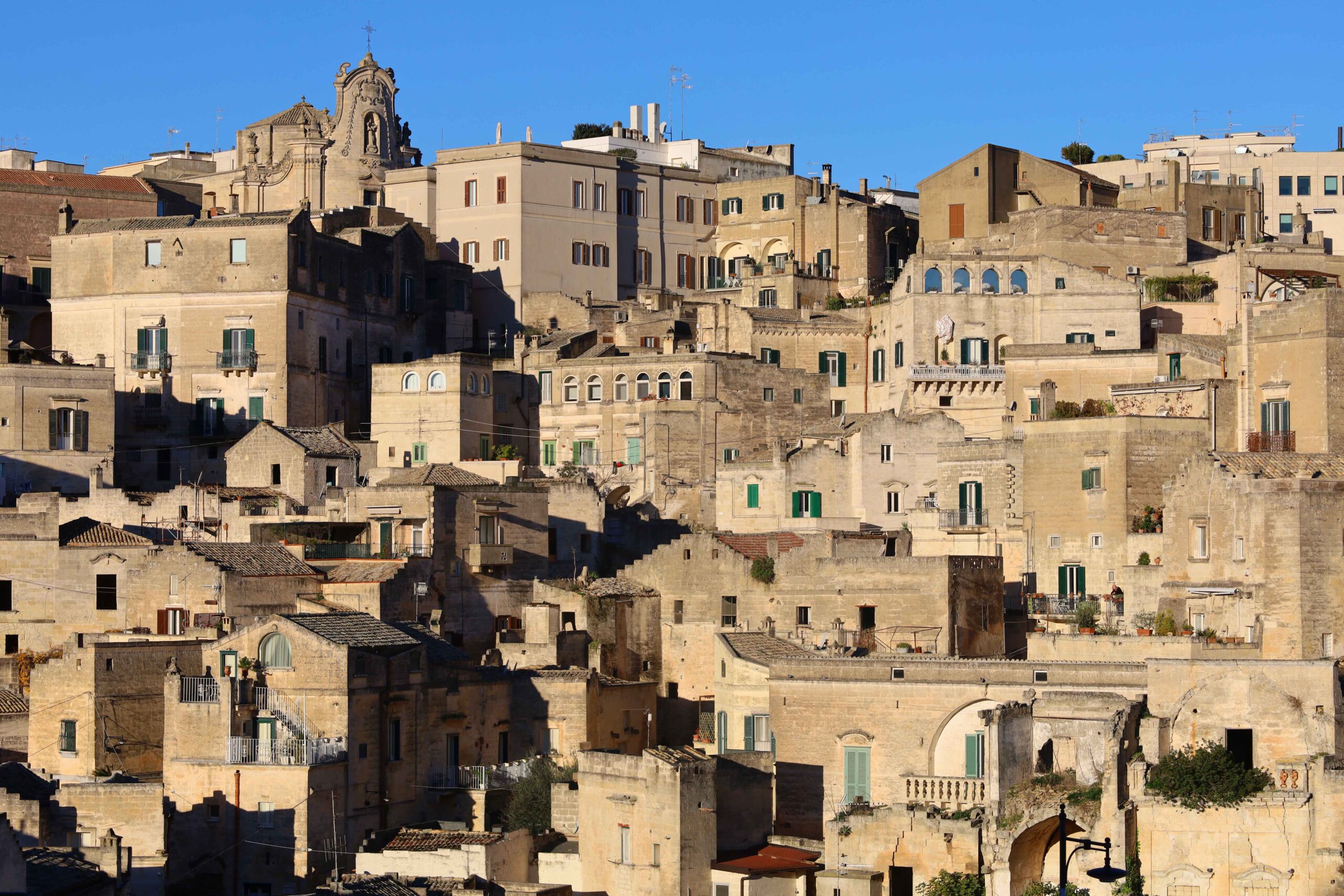
Applauded by discoverers of remarkable and unique tourist sites for its Sassi (Matera is one of the oldest inhabited towns in the world, a site that has been continuously occupied since the Palaeolithic era, with the first inhabitants living in the natural caves on the Murgia plateau and in the Gravina ravine.
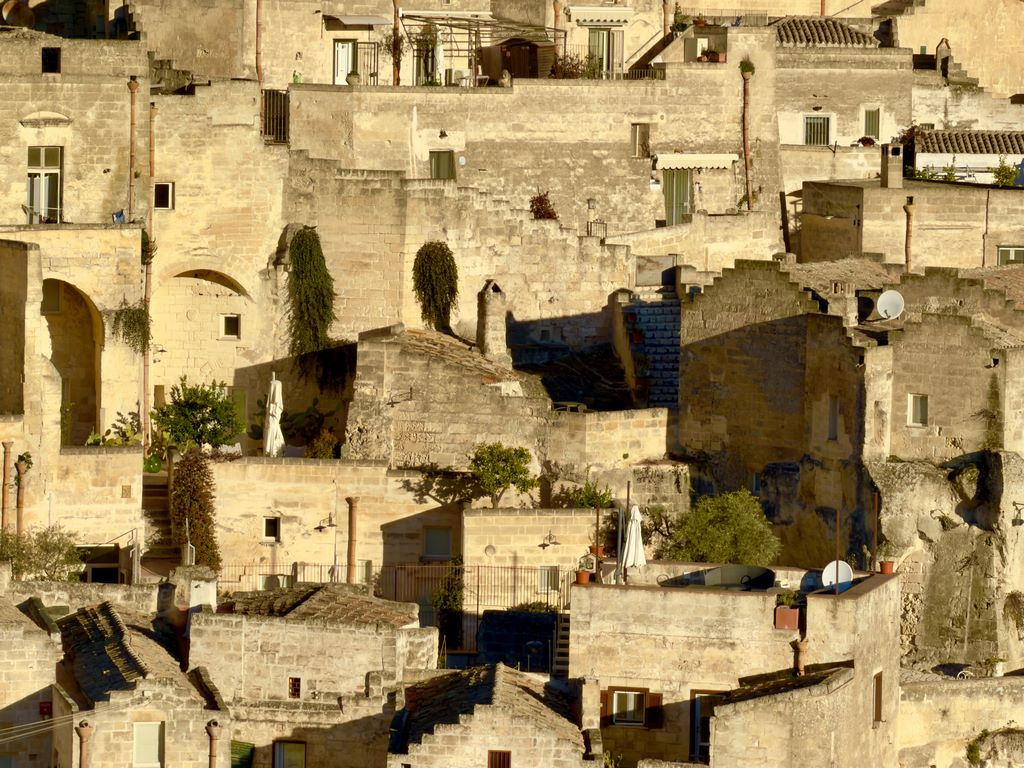
In Matera, the word Sassi doesn't refer to just any stone, but specifically to the two ancient districts that make up the historic heart of the town: Sasso Caveoso and Sasso Barisano, remarkable for the fact that the houses and places of worship there were carved directly into the soft limestone rock of the hill, tufa.
Matera, from medieval splendour to forced exile
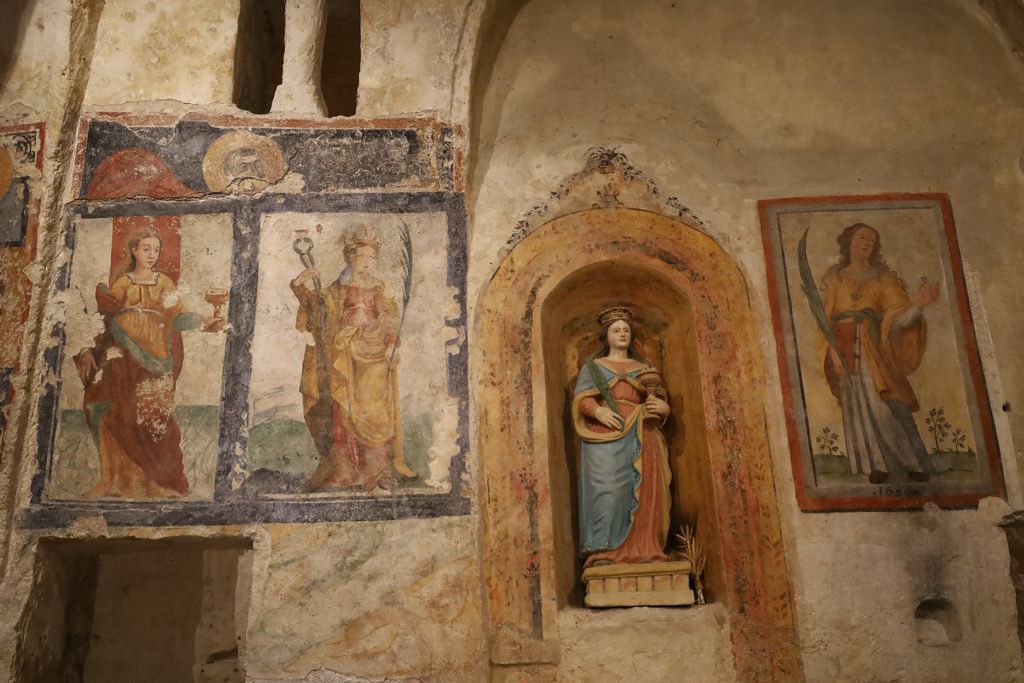
«In the Middle Ages, the town underwent a significant expansion with the development of monasteries and rock churches carved out of the rock and decorated with frescoes, often of Byzantine influence».», Porzia Grossi, a French-speaking guide from a middle-class district of Matera, explains in a nutshell. Without a compass, she leads her pupils through the jumble of staircases, alleyways and overhanging terraces that tumble down endlessly from the cathedral, from which nature, hungry for topsoil, has been excluded apart from a few planters. The floors, made of limestone worn by years and clogs, are slippery on rainy days. Porzia often advises visitors to be vigilant and wary between two anecdotes about the history of her town. «In the 20th century," she continues, "the Sassi became a symbol of abandonment and poverty. so extreme that in 1950, the Prime Minister Alcide De Gasperi denounces living conditions as «una vergogna nazionale», a «national disgrace» translates it...! The government then decided to relocate the population, willingly or not, to new areas.
A legacy of memory
To find out more, visit the vast Ricci shop. It sells the full range of souvenirs, objects and local products needed to whet the appetites of tourists from all over the world who have come to discover the 2019 European Capital of Culture.
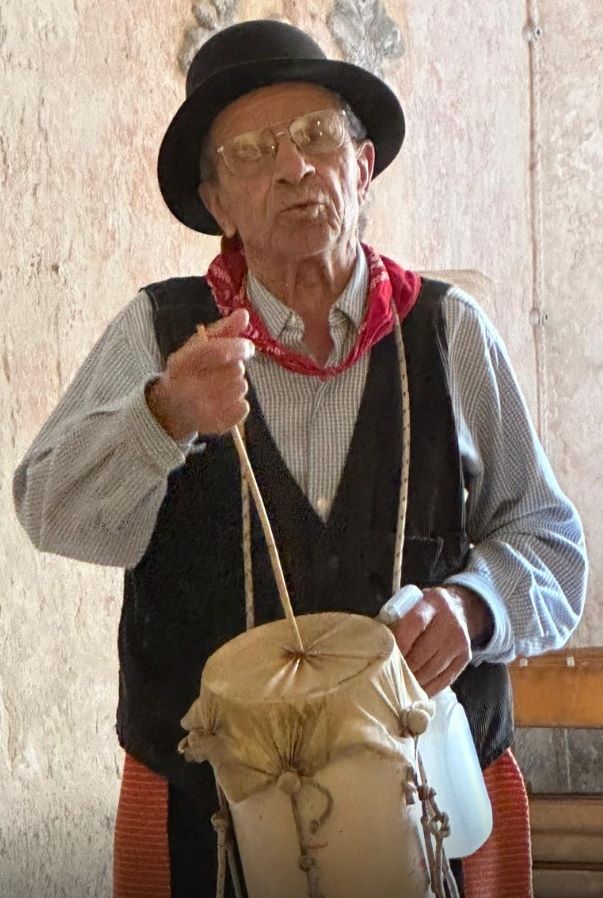
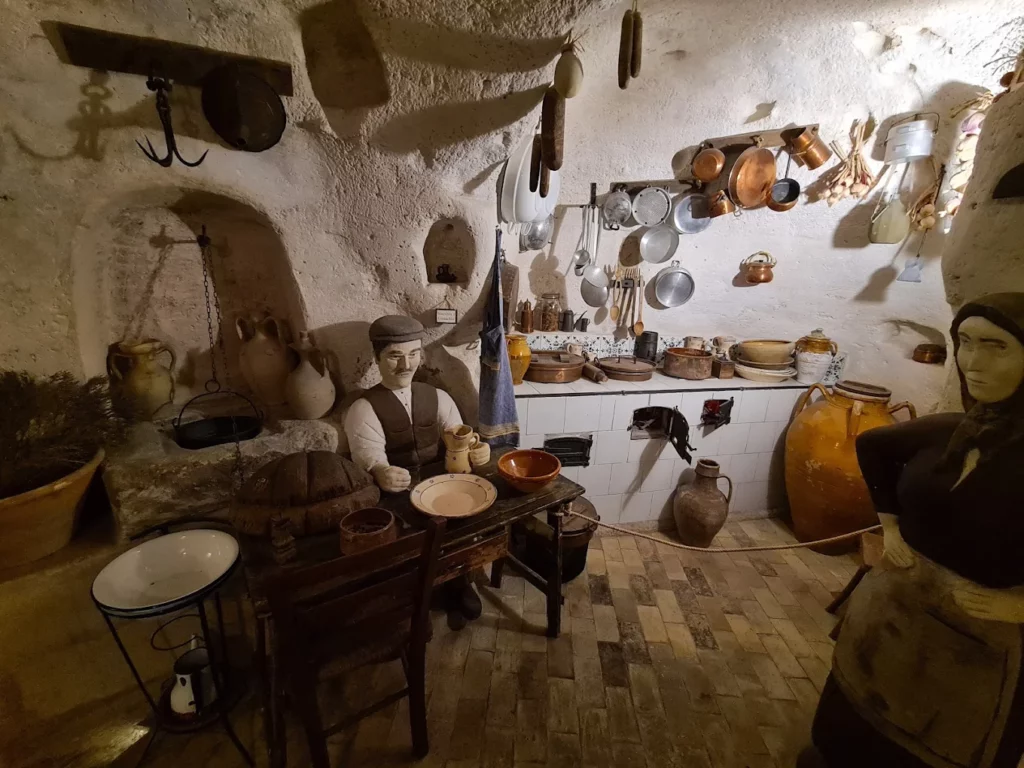
Eustachio Ricci, born in 1936, is the undisputed patriarch of the line of «bimbelotier» grocers who took over from the modest household he formed with his late wife. « At the time, I was a modest twenty-year-old stonemason, explains Eustachio. I dug caves and sold the limestone to build terraces. In 1956, I accepted an offer to swap a typical 70 m² house in the new Bottiglione district for our dark, unhealthy, damp grotto.. Sadly, we lost the neighbourhood life, the mutual aid and good neighbourliness that compensated for our misery... Some refused the offer but, evicted by court order, they only received expropriation compensation...... But I missed my Sassi. Later, I obtained permission to set up a small museum opposite our shop, a cave that I rebuilt exactly like the one we had had to leave. Using furniture and objects that had been preserved, and with the help of neighbours, I also sculpted in tufa this replica of the donkey that shared our lives and warmed us in winter... ».
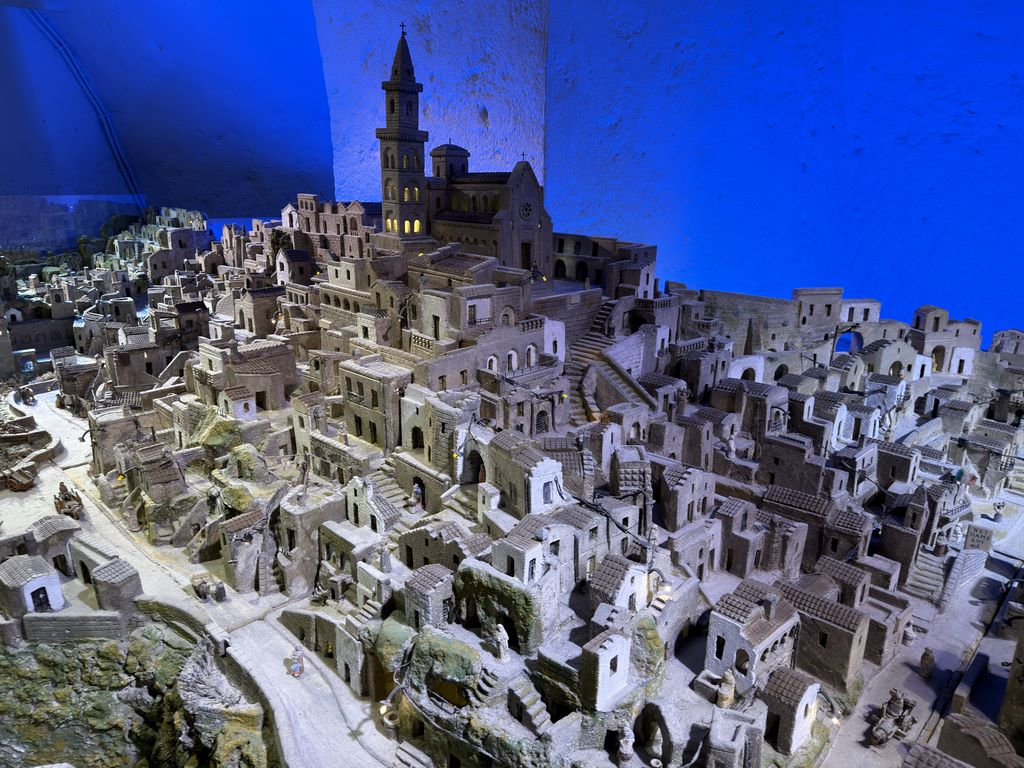
This Materano has managed to turn the corner on the tourism revolution, a revolution that will ensure the long-term survival of our most remarkable sites, but which could also lead to their becoming «dysneylandised» and «airbnbised»...
French footprints in Basilicate
Little known, the French influence in Basilicate was felt during two major periods in Italian history.
During the Angevin period (Late Middle Ages)
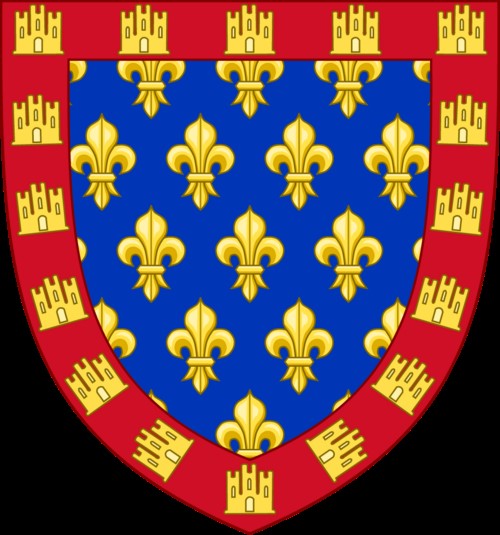
After the Swabian line died out, southern Italy (the Kingdom of Naples, including Basilicata) came under the control of the House of Anjou. Charles I of Anjou (brother of Louis IX) became King of Naples and Sicily in 1266. This rule, although marked by revolts and constant rivalry with the Aragonese, introduced administrative and feudal structures typical of the Angevin system, which meant allegiance to the French crown during this period.
During the revolutionary and Napoleonic periods
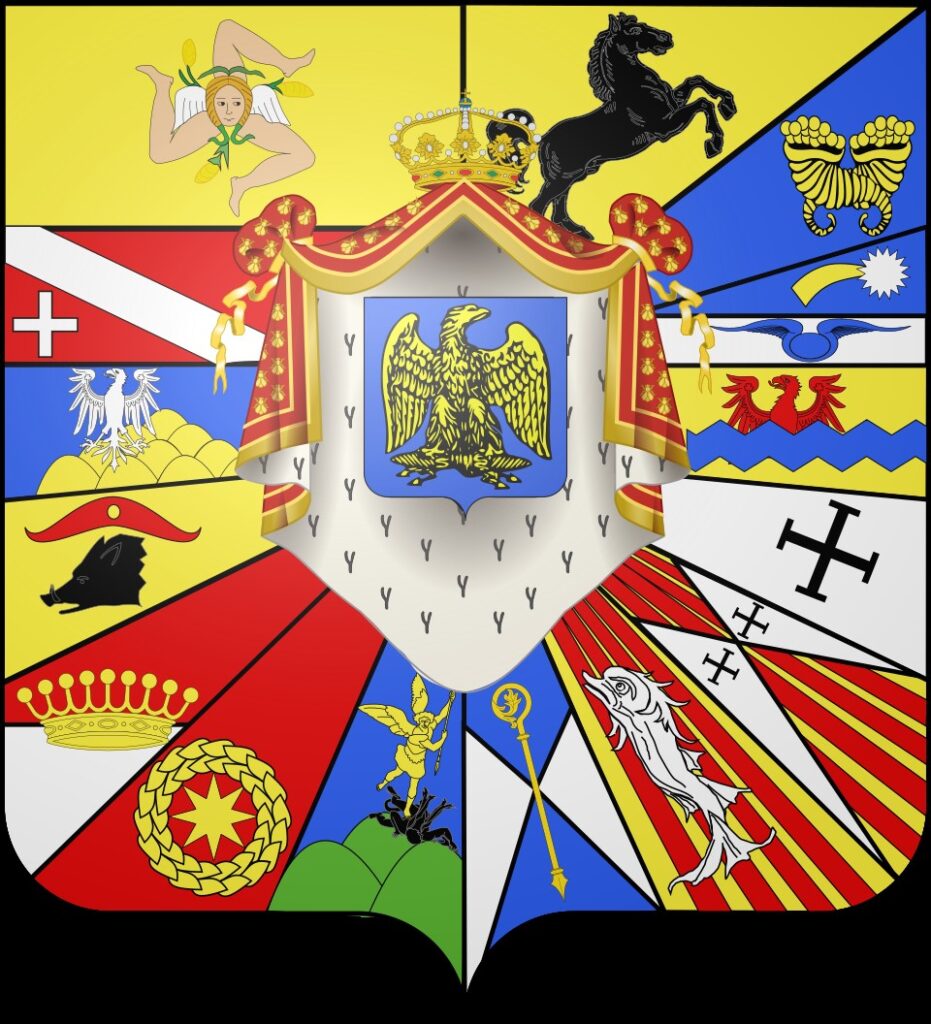
The most structuring impact occurred during the French Revolution and Empire, when Basilicata was part of the Kingdom of Naples. In 1799, a Parthenopean Republic (pro-French) was briefly established in Naples from 1806, Joseph Bonaparte, brother of Napoleon then Joachim Murat, the marshal of the Empire, reigned over the Kingdom of Naples. The Napoleonic period brought modern political and administrative reforms (codification of laws, abolition of feudalism). Thousands of Italians were conscripted into Napoleon's army and the army of the Kingdom of Naples to take part in the Empire's campaigns. This military participation had a demographic impact and exposed the population to new political ideas. Basilicata, like other southern regions, experienced armed uprisings against the French occupation (the Sanfedismo), often motivated by resistance to requisitions and conscription and in favour of the dispossessed Bourbons. French influence once again became crucial during the Risorgimento or the process of Italian unification in the 19th century. Napoleon III played a decisive role in providing military support to the Kingdom of Piedmont-Sardinia (Camillo Cavour) against Austria during the Second Italian War of Independence (1859). Although Basilicata was conquered by Garibaldi (Expedition of the Thousand) the French military intervention weakened Austria and created a favourable context.
What can you do on a holiday in the Sassi of Matera?
First, explore the two main Sassi di Matera on foot, wearing good shoes as the gradients are steep and the cobbles can be slippery. Sasso Caveoso, the most spectacular part, is full of overlapping caves and seemingly anarchic buildings. The Sasso Barisano, more restored, is rich in Baroque palaces and rock churches.
Visit a casa grotta
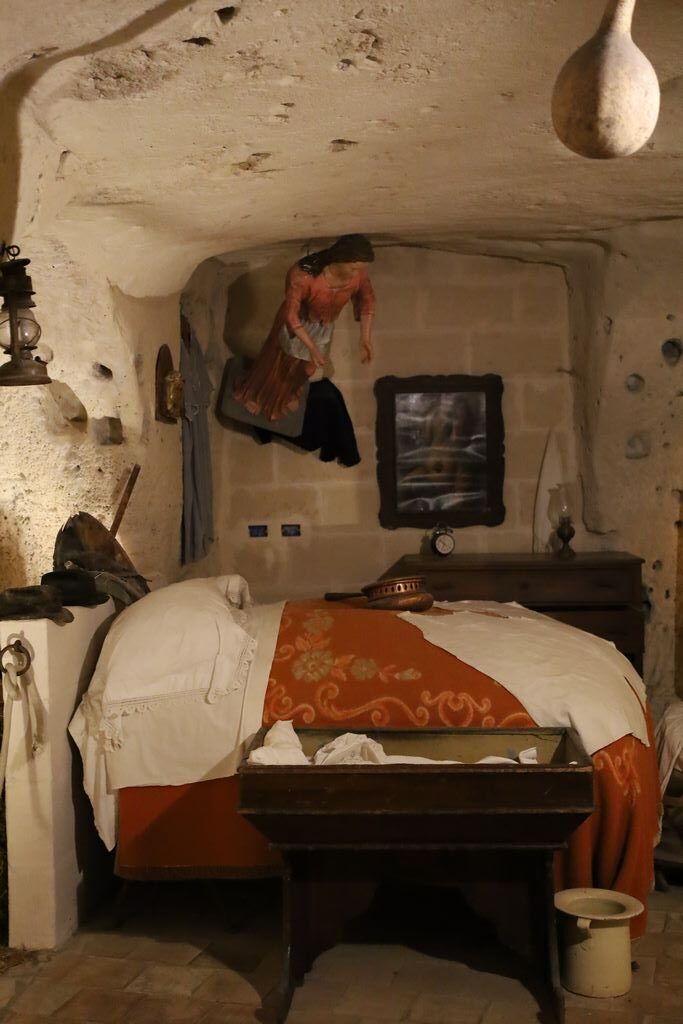
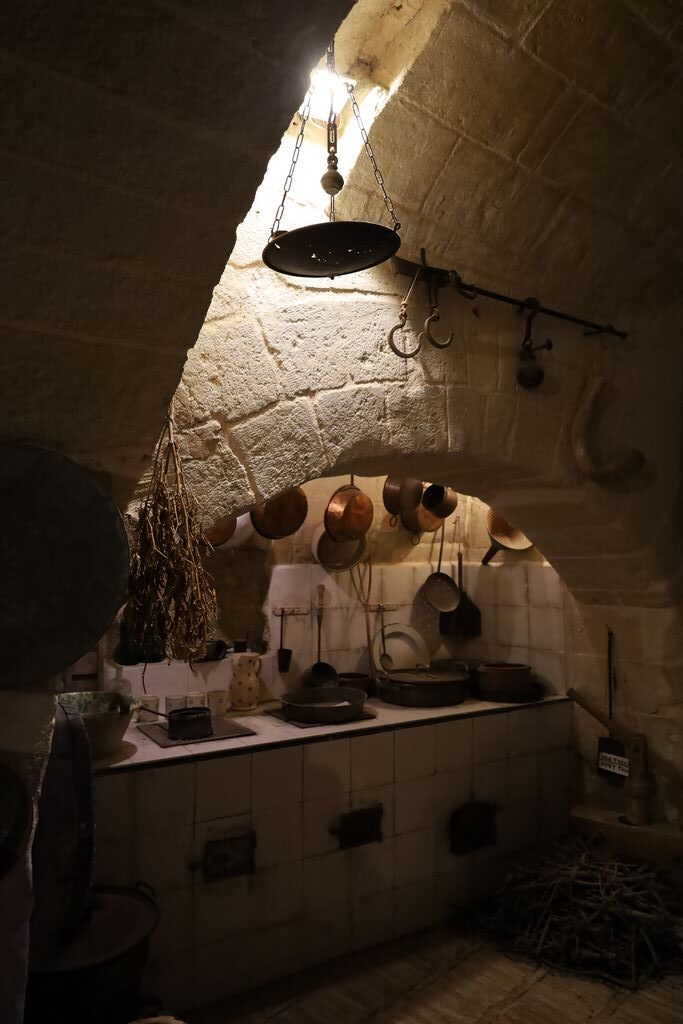
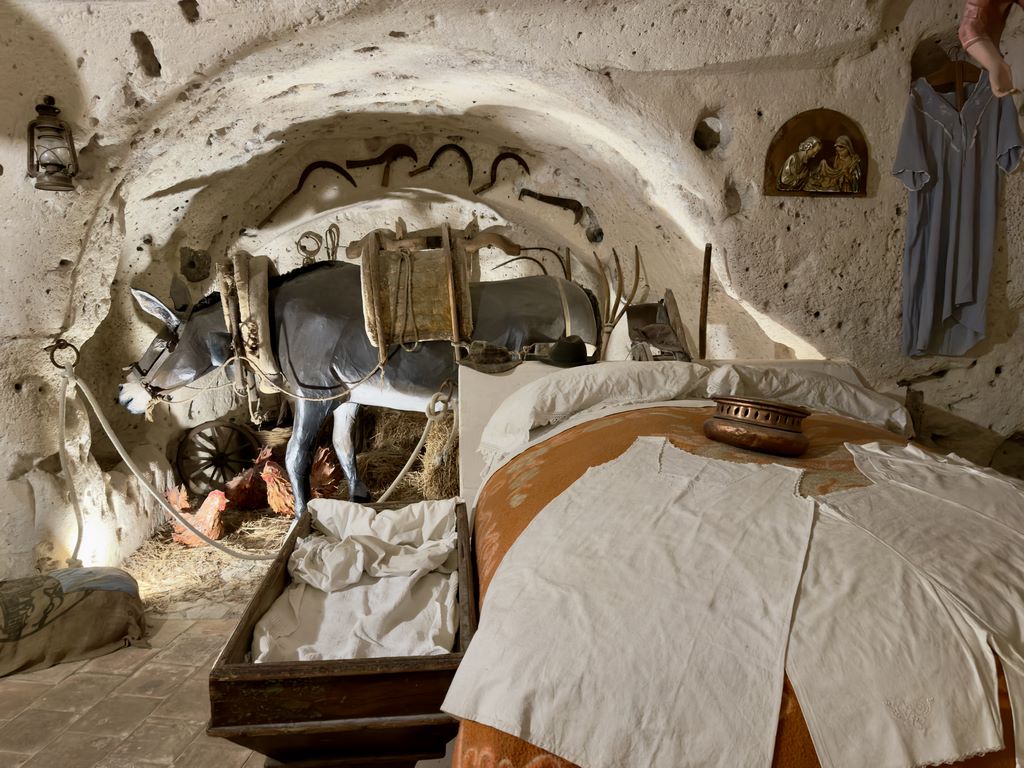
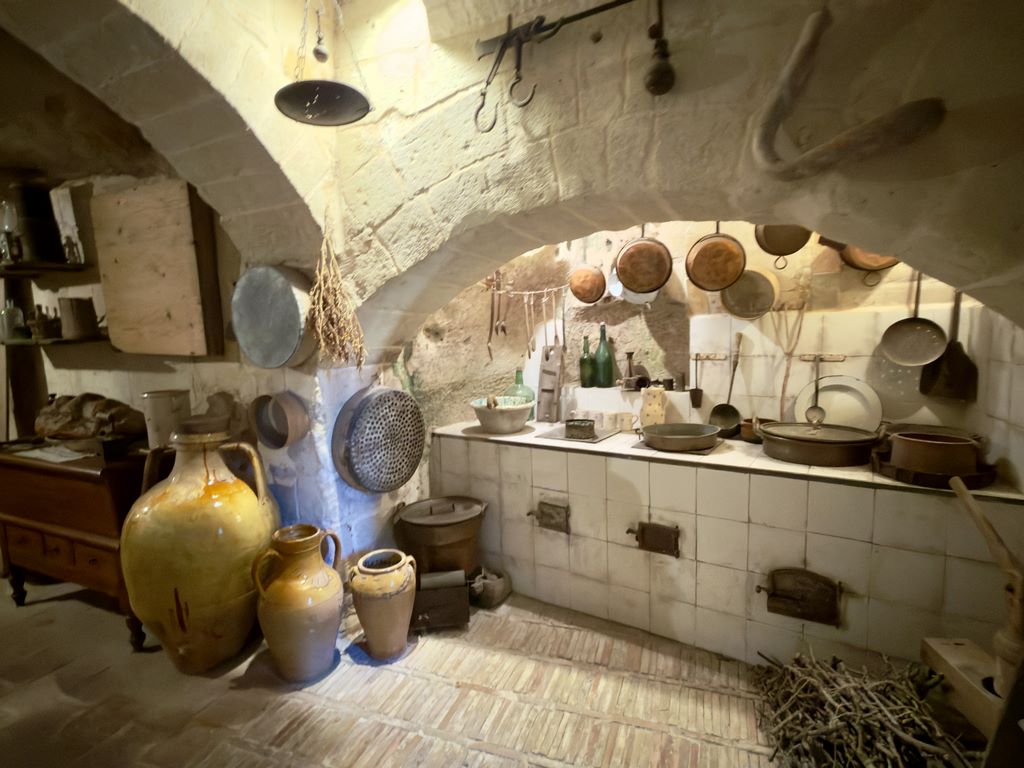
To understand the way of life of the Sassi inhabitants until the 1950s, it is essential to visit a Casa Grotta furnished, like the Casa Grotta di Vico Solitario. These museums offer a poignant insight into the extreme living conditions (often with farm animals) of the time.
Rock churches
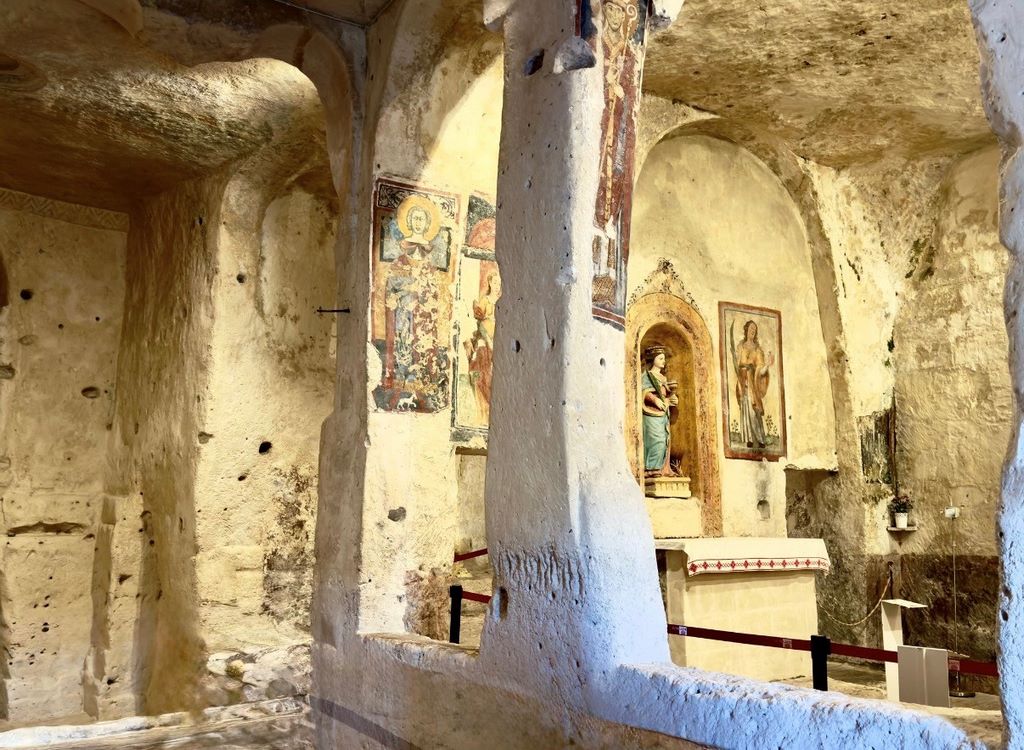
Matera is famous for its many rock-hewn churches, often decorated with magnificent medieval frescoes.
The Duomo di Matera, located on the highest point of the city, between the two Sassi, is an imposing Romanesque-Apulian cathedral with exuberant, gilded Baroque decor. It stands in stark contrast to the grottoes, a mark of the town's historical development.
Communicating tanks
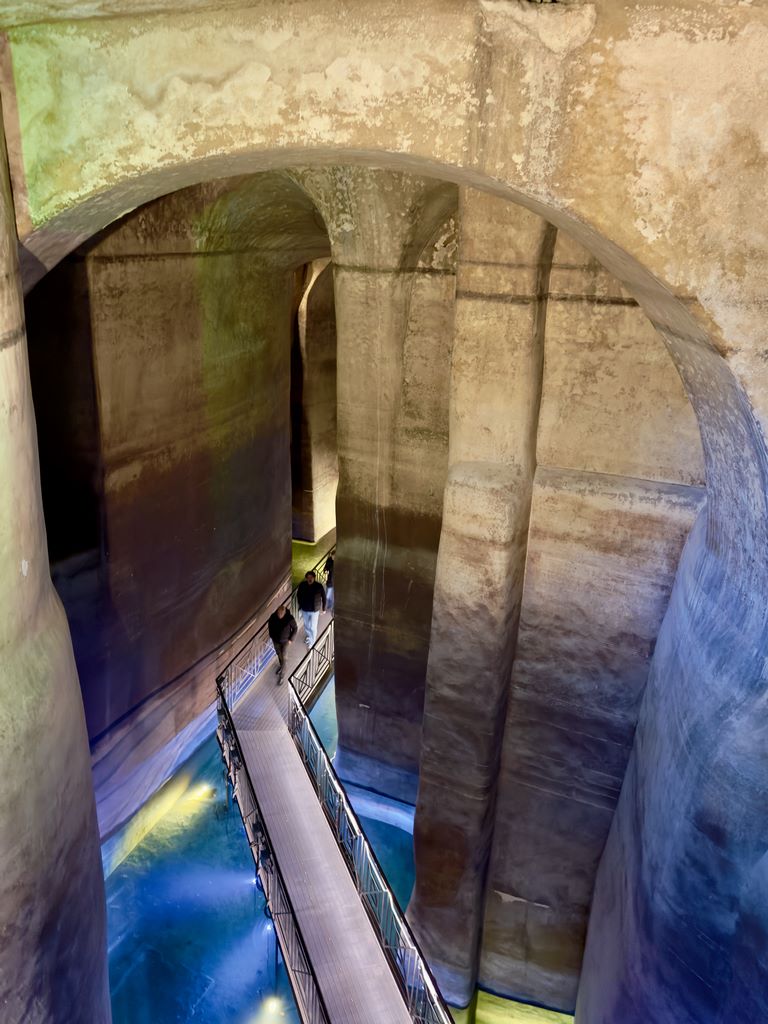
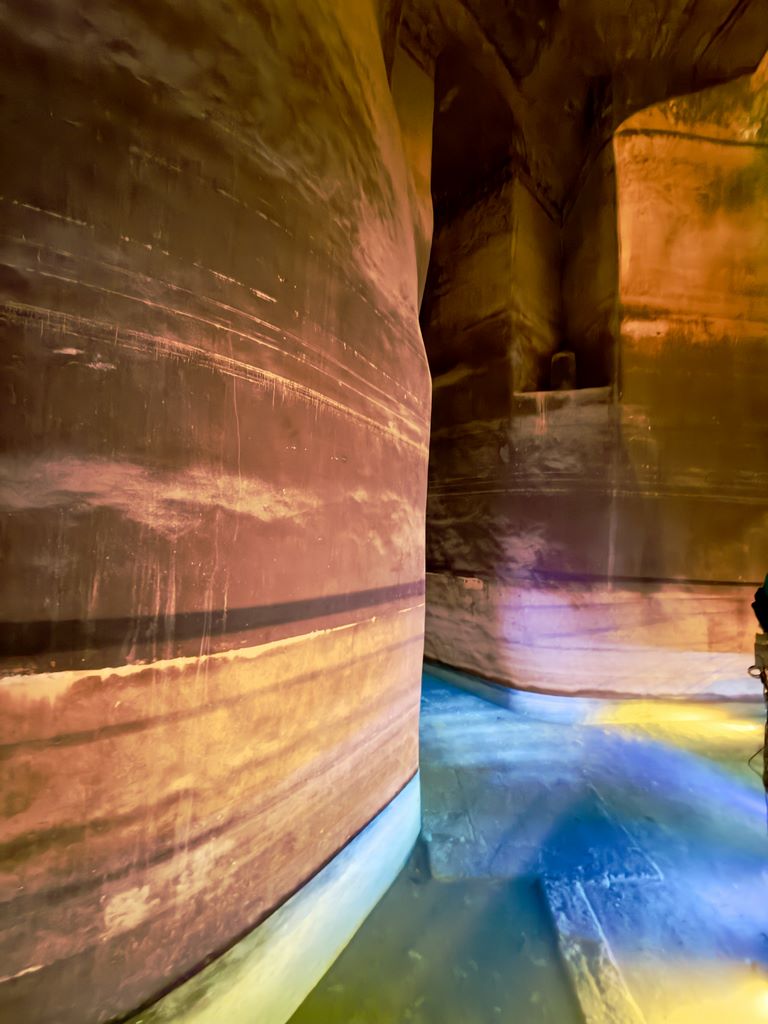
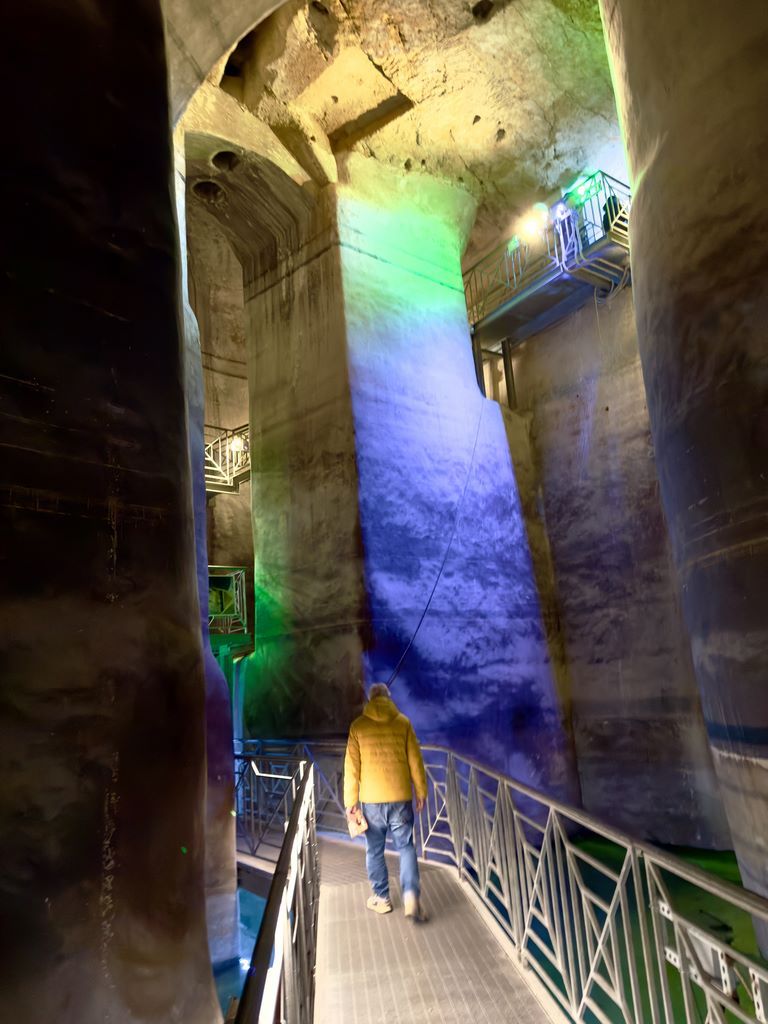
The Palombaro Lungo is the largest underground water tank of the city of Matera. It is located beneath the paving of Piazza Vittorio Veneto, where rainwater and spring water from the hills of La Nera, Lapillo and Macamarda converge. These underground cisterns are part of a water collection system that runs the length of the Sassi, to supply its residents.
Hiking at the Parco della Murgia Materana
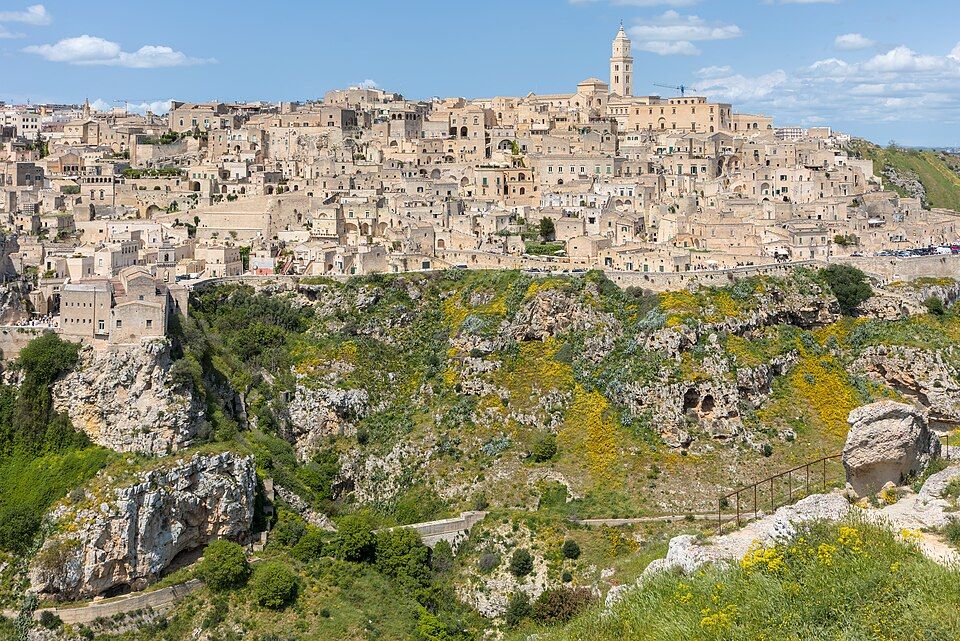
Hiking at the Parco della Murgia Materana is easy (around 3 hours round trip). You can also explore other rock churches in the park, ideally at sunset.
The «Sistine Chapel» of cave churches
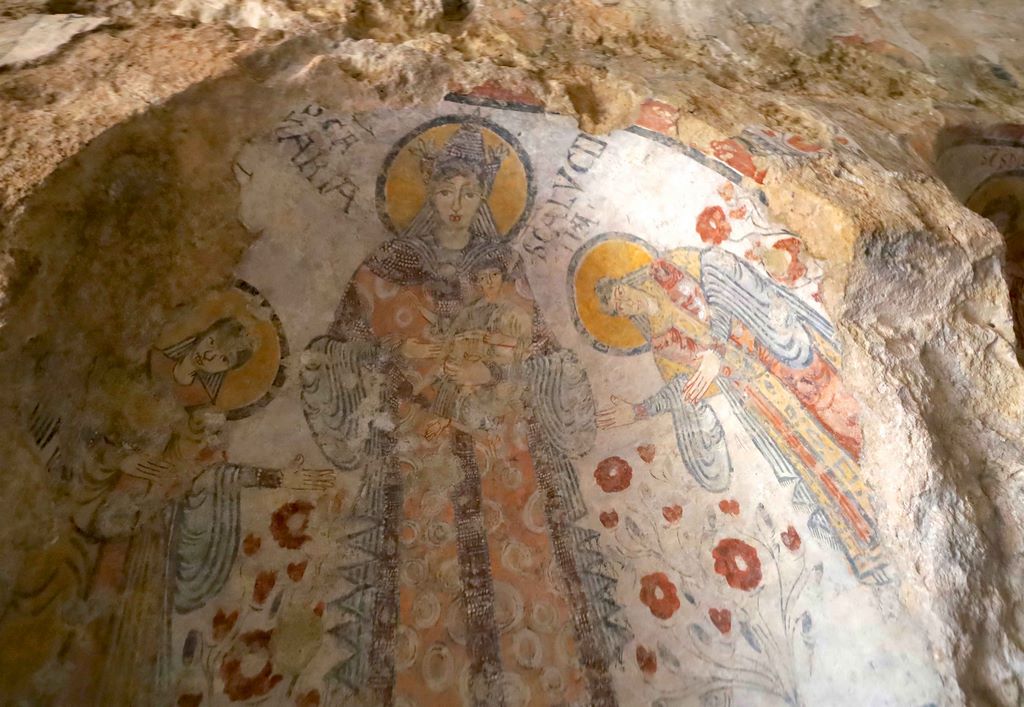
In Contrada Pietrapenta, near Matera, the Crypt of Original Sin or Cripta del Peccato Originale, pompously dubbed the «Sistine Chapel of cave churches» for the quality of its frescoes (*book in advance!), was the place of worship of a Benedictine cave monastery dating from the Lombardy period. It was «rediscovered» in 1963 on the site of a 20-hectare farm belonging to the Dragone brothers.
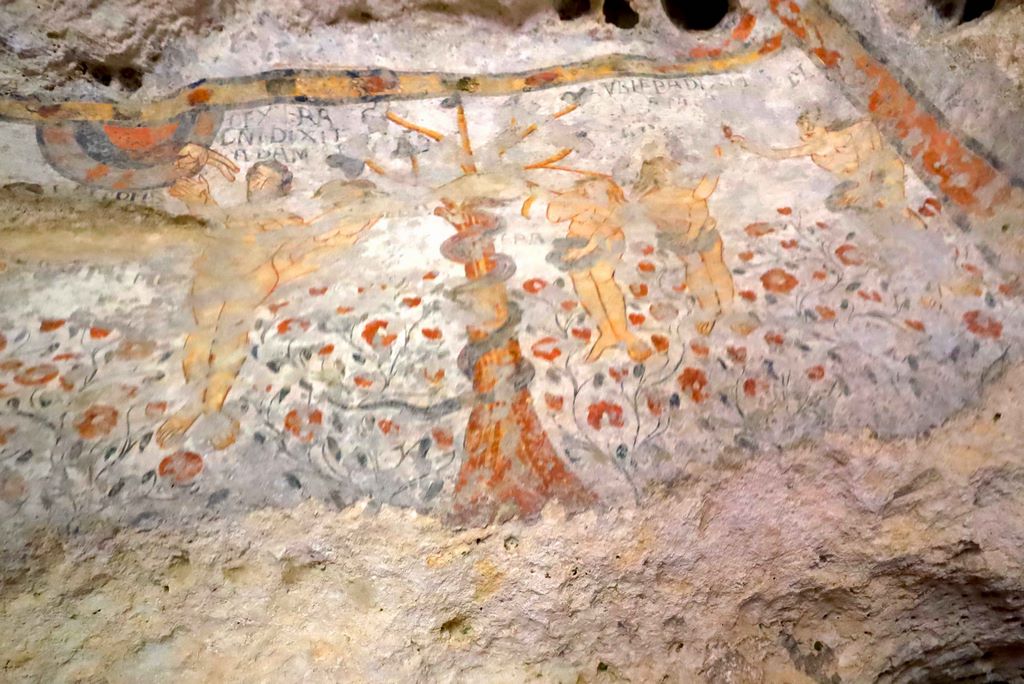
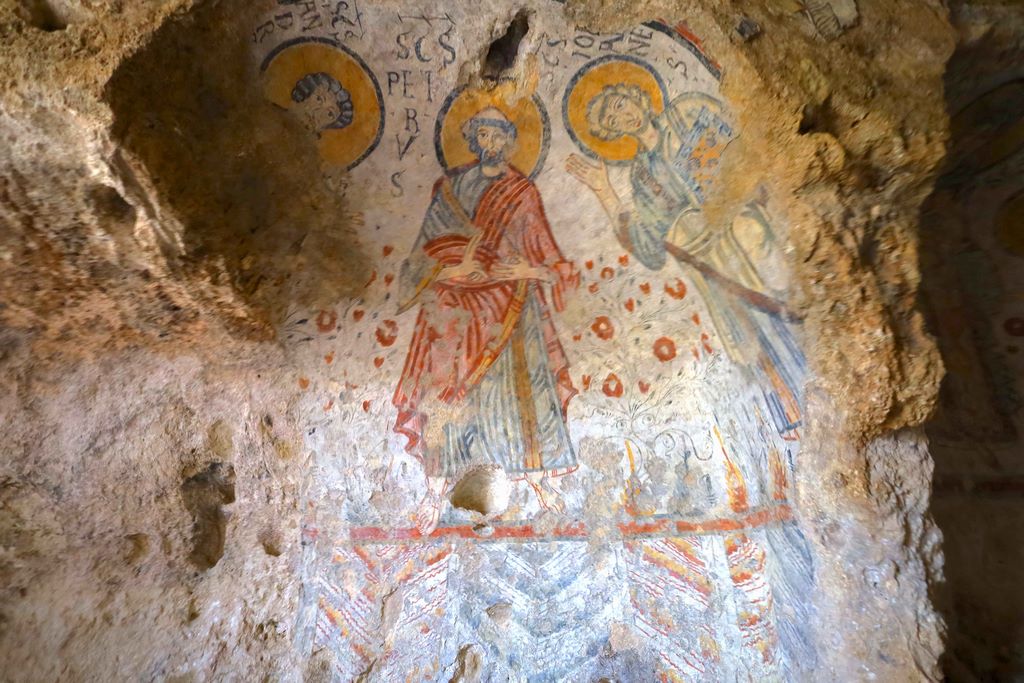
The grotto was virtually forgotten and abandoned for centuries, serving as a refuge for shepherds who called it the “grotto of a thousand saints” due to the numerous paintings on its walls. It is illustrated by a cycle of frescoes dating from between the 6th and 9th centuries, painted by the artist known as the Painter of the Flowers of Matera and expressing the historical characteristics of Benedictine-Beneventan art. The left wall features three niches, each depicting the triarchies of the Apostles, the Virgin Queen and the Archangels. The back wall features a large pictorial cycle illustrating episodes from Creation and Original Sin. Today, the crypt is a UNESCO World Heritage Site. This site, remarkable for its well-preserved frescoes, is run on site by an association, the Fondazione Zétema of Matera.
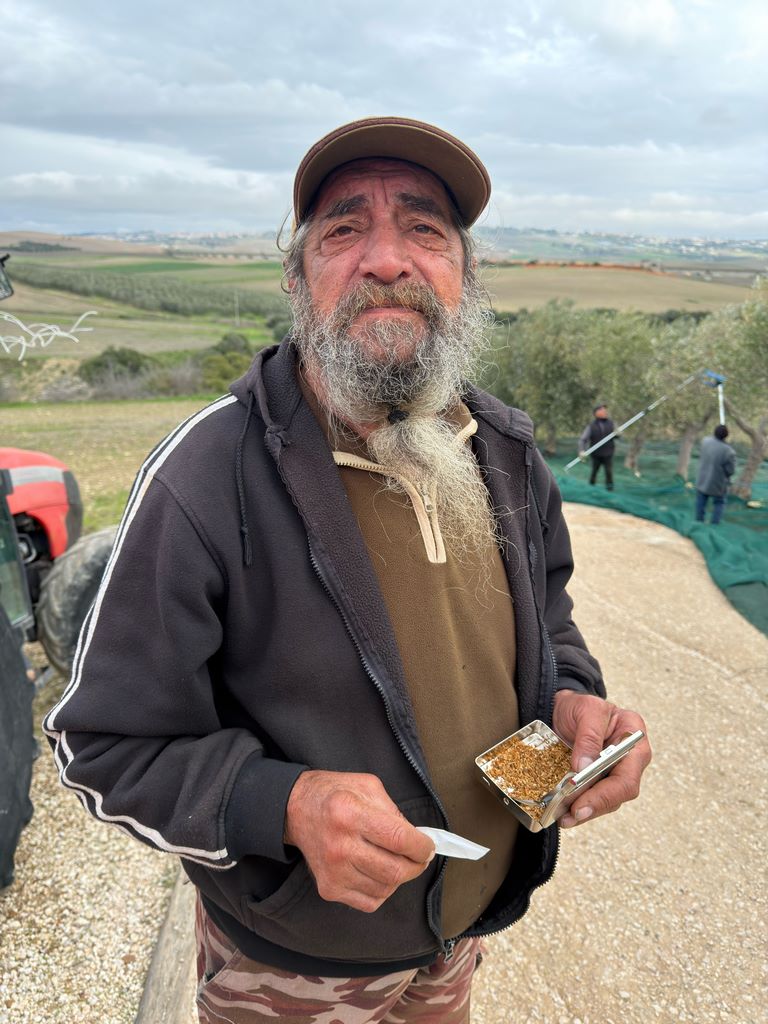
As well as visiting the Grotto of Original Sin, you can buy local products from the farm, such as wines made from the local grape variety. primitivo, You can also visit the olive grove, which produces olive oil, and enjoy lunch (a menu of local specialities). At the time of our visit, the olive harvest was in full swing... (Official website : criptadelpeccatooriginale.it)
Photo: One of the members of the Dragone family takes a break while picking olives.
Discover the local gastronomy
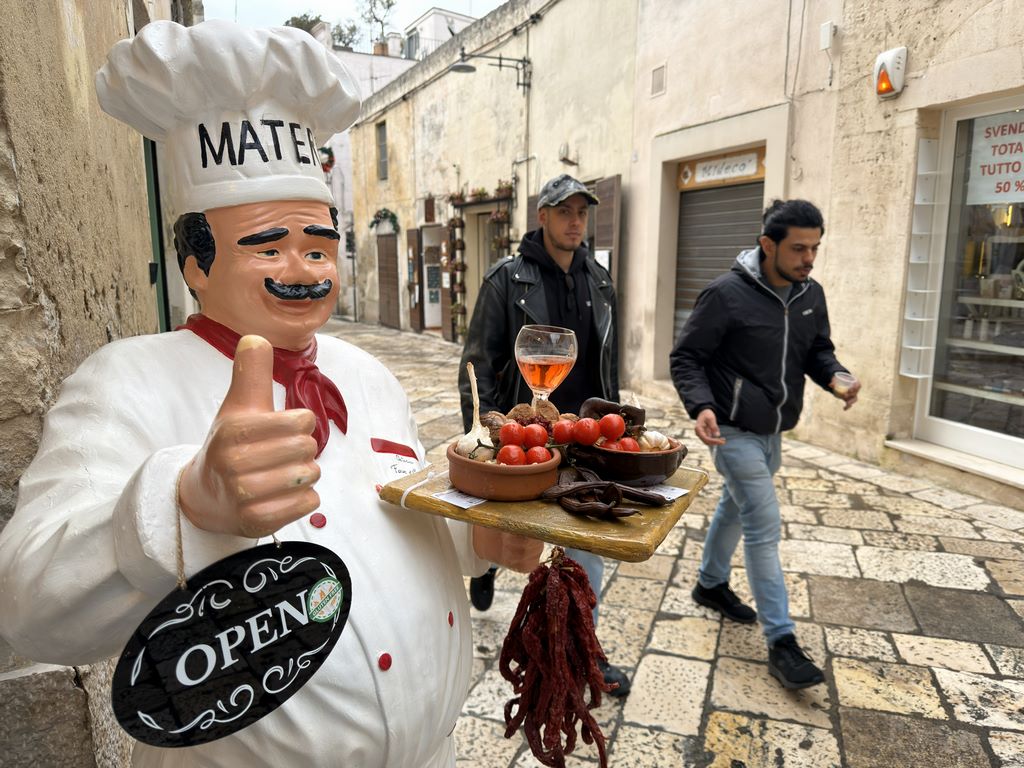
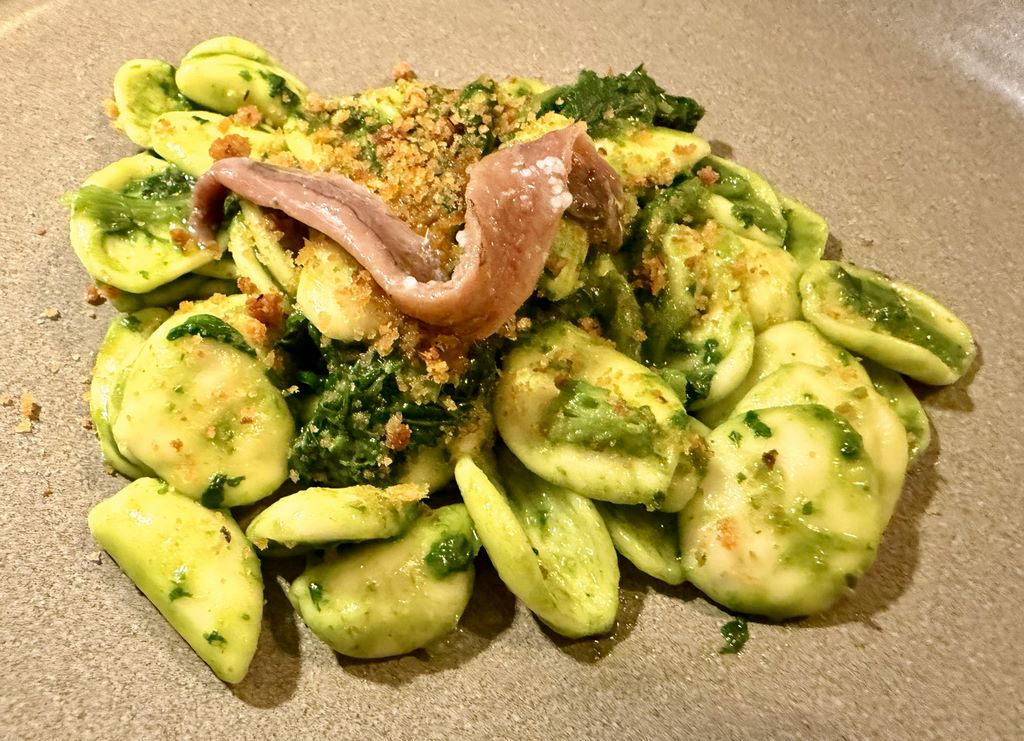
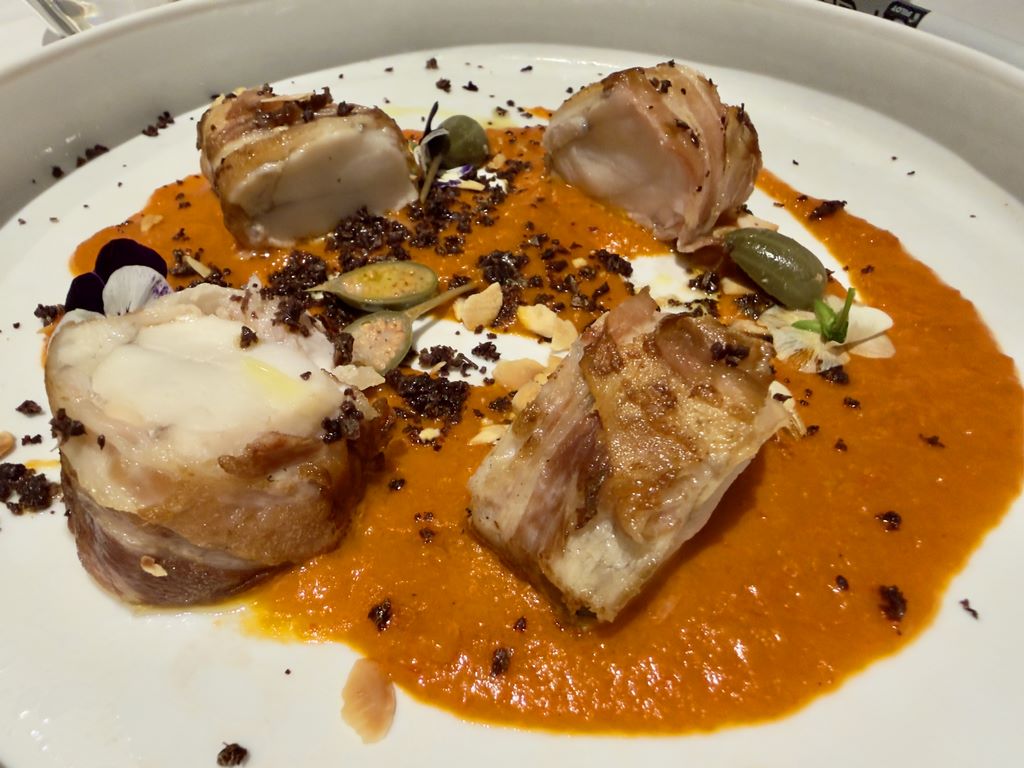
The cuisine of Matera and the surrounding region is deeply rooted in farming traditions. There are many restaurants nestling in the caves where you can discover the simple, tasty Basilicata cuisine, such as the peperoni cruschi - dried and fried peppers -, the crapiata, a rustic soup of legumes and cereals, or the orecchiette, These «little ears» pasta dishes are served with vegetable or meat-based sauces.
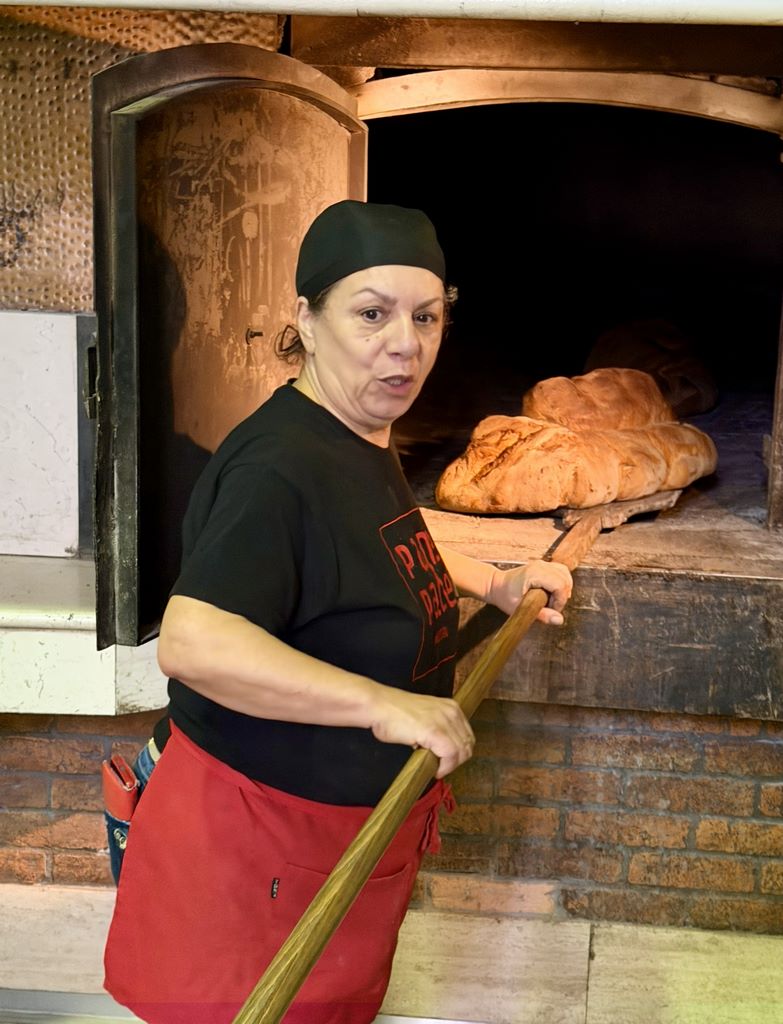
And let's not forget the famous Matera bread (PGI), made exclusively with durum wheat semolina, with a golden crust and honeycombed crumb. It's a bread initiated and imposed by a certain Senator Cappelli, made from locally-grown wheat of the same name. We can't stress enough that it's not flour! An oven open to enthusiasts will introduce you to the ritual of baking this bread into large, puffy loaves, which can be used in a wide range of gastronomic variations.
See the following report on Venosa : https://universvoyage.com/venosa-son-histoire-se-lit-dans-la-pierre/
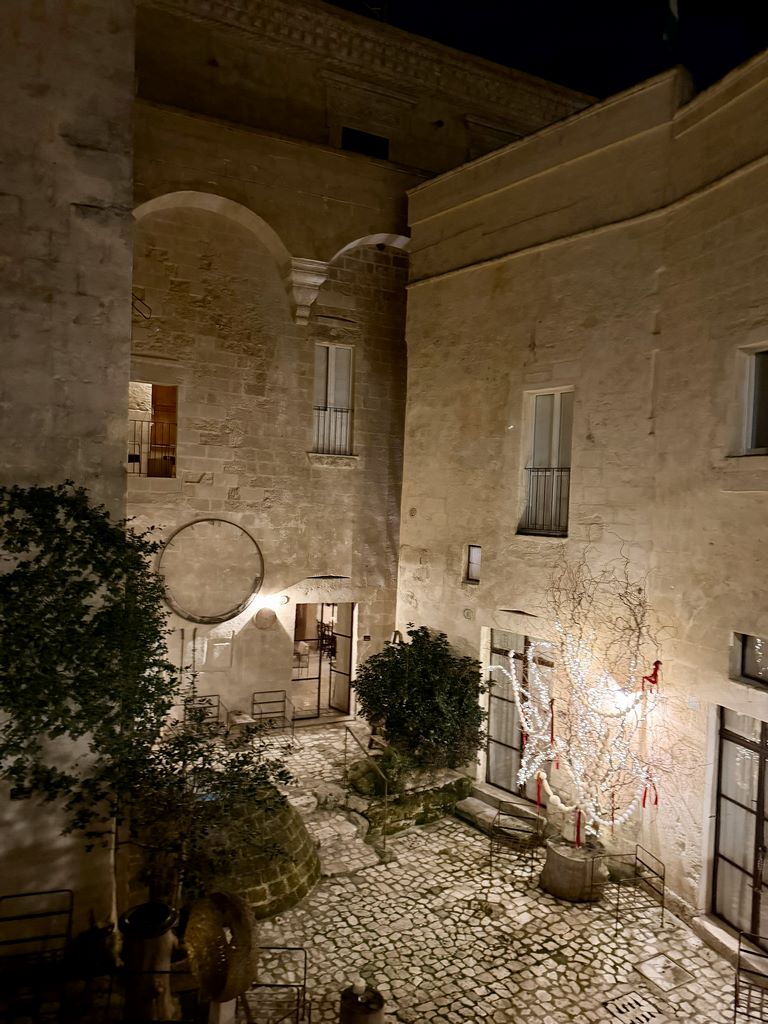
Accommodation in Matera :
Text and Photos : Sylvain Grandadam, unless otherwise stated.