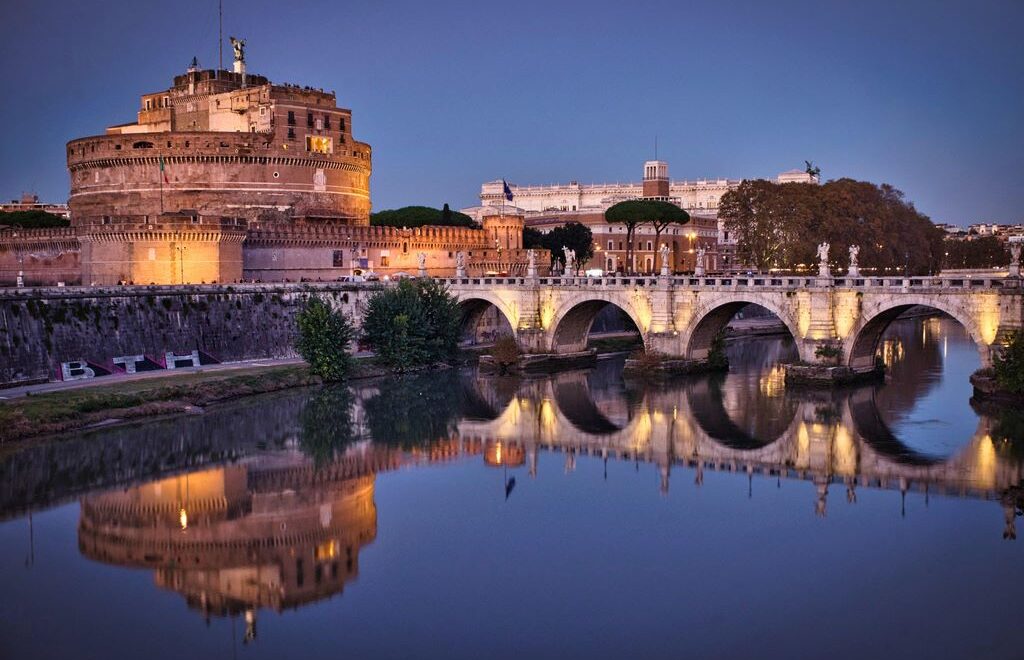
A holy city, a secular city, the capital of an empire and then of a faith, Rome cannot be visited: it has to be read and deciphered. You walk through it as if you were turning the pages of a historical novel, written in the ink of Senecaand the pounding of a hammer in the background. Bernin angry.
Table of Contents
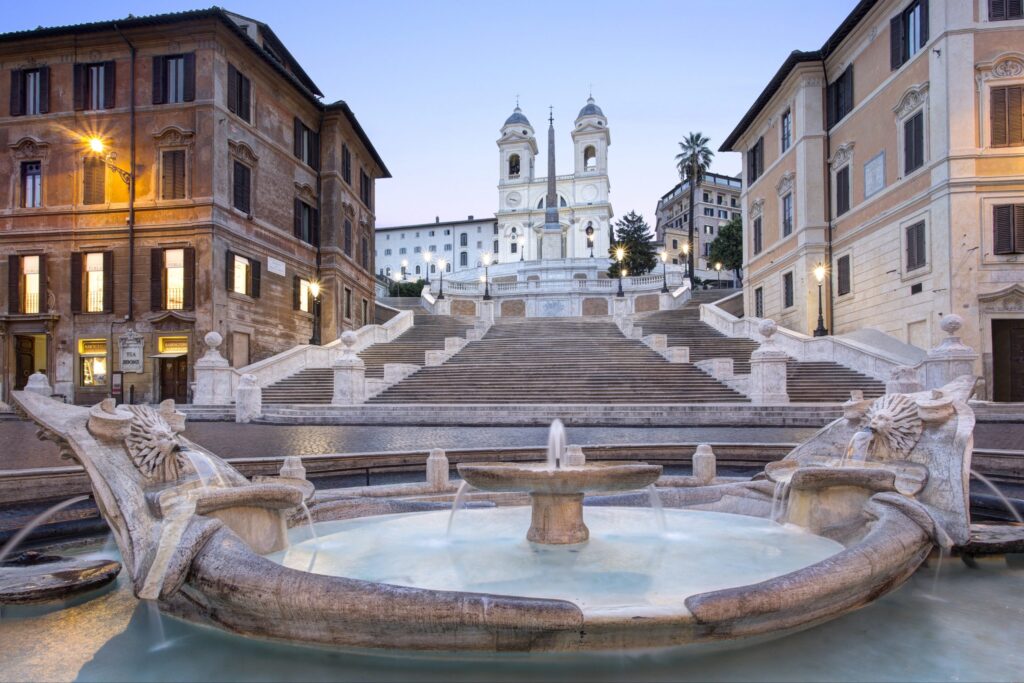
Early flight. Landing at Fiumicino under an ivory-coloured sky. Rome receives you without haste, like a diva who has not forgotten the Dolce Vita. Taxi toHôtel de la Ville (Rocco Forte Hotel), above the Spanish Steps. The elegant façade overlooks the square designed by the Renaissance genius, Michelangelo (1478-1564). The doorman is as phlegmatic as the antique busts. From the moment you enter, you can feel the hushed atmosphere of a place where artists, diplomats and a few crowned heads pass through.
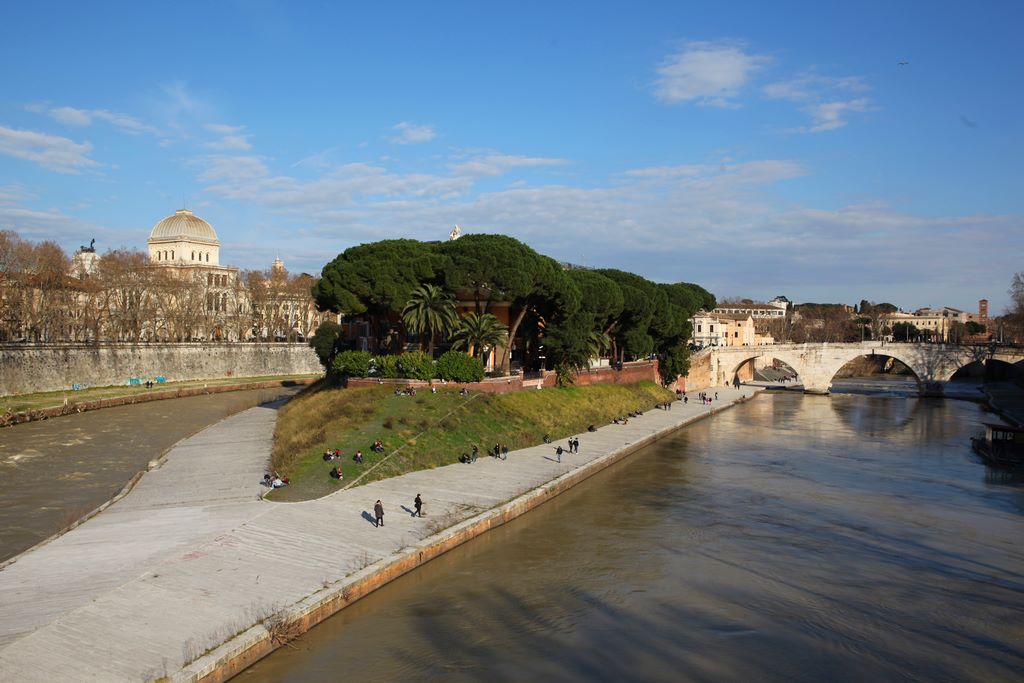
You don't have to be an archaeologist to understand Rome, you just have to walk there. You just have to walk along the Tiber, a river that doesn't sing but remembers. Or to sit in the shadow of a column in the Forum, where dust mingles with grandeur. Here, every stone whispers, every shadow breathes, every alleyway seems to have been waiting for you for 2000 years. In short, Rome has never ceased to be the centre of the world, or at least of its own.
The Pantheon
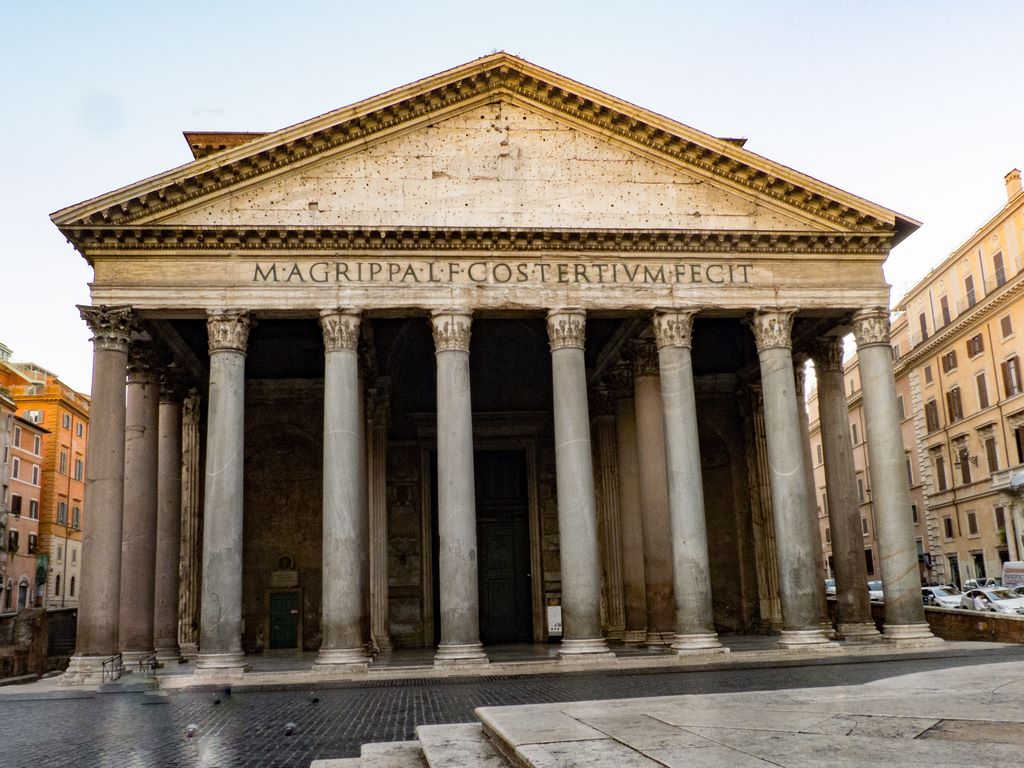
In the midst of the Roman tumult, between the horns and imperial memories, a few narrow streets, a square and then suddenly a perfect, motionless mass, the Pantheon. It's not the grandeur that impresses, but the balance. An immense dome, larger than that of St Peter's (it is one metre shorter), rests on the air like an ancient mystery. Inside, the silence is not religious but philosophical. The silence of a place that knows that everything passes away: empires, wars, names engraved on the marble... Through the oculus - the open circle at the top of the dome - an oblique, almost timid light enters. The gods it housed are long gone. The Christians came, then the illustrious dead, Raphaël (1483-1520), Victor-Emmanuel II (1820-1878), his son Humbert I (1844-1900) and his wife Margaret of Savoy (1851-1926) are buried there.
The Colosseum, theatre of eternity
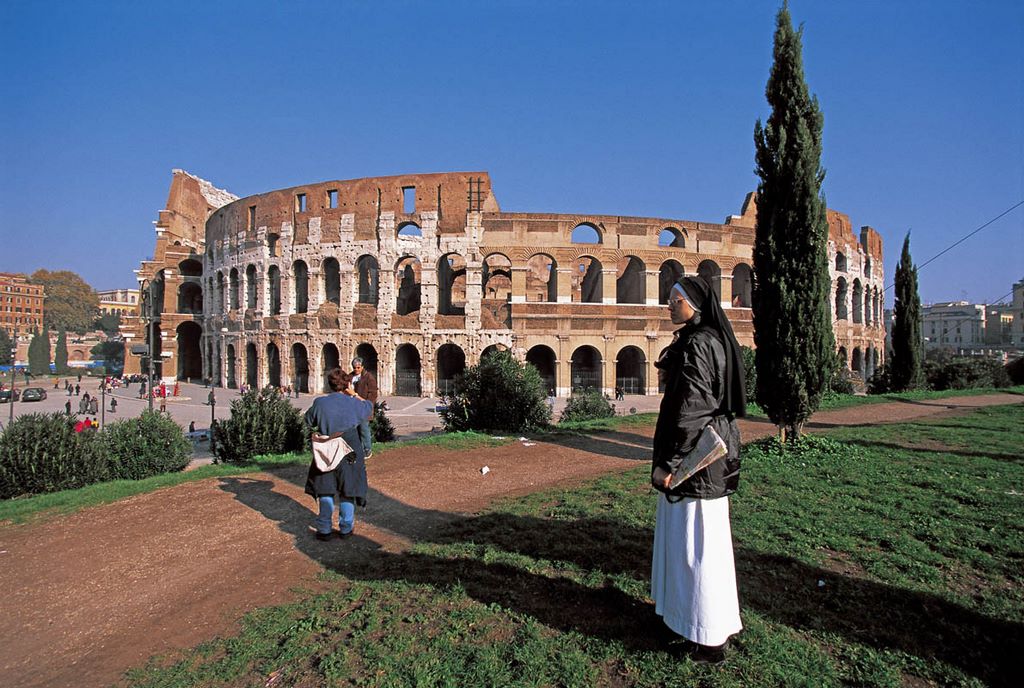
As you approach this imposing monument, you are astonished by its size and technical audacity. Originally called the Flavian amphitheatre, the ColiséeIts construction began between 70 and 72 AD, under the emperor Vespasianand was completed in 80 under TitusThe Colosseum was built not just to impress, but for games: fighting, shouting, sweat and blood. The Colosseum was a theatre of life in all its ferocity.
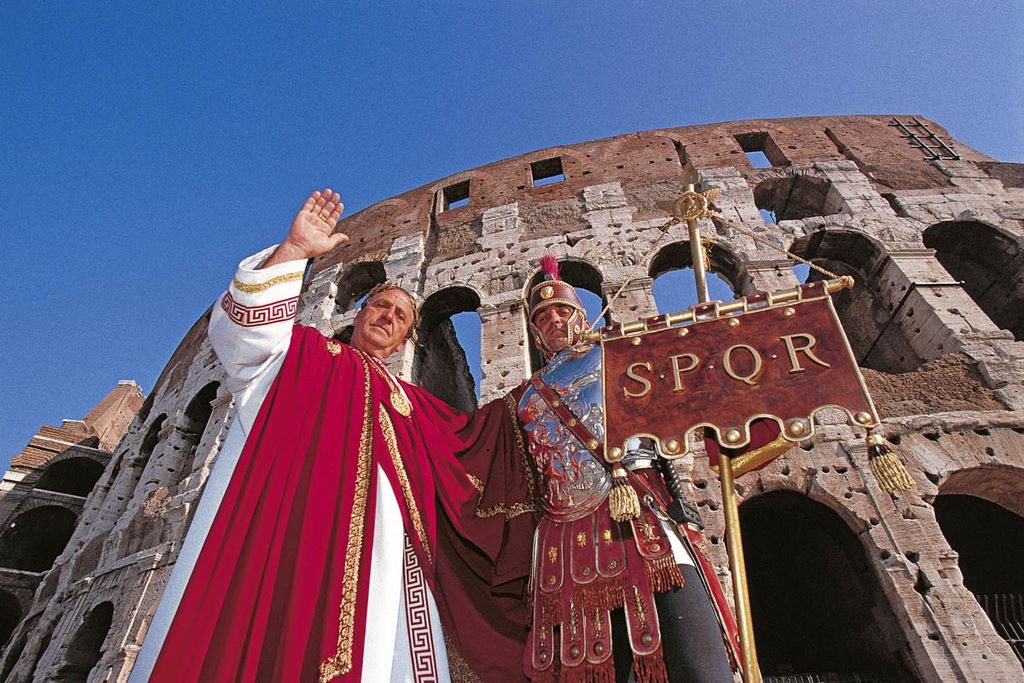
In the shadow of its stones, the silence is charged with the memory of gladiators, fights with wild beasts, enthusiastic and terrified crowds. Architectural beauty - the travertine pilasters, the tufa, the arches - is combined here with the brutality of the Circus games.
L'Empire du spectacle
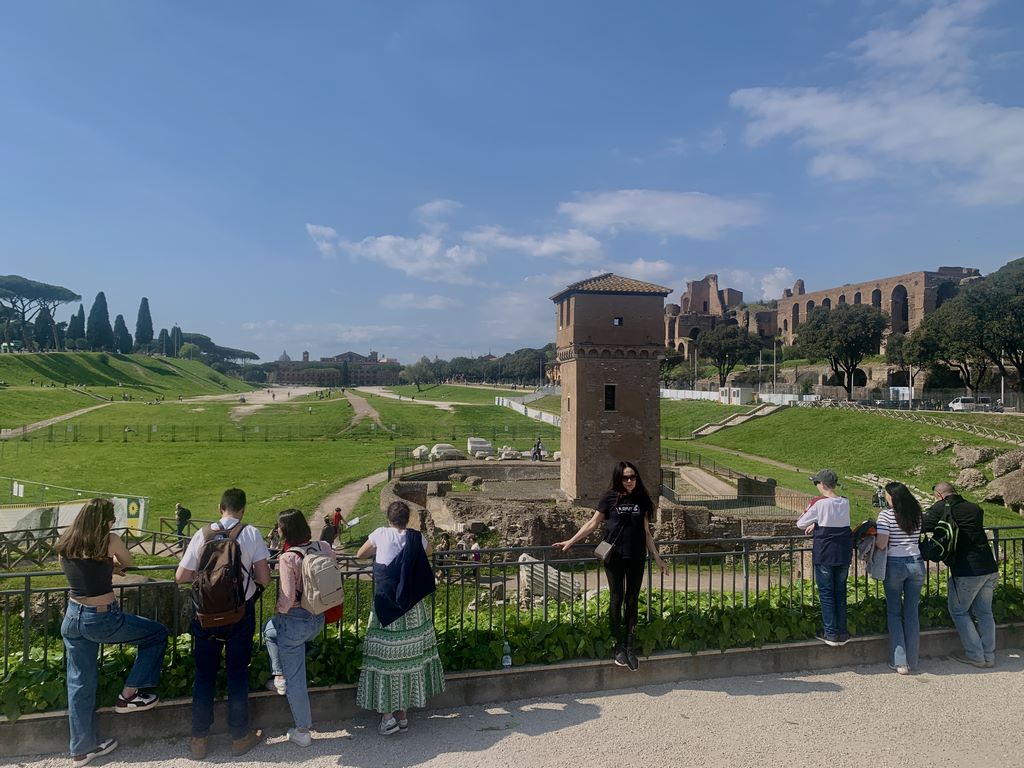
The people wanted bread and games? We gave them to them Circus Maximus. This vast, grassy area between the Palatine and the Aventine, which joggers cross today, was once the most popular - and perhaps the most political - place in ancient Rome, with chariot races that fired up the crowds. Much more than a stadium, it was the Empire of the spectacle, the liturgy of the people. Imagine 200,000 screaming spectators, colourful factions - the Blues, the Greens, the Reds and the Whites - and horses thrown at full speed around a spina decorated with statues, obelisks and imperial symbols. The charioteers were stars, sometimes former slaves who had become rich.
Here, we didn't vote. We cheered, we insulted, we exulted. The spectators were nothing like our football fans. Far from being mere entertainment, chariot racing was the very image of Roman order and hierarchy.
The emperor, seated in his box on the Palatine, in full view of everyone, did not govern: he showed himself, not in the gravity of the Senate, but in the din of the circus. This was the Roman form of the social contract: magnificence versus loyalty.
Piazza Navona: the Baroque heart of Rome
Fountain of the Four Rivers
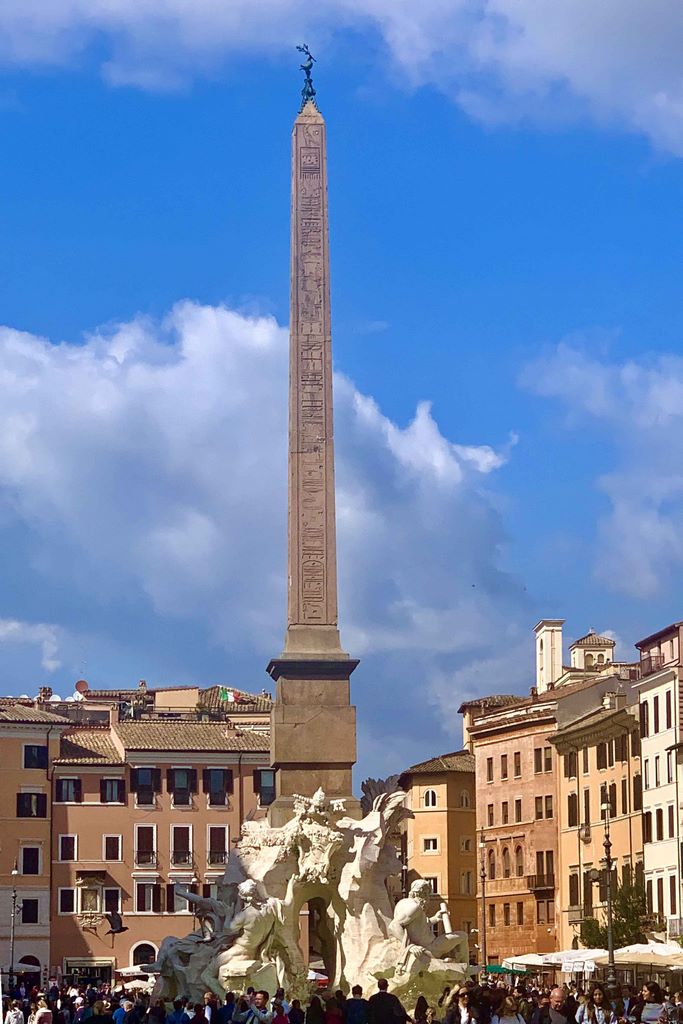
A Roman walk is all about stone, theatre... and water. In Rome, every fountain is a message and every square an opera set.
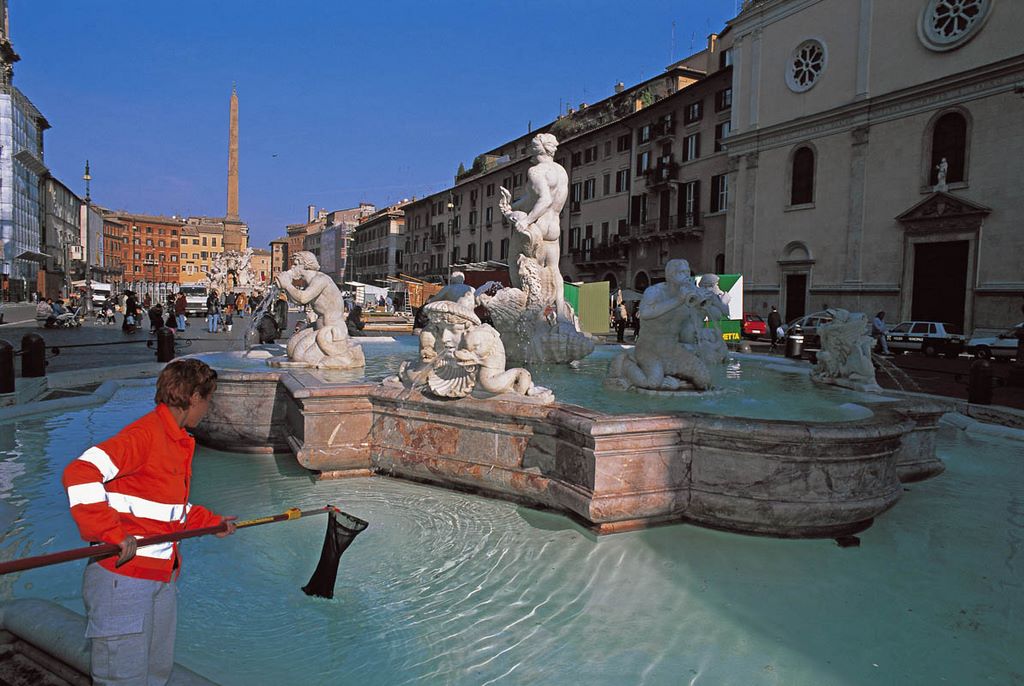
Where, in the time of the Caesars, Domitian's Stadium for sports competitions once stood, today's Piazza Navona is a monumental ellipse flanked by palaces, churches and, above all, theatrical fountains. In the centre, the most famous: the Fountain of the Four Riversmasterpiece of Gian Lorenzo Bernini known as Bernini (1598-1680). Four rivers - the Danube, the Ganges, the Nile and the Rio de la Plata - symbolise the 4 continents known at the time. On either side of it, you can admire the Fountain of the Moor. (Fontana del Moro) and the Fontaine de Neptune (Fontana del Nettuno).
Fountain of the Moor
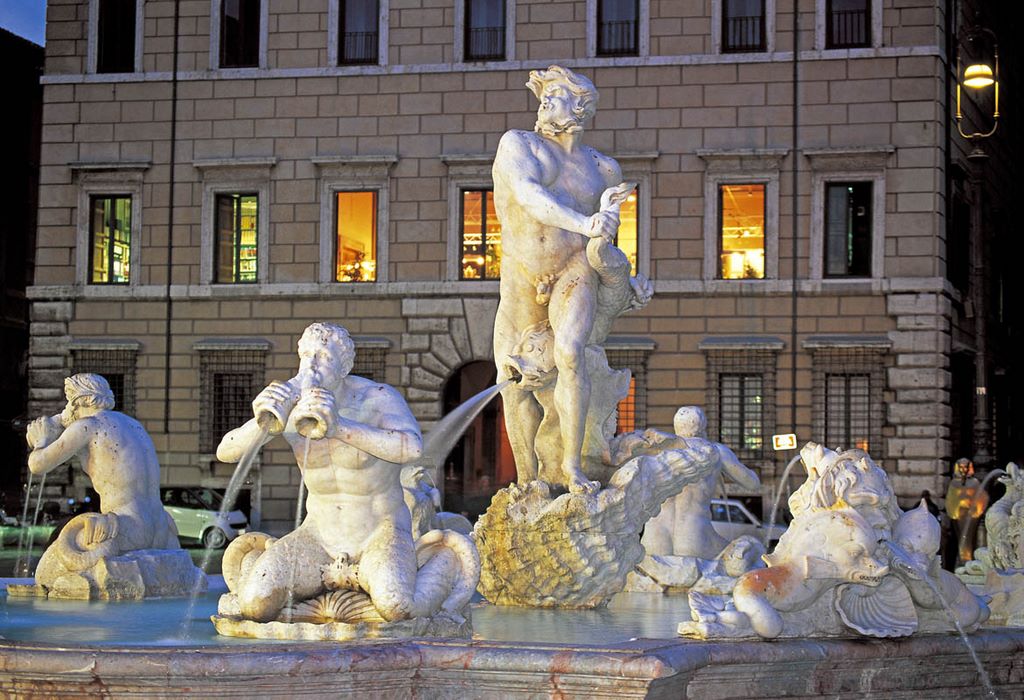
Opposite the Pamphili PalaceThe Fountain of the Moor, now the Brazilian Embassy, has a Portasanta marble basin. (on the island of Chios)built in 1575 by Giacomo Della Porta. The Pope Innocent X Pamphilj (1644-1655) commissioned Gian Lorenzo Bernini to renovate the 16th-century fountain. A swimming pool was created based on the design of the previous pool, at the centre of which, in 1655, a statue sculpted by Giovanni Antonio Mari based on an original drawing by Bernini himself. The sculpture depicts a man clutching the tail of a dolphin, whose head protrudes from the statue's legs and from whose mouth water gushes out.
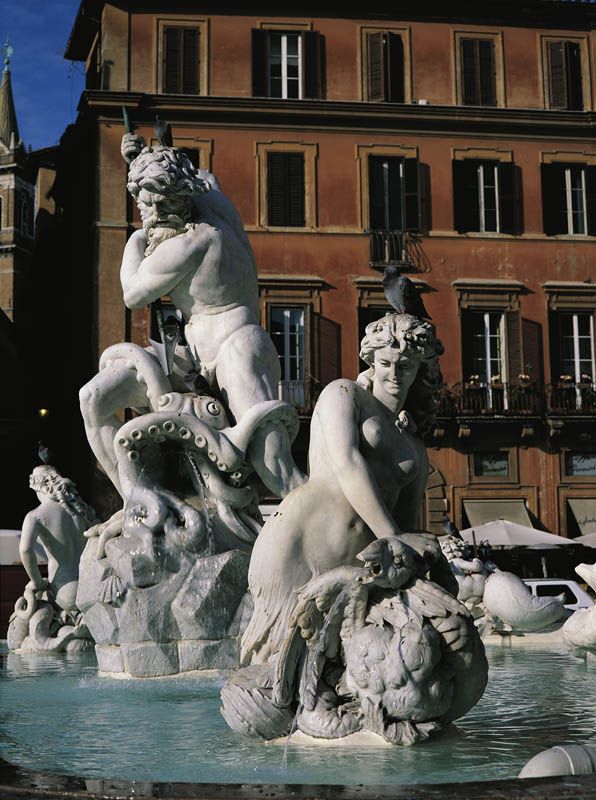
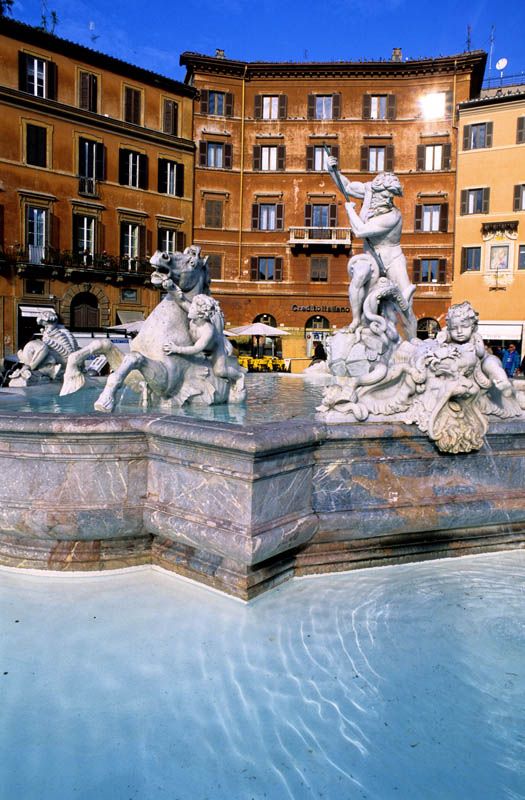
Fountain of Neptune
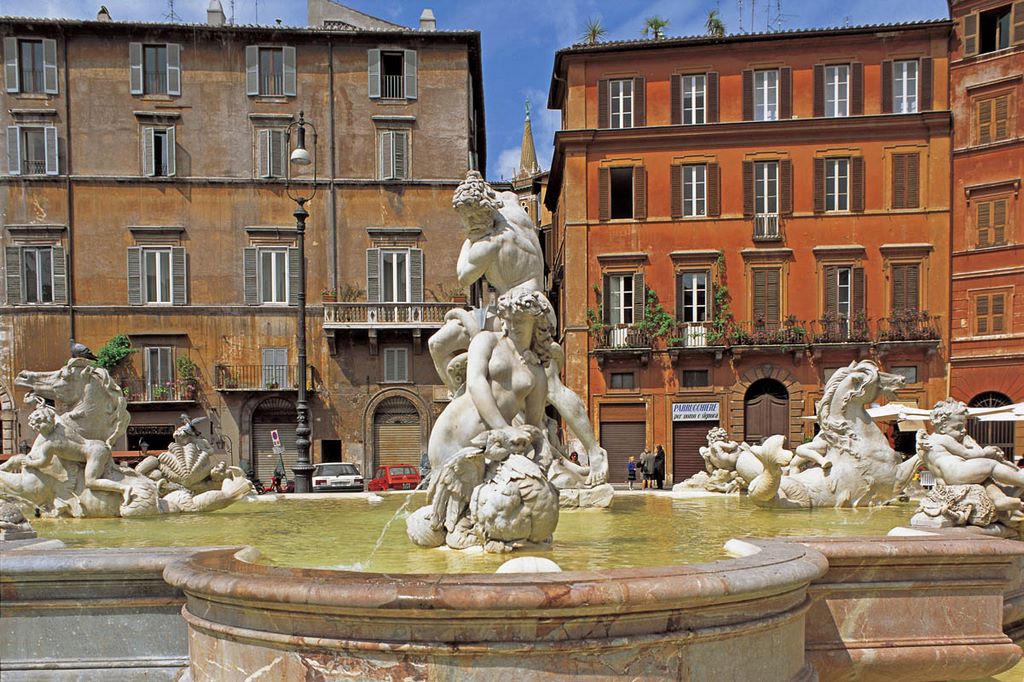
The third fountain in the Piazza Navona, the Fountain of Neptune was commissioned by the Pope Gregory XIII in 1574 at Giacomo della Porta. But he only made the pool. The sculptures are much more recent and were made by Gregorio Zappalà and Antonio Della Bitta in 1873.
The Trevi Fountain: the promise of a comeback
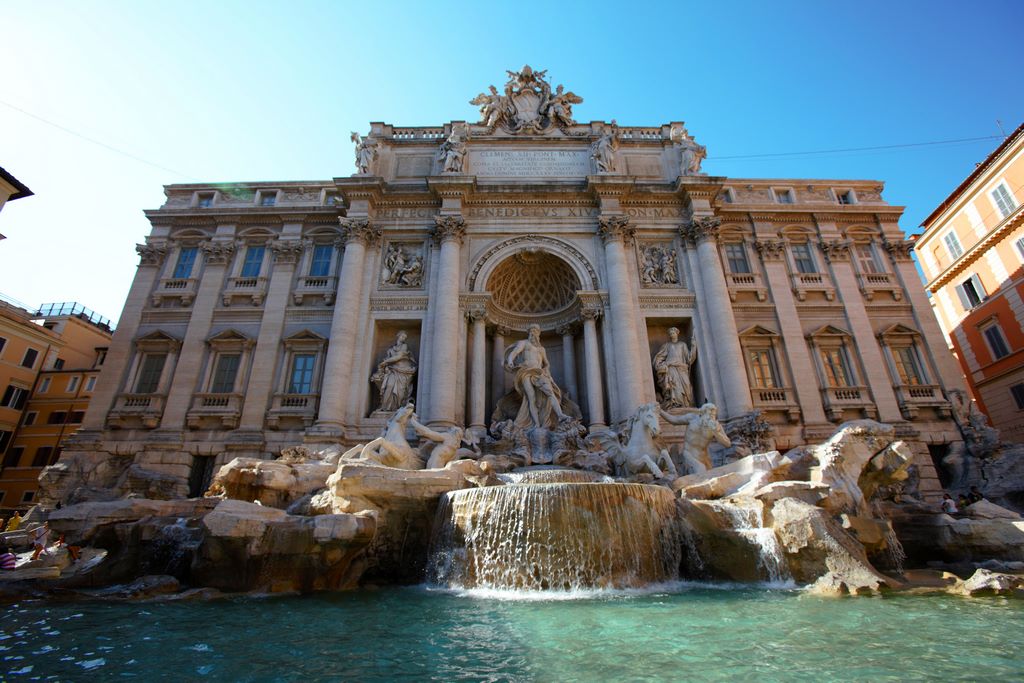
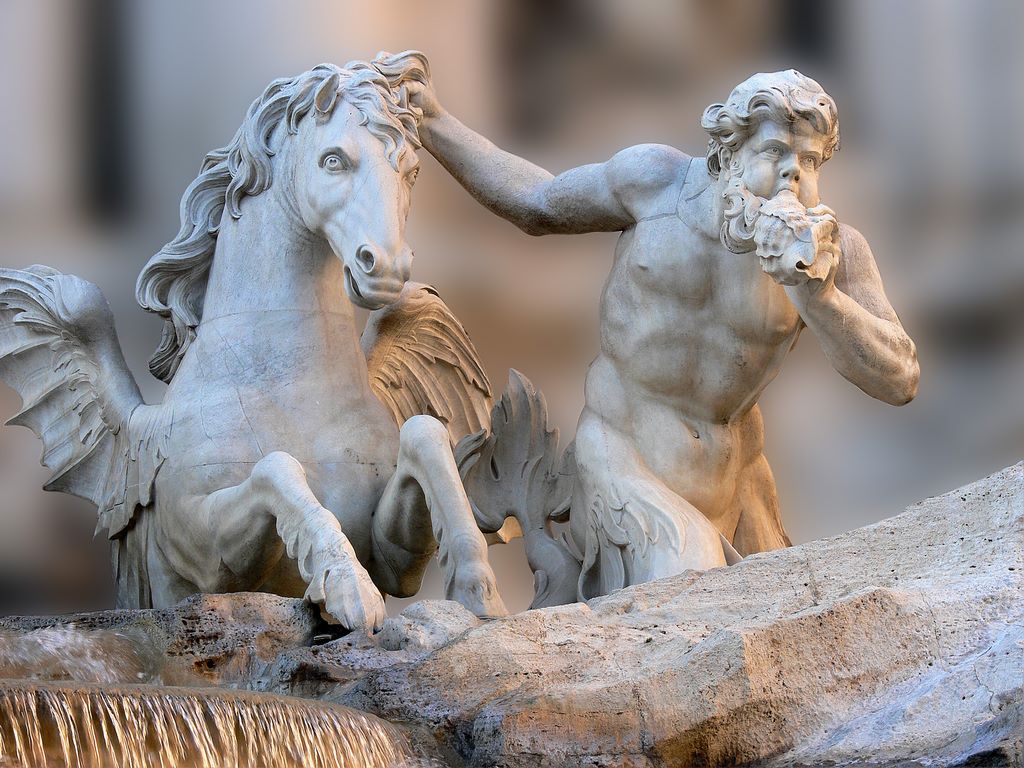
There are places where water ceases to be "water" and becomes a sign. The Trevi Fountain is not a fountain in the strict sense. It's the façade of an aqueduct disguised as a Baroque apocalypse. A wall that gushes out, spitting out its memory in cascades. The columns, the statues, the sea horses: it's all there, as in a Latin phrase or a church fresco, where every detail seeks to convert you.
The central figure, Neptune, is not a god but a sign of man's power over the elements. He rules, like a hydraulic minister in a Rome where magnificence is a political justification,
What tourists come for is not the fountain itself, but the myth it exudes. The tossing of the coin, with back turned and arm raised, is a semi-religious act, a pagan rite that has gone viral. This gesture is the grail of the tourist age: a small coin is exchanged for the promise of a return, in other words, repetition, a Nietzschean eternal restart.
And then there's Fellini, of course. Since " La Dolce Vita ", Anita Ekberg is no longer an actress but a mythical apparition, and the water in the fountain is no more than the liquid support for this collective memory. The reality of the fountain dissolves into the memory of the film.
And if you listen carefully, you might hear the ancient voices of the Roman aqueducts, which long before the selfie carried the dream of an eternal Rome.
Here, the Roman Baroque has been swallowed up by the chaos of tourism. Rome wanted to tame water. It produced a river of visitors. Neptune, the central God, contemplates the crowds with the indifference of a luxury hotel waiter. He has become an official of the marvellous.
The coins fall into the pool, one by one. A shower of euros thrown towards an imaginary future. Because the real miracle is no longer returning to Rome, but still believing that a throw of coins is enough to ward off oblivion. Around me, influencers adjust their dresses. Groups of Japanese hold up their selfie poles like divining rods. It's no longer a fountain, it's a pagan mass, celebrated without clergy but with hashtags.
Accommodation
L'Hôtel de la Ville - Rocco Forte Hotel
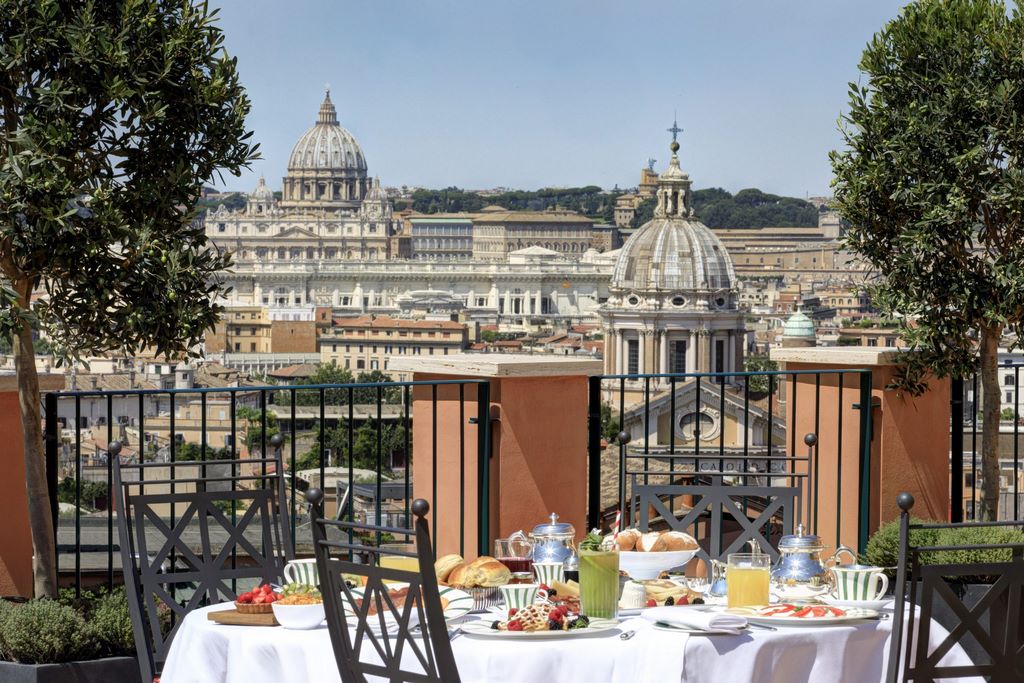
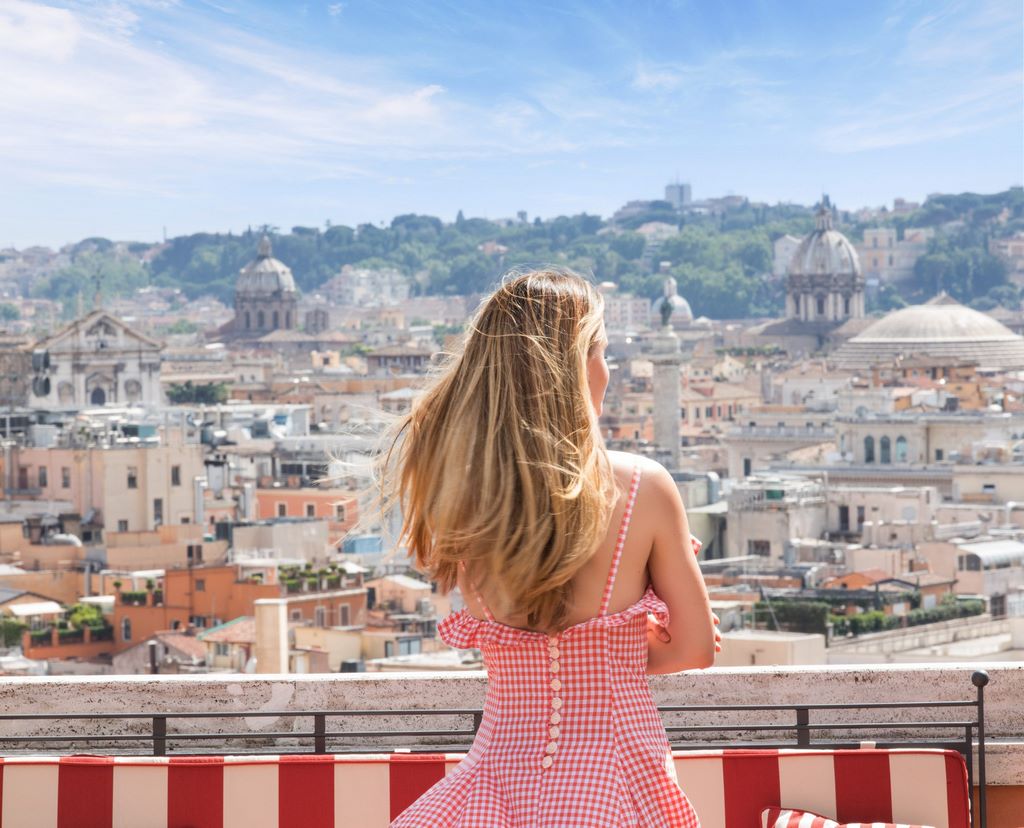
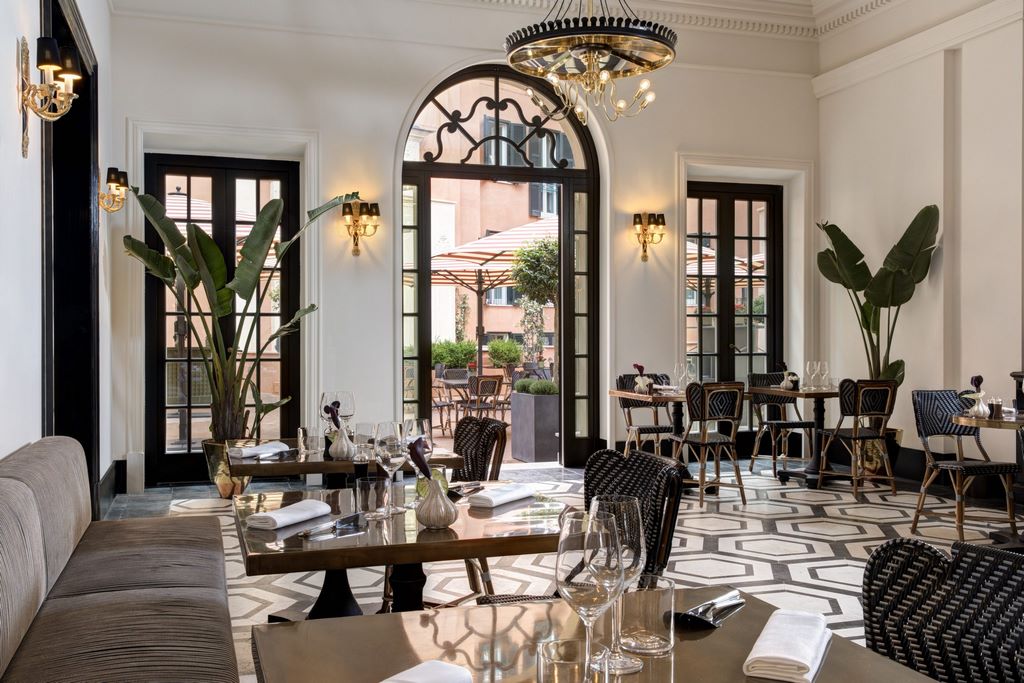
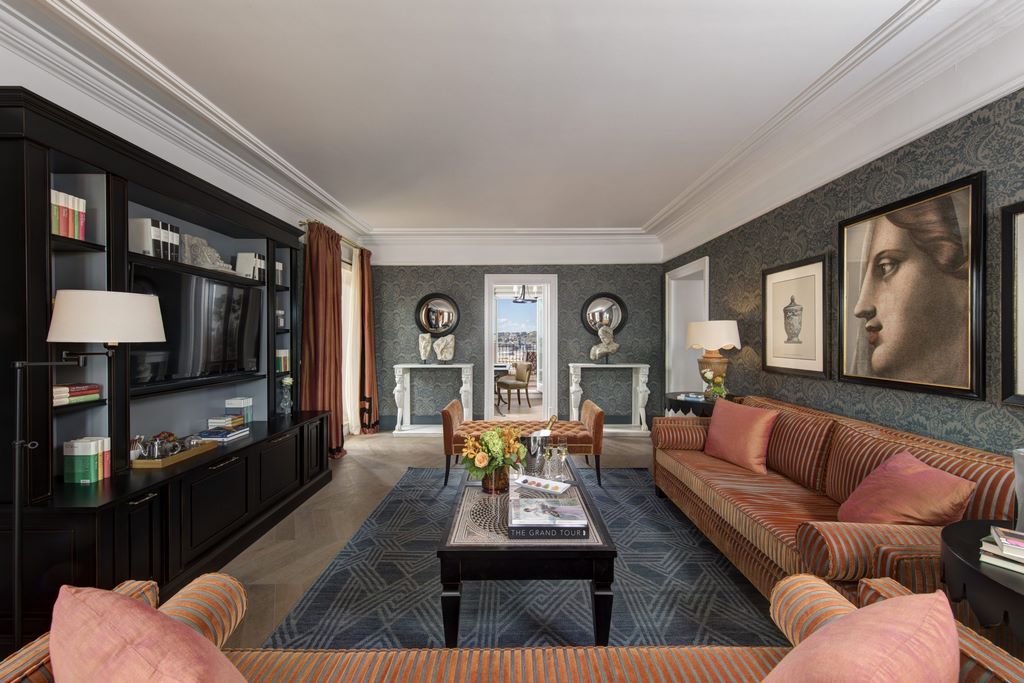
Opening in May 2019, the Rocco Forte group's second Roman hotel embodies the quintessence of Roman elegance. Located on the Pincio hill, in an eighteenth-century palace, it houses around a hundred rooms decorated by the gifted designer Tommaso Ziffer, who drew his inspiration from the 'Grand Tour' once undertaken by art lovers and writers. Tapestries, sumptuous fabrics, Renaissance-inspired statues, antique and contemporary furniture... Refinement is in every detail. The panoramic terrace, Cielo, is weightless above the Eternal City.
Overlooking the church and convent of the Trinità dei Monti, Cielo Terrace is decorated with elegant red and white striped sofas, offering 180° views of the main Roman monuments.
The simple, tasty dishes are concocted by chef Fulvio Pierangelini, one of the great masters of Italian cuisine. Approximately €35 per person.
Hôtel de la VilleVia Sistina, 69. Tel: +39 06 32 888 880. From €560 per night,
www.roccofortehotels.com
Francesco Roccato, Managing Director Italy Rocco Forte Hotels
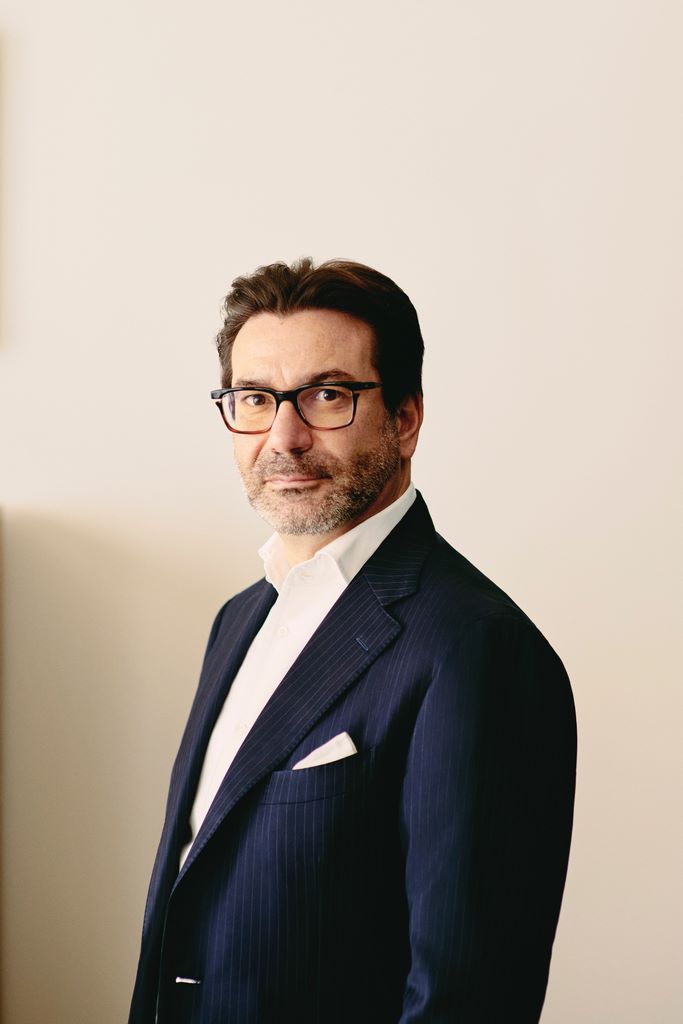
Francesco Roccato is General Manager for Northern Italy at Rocco Forte Hotels. He oversees some of the group's flagship establishments in the region, including the Hotel de la Ville in Rome. Born in Turin, Francesco began his career in the hotel industry as a chef in 1995, moving into restaurant management before rising to the position of General Manager. His career has taken him all over the world, with professional experiences in Canada, Bermuda, Spain, the United States, London and back to Italy. With over 30 years' experience in the luxury hotel industry, Francesco brings a unique, people-centred leadership style, shaped by an international perspective, a passion for excellence and a deep belief in teamwork and empathy.
Read
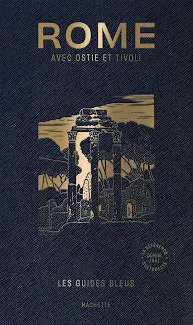
Les Guides Bleus : Rome
An invaluable guide to the riches of the Eternal City, with texts focusing on art and history written by leading specialists.
Edition 2024. 35 €.
Italian Tourist Office
http://www.italia.it
Text : Michèle Lasseur
Photos : as indicated