
With population growth and changes in food consumption, the need for water is increasing, while the resource is being affected by climate change. What are the prospects for people living in the Amazon, in the deserts of Africa or in China?
Table of Contents
Water is a treasure for all humans, animals and plants. Yet its availability is uneven across the globe. Ghislain de Marsily, geologist and hydrology specialist, answers our questions.
Can you first explain the water cycle?
The water cycle can be summed up as follows: it rains, some of the falling water seeps into the ground, then some runs off and increases the flow of rivers. This water eventually ends up in the sea, where it evaporates, forms clouds and falls as rain... this is what is known as the " rain cycle ". per ascensum "Water. Most of the Earth's water is salty (97% is % in the oceans), and it is the evaporation of this water from the surface of the oceans and continents under the influence of the sun's rays, followed by condensation and precipitation, that feed most of the freshwater cycle. This cycle supplies the continents with water, both "green" water (73,000 km3/year for the world's continents), which is the water stored in the soil after rain, then taken up and transpired by vegetation, since only plant roots are capable of extracting this water from the soil. There is also "blue water" (36,000 km3/year), which is the water that flows in rivers and aquifers. This is the water used by engineers, which can be captured and channelled into canals or pipes for transport, for domestic and industrial water needs or for irrigation. The last flow is the melting at sea of icebergs released by frozen continents (Greenland, Antarctica) for 3,400 km.3/per year. These flows are used almost entirely by natural continental and coastal ecosystems, with life having developed everywhere up to the limits of available water resources.
Finally, there is fossil water, which is extracted from the stocks contained in the major aquifers of a number of countries (India, United States, China, Pakistan, Iran, Mexico, in decreasing order of extraction...), mainly for crop irrigation, at a rate of around 100 km per year.3/year, or 2 % of total water withdrawals for irrigation. This figure is low, but the situation is not sustainable. In fact, the stocks in these aquifers will be exhausted in a few decades' time, which will make it necessary to fetch water by canal from the great rivers, such as those flowing down from the Himalayas (Yang-Tsé-Kiang, Ganges, etc.), or to desalinate seawater.
What is our water resource made up of?
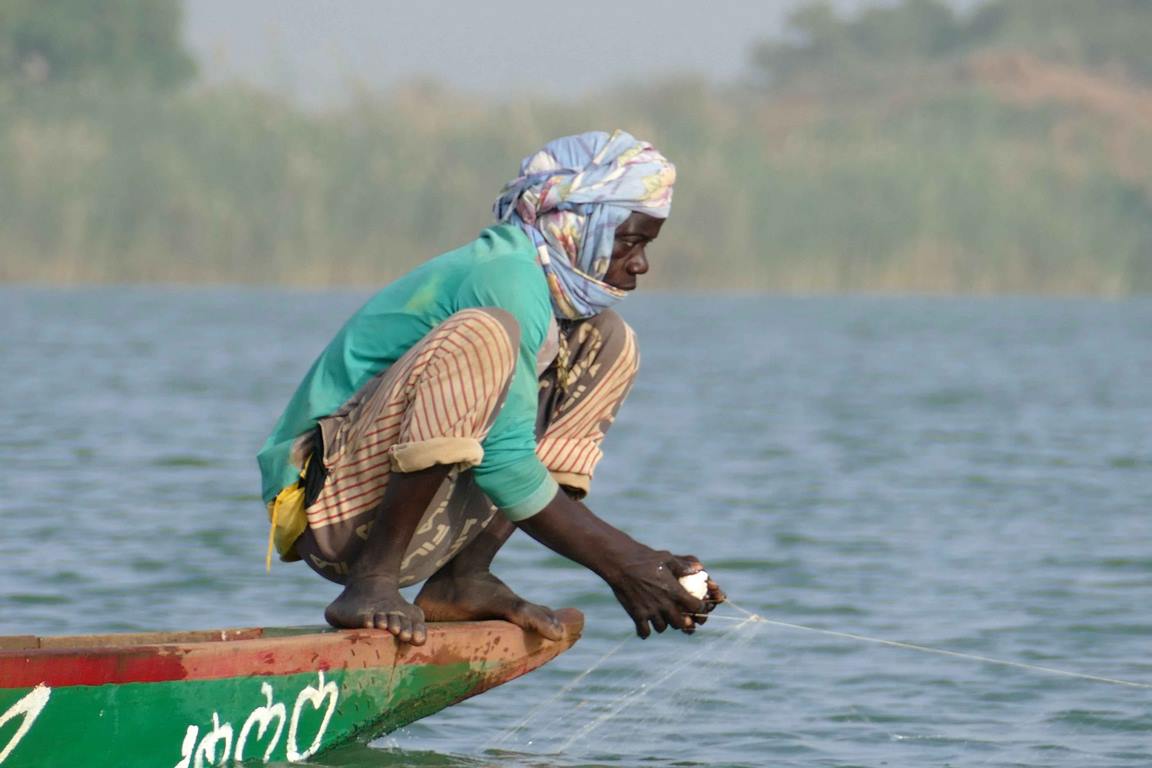
Most of the water we can mobilise is "blue water". Its overall quantity seems to have been fairly stable for around 6,000 years. But it is above all its spatial and temporal distribution (dry years) that varies. Some regions receive a lot of water, while others suffer serious shortages. The causes of this shortage are linked to climate change and variability, human activities and the lack of water storage facilities (for example, in Burkina Faso, where it rains abundantly for three months of the year, but nothing for the rest of the year, resulting in some 3.3 million people facing acute food insecurity, according to the FAO). It should also be noted that, worldwide, 30 % of the water consumed is so-called 'virtual' water. When we buy a material good (most often a food product, but also an industrial product), which is then transported to another country or another region to be consumed there, we are talking about virtual water, water that has been used in one country to produce this good and which arrives in another country not in the form of water, but as a consumer good. For example, it takes 100 litres of water to produce 1 kg of potatoes, or 1000 litres of water to produce 1 kg of wheat. But to produce 1 kg of beef, you need 13,000 litres of water! And let's not forget cotton: it takes a lot of water to irrigate cotton fields (between 500 and 1,500 litres/kg). An ecological and human disaster is the drying up of the Aral Sea in Uzbekistan, due to the diversion of water from the Amu Darya and Syr Darya rivers in the Himalayas. France imports a lot of its cotton from this region of Asia: indirectly, we are therefore responsible for this drying up...!
What is the impact of global warming on water resources and people?
On a global scale, it will rain more in the coming decades than it does today. Climate zones will shift towards the poles. This means that in the northern hemisphere the desert will rise and the Mediterranean zone will move northwards. As a result, the south of France will become progressively drier, with higher evapotranspiration than today, increasing the risk of fire. At the same time, rainfall will increase in northern and tropical areas. Some 110 million hectares of arable land in Mediterranean latitudes are likely to be lost to aridification by 2050, but 160 million hectares will be gained in northern latitudes (Canada, Siberia) as the climate warms up.
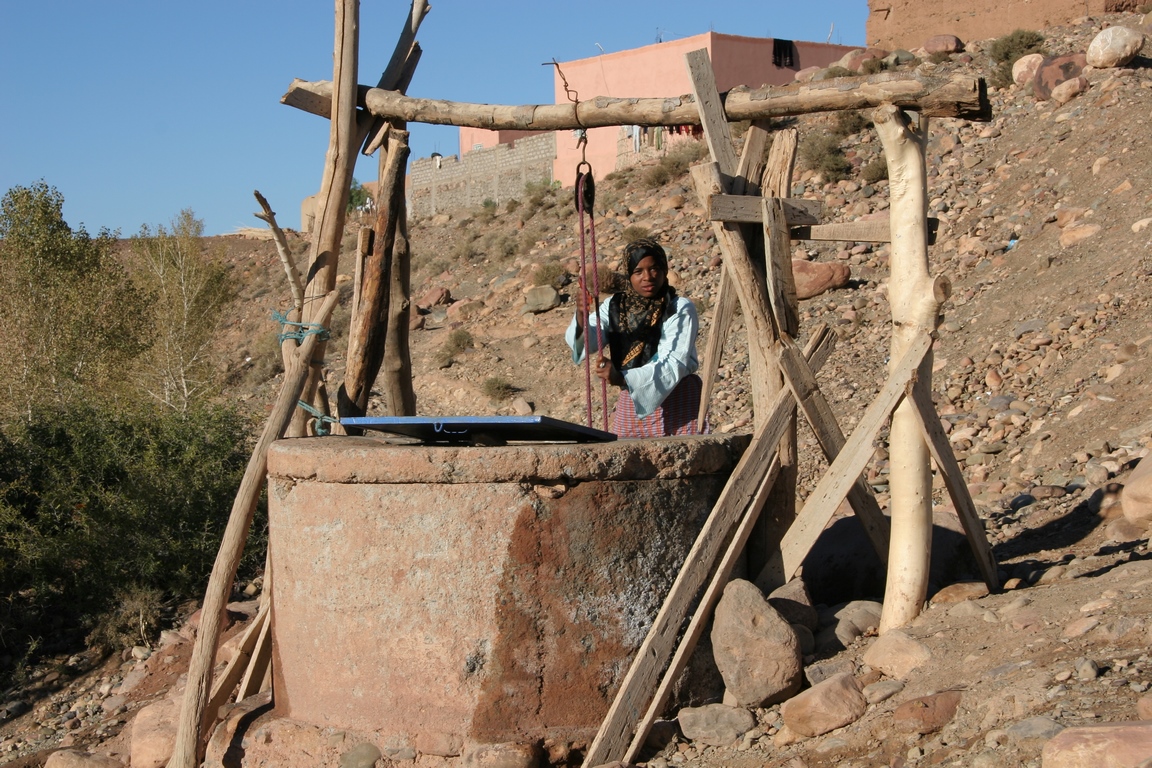
Another consequence of global warming is that extreme events (floods, severe droughts, fires) will become more frequent and more violent. And this is already happening in some parts of the world. For native peoples living in tropical and equatorial zones, such as the Amazon Indians or certain African populations, they will have to cope with violent rainfall leading to major flooding and gullying of the soil. It is also in these tropical and equatorial zones that deforestation is taking place, the second cause of global warming.
What about the people of arid zones?
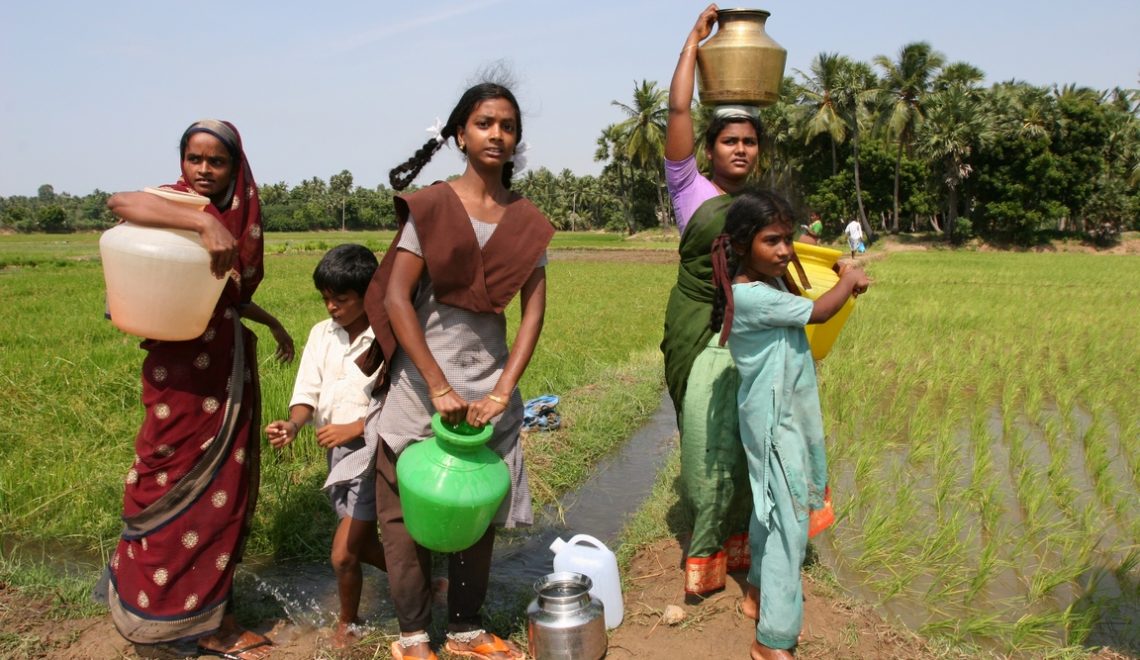
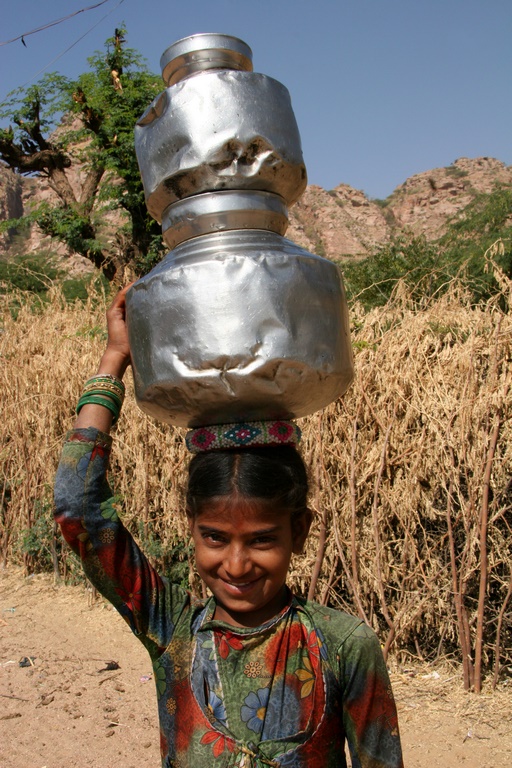
Today, 21.5 % of humanity is concentrated in steppes and arid zones, with only 2 % of the planet's 'blue water' resources. The areas with a chronic physical water deficit today are the deserts: the Sahara, Australia, the whole of North Africa (Sahelian zone), the Arabian Peninsula, northern China, certain regions of India, Mexico and the southern United States. People living in these arid or desert areas will either have to import their food or migrate. The migrant problem we face today is just the beginning of a long story that will inevitably intensify with climate change, population growth and the over-consumption of animal products.
Many countries, such as China, are already unable to be self-sufficient in food due to a lack of arable land or water, and have to import food from countries with surplus production (North and South America, Australia, Thailand, France). In the near future, before 2050, Asia and North Africa-Middle East will only be able to survive by importing massive quantities of food or by allowing their populations to emigrate. South America would then appear to be the main continent capable of providing the necessary agricultural production, but at the cost of gigantic land clearances, reducing even further the proportion of the planet reserved for natural ecosystems and biodiversity.
According to this scenario, we would therefore be moving towards clearing land that is currently uncultivated but arable?
In fact, the real 'water problem' on Earth is population growth, which is occurring mainly in sub-Saharan Africa. The world's population is expected to grow to 9.77 billion by 2050. All continents are stabilising except Africa, where the population is expected to reach 2.5 billion in 2050 (up from 1 billion in 2000) and to double again by 2100. But many African countries believe that their demography is their strength! Yet they will not be able to feed themselves without massive imports, despite the fact that these countries are located in highly watered areas. This situation is due to underdevelopment (insufficient agricultural production, lack of dams, absence of irrigation channels, etc.). Native populations do little to develop their land. They do not modify their environment by, for example, building dams, which would enable them to get through annual droughts, or those caused by reduced rainfall as a result of climate change. And for good reason: they don't have the financial resources. This is where international solidarity must step in to finance the most appropriate technical solutions. Otherwise, there will be only one alternative left to people: to move within their own continent or to other continents!
To cope with this demographic explosion, but also to counter the changes in eating habits in certain countries, the challenge of this century is to build the facilities that are essential to have water for irrigation, while minimising their environmental impact. We also need to create stocks of food and cereals to be able to cope with dry years, or even a series of deficit years, during which global agricultural production will be insufficient to feed everyone...
For domestic water, whose needs are negligible compared to agricultural water (for example, in France, we use 50 m3 per year of drinking water per inhabitant, compared with 1,700 m3 to feed ourselves), so the problem is not one of quantity, but of transport and quality, and therefore of water supply and treatment infrastructures. The planet will never run out of domestic water if it builds these infrastructures in time. For example, the city of Windhoek (350,000 inhabitants), the capital of Namibia in the middle of the desert, has been supplied with water for 30 years by a dam and an 800 km long pipeline, as well as by recycling its treated waste water...

In 2050, to feed everyone on the current diet, we would need 11,000 km of land.3 This is possible if deficit countries have the means to buy their food from exporting countries, and if the latter agree to produce more than they need. If meat consumption accelerates, it will take 13,000 km3/per year. These 11,000 to 13,000 km3/per year will be divided between rain-fed and irrigated agriculture: yields and cultivated areas will have to be increased everywhere. But more rain-fed agriculture means clearing land, and more irrigation means building dams. In fact, many reservoirs will have to be built around the world on sites that are not yet equipped, which will also be used to produce energy, consumption of which is also increasing exponentially. It's true that the construction of dams has serious environmental consequences, and that Western public opinion is often opposed to them, on the grounds of protecting populations that may have to be relocated, flooding valley ecosystems, changing the hydrological regime of rivers downstream, with certain harmful ecological consequences, etc. But if the planet's population never stops growing, shouldn't we try to feed it at all costs? And in the least harmful way? It's all very well for Westerners to oppose the construction of dams in developing countries, knowing that theirs were built a long time ago: each American has several thousand cubic metres of water stored in a dam, while a Frenchman has just under 1,000 cubic metres.3and an African... measuring 3 m3 ! Dams are certainly not a miracle solution, and are decried by environmentalists, but sometimes you have to choose between two evils.
Are there other ways of meeting future water needs?
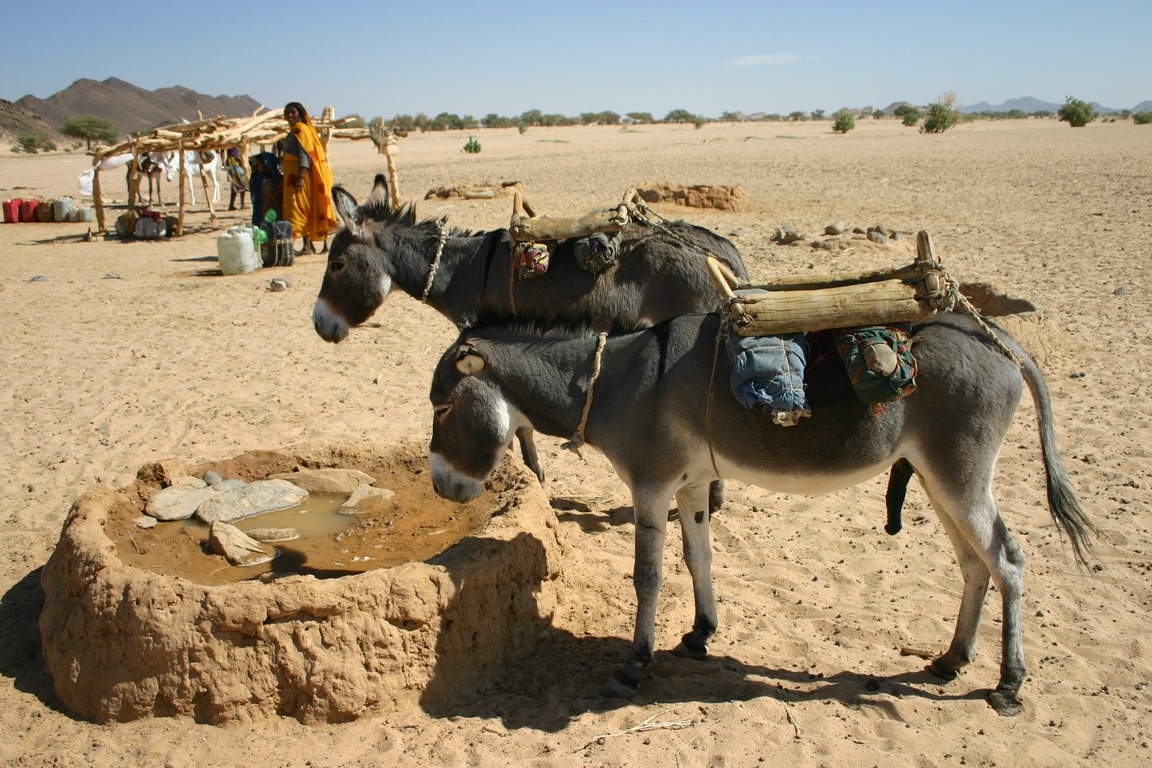
Firstly, we can live more sparingly, because the amount of water needed to feed a human varies from 600 to 2,500 m3/year depending on the country. You can also move around. This is what nomadic populations have been doing since time immemorial, following the pattern of the rains, as they still do today in Africa, or in the United States during the great drought of the 1930s, the famous "Dust Bowl". We can also store water when it rains, and transfer water through canals or underwater pipes. Finally, we can treat wastewater and desalinate seawater.
Will we run out of water in the end?
No, we are not going to run out of water globally. But locally, yes, because this abundant resource is, like the population, unevenly distributed across the globe. The water problem is first and foremost a technical problem which, if not tackled by governments, will become a highly sensitive social issue.
Some references
- Marsily, G. de (2009) L'eau, un trésor en partage. Dunod, Paris, 256 p.
- MARSILY, G. de, Coordinator (2006) "Les Eaux Continentales" Rapport RST n°25 de l'Académie des Sciences, EDP Sciences, Paris, 329 p.
- 56. LERIDON, H., MARSILY, G. de, Coordinators (2011) Démographie, climat et alimentation mondiale. RST Report n°32, Académie des Sciences, EDP Sciences, Paris, 313 p.
- MARSILY, G. de, ABARCA-DEL-RIO, R., CAZENAVE, A., RIBSTEIN, P. (2018) Will we run out of water soon? La Météorologie, Revue de l'atmosphère et du climat. No. 101, p. 39-49, May 2018. http://documents.irevues.inist.fr/bitstream/handle/2042/67429/meteo_2018_101_39.pdf
Ghislain de Marsily
- Professor emeritus at Sorbonne University, Pierre-et-Marie-Curie University (Paris-VI) and the École des Mines de Paris, member of the Académie des Sciences, the Académie des Technologies, the Académie d'agriculture de France and a foreign member of the US Academy of Engineering, Ghislain de Marsily is a geologist specialising in hydrology. His research focuses on water resources and the effects of climate change, the contamination of water by human activities and the geological processes associated with underground flow.
Interview by Brigitte Postel, published in Natives n°4 hhttps//www.revue-natives.com/editions/natives-n04/
Photos: Brigitte Postel