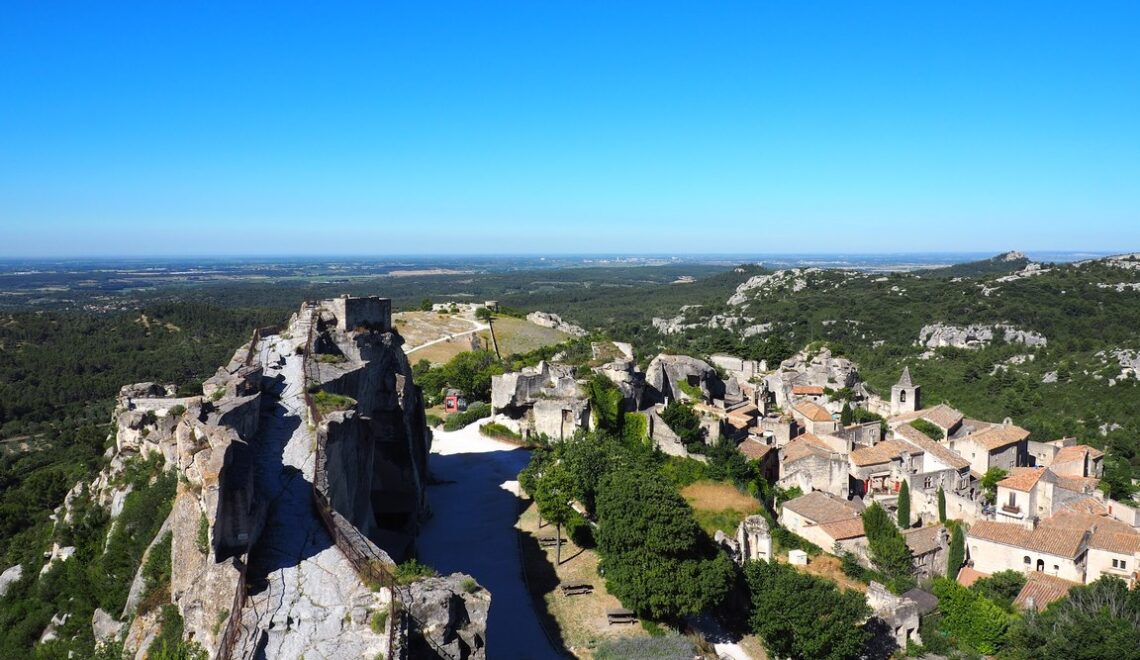
There are villages to be discovered, and others that impose themselves. The village of Les Baux-de-Provence undoubtedly belongs to the latter category. Clinging to its rocky spur, it emerges in the magnificent landscape of the Alpilles.
Table of Contents
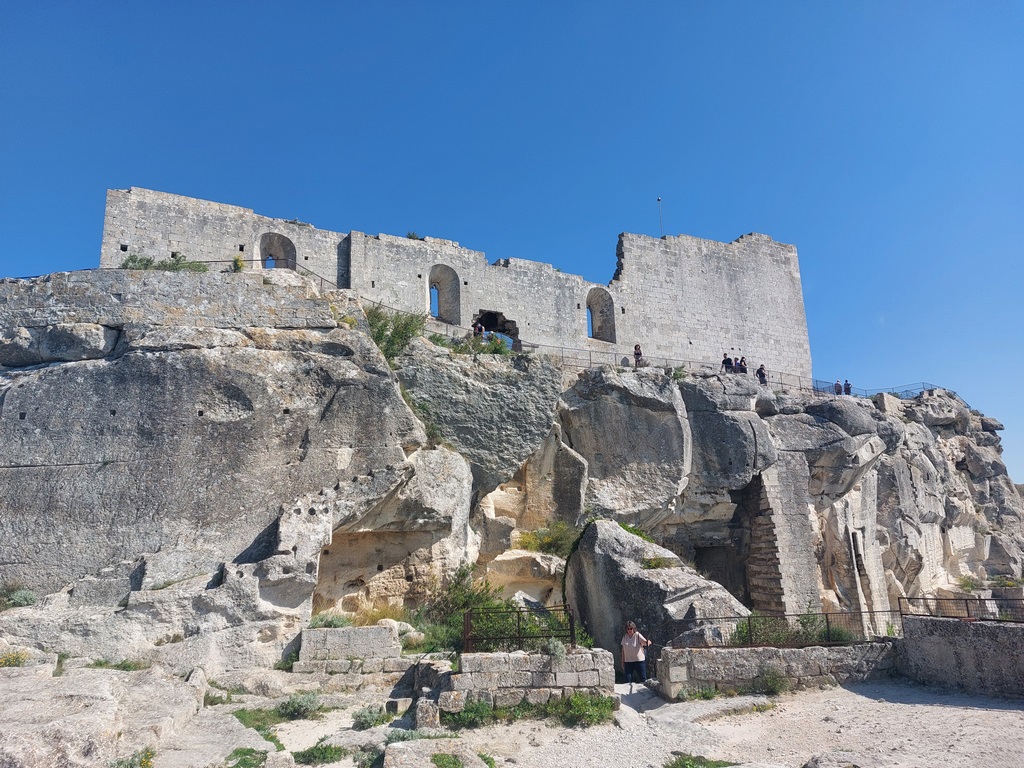
It's not a castle in the classical sense of the word, but rather a sprawling fortress, with its collapsed walls and gutted towers.
Les Baux: A Citadel at the Heart of Feudal Rivalries
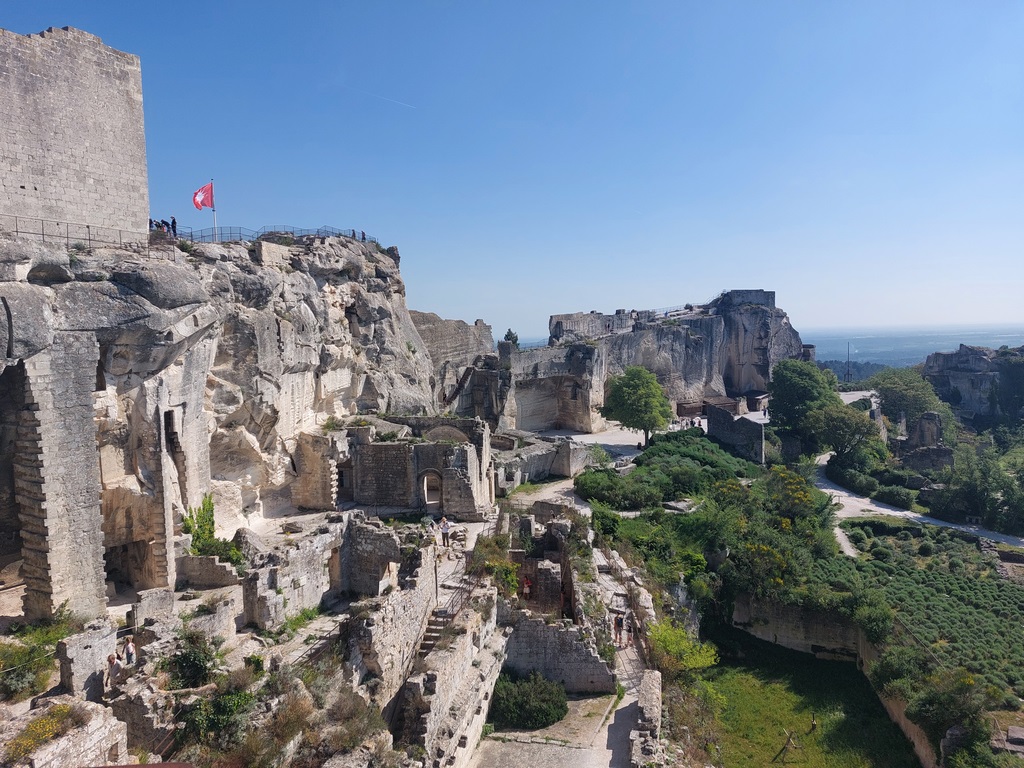
One must then imagine Les Baux in the Middle Ages, a feared stronghold, theatre of feudal rivalries and seigniorial splendour. The powerful Baux family, who claimed descent from the Magi kings, made this promontory a strategic bastion and an influential centre of power. Remains from this era still exist: a keep, reconstructed siege engines, open-air chapels. The castle then becomes a life-size history book, where one can wander freely, to the rhythm of the stones and the wind.
Les Baux: A Provence of stone and scents
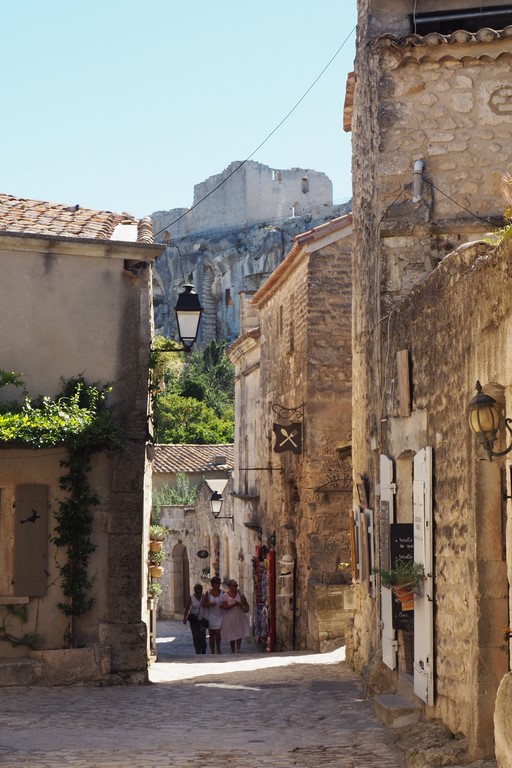
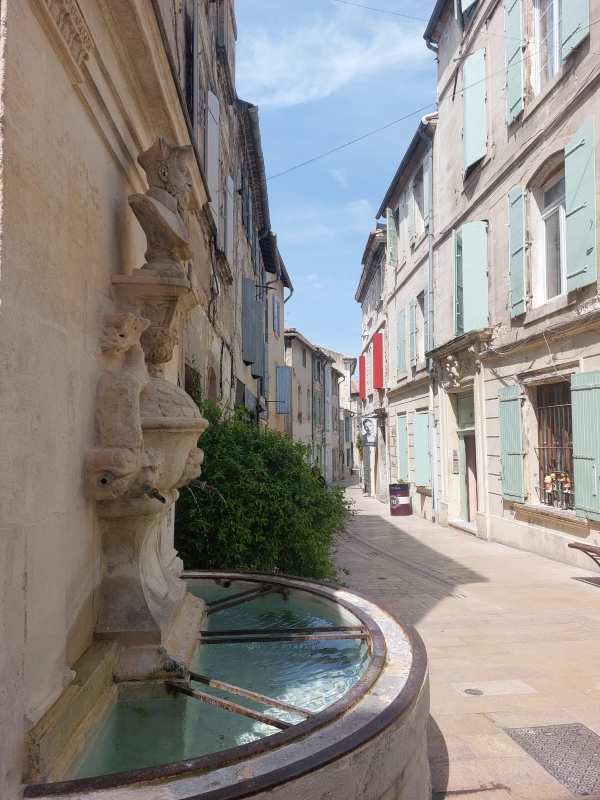
But Les Baux-de-Provence is not just about its warrior past. The village, listed among the most beautiful in France, unfurls its cobbled streets as so many invitations to leisurely stroll past its shops and restaurants. At every turn, an archway, a small square, a shaded terrace seem to suspend time.
In this mineral setting, nature is never far away. Olive trees, cypresses and scrubland make up a typically Provençal landscape, where the scents of thyme and rosemary accompany every step. One then understands why so many artists have found an inexhaustible source of inspiration here.
We come to Les Baux not just to see, but to feel the warmth of the stone, the force of the wind, the weight of history. There is, in this suspended village, a footbridge between the past and the present, between the harshness of the landscape and the softness of the light. And perhaps this, deep down, is what makes Les Baux-de-Provence unique.
Information
Office of Tourism of the Baux de Provence
www.lesbauxdeprovence.com
The Quarries of Light: Pablo Picasso and Frida Kahlo, a dialogue between 2 geniuses.
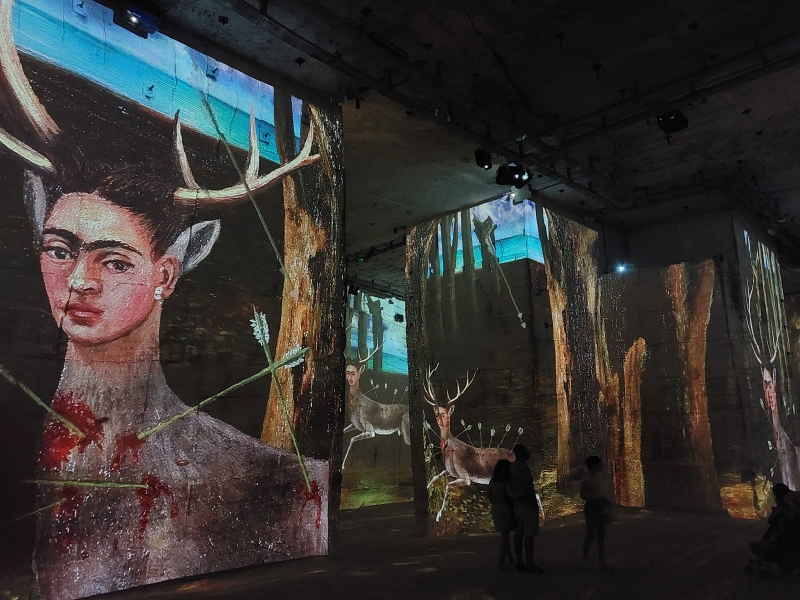
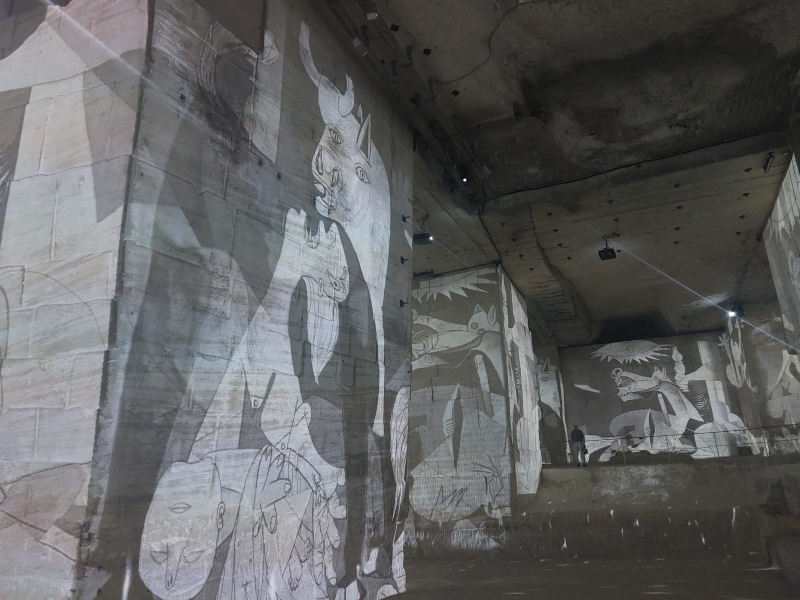
One cannot visit the Baux without going, quite obviously, to the Carrières de Lumières located a few hundred metres from the village of Les Baux. The entrance ticket includes both visits, by the way.
In the cool, monumental shadow of these ancient quarries, exploited since antiquity for their limestone and then, in the 19th century, for a red ore rich in alumina (1) discovered by the chemist Pierre Berthier (1782-1861), stone gives way to another form of exhilaration: that of art in motion. Carved out over more than two millennia by generations of quarrymen, these vast galleries, once dedicated to extraction, have today become a spectacular setting for immersive exhibitions.
Pablo Picasso and Frida Kahlo
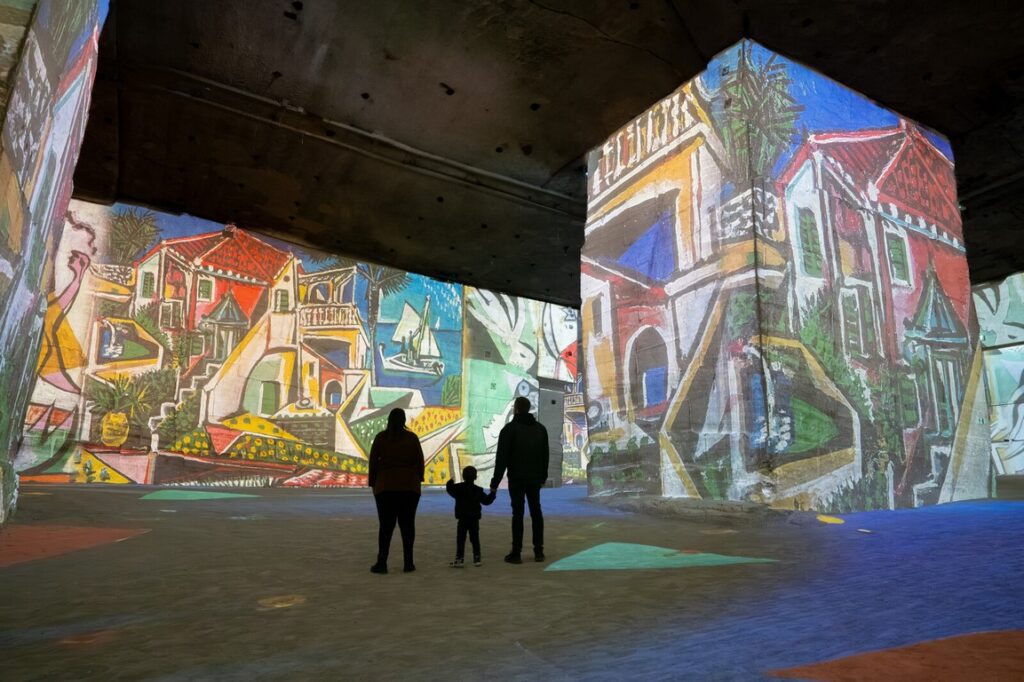
From February 2026, this striking, monumental venue will host a new immersive creation dedicated to two major 20th-century figures, Pablo Picasso (1881-1973) and Frida Kahlo (1907-1954). Two trajectories, two sensibilities, but the same intensity, projected onto the rock itself, in a staging that is as much about spectacle as it is about contemplation.
Presented in a version entirely designed for the Baux-de-Provence website, the experience « Picasso, art in motion »captures us from the first few minutes.
The gigantic limestone walls become living canvases. Over 450 images, paintings, drawings, and archives unfold in a visual and sonic choreography that embraces the site's volumes. .
From Spanish bullrings to Parisian nights, the radical forms of The Young Ladies of Avignon to the tragic power of Guernica, Each sequence forms a vibrant fresco of his work. The music dialogues with the images, accentuating at times their violence, at times their poetry. Picasso's genius finds a fitting setting here.
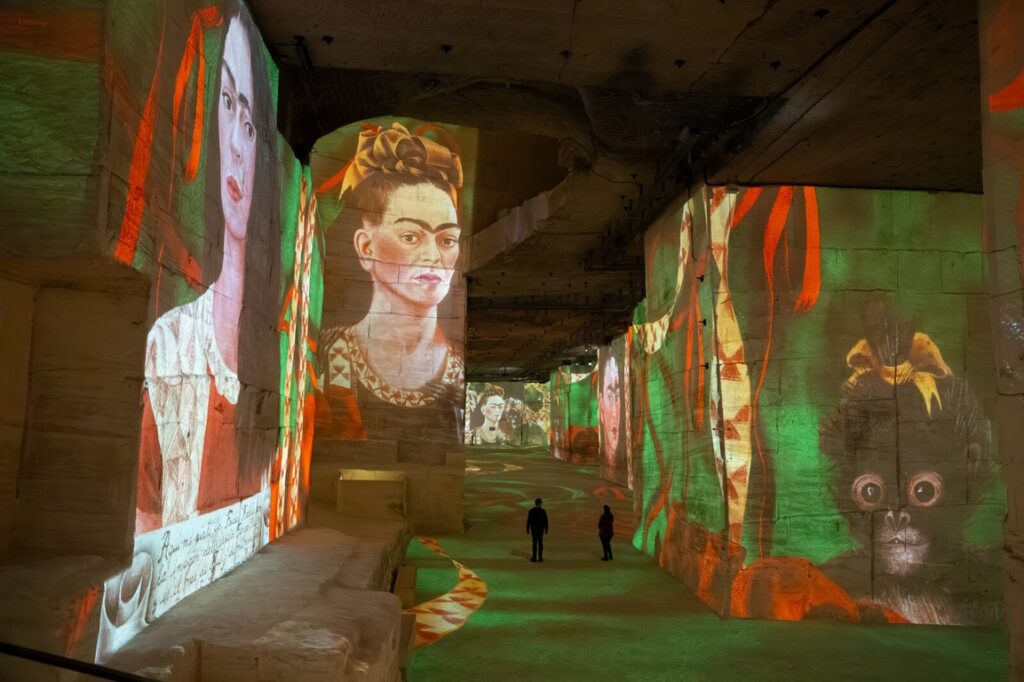
But perhaps it is in the contrast that the true emotion lies. After this outpouring of creative energy, the experience dedicated to Frida Kahlo « Frida Kahlo, right in the heart »imposes itself as an intimate counterpoint. Shorter, it acts as a breath of fresh air.
The quarry walls are then adorned with vibrant colours and powerful symbols. The life of Frida Kahlo is revealed there in all its complexity: the ever-present physical pain, but also the quest for identity, strength, and resilience. Her self-portraits, projected on a large scale, take on a troubling dimension.
Here you'll find his most iconic works, such as The Two Fridas, The Broken Column, where the body becomes language, where suffering transforms into a universal expression. The broken column bears witness, among other things, to his ability to express his wounded body and his melancholy.
The floral and anatomical motifs come to life, as if the painting itself were breathing.
This dialogue between Pablo Picasso and Frida Kahlo is not insignificant. The two artists met, briefly, in Paris. They admired each other. The exhibition thus plays on this resonance.
The entire success of Carrières des Lumières is thus before our astonished eyes: transforming a raw, historically rich site into a space for contemporary emotion.
An exhibition not to be missed!
The exhibition runs until 3 January 2027. https://www.carrieres-lumieres.com/fr/visiter/horaires-tarifs
1- This ore will be named «bauxite», in reference to Les Baux-de-Provence.
www.carrieres-lumieres.com
Where to stay?
Bed and Breakfast Le Mas de la Fadeto
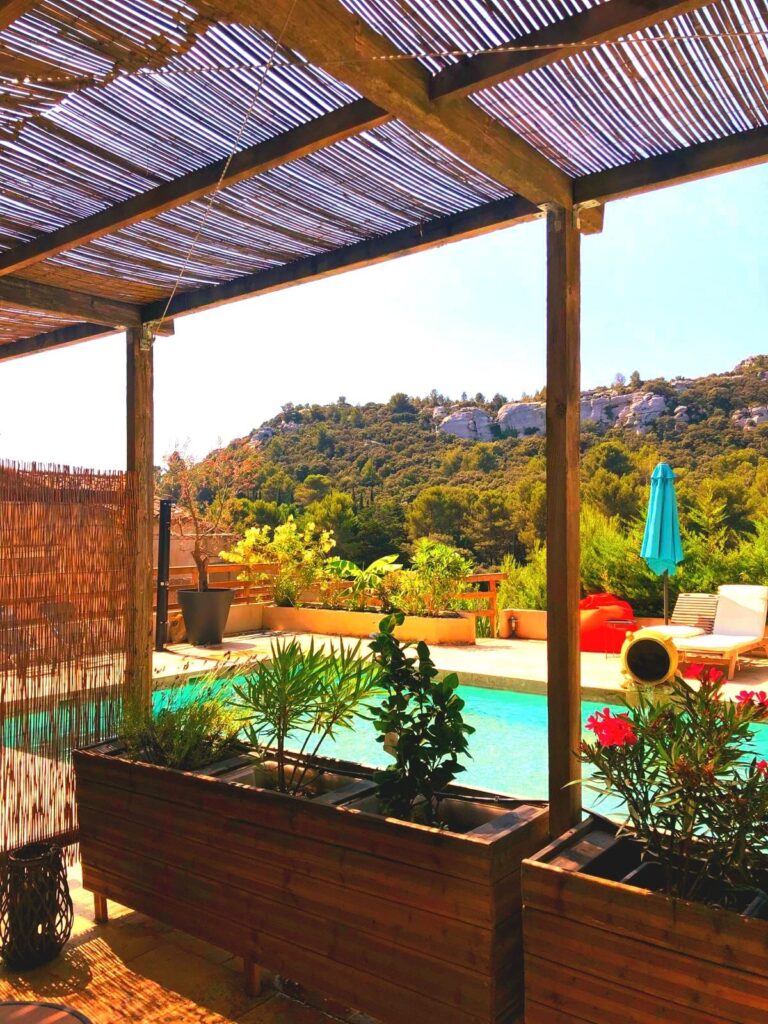
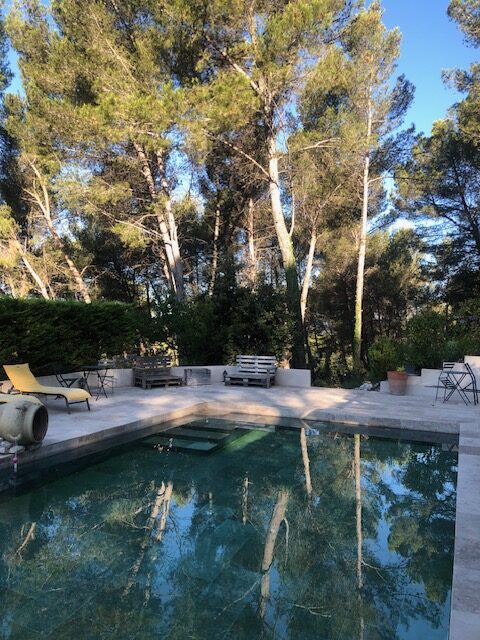
On the edge of the Alpilles, where the light carves the rock with a goldsmith's precision, lies an address that seems to have escaped the tumult of the modern world: Le Mas de la Fadeto. Near the listed village of Les Baux-de-Provence, this guest house cultivates a discreet art of living.
From the moment you arrive, the tone is set. Here, there's no ostentation or flashy luxury, amidst terraced slopes planted with olive trees. Here, everything begins with an encounter. That of the owner, whose warm welcome immediately gives the feeling of being eagerly awaited.
The rooms elegantly blend Provençal charm with understated comfort: delicate textiles in blue and brown tones, and an almost palpable silence that in summer will only be disturbed by the song of the cicadas and in spring by the whisper of the mistral. The living tableau of a timeless Provence.
But perhaps it is around the table that the place reveals its true uniqueness. Breakfast, served with unostentatious generosity, gives pride of place to local produce: golden pastries, sun-drenched apricot jam, generous homemade fig jam, strawberries…
Not to forget in the evening, there's an aperitif served on the terrace facing the pool: a bottle of champagne offered by Carole, the owner, who is originally from Champagne, and her homemade olive oil.
An attention that speaks volumes of the place's philosophy: that of a sincere, almost familial welcome, where luxury is measured by the quality of the attention.
Le Mas de la Fadeto isn’t just a stopover; it’s an invitation to slow down. In an era where tourism is becoming faster and more standardised, it serves as a reminder that travel should be about experiences and encounters. It’s an address to keep to yourself, almost jealously, like those secrets you only share in a whisper.
www.lemasdelafadeto.com
Hôtel Le Mas d’Aigret
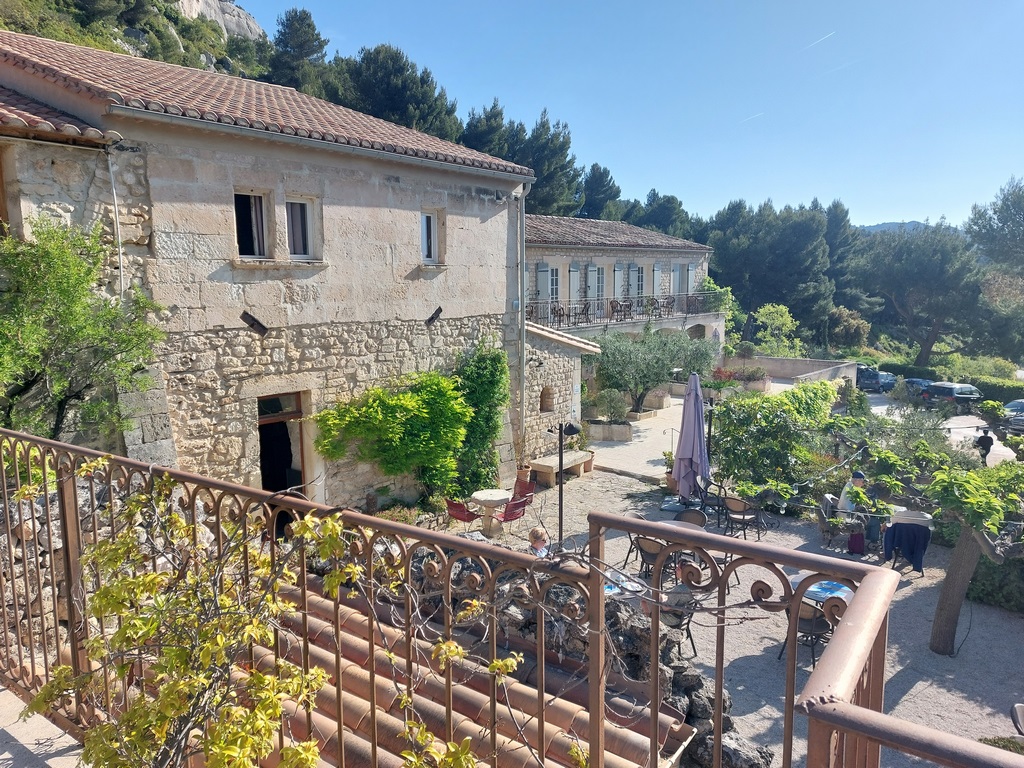
On the rock face, almost hidden in the living stone of the Alpilles, le Château d’Aigret It cultivates a rare elegance. The troglodyte rooms offer natural coolness and an immediate change of scenery. The irregular walls, left bare, tell a story that time has not erased. Every detail creates subtle harmony. In the evening, the troglodyte dining room is adorned with soft lighting, and the cuisine is firmly rooted in Provençal traditions. In the early morning, the terrace reveals a breathtaking panorama of the entire Baux Valley.
Staying at Mas d’Aigret is to offer yourself a timeless escape, steeped in stone, light, and memory.
Find the full article:
Text : Laurence Grémy-Flamand