The Rhône delta, sometimes called the Camargue delta, has been formed for over 10,000 years by the Rhône at its mouth in the Mediterranean Sea. It begins near the town of Arles, where the river divides its course into two arms: the Petit-Rhône to the west and the Grand-Rhône to the east.
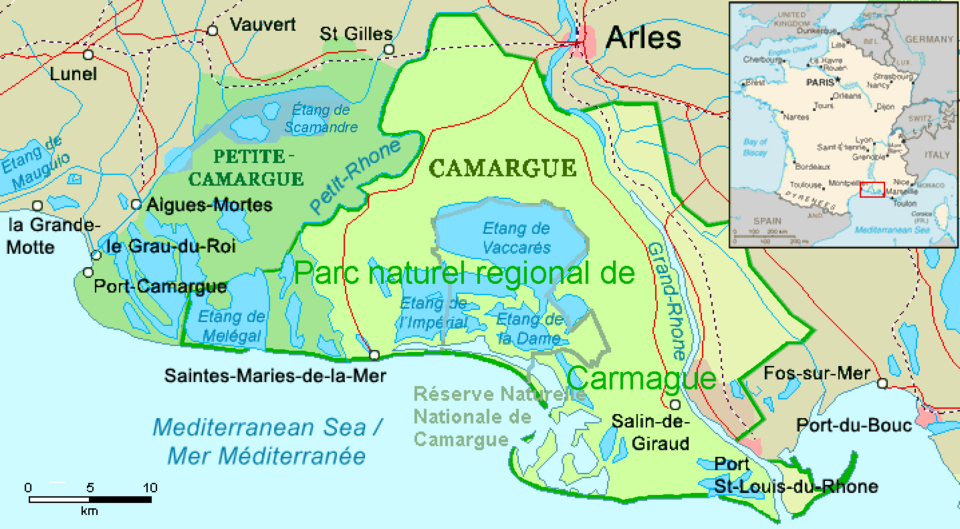
Bounded by these two arms of the Rhône and the sea, the Camargue thus forms a sort of island that humans have continually shaped, at least since the 11th century for the earliest known interactions. This delta has become a land of diverse cultures, biodiversity, and tourism. Over the centuries, the climate, the movement of the sea, the vegetation, as well as human activities, have shaped this place of exceptional beauty.
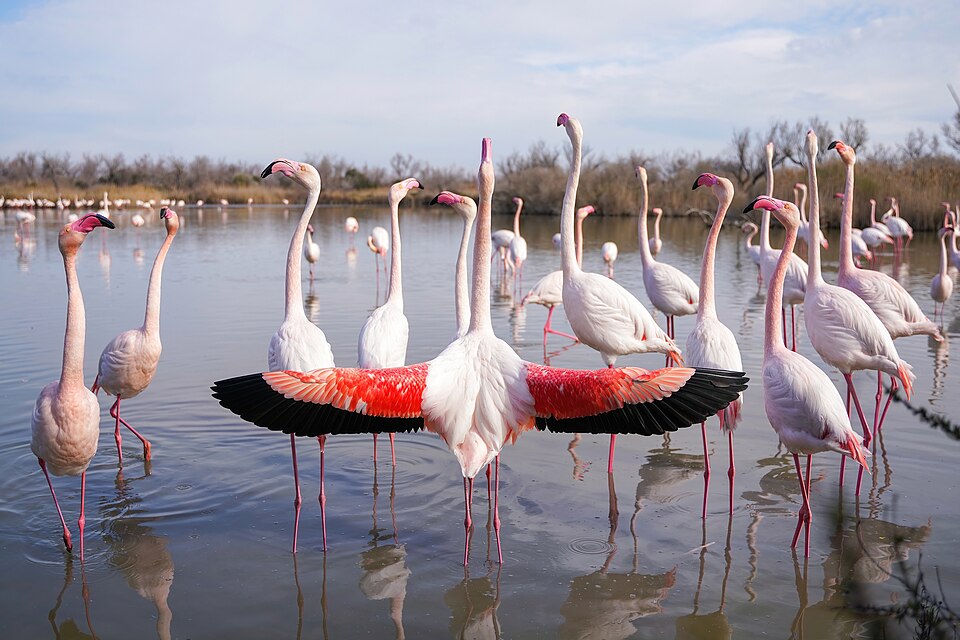
With a surface area of over 930 km², the Camargue is one of the largest river deltas in Western Europe. Between rice paddies and wild beaches, between marshes, ponds and salt pans, the delta holds a unique ecosystem in France. It combines wild landscapes composed of a subtle mosaic of environments and a high degree of artificialization due to extensive water management. The landscapes here show several faces – those of nature, history, and industry – which are discovered progressively or are immediately apparent depending on the visitor's geographical origin.

The rise of the large Camargue herds
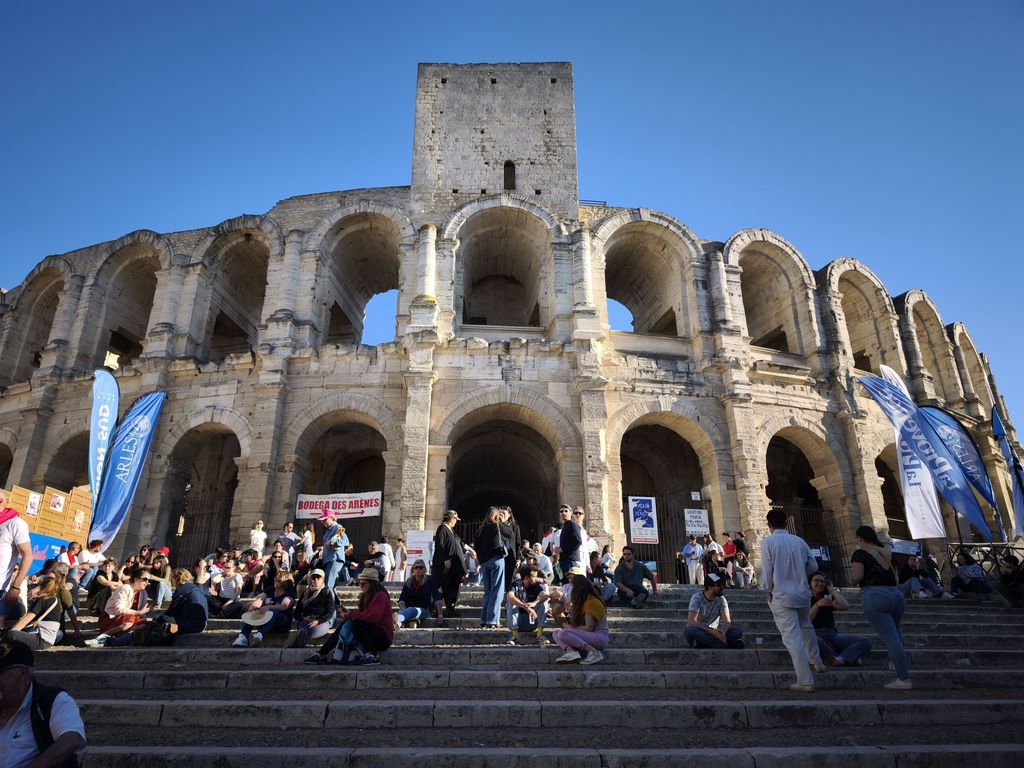
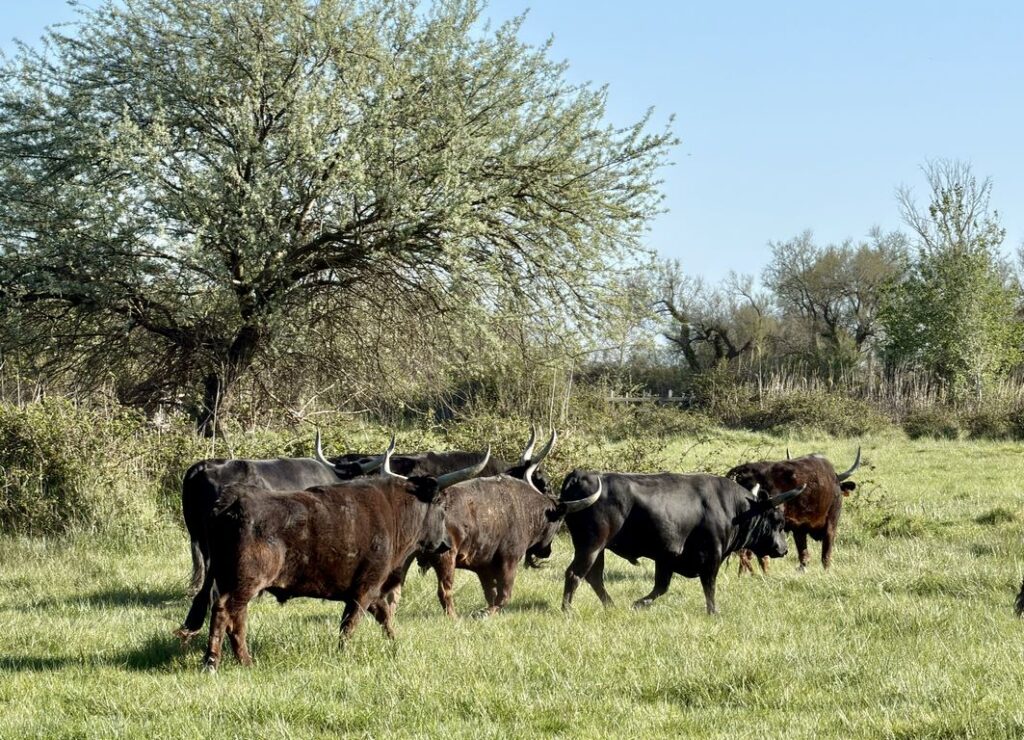
Arles, situated at the northern tip of the delta where the Rhône divides, has been described as the “capital” of the Camargue. In the 16th and 17th centuries, large estates called *mas* were founded by wealthy Arlesian landowners. The end of the Rhône's meandering in 1711 marked a decisive turning point: agriculture advanced in the delta, followed by total embanking, the expansion of salt pans, and the development of hamlets. It was in this context of the progressive reclamation of a land long considered inhospitable that the great Camargue *mas* gained prominence, of which the Mas de Peint, the Mas du Couvin or the Domaine de la Tour du Cazeau in the locality of Le Sambuc.
Text : Sylvain Grandadam
Photo opening : © Giles Laurent/Commons.