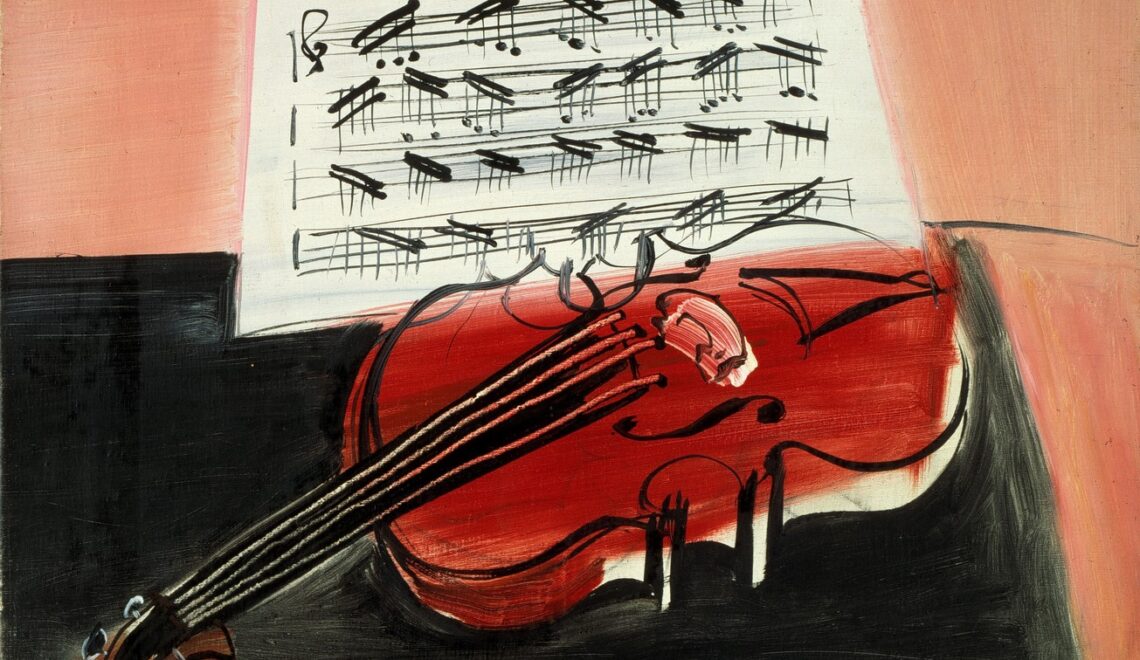
The Dove, the Ibis, the Rabbit, the Cat, the Tortoise, the Crayfish… There are around thirty short poems (quatrains) in total by Guillaume Apollinaire (1880–1918) illustrated by Raoul Dufy (1877–1953), which were published in March 1911. A shared adventure recounted this summer in words and pictures at the Franciscan Convent in Deauville.
Table of Contents
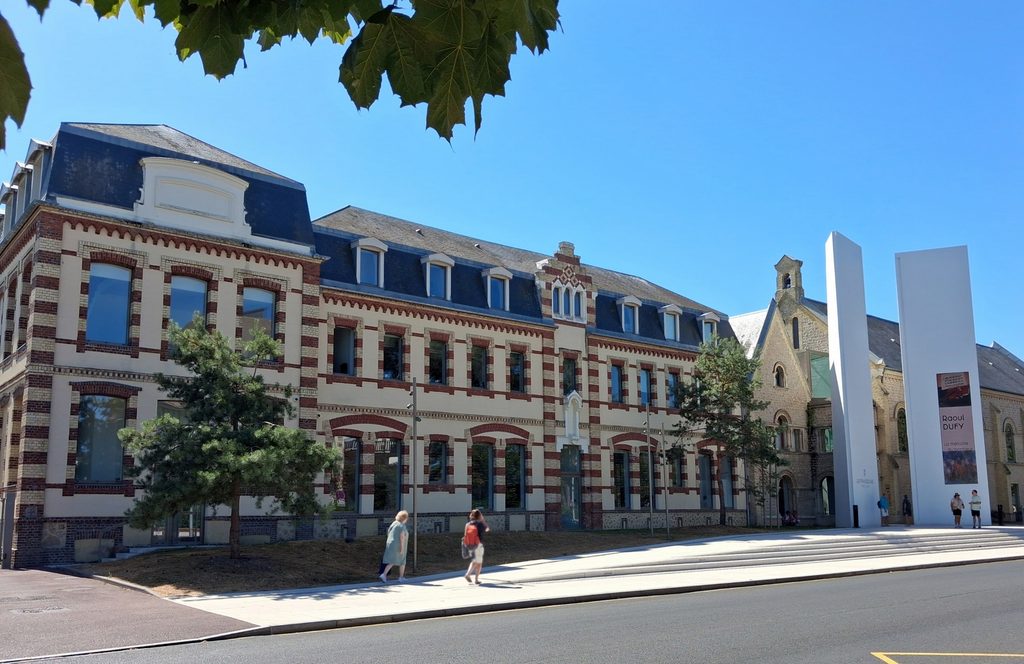
This remarkable 19th-century heritage complex, formerly convent of the Franciscan Sisters Transformed into a cultural venue in May 2021, it allows us to discover one of the many rich facets of this Norman artist’s work.
Media centre, museum, exhibition space, performance venue… Here, you’re spoilt for choice. And this summer, the organisers are taking the opportunity to do justice to the impressive versatility of Dufy’s talent, which goes far beyond easel painting to encompass drawing, printmaking, ceramics and textile art… Around a hundred works are on display in an exhibition organised into ten sections, arranged both chronologically and thematically.
Metrics and prosody take centre stage
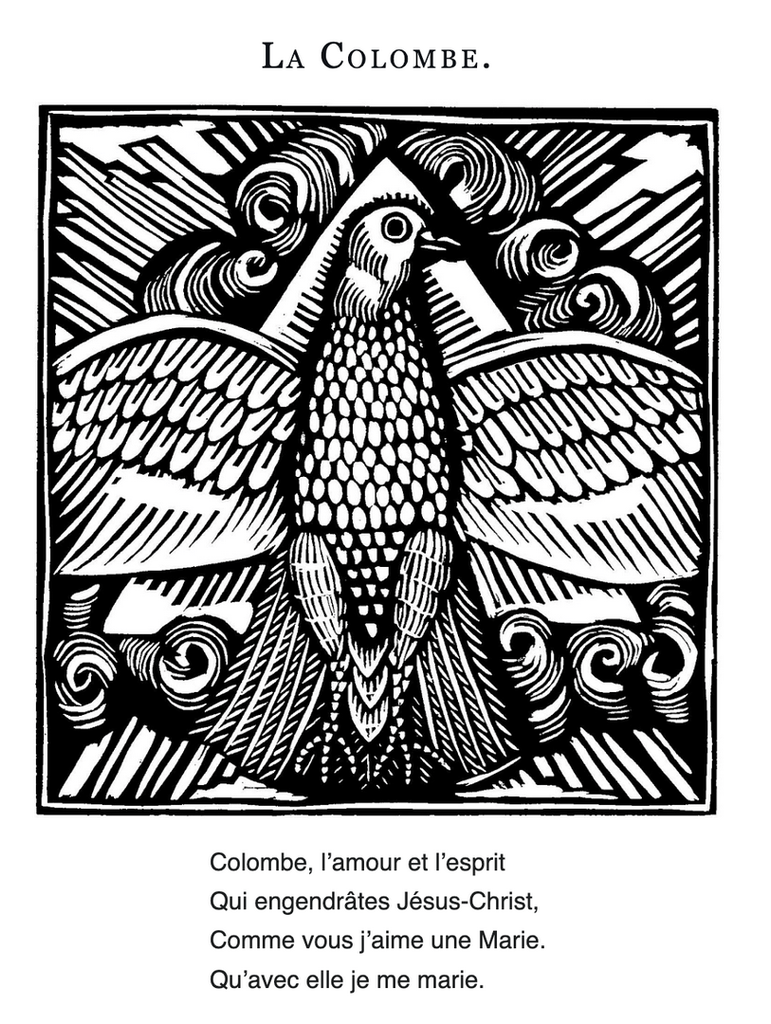
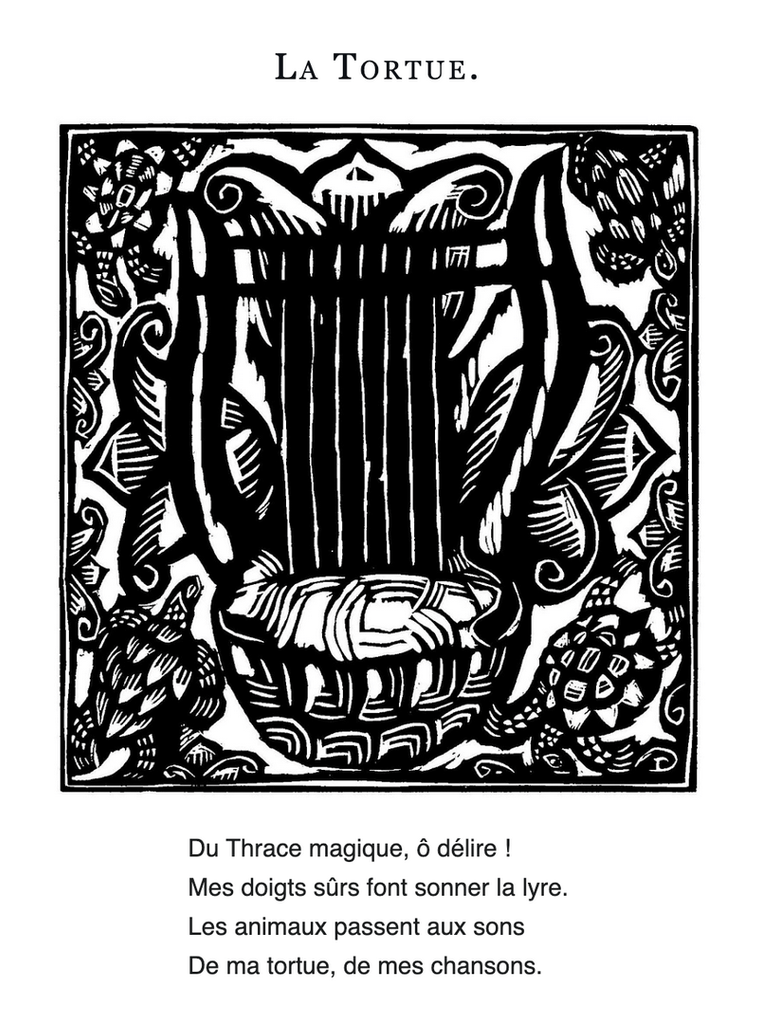
Guillaume Apollinaire’s poems, illustrated by Raoul Dufy, adhere strictly to the traditional rules of poetry in terms of metre and prosody.
For example, these rhythmic quatrains – in octosyllables or alexandrines – use «flat rhymes», so that the first two lines, phonetically echo one another, whilst the last two lines, for their part, resonate together according to the AABB pattern.
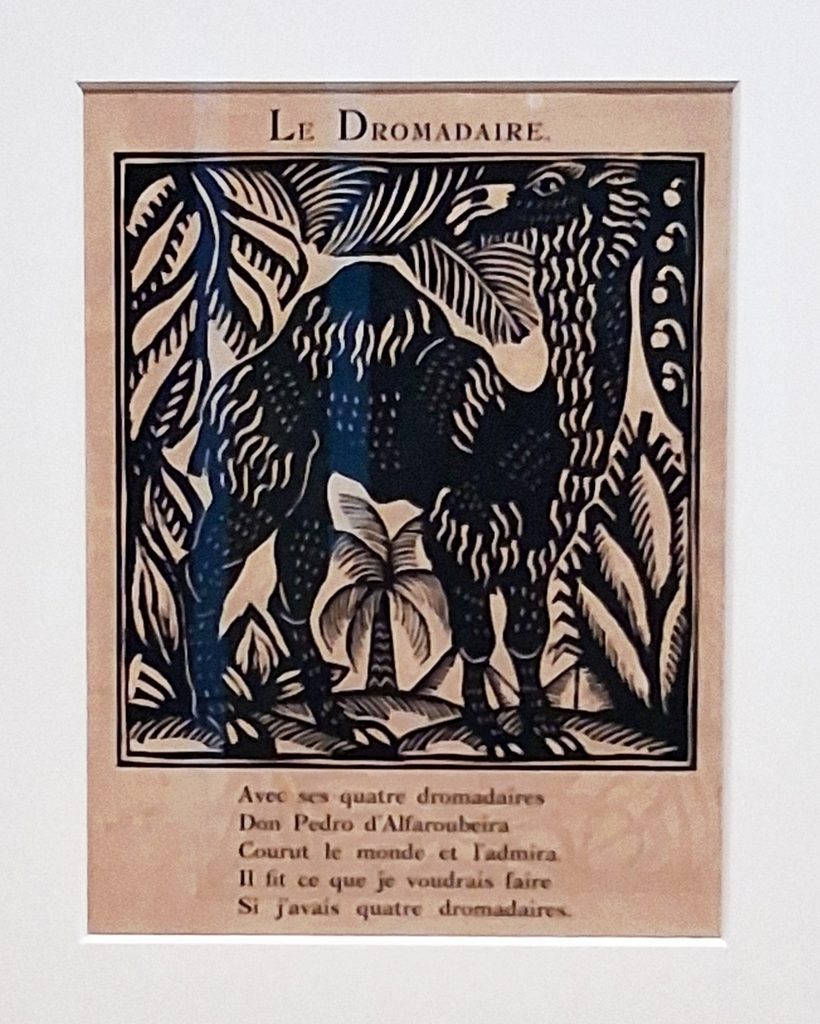
This poem tells the story of a young prince from Portugal who set off to visit seven parts of the world on four camels. Exoticism abounds.
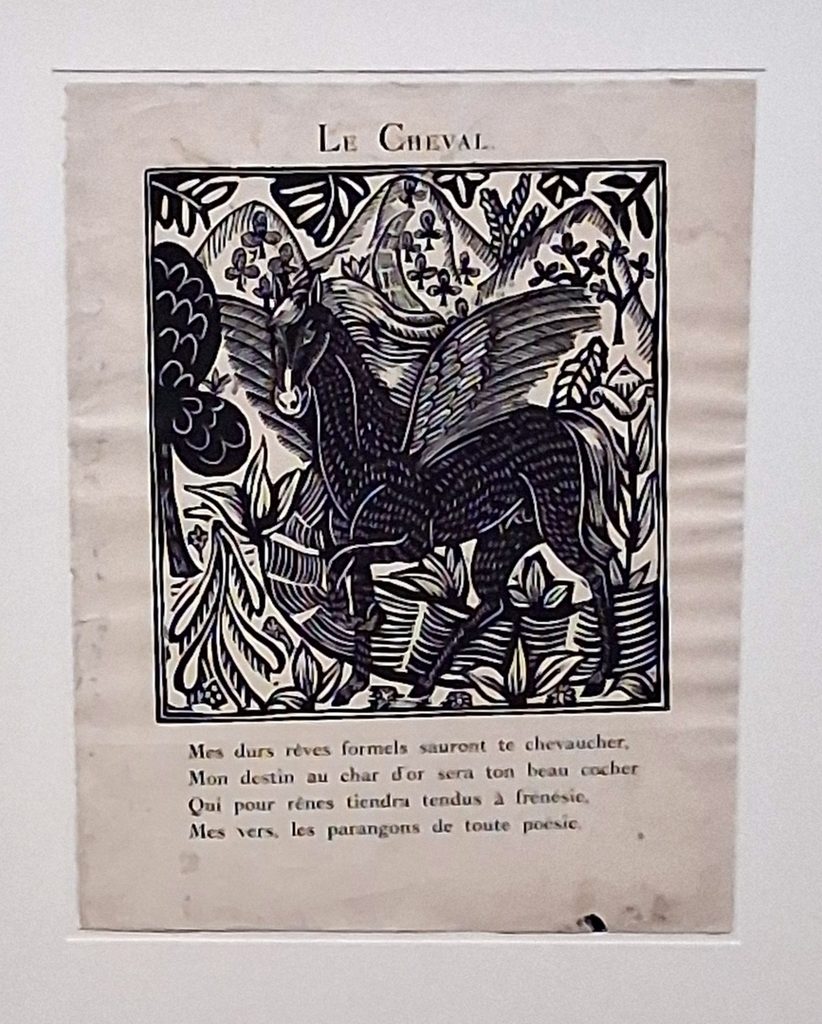
This possible depiction of the poet brings to mind Helios, the personified Sun God of Greek mythology, riding a golden chariot.
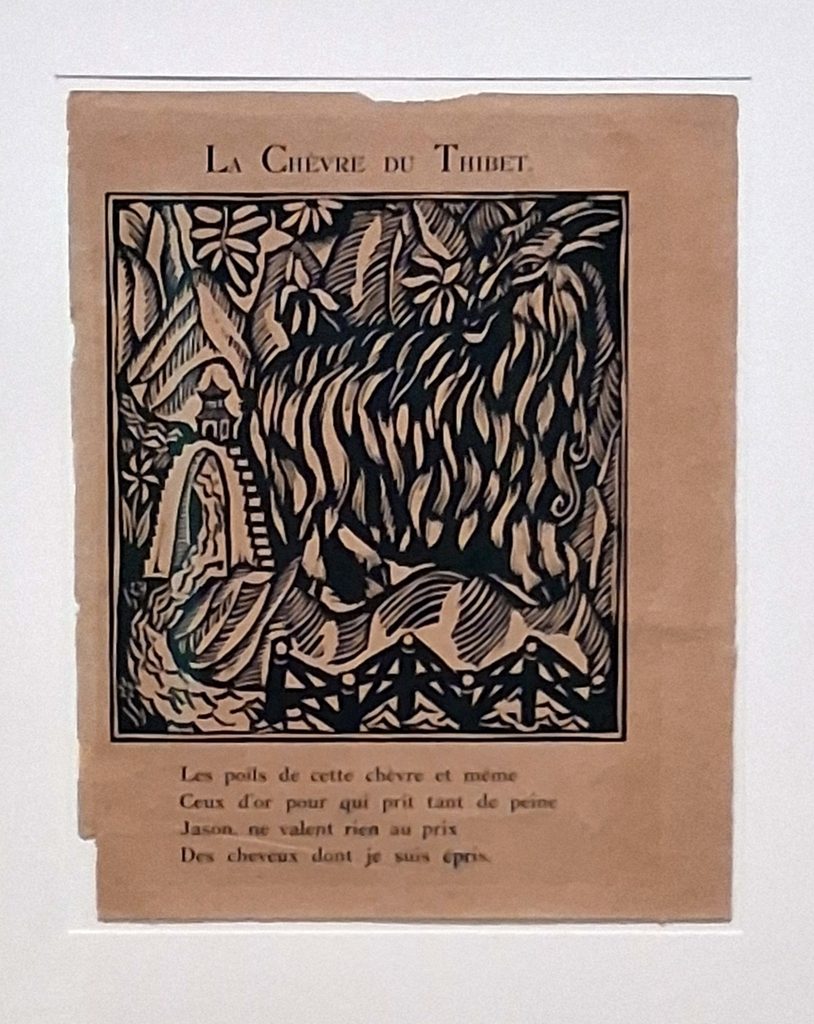
A golden but rather shaggy fleece – reminiscent of the legend of Jason – this one hailing from the heights of Tibet – blends into the twists and turns of the engraving.
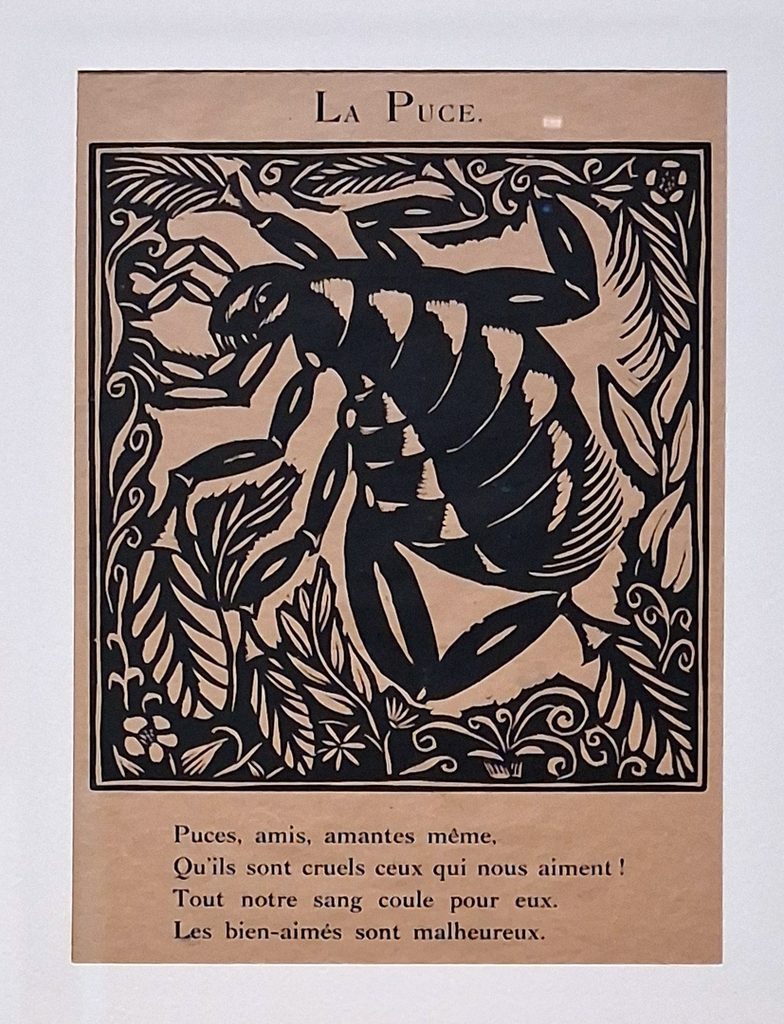
A less glorious image than that of the celestial body, this figure—a regular in dusty nooks and crannies—embodies for Guillaume Apollinaire a love as cruel as it is intimate.
A bestiary written by two authors
A work by Apollinaire and Dufy, « The Bestiary or The Procession of Orpheus », a collaborative collection comprising poems accompanied by woodcuts (xylographs), will be published at the authors« own expense by the publisher Deplanche, who will have the work printed by Gauthier-Villars. “ The Bestiary » will be printed in a run of 120 copies.
The artistic approach draws inspiration from the « La Fontaine’s Fables »in which each poem paints a witty portrait of an animal.".
The character of Orpheus, a mythological figure and the central character of this bestiary, played a lyre that Mercury had given him, made from a tortoise shell. His singing and the music emanating from the instrument irresistibly drew wild animals, which approached of their own accord to listen to him.
Exhibition: «Raoul Dufy – The Sound of Music»
from 27 June to 20 September 2026
The Franciscans
145 B, Avenue de la République – 14800 Deauville
Enquiries: 02 61 52 29 20
http://lesfranciscaines.fr
Text and photos: Reza Afchar Naderi
Photo opening : Raoul Dufy
The Red Violin, c. 1948
Oil on canvas, 38.5 x 46 cm
Pompidou Centre Collection, Paris
National Museum of Modern Art – Centre for Industrial Design
© Centre Pompidou, MNAM-CCI/MNAM Photographic Documentation Department/Dist. GrandPalaisRmn