

Table of Contents
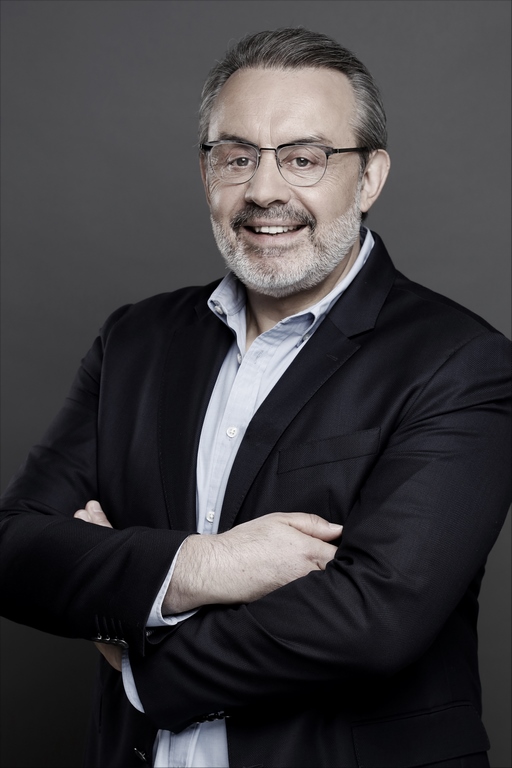
Jean-Pierre Nadir, founder of FairMoove, an online travel agency that reconciles travel, ecology and sustainable tourism, spoke at the Centre d'études des indépendants du voyage (Cediv) convention in Sicily at the end of November. We caught up with this entrepreneur, who is developing an innovative offering to meet the challenges of more responsible tourism.
How are you trying to reconcile travel with tourism, which should be responsible and respond to ecological issues?
Our starting point was the concept of responsible tourism, i.e. tourism that takes full account of its social, economic and environmental impact, both now and in the future, in order to design and develop offers in line with these values. Today we have, on the one hand, the "décroissants" who advocate stopping travel or at best travelling by train, which deprives tourism of a whole section of humanity and, on the other, those who are not concerned about its impact and continue to travel, believing that each generation finds its own solutions.
Between these extremes, there is a total of 70 % people who are wondering about and want to continue travelling, but in a different way.
What does travelling differently mean? It's about reconciling the challenges facing the planet with the interests of local populations and tourists, and striking a balance between these three poles, bearing in mind that tourism has developed around a single vision, that of tourism, tourists and the money they bring in! This "predatory" tourism, which is primarily based on marketing tools, concerns a single group of individuals and leaves only a few pennies for the local population, without any concern for them. Responsible tourism, on the other hand, concerns three major causes and is part of a global vision. So we need to adopt a cross-disciplinary approach that incorporates all the issues. And we need to move away from a pleasure-centred vision towards a model that is fairer and less destructive for nature and local populations.
You see the tourism of tomorrow as regenerative tourism. Could you elaborate on this?
Regenerative tourism is linked to the added value that visitors can bring to the destination and its population. Where responsible tourism aims to minimise its negative impact at destination and optimise its positive impact, regenerative tourism is all about positive change. It acts to regenerate resources and make things better for the planet and future generations. For example, it means replanting coral reefs where they have disappeared, reforesting areas that have been deforested, reprocessing water to supply neighbouring villages that had been deprived of drinking water, and so on. It means ensuring that tourism resources also benefit local populations and the planet. For example, by practising agroforestry, we can regenerate the soil, recreate shady areas and halt desertification. This ecosystem generates jobs cultivating the soil, growing vegetables and harvesting produce that can then be bought by hoteliers or sold at markets, thereby reducing the need to import products that have travelled thousands of kilometres by boat and pollute. Let's encourage local consumption. It's a value chain that benefits everyone.
Based on these criteria, how do you choose your destinations?
In a number of ways. Firstly, the underlying idea is to consider the social impact, i.e. for whom and how? If we only deal with part of the problem, taking into account only the planet and the tourists, we can effectively come to the conclusion that responsible tourism means staying in France. That's where the negative impact on the planet is lowest. On the other hand, if we introduce the third element, which is the social impact on the destination, then we will be looking at the 3 billion people in the world who live on less than three dollars a day. These people are concentrated in more or less the same countries and almost all on the same continent: Africa. So today, when we choose to stay in France, we are condemning all the countries that make a living from tourism or that could have made a living from it. I'm obviously thinking of Tunisia, Morocco, Senegal and Madagascar, as well as all the countries for which tourism is a real lever for development, and on which they rely or should rely to avoid the economic exodus that is already underway.
When temperatures are predicted to rise by 3 or 4 degrees in the coming years, human migration is inevitable. And it's already happening. Just look at the risks taken by these people to cross the sea in makeshift boats and try to earn a crust, living here in degraded conditions in Quechua tents, in order to feed ten, fifteen or twenty people who have stayed behind. Let's not forget that a third of Senegal's economy relies on Western Union. That's why my proposal is to say: OK, if I integrate these three dimensions, then I must integrate destination tourism in the countries that need it and for which it can be a solution. It's all the more of a solution because these countries have lost the economic levers they had with the subcontracting factories that have been relocated to Asia (the manufacturing sector is shrinking by 2 to 3 % per year), and with agriculture where 40 % of jobs have been lost worldwide over the last 30 years. The challenge will be to keep people on their land who are leaving because they have no other way out. In my view, tourism is an element of both geopolitical balance and personal fulfilment.
And the problem of air travel?
It's important to realise that tourism marketing is very much based on price, with discounts and flights with stopovers to make air travel as cheap as possible. This is totally absurd, because the more stopovers you have, the cheaper it is and the more pollution you cause! A direct flight represents 15 % less carbon footprint than a flight with a stopover. Let's start with the basics, by making consumers aware of their responsibilities and educating them. By promoting non-stop flights, which consume less fuel, or destinations that limit CO2 emissions (by choosing Tanzania rather than South Africa, you can cut your CO2 emissions from 4.5 tonnes to 3 tonnes). By selecting airlines that practise eco-piloting by limiting their speed and reducing taxiing, which saves kerosene. By favouring new-generation aircraft that consume 20 % less kerosene than older aircraft. By asking passengers to reduce the weight of their baggage (1k per seat represents 50 tonnes of fuel/year). Air France is the most advanced airline in this respect. Let's also mention biofuels, which are expensive at the moment, but which consume 85 % less CO2 and will be the future of aviation, along with hydrogen, although this fuel currently poses problems of storage and changing engines. On the other hand, I'm in favour of abolishing the low-cost flights financed by certain regions: their low prices mean that they pollute without creating any revenue, as do weekend flights.
So it's a question of reorienting the tourism offer towards a more virtuous model?
Indeed, I'm back to my view of the world, which is that tourism is more of a solution than a problem. Let's talk about accommodation at the destination. With the aim of encouraging redistributive tourism, we can favour hotels with vernacular architecture, designed with local materials, hotels that will develop bioclimatic architecture with natural ventilation, produce clean energy and even redistribute it, reprocess grey water, use biodegradable detergents, do away with plastic, and so on. But above all, we want to encourage hoteliers to fight against waste, to stop throwing things away and give the surplus to staff or schools, and to offer a buffet with local produce by helping producers to develop their offer by giving them money. By relaunching local production, diversifying it and finding immediate outlets, we save the land, create jobs and keep people settled. If we help people, educate them and pay them better, then yes, we create social benefits.
For example, in Mauritius you don't have beef. The beef served in Mauritius comes from Australia. Today, more and more hotels are doing away with beef because there are other resources: fish, shellfish, pork, chicken. You can do without beef for a week! Just as there are no orange trees. You can replace the orange juice with mango or papaya juice, which grow on the island.
You recently acquired tour operator Double Sens and publisher Betterfly Tourism. Are you adding to your range of ethical products?
Yes, FairMoove now includes all the solutions needed to shake up the tourism industry. Double-Sens offers fair-trade travel in local communities, with a strong local redistribution. And Betterfly Tourism develops software for tourism professionals to help them make the ecological transition.
We have also created a FairScore calculator which provides a system for rating destinations according to their level of eco-responsibility. It incorporates three categories of criteria. Firstly, the ecology and carbon footprint (which includes the destination's energy mix, water reserves, waste management, zero plastic policy, transport to and from the destination, etc.), the social and economic aspect (local working conditions, average salary, staff training). Finally, we take into account the country's cultural heritage and environment. Customers can therefore choose their destination with a high FairScore.
One example is South Africa, where the energy mix is unfavourable because 90 % of electricity is produced by coal-fired power stations. If you want to choose a safari destination, Tanzania is the place to go. Including for reasons of air transport, this reduces carbon emissions from 4.5 tonnes to 3 tonnes.
Could you imagine a Fairmoove label for travel agencies, accommodation and destinations?
Yes, we already have a label with Betterfly but we're gradually moving towards that. Today, we have lots of criteria, lots of tools and we're the most advanced in this area. So our ultimate aim is to add our stamp of approval to guarantee that we are indeed engaged in responsible tourism.
My idea is to say: we need to replace price with spirit. Of course, price is an important concept, but it needs to be complemented by spirit, so that it becomes a couple and this couple restores constancy and consistency to the travel agent's profession. It's a total paradigm shift in the way travel is sold.
Do you think artificial intelligence will have an impact on travel agencies, and how?
I'm not sure that AI will completely revolutionise travel agencies. The travel agent combines knowledge of the business with the ability to manipulate that knowledge. AI is obviously going to get to grips with these issues. In a year or two, we will no doubt be able to ask ChatGPT, which will have integrated FairMoove and FairScore criteria, for example, which destination has the most advanced level of waste disposal, etc., and compare two destinations. But in spite of everything, the human element, its sensitivity, its ability to describe experiences on the ground, to compare several types of criteria and to explain these concepts, all these interconnections leave a lot of scope for agencies. In fact, they are the ones who need to embrace this new spirit and evangelise awareness. AI is a tool at the service of a cause, but today, 90 % of the people who question AI are asking questions about the weather in Egypt or the cheapest 4-star accommodation by the sea. But where is the human element?
My position is to reinvent a paradigm based on a completely different prism that puts people and the product back at the heart of the debate and changes the way in which the relationship between the salesperson and the customer is interpreted. So I'm proposing a big bang in the way we look at tourism, in which AI can be an accelerator of change but by no means the only answer.
What does the future hold for small agencies?
The small agencies that have a clientele because they have managed to reinvent themselves, that have an empathetic contact with their customers, that are a player in local life in the same way as the butcher, that also have opening hours that make it easier to contact customers, these are the ones that can prosper. What's more, I don't understand why travel agencies aren't open on Sunday mornings in busy places (main streets, markets, big shopping centres where people go to do their shopping); all the other shops are open except travel agencies! And the same applies in the evenings, in neighbourhoods where there are young people and bars with terraces, rather than in the mornings when people are at work. I think they need to reinvent themselves in terms of customer flow management and the way it works, rather than just being online and selling on the internet. If I'm a small retailer, I do business, and I rely on my availability, my empathy, and opening hours that are adapted to customers to make their lives easier. If I were a travel agent, I'd open every evening and people would know that I was open from 6pm to 11pm. In fact, you have to be ultra-service-minded, as Voyageurs du Monde is, because that's the only way to stand up to the price gougers. In this way, the travel agent profession can regain its legitimacy, thanks to its expertise and its commitment to the customer. Cediv has made no mistake in considering working with FairMoove on a range of tasks, from technology to training.
Interview byr Brigitte Postel