Table of Contents
At the heart of the peninsula of Yucatán, In Mexico, Chichén Itzá preserves the remains of one of the most powerful cities of the Mayan civilization. Behind the familiar silhouette of the pyramid of Kukulcán a monumental complex unfolds where architecture, mathematics, astronomy, and religious practices seem closely intertwined. Archaeological excavations, underground explorations, and new technologies have allowed for a better understanding of its history. But several questions remain: who actually governed this metropolis? Why were some temples built above older structures? What do human sacrifices reveal about the beliefs of its inhabitants? And how can the decline of a city that dominated part of the Maya world be explained?
If the Spanish conquistadors discovered Chichén Itzá in the 16th century, it was mainly the American explorer John Lloyd Stephens (1805-1852) who brought the ancient Mayan city to the Western public. Accompanied by the British draftsman Frederick Catherwood (1799-1854), he traveled through Yucatán and published in 1843 Travel Incidents in Yucatan, a richly illustrated story that helps to arouse interest in the Mayan ruins.
A few years later, the French explorer and photographer Desiré Charnay (1828-1915) undertook to document the pre-Hispanic monuments of Mexico. During his expedition from 1857 to 1860, he notably took the first known photographs of Chichén Itzá. His work appeared in 1863 in American cities and ruins, an illustrated work with photographs, accompanied by texts byEugène Viollet-le-Duc (1814-1879) and Charnay himself.
However, it was not until the 20th century that major archaeological campaigns began to take place. Under the direction of the American archaeologist Sylvanus Griswold Morley (1883-1948), the Carnegie Institution In 1924, Washington launched a vast program of excavations, studies, and restorations that continued until 1940. These works, in which the archaeologist Earl Morris participated, made it possible to excavate and study several monumental ensembles, including the Temple of the Warriors and the group of the Thousand Columns.
A metropolis at the heart of the Maya world
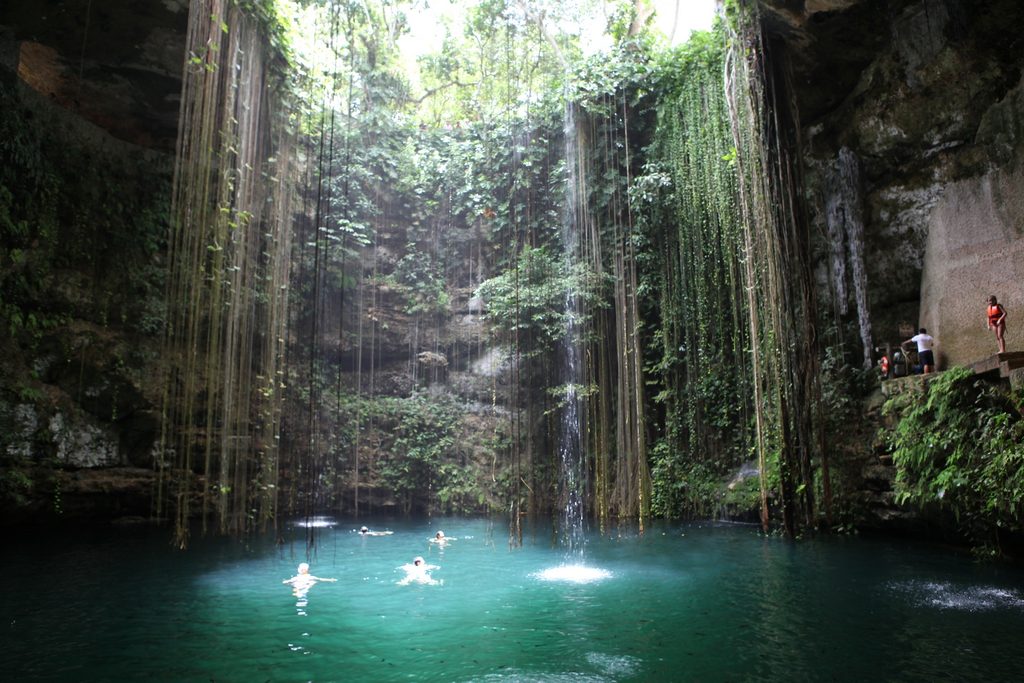
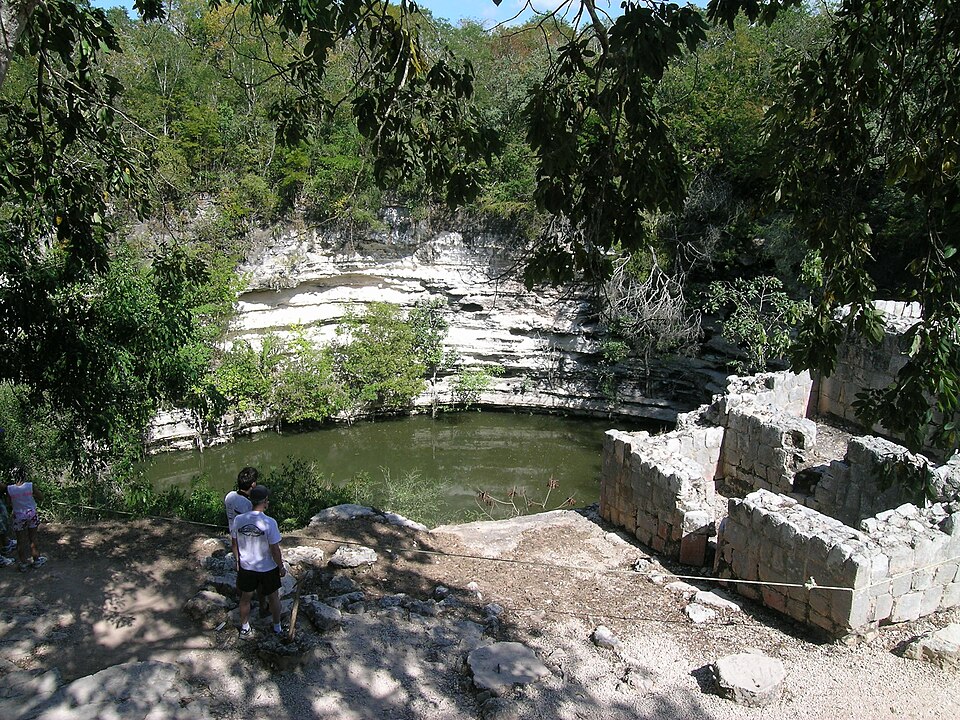
Before becoming one of the most visited archaeological sites in Mexico, Chichén Itzá was a great political, religious, and economic city. At its peak, Chichén Itzá covered an area of approximately 25 km², of which about 6 km² were dedicated to its religious, political, and administrative center. Around its temples and palaces stretched residential districts, much of whose remains still lie buried beneath the vegetation today. Its name, usually translated as «at the mouth of the Itzá well,» refers to the cenotes, natural cavities carved into the limestone underground of Yucatán, and the Itzá, a Maya group associated with the history of the city. Chichén Itzá was precisely developed between two large cenotes. To the north, we find Sacred cenote, where offerings were made and human sacrifices were practiced. In the south, the Cénote Xtoloc provided the water needed by the population.
Between the two cenotes stands the pyramid of Kukulcán, whose position on this axis could correspond as much to religious considerations as to a symbolic organization of space. Recently, researchers of the project Gran Acuífero Maya (one of the largest networks of underground rivers and flooded caves in the world) have identified two other cenotes, Holtún in the west and Xkanjuyum to the east, forming with the first two a configuration around the Castillo. Some researchers see in it the representation of a Mayan cosmogram, with the pyramid at the center.
Chichén Itzá, between Mayan and Toltec influences
The occupation of the site probably dates back to the fifth or sixth century AD, but it was mainly between the ninth and thirteenth centuries that Chichén Itzá experienced its monumental and political rise. Its influence extends far beyond its immediate territory, as evidenced by its architecture, artistic productions, and objects from distant regions found during excavations.
Unlike the large Mayan cities in the south, such as Tikal (in Guatemala) or Palenque (in the Mexican state of Chiapas), whose monuments bear numerous inscriptions glorifying the rulers, Chichén Itzá presents a political organization that is more difficult to reconstruct. The inscriptions exist, but they do not allow for a clear dynastic succession. This peculiarity has fueled the hypothesis of a government exercised by several leaders or lineages. However, the idea of a collegial power remains debated. Researchers are still questioning the relationships between the dominant families, the priestly functions, and the military authorities.
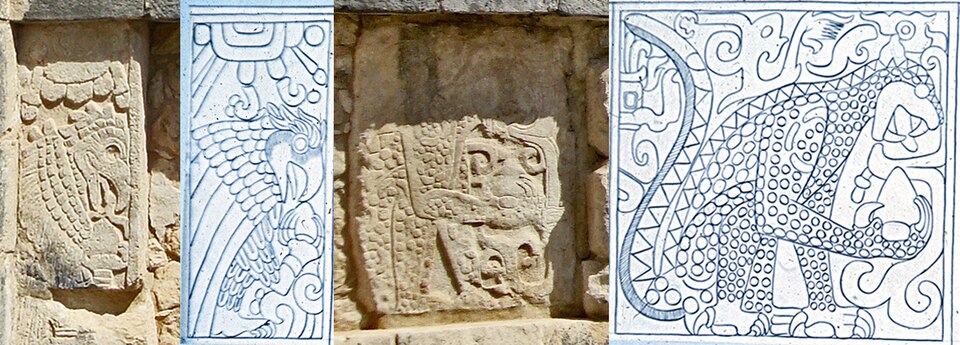
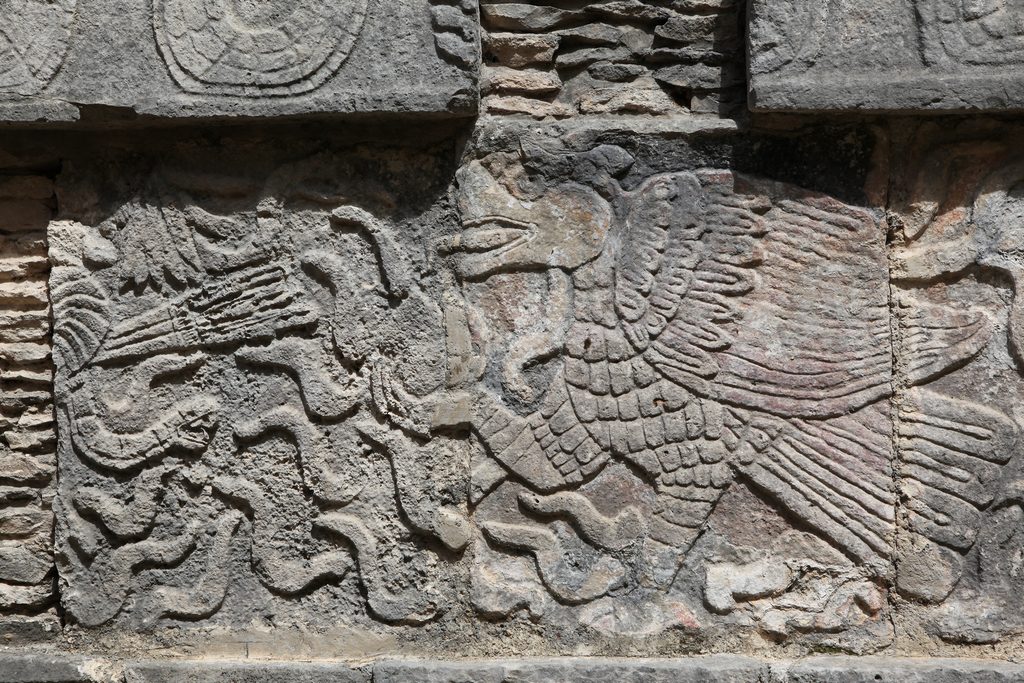
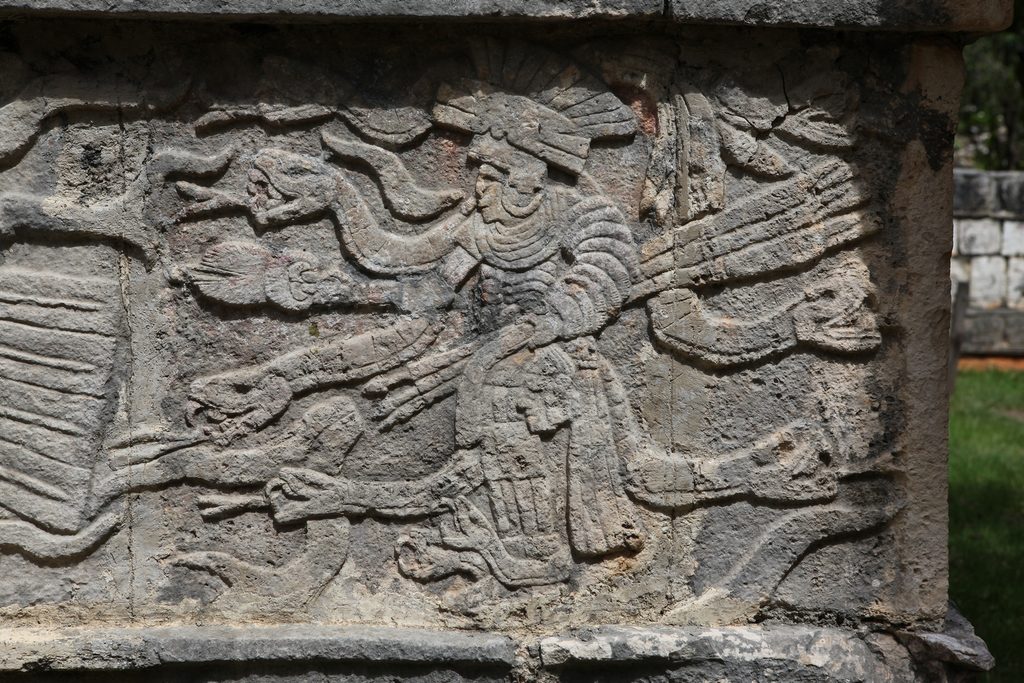
Another singularity: the coexistence of Mayan architectural traditions and iconographic elements reminiscent of central Mexico, notably: Tula, the ancient capital of Toltec culture. Columns depicting warriors, feathered snakes, eagles and jaguars devouring hearts make up a repertoire that has long been interpreted as evidence of a Toltec conquest. But this explanation is now being called into question. The similarities can also represent trade exchanges, the circulation of religious ideas and political relations between different regions of Mesoamerica. The respective chronologies of Tula and Chichén Itzá also complicate the hypothesis of unilateral military domination. The history of the city thus appears less as that of an isolated civilization than as that of a major Mesoamerican crossroads.
El Castillo, a pyramid that hides two others
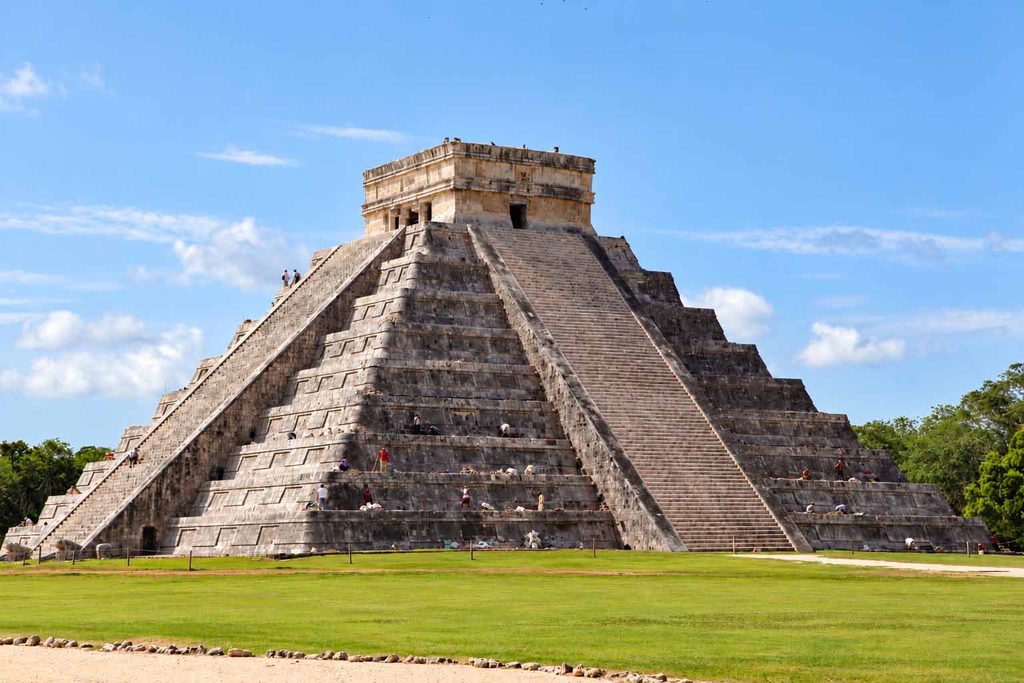
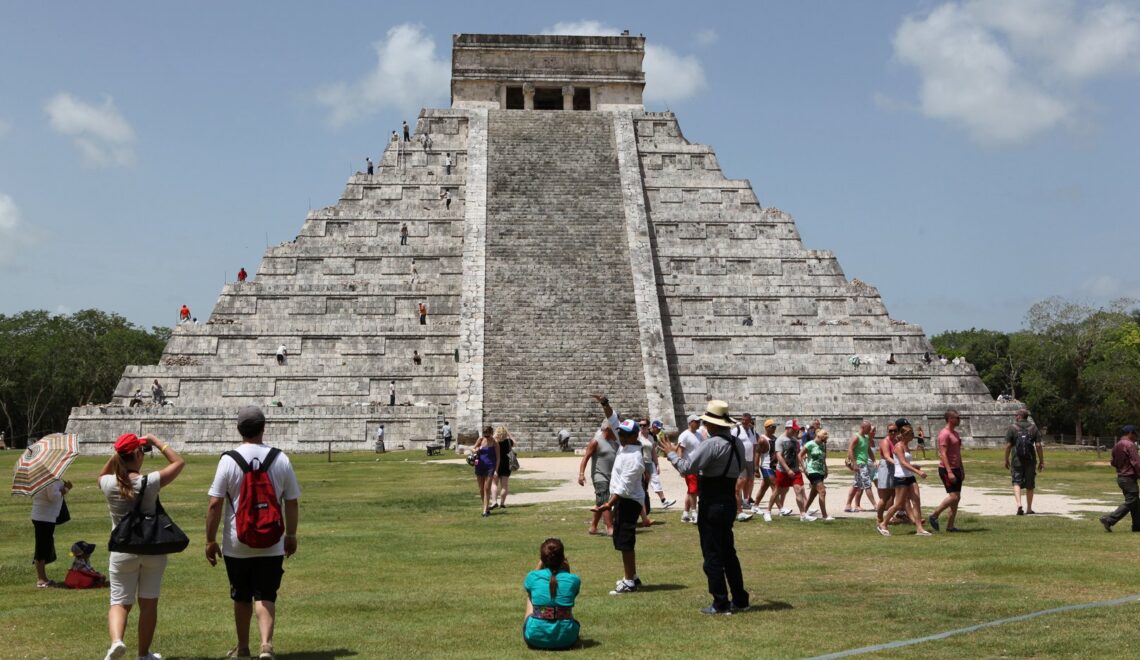
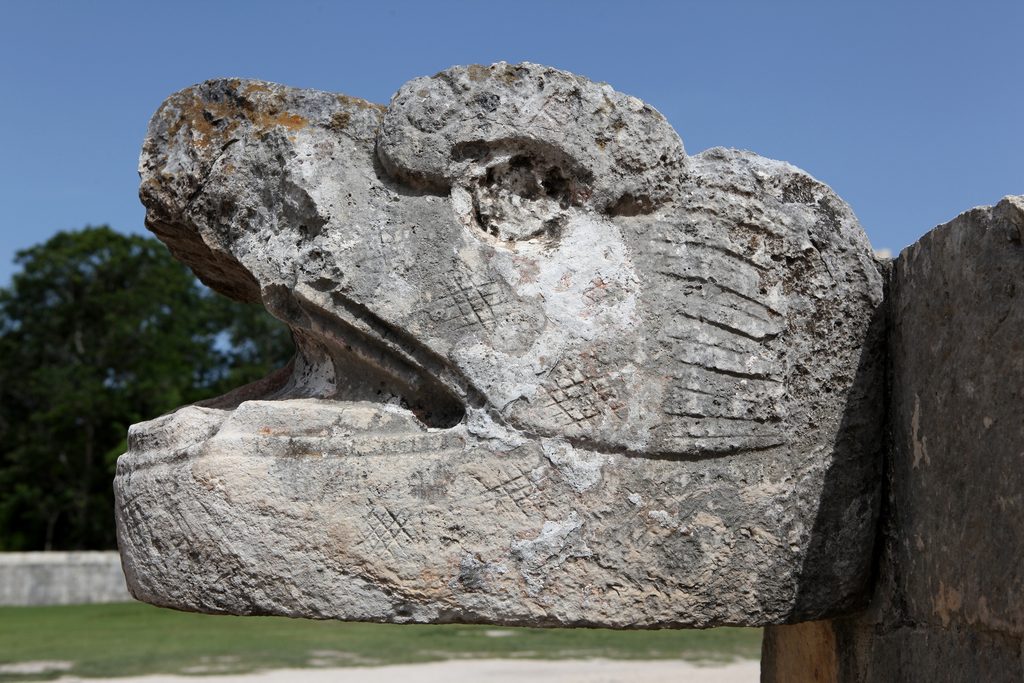
The Pyramid of Kukulcán, also called El Castillo, dominates the large ceremonial plaza. Kukulcán, whose name means «feathered serpent» in Yucatec Maya, is a major deity associated with the four elements, similar to Quetzalcóatl of the Aztecs. At about 30 meters high, this pyramid consists of nine superimposed platforms and four monumental staircases. Two large snake heads frame the base of the north staircase.
The edifice is often presented as a stone calendar. It has four sides and each of the four staircases has 91 steps. Adding the upper platform, we obtain 365, which is the number of days in a solar year. The nine levels, divided by the stairs, have also given rise to cosmological interpretations.
These numerical correspondences are intriguing, but they do not constitute proof of an astronomical program entirely designed around the solar calendar. The Mayas possessed several calendrical systems, including a ritual cycle of 260 days and a solar year of 365 days. The question is to what extent this knowledge influenced the proportions of the monument.
A thousand-year spectacle: the descent of the feathered snake
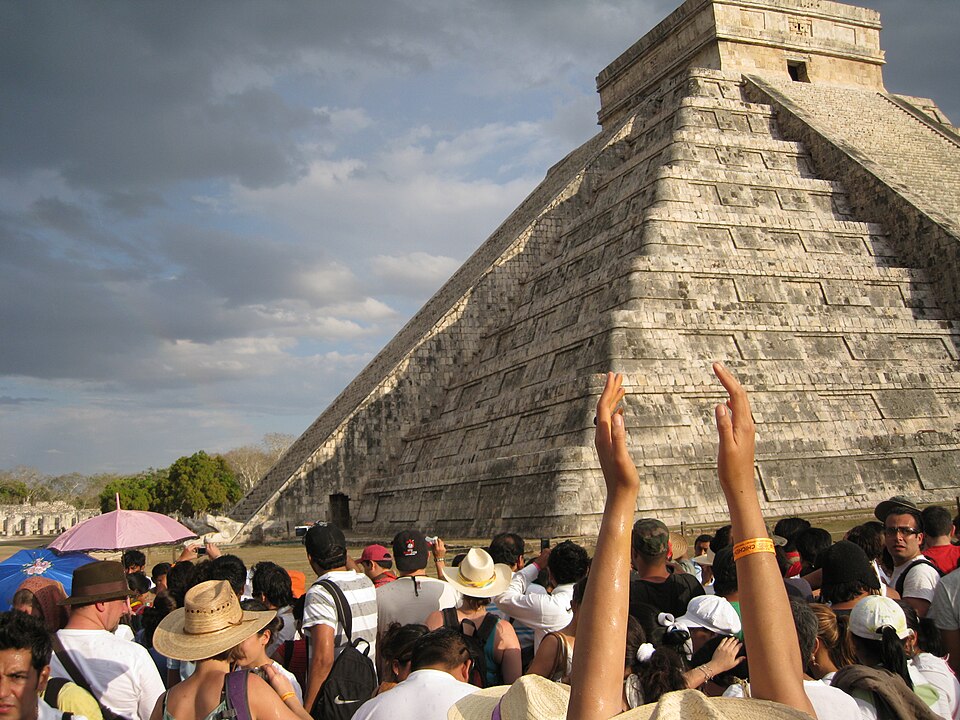
The most famous phenomenon occurs around the equinoxes. Under the influence of the sun, the angles of the platforms project onto the north balustrade of the staircase a succession of triangles of shadow and light that gradually draw the silhouette of a snake descending along the pyramid. At the foot of the staircase, a stone head representing Kukulcán seems to extend its body. The illusion is striking. But if the optical phenomenon is real, its interpretation as a deliberate and precisely calculated staging of the equinoxes remains debated. The effect is indeed observable several days around these dates, and no known inscription allows one to assert that the builders intended to mark the equinoxes in the modern astronomical sense. The spectacle, particularly popular with Mexicans and tourists, also attracts its share of mystics, who come to chant incantations or enter a trance before this snake of light. It must be said that the appearance lacks no element of suggestive power.
© BmamlinCommons.
But the most astonishing thing is found beneath the visible stones. In the 1930s, Mexican archaeologists discovered a more ancient structure inside the Castillo. An interior staircase leads to two rooms where a Chac Mool sculpture and a throne shaped like a jaguar painted in red, adorned with jade encrustations, were found.
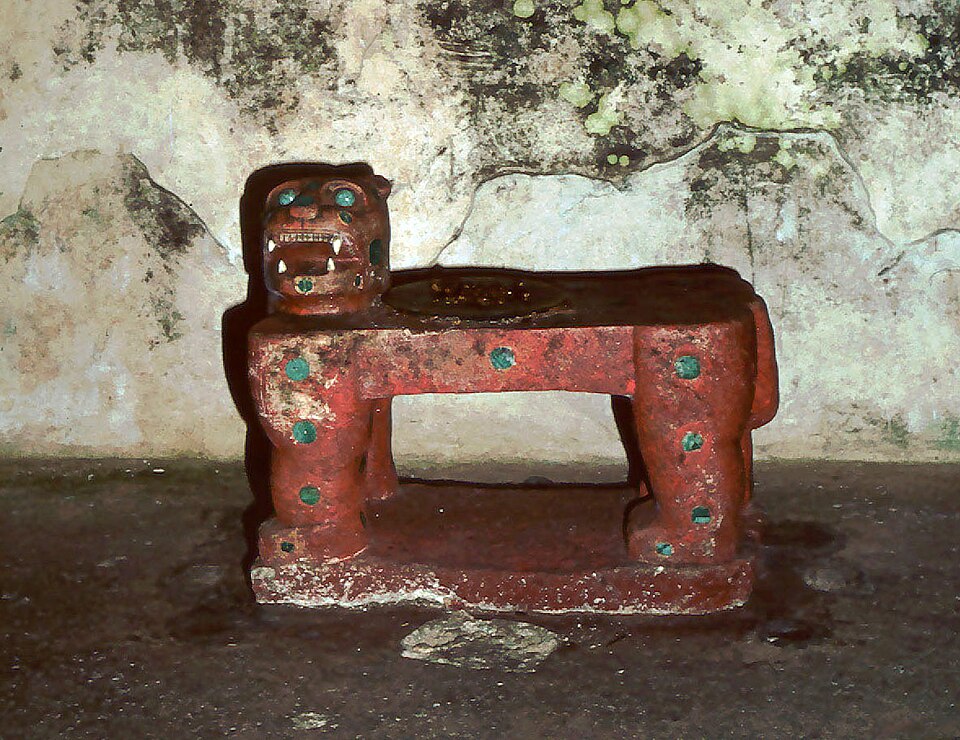
The outer pyramid had therefore not replaced the old sanctuary by destroying it; it had enveloped it.
In 2016, researchers from the National Autonomous University of Mexico (UNAM) and the National Institute of Anthropology and History (INAH) announced that they had identified, through electrical resistivity tomography, an even older structure buried within the two previous ones. The results published by the INAH attribute this first construction to a period approximately between 550 and 800 BC. The Castillo now appears as a set of at least three overlapping architectural phases.
This superposition raises a fundamental question: why build a new temple around an already existing sanctuary? This practice is well attested in Mesoamerican architecture. It may correspond to a desire for religious renewal, the assertion of a new power, or the continuity of a sacred site. But the precise reasons for these reconstructions at Chichén Itzá remain to be discovered.
Another discovery further complicates the picture. Geophysical investigations have revealed a cavity containing water beneath the pyramid, interpreted as a cenote. In an area where groundwater played a vital and religious role, this position could be significant. However, it is unknown whether the builders knew exactly the configuration of the cavity and to what extent it determined the location of the sanctuary. In 2025, the INAH announced the preparation of a new exploration campaign using muon tomography, a technique based on the detection of cosmic particles capable of penetrating the stone. Its goal is to examine the internal structures without damaging them. This does not, however, bode well for the discovery of new chambers.
The Temple of Warriors, an architecture of power

To the east of the great square, the Temple of the Warriors presents a very different architecture. A stepped pyramid supports a sanctuary preceded by sculpted columns depicting warriors. Nearby is the so-called Thousand Columns group, a remnant of a vast complex of galleries that were once covered.
The presence of armed warriors, feathered snakes, and figures associated with sacrifices illustrates the importance of military and religious representations in the ideology of the city.
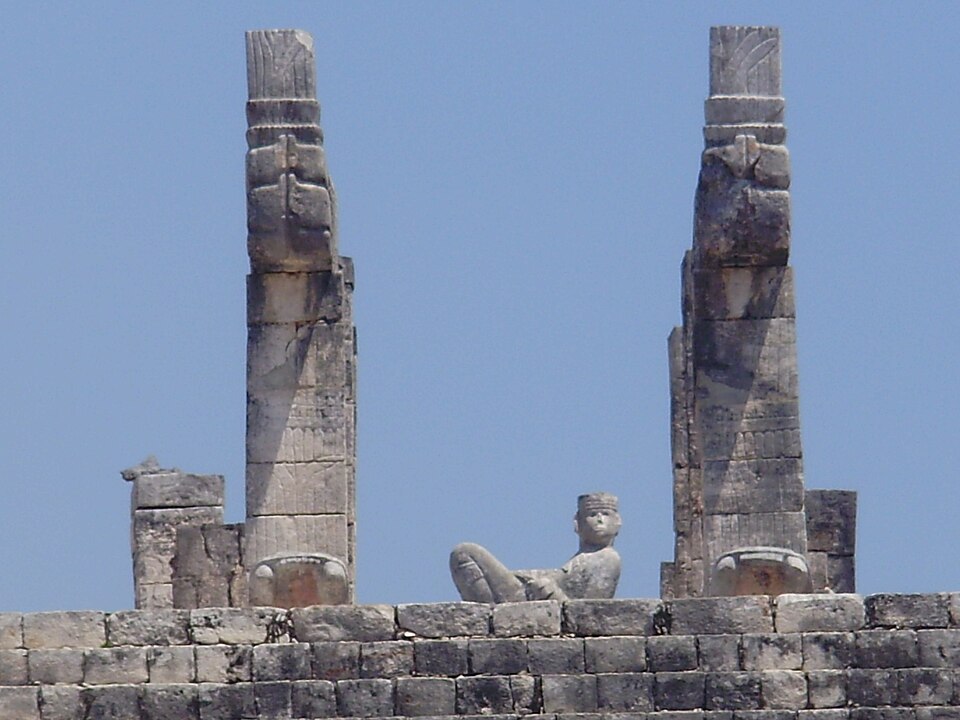
At the top of the temple, a sculpture of Chac Mool represents a semi-elongated figure, leaning on its elbows, its head turned to the side, holding a tray on its abdomen. Comparable figures appear in several Mesoamerican sites. They are generally associated with the presentation of offerings, but their exact meaning and identity remain debated. This type of statue appears in Mesoamerica at the beginning of the Postclassic period and is associated with Toltèques.
© Sheila PiñaCommons.
The Temple of the Warriors also played a major role in the debates about the relations between Chichén Itzá and Tula. The architectural and iconographic similarities between the two sites are undeniable. However, they do not suffice to establish which influenced the other, nor to demonstrate a conquest. The issue goes beyond the mere history of art: it concerns the transformations of Maya power and the place of Chichén Itzá in the political networks of Mesoamerica.
The great game of ball, between competition and sacrifice
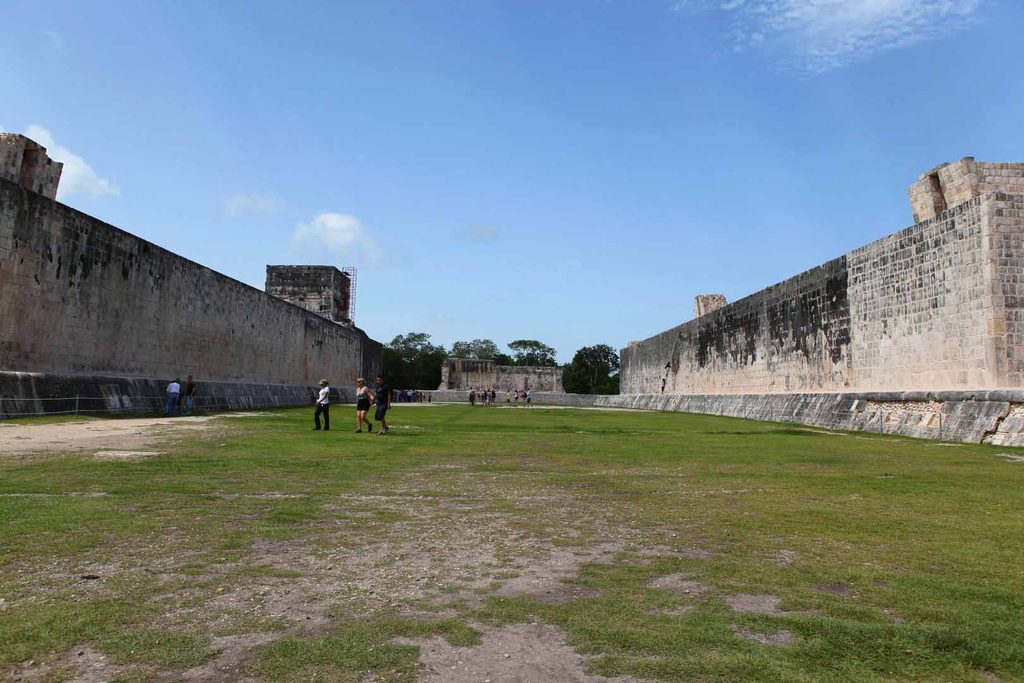
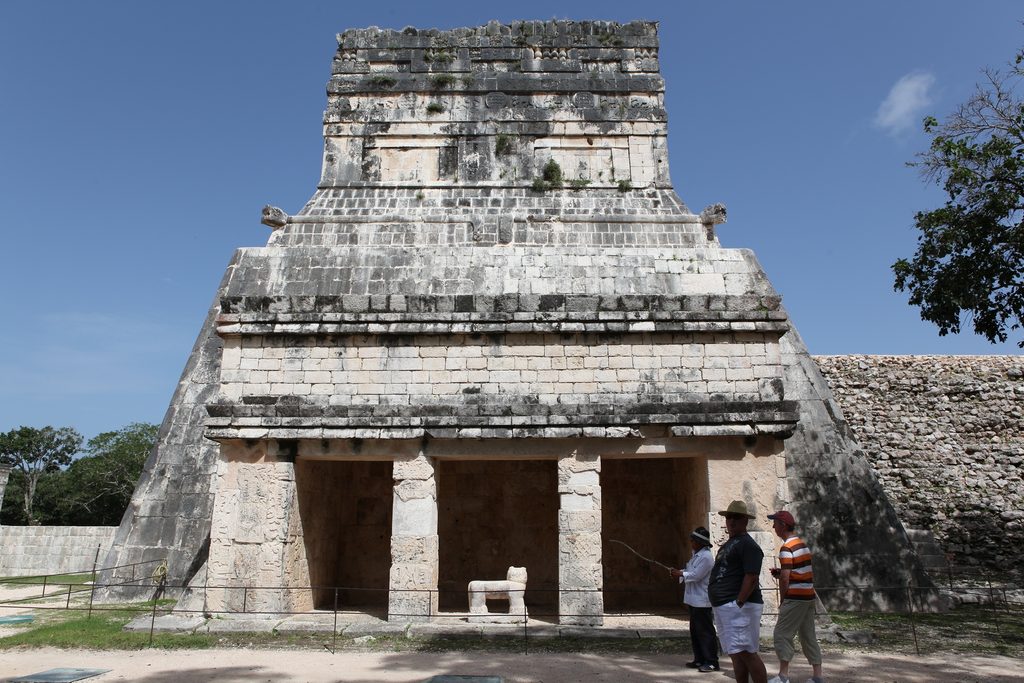
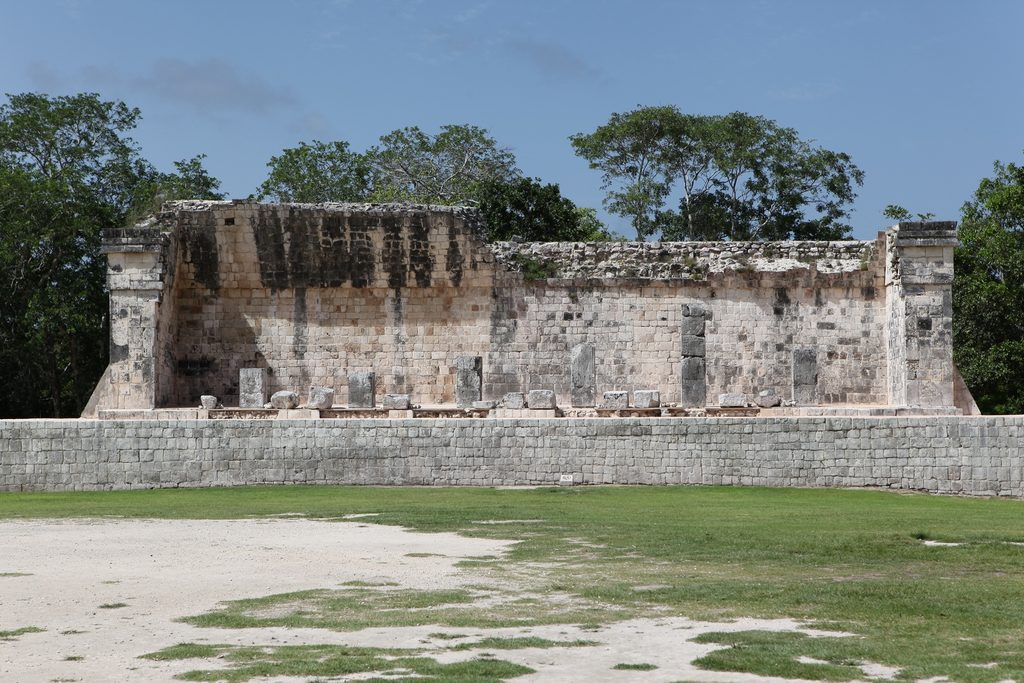
With its length of approximately 168 meters and width of 70 meters, the large ball court of Chichén Itzá is among the largest in Mesoamerica. Two high parallel walls delimit the central space. Stone rings are fixed at height, while the foundations bear bas-reliefs depicting players.
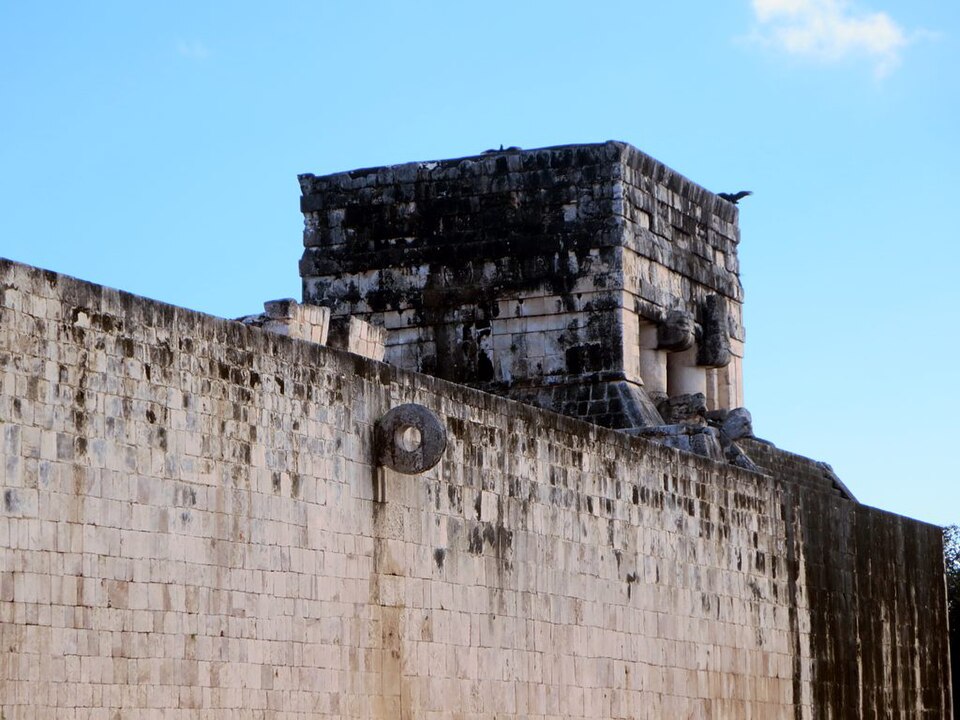
The Mesoamerican game of ball was attested well before the peak of Chichén Itzá. Its rules varied according to the times. In some variants, the players had to move a 3 kg rubber ball and pass it through rings sealed in the wall without using their hands, hitting it with their hips, for example.
The ball game probably meant much more than just entertainment. It was part of public ceremonies and the staging of relationships between men, gods, and the cosmic order.
© David Stanley/Commons.
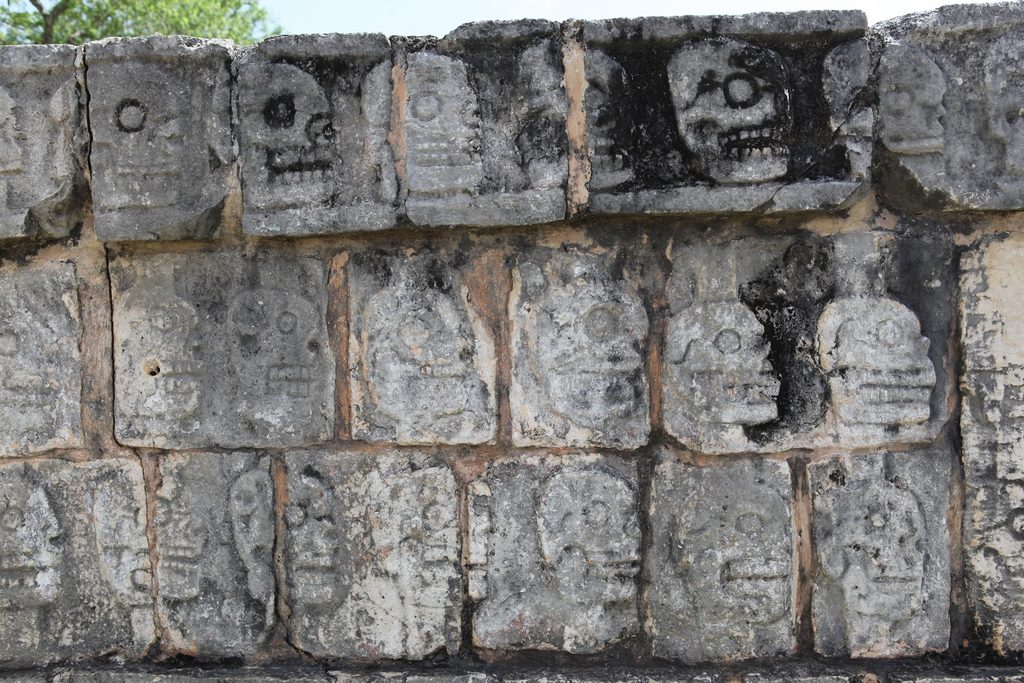
In Chichén Itzá, the reliefs give this practice a particularly dramatic dimension. One scene shows a decapitated player from whose neck emerge forms interpreted as snakes and plant elements. Human sacrifice, especially of prisoners, therefore appears explicitly in the iconography of the site.
But an often repeated claim to visitors deserves to be nuanced: nothing can guarantee that the captain of the winning team in the ball game was systematically sacrificed, nor even that the victims were necessarily victorious or defeated players. Although the sculptures bear witness to a symbolic link between play, death, and regeneration, they do not provide the precise rules of the ceremonies. The grounds also possess remarkable acoustic properties, favored by the height and arrangement of the walls. The stories claiming that a murmur could be heard at the other end, or that the architecture deliberately reproduced the cries of sacred animals, nevertheless require being confronted with measurable acoustic observations.
El Caracol, an astronomical observatory?
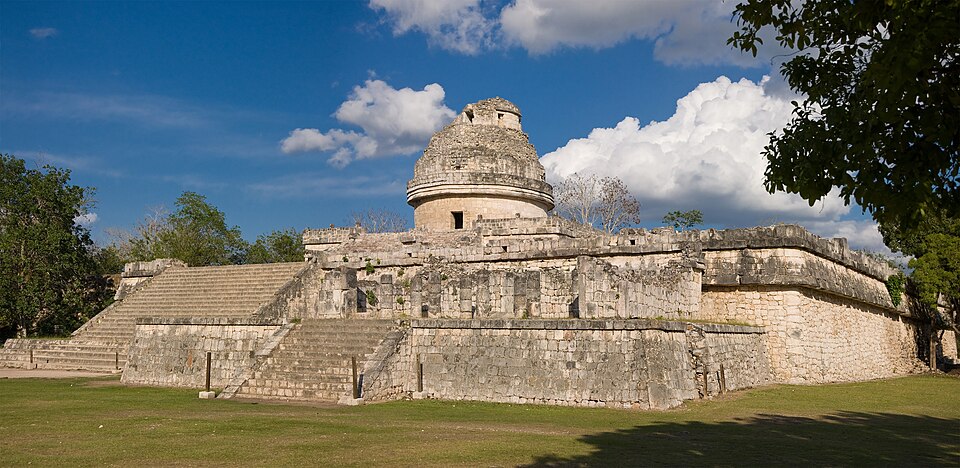
The shape of the monument, unusual in Mayan architecture, led researchers to consider an astronomical function. Several openings and architectural orientations have been compared with remarkable positions of the Sun and Venus. The Mayans’ interest in the movements of Venus is well documented. The Dresden codex, Mayan manuscript preserved in Germany, contains astronomical tables dedicated to its appearances. The planet occupied an important place in ritual cycles and certain representations related to war. However, it would be excessive to present El Caracol as an observatory comparable to those of modern astronomy. Some proposed orientations are discussed, and the successive transformations of the edifice complicate the reconstruction of its original functions. Its architecture nevertheless testifies to the attention paid to celestial phenomena in a civilization that associated the observation of the sky with the calendar, religious practices, and the organization of power.
The sacred cenote, a sanctuary at the bottom of the water
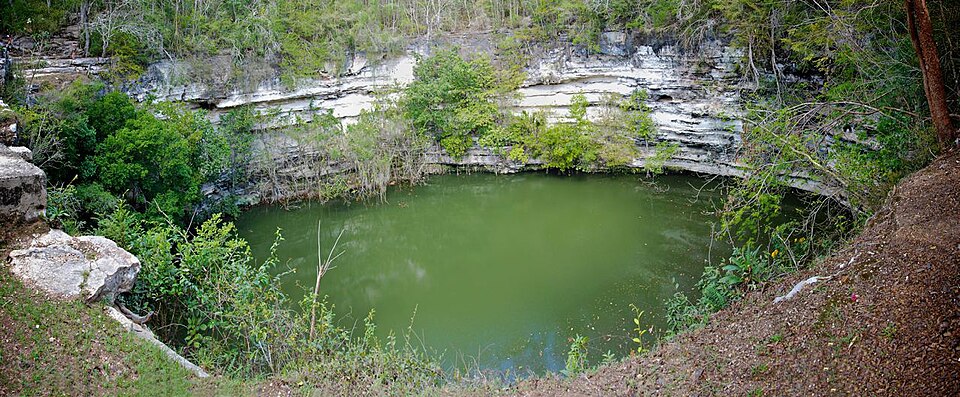
From the large esplanade, a raised roadway, called sacbé, lead to the sacred Cenote. This immense opening in the limestone plateau was one of the main places of worship in Chichén Itzá. In the Yucatán, lacking large surface waterways, the cenotes were essential resources. They also had a religious dimension. Water, caves, and the depths of the earth were associated with supernatural powers and spaces for communication with the underworld.
In the early 20th century, the American Edward Herbert Thompson began excavating the cenote. His methods, which are now highly questionable from an archaeological standpoint, allowed for the recovery of numerous remains, but also disrupted their context of deposition. The bones recovered confirm that human sacrifices were practiced in this sanctuary. However, the popular image of young virgins systematically thrown into the waters does not correspond to the diversity of individuals identified by osteological studies. Researchers are particularly interested in determining the geographical origin of the victims, the circumstances of the sacrifices, and the relationships between these ceremonies, the requests for rain, and the crises experienced by the city. The religious importance of the cenote continued beyond the political peak of Chichén Itzá. It remained a place of worship and pilgrimage during the postclassical period (from 900 to 1521 BC).
Sacrificed children: what ancient DNA reveals
One of the most important scientific advances regarding Chichén Itzá was published in June 2024 in the journal Nature. An international team analyzed the genome of 64 children whose remains came from an underground collective burial, arranged in an ancient chultún, a structure originally intended for storage, located near the sacred cenote. Dating places these burial deposits between approximately 500 and 900 BC.
The results held several surprises. All the individuals analyzed were male. A quarter of them had close family ties with at least one other child in the group. Even more remarkable, the researchers identified two pairs of true twins. This discovery calls for a reassessment of the religious dimension of the sacrifices. In Mayan traditions, twinning holds a strong symbolic value. Popol Vuh, the great mythological narrative of the K'iche’ Maya of Guatemala, tells, among other things, the adventures of the heroic Twins, Hunahpú and Xbalanqué, confronted with the forces of the underworld, death, and rebirth.
The researchers therefore suggest that some of the sacrifices may have formed part of a ritual world connected to these narratives. But this is an interpretation, not a certain identification of the ceremonies practiced at Chichén Itzá. The study also sheds light on the ancient populations of the Yucatán. Comparing the genomes with those of present-day Maya inhabitants in the region reveals a long-term genetic continuity.
Chichén Viejo, the other face of the city
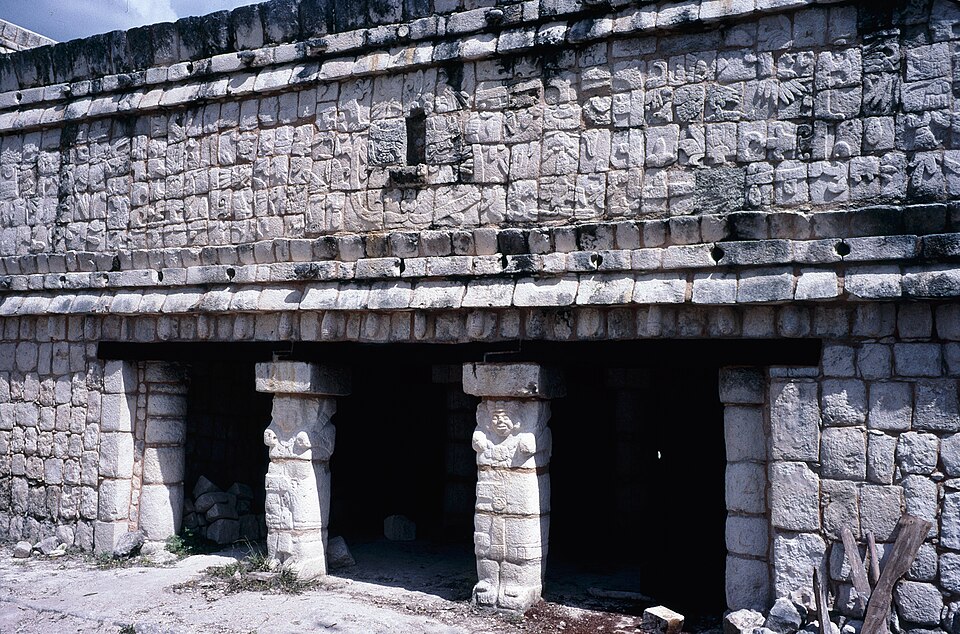
The majority of visitors focus their attention on the major monuments in the northern part. However, in the southwest of the ceremonial center, the sector of Chichén Viejo reveals another facet of the city. There we discover an architectural ensemble called the «Group of the Initial Series,» in reference to an inscription using the Maya system of long-date marking. It brings together 25 structures distributed around two plazas, on a vast platform delimited by walls. Notably, the House of the Snails, the House of the Moon, and the Palace of the Phallus.
Its buildings bear witness to a distinct architecture from that of the Castillo or the Temple of the Warriors. Some of them bear characteristics associated with traditions Puuc, recognizable by their geometric decorations and richly worked façades. Decades of research have allowed the identification of several phases of construction and spaces related to the life of the elite. In 2007, archaeologists unearthed a collective burial site, among other things.
This sector is particularly important for understanding the evolution of Chichén Itzá. It shows that the city is not limited to its large public sanctuaries: it also included monumental residential complexes, where the relationships between power, kinship and religious practices were played out.
Why did Chichén Itzá lose its power?
The end of the political dominance of Chichén Itzá remains one of the major historical problems of the Pre-Hispanic Yucatán.
The city emerged at a time when several major Maya centers in the southern lowlands were experiencing deep crises. However, its own supremacy was not durable. Chronologies remain controversial. Some studies place the monumental peak of the city mainly in the 9th and 10th centuries; others propose a longer period, up to the 12th century. Later historical records and archaeological data do not always overlap.
Several factors have been considered to explain its decline: changes in political alliances, regional conflicts, redistribution of trade, or changes in power structures, including a drought that devastated the Yucatan. Relationship with Mayapán, another major city in the Yucatán, located about a hundred kilometers away, holds an important place in these debates. But the idea of a simple succession, in which Mayapán would immediately replace Chichén Itzá after a single catastrophe, does not take into account the complexity of the available data.
It is also necessary to distinguish the decline of a political power from the total abandonment of a place. Chichén Itzá indeed retained religious importance after the end of its period of regional dominance. Therefore, no archaeological evidence can be used to reduce its history to a sudden destruction or an unexplained disappearance of its population.
A city whose archaeology continues to change history
Listed as a UNESCO World Heritage Site in 1988, Chichén Itzá is now famous for its spectacular monuments. But the archaeological interest of the site lies as much in the visible buildings as in the remains still buried beneath the surface.
The research conducted on the internal structures of the Castillo, the genetic analyses of the tombs, the exploration of underground cavities, and the study of the residential neighborhoods show how our understanding of the city remains evolving.
The most interesting questions do not concern the existence of alleged mysterious powers or inexplicable knowledge. They concern much more nuanced historical realities: the formation of a regional power, the exchanges between Mesoamerican societies, the role of sacrifices in religion, the transmission of astronomical knowledge, and the successive transformations of a great Maya metropolis.
In Chichén Itzá, archaeologists are not just trying to understand how the temples were built; they are also trying to discover the society that designed them, the beliefs that gave them meaning, and the upheavals that transformed the city.
Getting there
With byNativ agency
Between turquoise seas and ancient stone ruins, this trip will take you to the most beautiful Mayan archaeological sites: Chichén Itzá, the Mayan capital; Ek’Balam and its magnificent royal tomb; and Coba, a city so vast and modern that it developed according to a well-defined urban planning plan! Beaches and relaxation will also be on the agenda as the trip begins with a day in Cancun and ends beautifully with three days in Tulum.
Visiting the Yucatan, From Mayan cities to Caribbean beaches
Text and Photos : Brigitte Postel, unless otherwise stated