
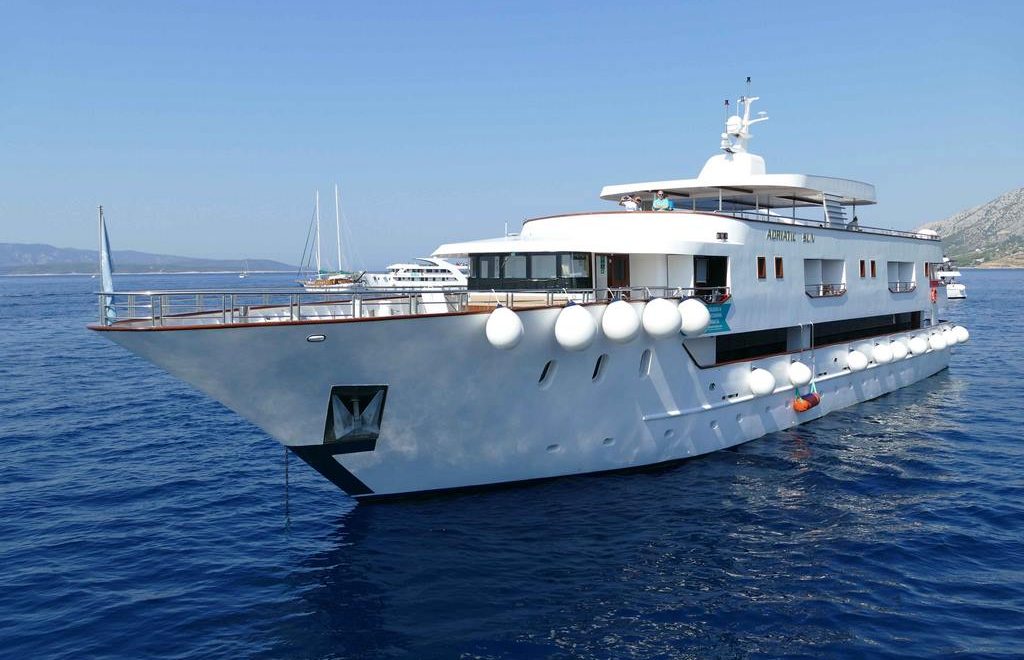
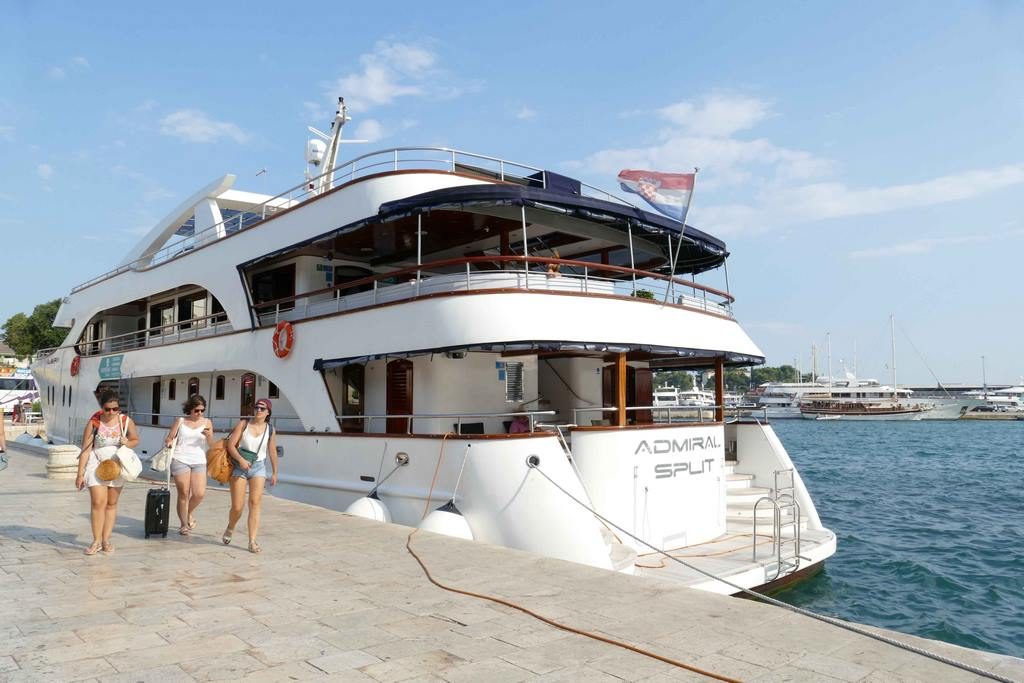
Docked in Split, on Illyrian soil, Katarina Line's Admiral yacht awaits its passengers for a week of luxury cruising on the Adriatic. Embark immediately to discover one of the most beautiful shores of the Mediterranean.
Table of Contents
Is this the same Illyria of The night of kings by Shakespeare, in which two twins survive a shipwreck but are stranded at two different places on the coast, so that they think they have lost each other? "Imagination is so fertile in changing forms that nothing matches its bizarre fantasies. Lulled by the gentle roll of the yacht, the charm of a free spirit is at work.
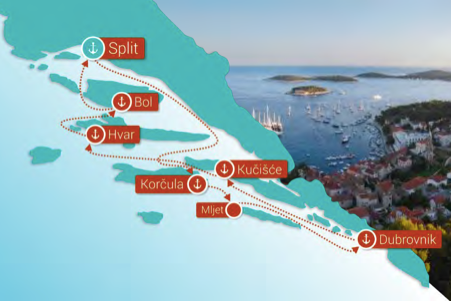
Split, an open-air museum
Our journey begins in the centre of Dalmatia, in Split.
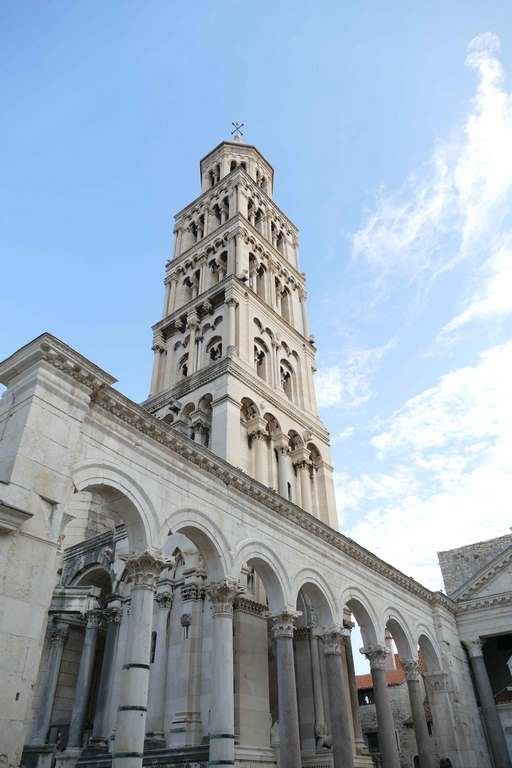
A UNESCO World Heritage Site, the palace of the Roman emperor Diocletian - the place for which he listened to his childhood heart and left Rome to return to his homeland - is a must-see. Built of white Brač stone, it covers around 31,000 m² and forms part of the old town. This is an open-air museum. Inside the palace, the Cathedral of Saint Domnius, built in the mid-seventh century, is well worth a visit. It houses the relics of the martyrs St Domnius and St Anastasius.
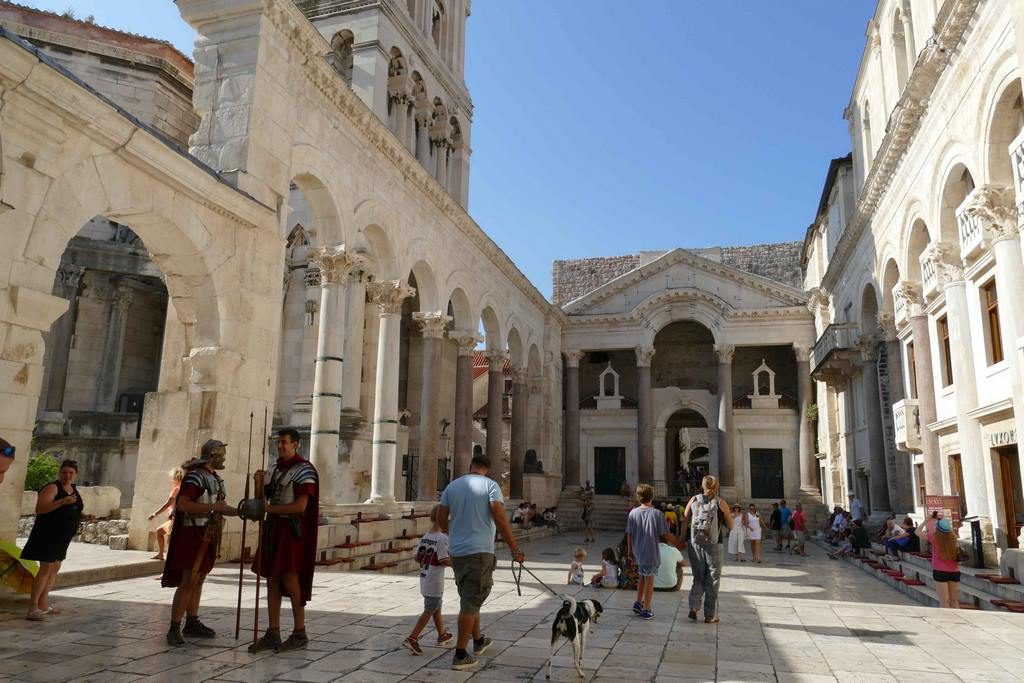
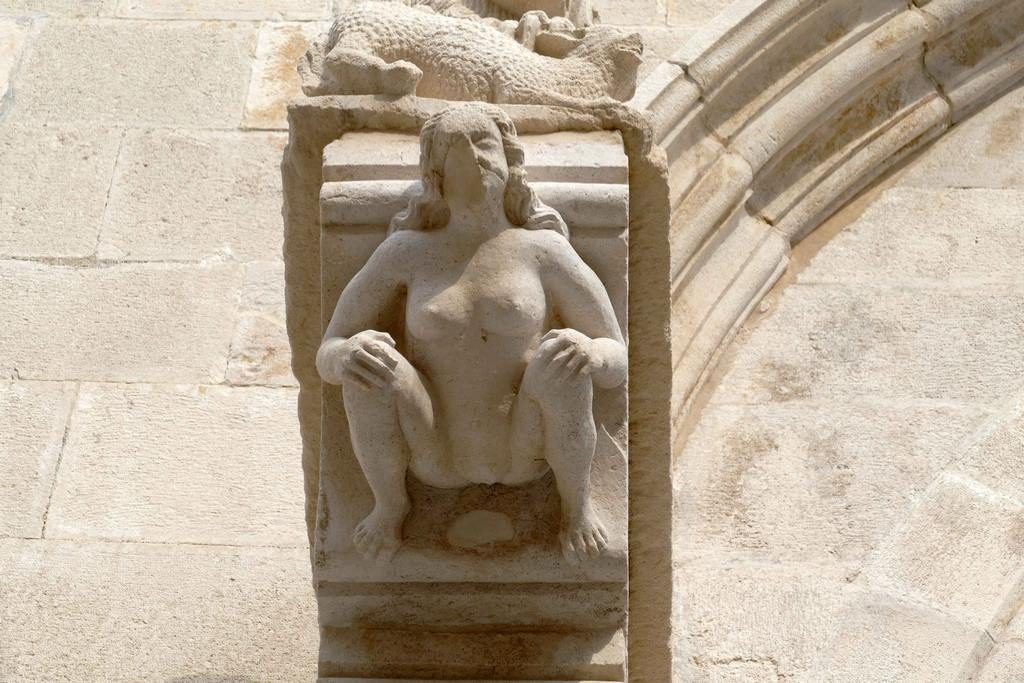
It's a merry hustle and bustle, where you can shop, wander around and admire the power of this setting, which has been featured in the Game of Thrones. The city is surrounded by walls that are over a thousand years old. From lions carved into the walls, fossils of the Republic of Venice, the Serbian of Venice, from the Serbian character to the guttural language (try pronouncing "Hrvatska", meaning "Croatia"), Split has much to delight and astonish Split has much to delight and amaze visitors.
Before you leave, be sure to rub the toe of the bronze statue of Gregory of Nin, (a piece by sculptor Ivan Meštrović), which has become smooth due to the local belief that stroking his toe brings good luck and makes all wishes come true...It's the foot!
Sćedro and Korcula, jewels of the Adriatic
After a night on board, the roar of the engines reminds passengers that breakfast is served. The nine crew members are on hand to look after the thirty-five passengers.
We set course for Sćedro, for our first swim in a cove filled with the sound of cicadas.

Jump from the upper deck of the Katarina Line yacht Admiral
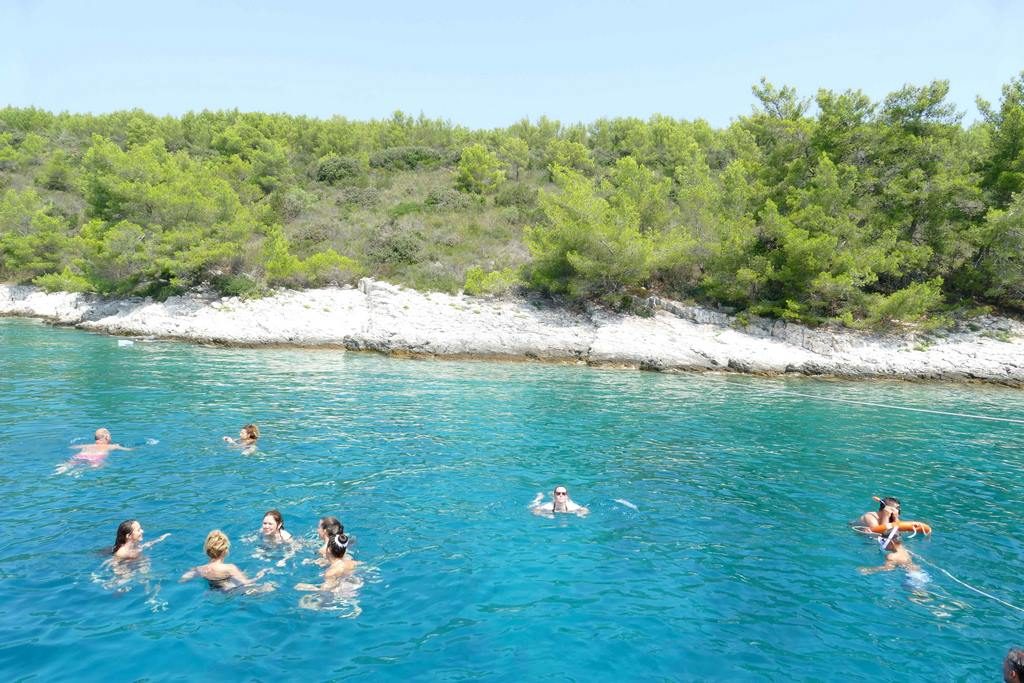
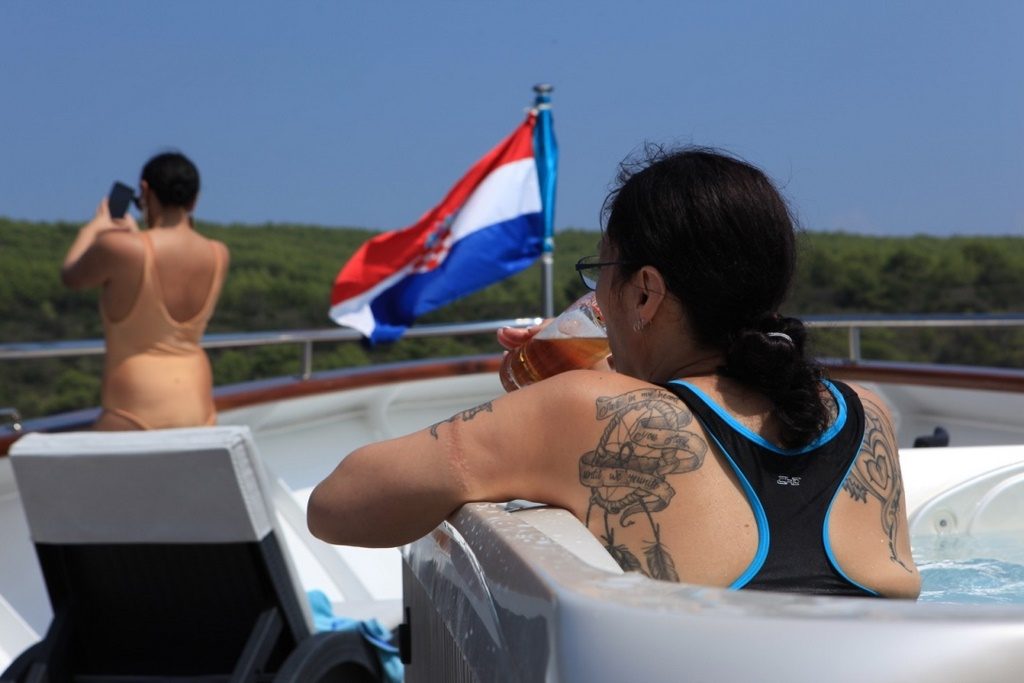
The captain then sets sail for Korčula, Croatia's third largest island.
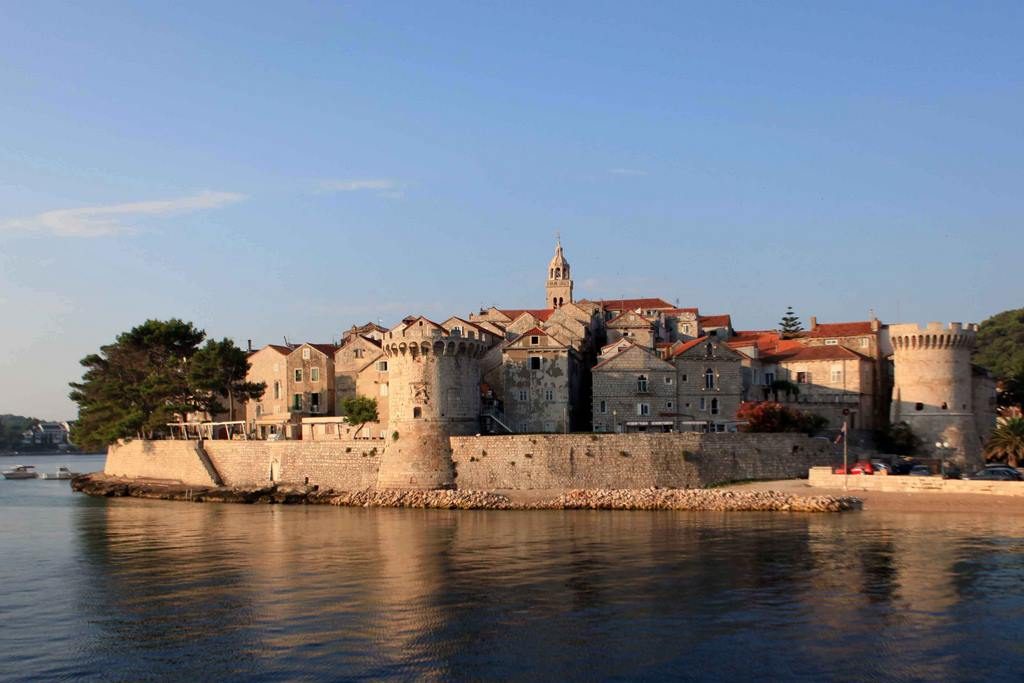
Legend has it that Korčula is named after the nymph Korkyra, whom Poseidon jealously transformed into a paradise island. Poseidon, jealous, transformed her into an island paradise. So it was on this possible that we docked, admiring the fortifications and climbing the narrow steps the narrow stone steps of the bell tower of the church of Saint Mark. church.
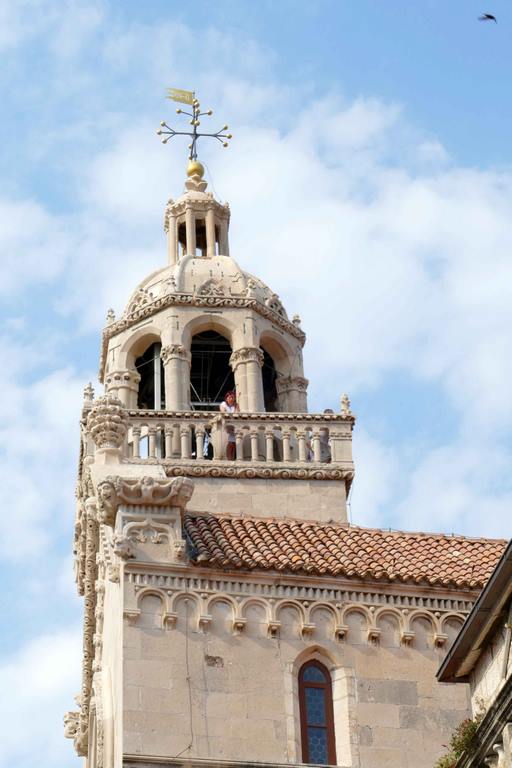
Alone at the top of the bell tower, vibrating along with the bells that mark the quarter-hour, I am dazzled by the colour of the town, a subtle blend of white stones and orange tiles, as well as by the sun reflected on the sea.

Then, moving away from the historic centre, we follow the so familiar to the southern lands of the crickets, skirting the pine and yew forests forests of pine and holm oak, picking a fig as you go, and finally stopping in a cove a fig along the way, and finally stopping in a cove with turquoise water. Korćula is indeed the "Black Korćula" of the Greeks, so named because of the dark colour of its forests. because of the dark colour of its forests. It is also the most wooded island in Croatia.
The peninsula is also famous for its vineyards, and you can enjoy the sunset with a glass of "Maximo" in your hand, while listening to the story behind its label. Rumour has it that Empress Maria Theresa of Austria and Baron Franio de Trenck, a Russian officer who commanded her army's pandours, had a week-long affair in the wine cellar of a Slavonian monastery; to mark their 'sexploits', they drew seventy lines on the walls. Can you believe it?

The island of honey: Mljet
Is this the mythical island of Ogygia, home of the nymph Calypso who rescued Ulysses after his shipwreck? The western part of the island is classified as a national park. It has a rugged coastline and lush Mediterranean vegetation surrounding the two lakes. The lakes are the result of a rare phenomenon phenomenon: they are salty because they communicate with the sea via a channel and crevasses.
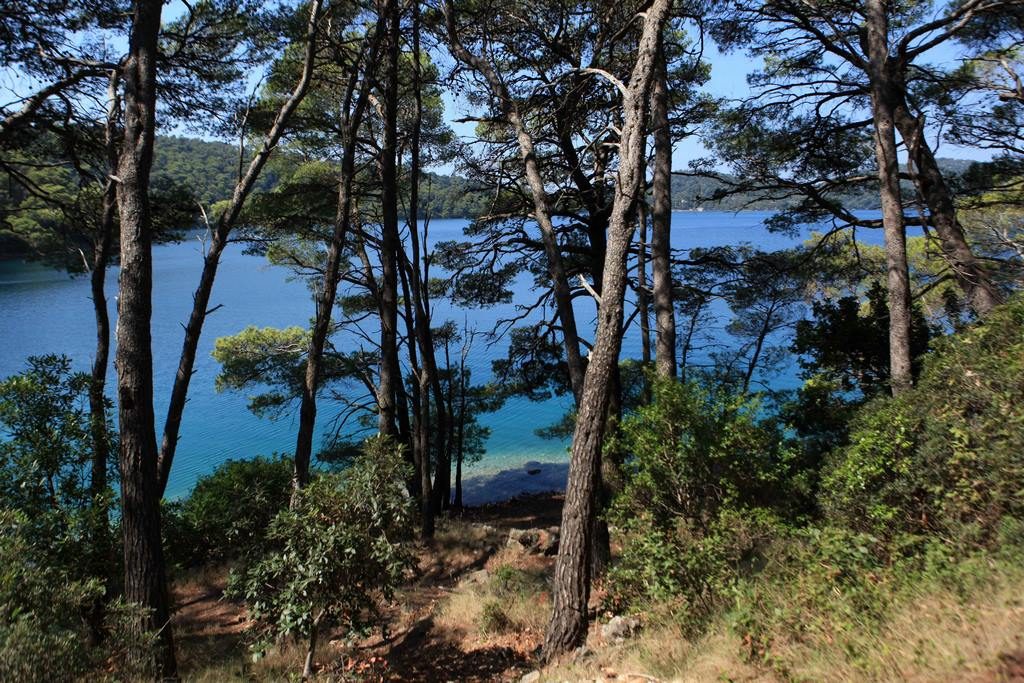
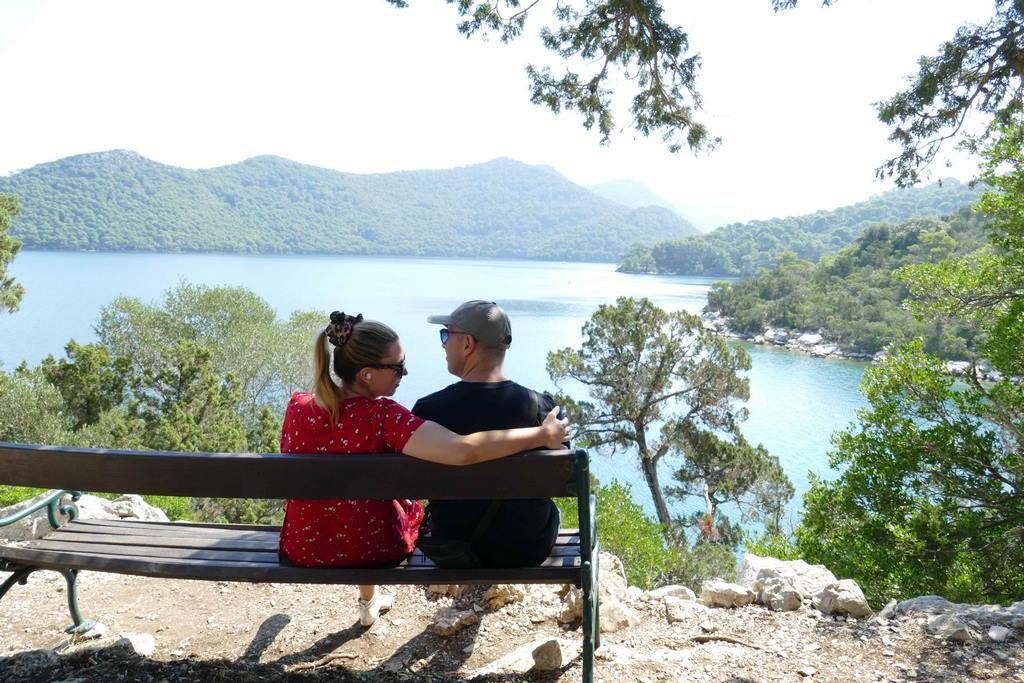
Ignjat Dordić, a poet from Ragusa, wrote in the 18th century that " on the island of Mljet, the branches down to the sea and shade the shoreline, and if you go by boat, it's as if you're sailing through a forest. boat, you have the impression of sailing through a forest. ". And this is still true today. As you go deeper into the forest, the combination of pines oaks and scrub made up of thorny climbing plants make it impossible to leave the impossible. No matter how hard you try, you can't venture out without your legs and arms. You hike along the GR paths, greeting the Croatians who live in the park, taking care not to wake an old woman dozing in the shade in the shade of her olive tree, looking for a beautiful viewpoint over the lakes. You won't venomous snakes or mongooses, but delightful foraging bees and a few and a few spiders with admirable webs.
Whichever paths you choose, they lead irresistibly to a dip in the turquoise water.
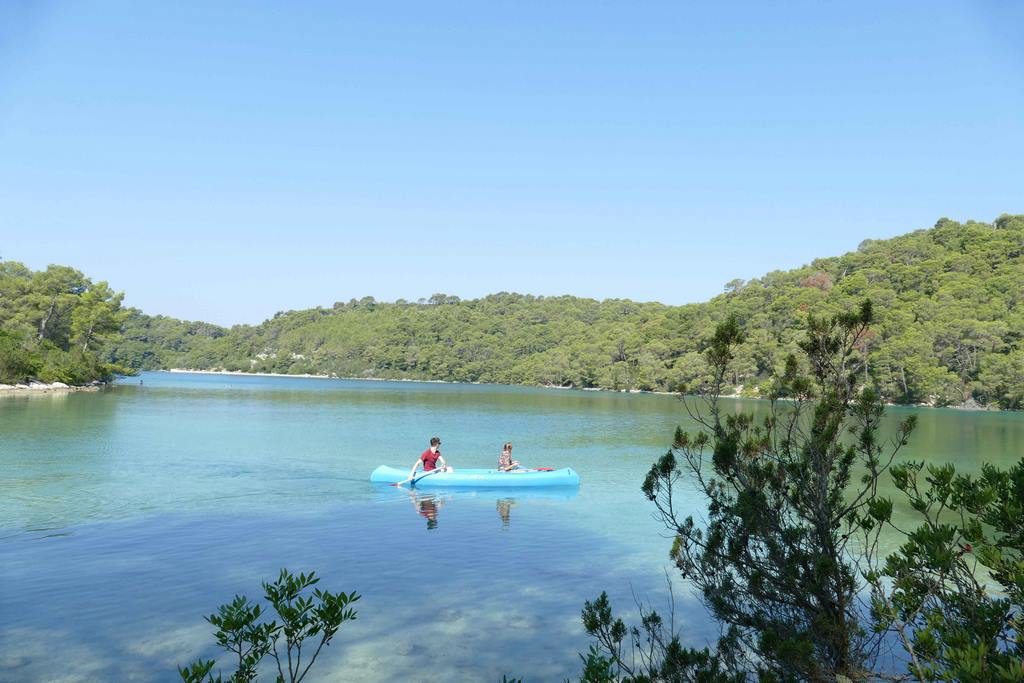
The perimeter is about ten kilometres long, or two and a half hours' walk. but it's easy to get distracted by the many natural access points to the water. natural accesses to the water, so you'll need to allow a full day.
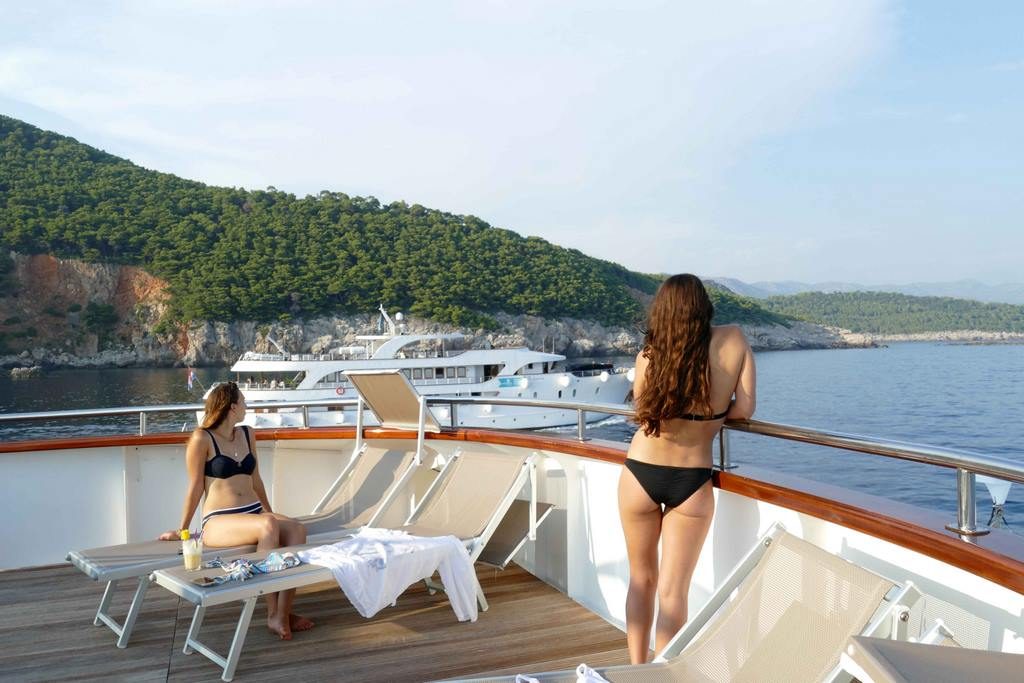
After Mljet, our boat will sail 36 nautical miles to Dubrovnik, skirting the Elafiti archipelago.
Dubrovnik, the old Ragusa
Smooth sailing to Dubrovnik
The morning routine begins with the ascent of a hill hill (405 metres ascent), which will give you an overview of this typical medieval give you an overview of this typical medieval town, formerly known as the Republic of Ragusa, Venice's rival.
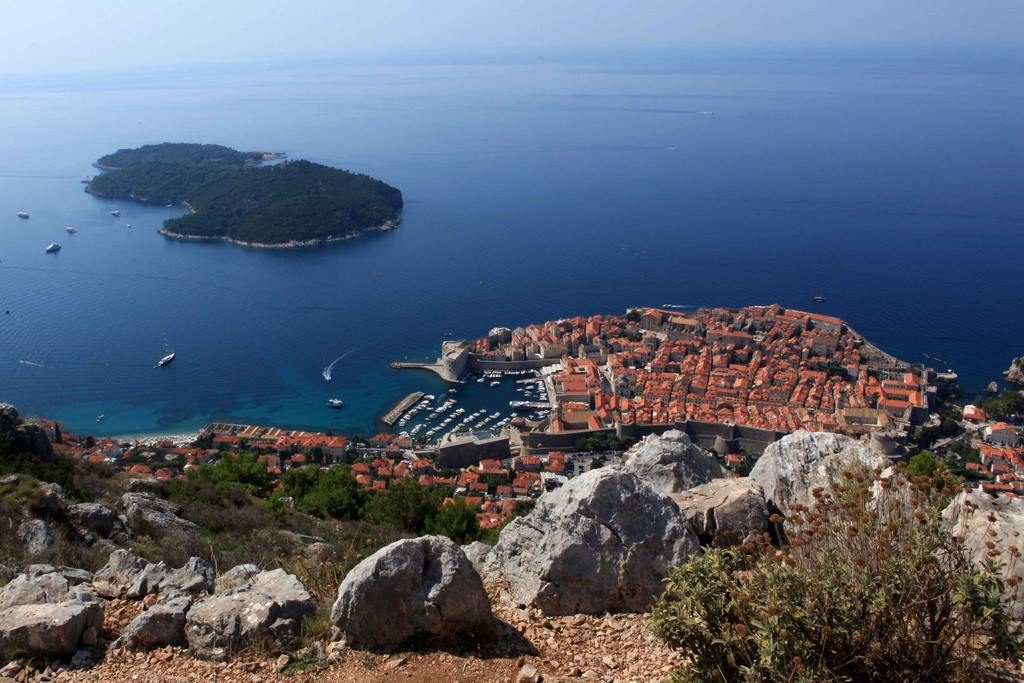
It is one of Europe's most renowned tourist destinations
in Europe, and one of the most beautiful urban areas in the Mediterranean.
The
fortune decided when the big cruise ships, with their thousands of passengers on board
thousands of passengers on board. Phew! It's a day
and so much the better, because the influx of visitors in this heat would
the charm of this setting, once again chosen for certain scenes from
Game of Thrones, such as the fort at Lovrijenac, which protected the town from
from the hinterland as well as from the sea. Above the
the entrance door, a famous inscription in Latin: " non bene pro toto libertas venditur auro "
(you can't sell freedom, even for all the gold in the world). This fort hosts
during the Dubrovnik Summer Festival; it is common to see Shakespeare's cult play
Shakespeare's cult play "Hamlet",
"Hamlet.
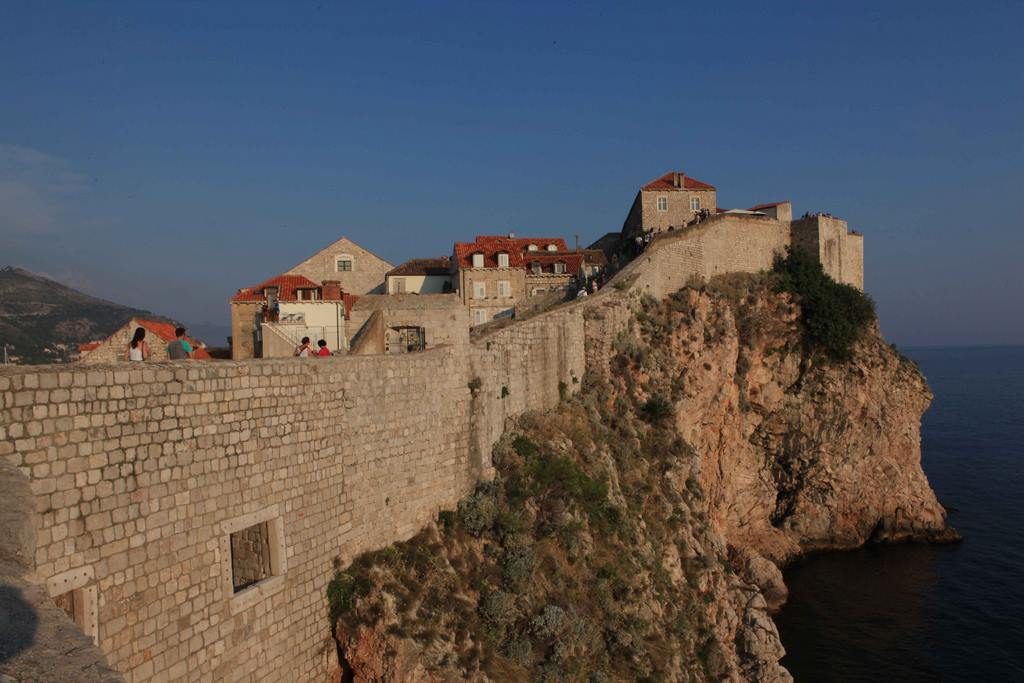
The pedestrian tour of the ramparts at sunset, with the play of light on the limestone with the play of light on the limestone and the view over the whole of the old town. the whole of the old town is an opportunity to spend a couple of hours facing the island of Lokrum and looking out to sea. the open sea, a contemplation pleasantly nuanced by the previous days of the the previous days of the cruise, when it was customary to observe the land from out at sea.
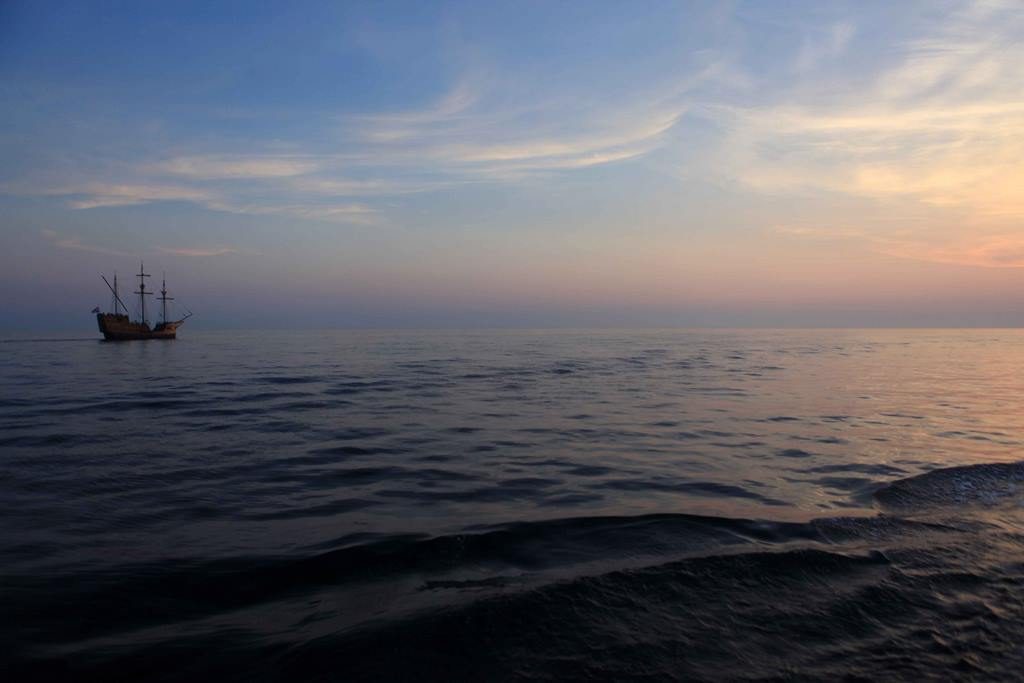
Pleasure sailing
The fifth day of the cruise is spent at sea aboard the Admiral. Today is 5 August, National Remembrance Day or Croatian National Renaissance Day, which commemorates the events of 5 August 1995, the liberation of Knin, a Serbian stronghold, by Croatian forces.
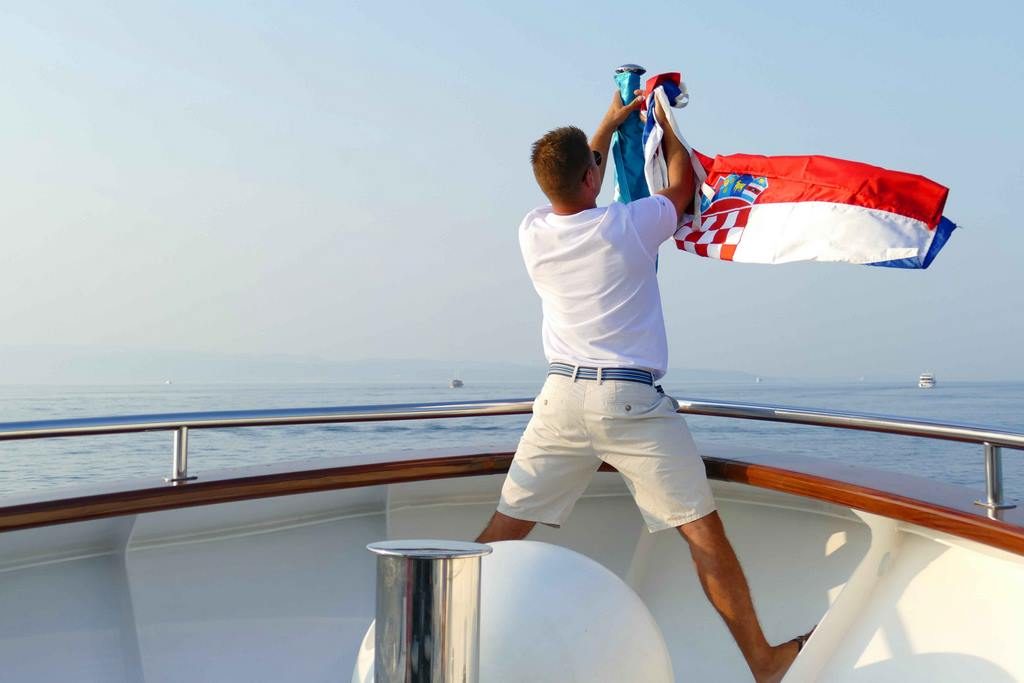
After being offered a tasting of carob liqueur for breakfast, an amazing Croatian remedy, we were reluctant to go back to our hotel. Croatian remedy, we're reluctant to go back to bed. to bed. The captain drops anchor near the wooded Pelješac peninsula in a cove called Sabunara (sabun means sand in the local dialect). Attracted by the crystal-clear by the crystal-clear waters of the coastline hemmed in by jagged stones the seabed and its fish.

The barmaid provides service from the yacht's tender, bringing cocktails to amateur passengers.
As we leave this enchanting spot, dolphins frolic in the wake of our yacht; we gaze at them, lulled by the slow tempo of the navigation and the steady breeze.
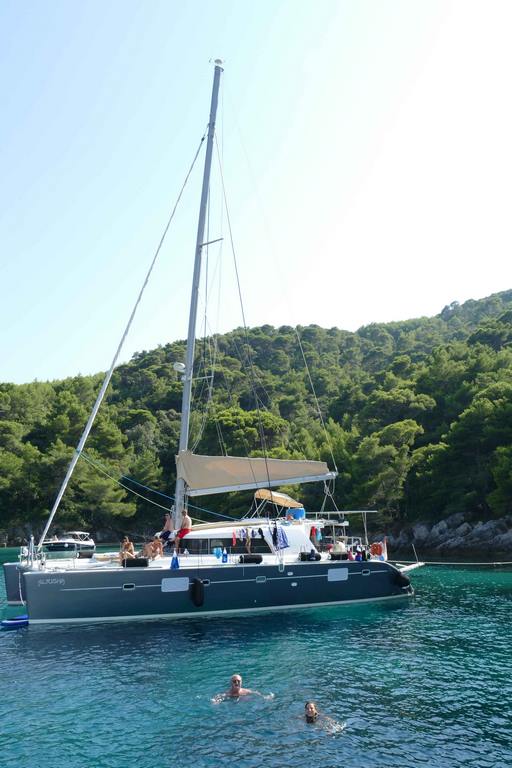
After a night on board, our ship leaves Pelješac for Hvar (pronounced Kvar), the longest of the Dalmatian islands (68 kilometres long), where we dock in the afternoon. Equipped with our 'whispers' (audiophones), as we are every time we disembark, we set off on a guided tour of the town, just long enough to get our bearings in terms of history and culture.
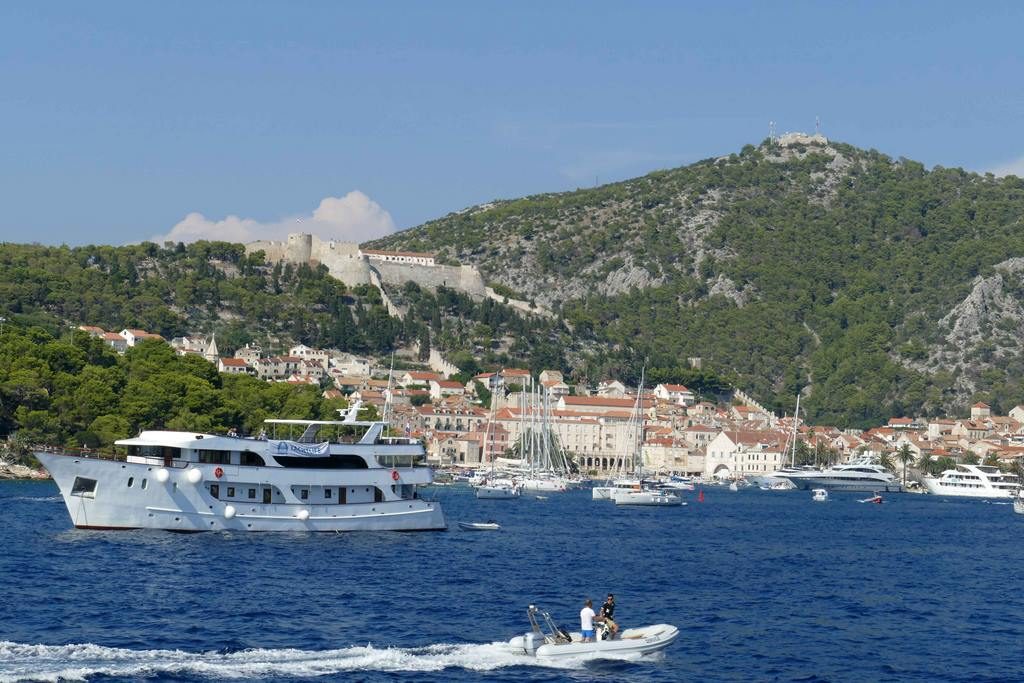
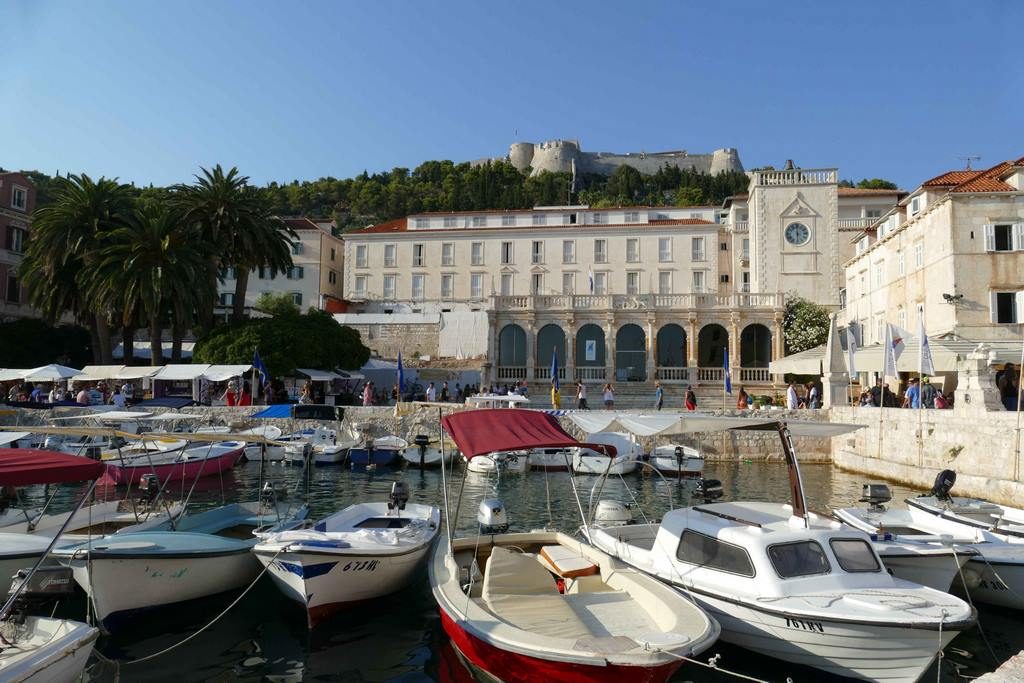
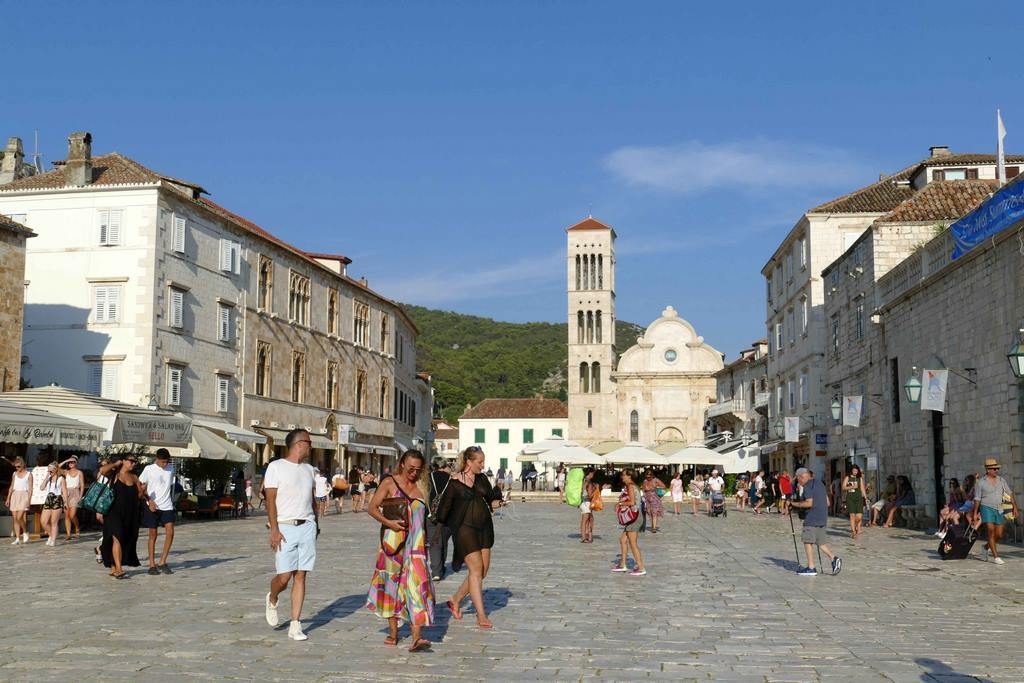
In 1612, at a time when only aristocrats had access to culture access to culture, Prince Pietro Semitecolo decided to create, on the first floor of the the first floor of the Arsenal, a place used for repairing ships and storing maritime renovated in 2009.
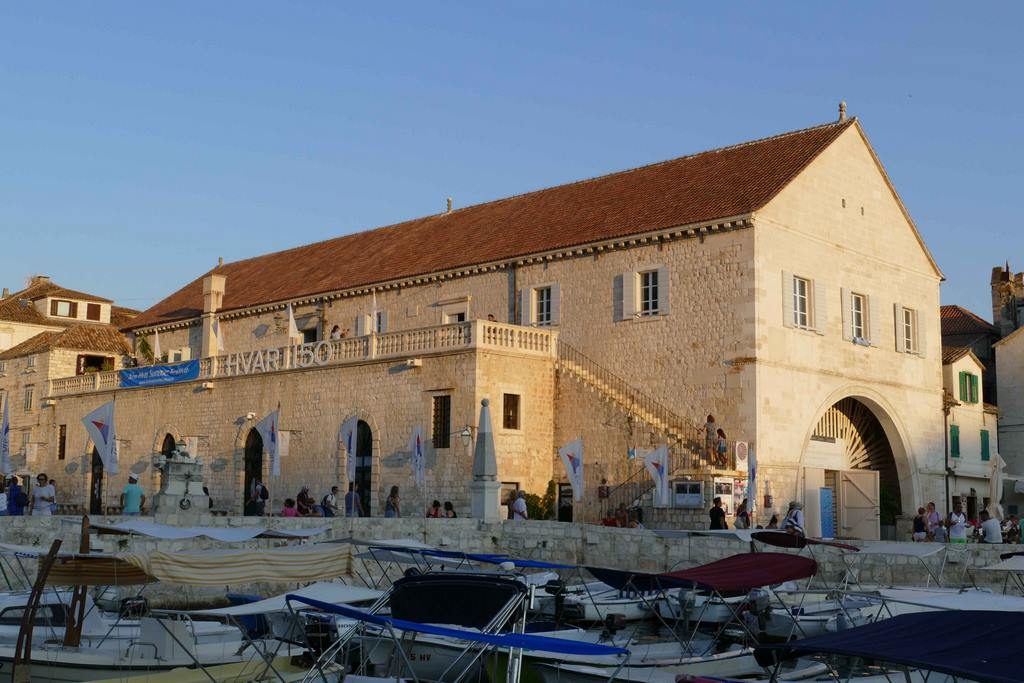
The Fortica (Španjola) fortress, originally designed to protect the town originally intended to protect the town, by a path winding its way up through prickly pear and agave trees. Its construction was completed in the mid century, on a hill overlooking the old part of the town of Hvar. of Hvar. This brief tour ends with a visit to the old dungeons, which give us a glimpse of the living conditions in the old days. a glimpse of what life was like for a prisoner in the sixteenth century.
Back at the boat, as night falls or early morning for those who have enjoyed an unforgettable party at the famous 'Carpe Diem', don't forget to lock your cabin, because at night, yacht doors are all the same, and no one is safe from a partygoer who is a little too tipsy.

Brać: wild coves and turquoise bays
The next day, we approach the island of Brać ((pronounced Bratch) via Bol, a coastal town on the south coast. This renowned seaside resort is typical of Dalmatia, with its port, daily market and white stone houses where time seems to have stood still. where time seems to stand still. Walk along the harbour and enjoy a glass of fruity Croatian wine, almost with your feet in the water. Brać is famous for its open-air quarries from which its white stones are extracted. the construction of Diocletian's Palace and even for the Diocletian's Palace and even the White House in Washington!
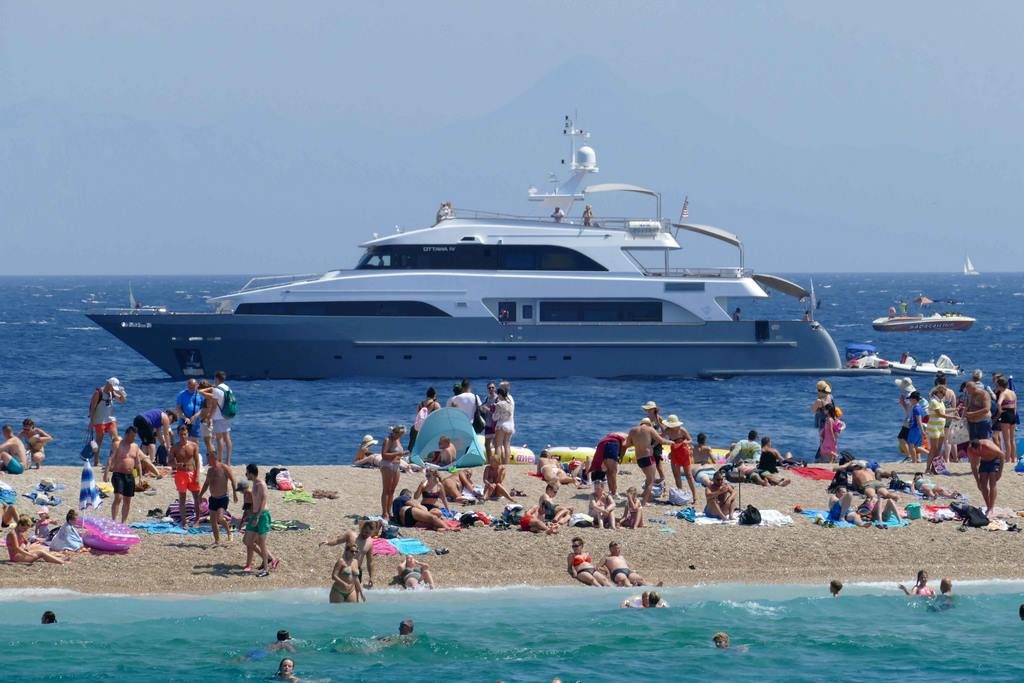
Zlatni Rat is the ideal place for sunbathing and water sports water sports such as kitesurfing, sea kayaking and windsurfing. windsurfing. Only an hour's ferry ride from Split, this spot is very popular with Croatians. popular with Croatians.
The night is illuminated by the "tears of Saint Laurent", a swarm of meteors that appear to come from the constellation of Perseus. On this last night on board, the Admiral's passengers enjoy the show and dance, remembering Horace's verses. the show and dance, remembering Horace's verses, " Carpe diem quam minimum credula postero ("Seize the day, relying as little as possible on tomorrow"). tomorrow as possible").
Text : Capucine Ferry
Photos : Capucine Ferry and Brigitte Postel
Practical notebook
Dalmatians - Did you know? ?
"Dalmatia" derives from the name of the Illyrian tribe Delmata ("delm" meaning shepherd; cattle rearing must have been the tribe's main occupation). The eponymous breed of dog originated in Dalmatia.
Split
Where to dine?
Visit NostromoThere's no doubt about it. Grilled calamari and Croatian-style fish.
www.restoran-nostromo.hrhttp://www.restoran-nostromo.hr
Krav Sv. Marije 10 /pokraj ribarnice / 21 000 Split - Croatia
Where to go out?
Inbox club
From the boat, the electro music coming from the quayside arouses your curiosity. It's easy to get caught up in the city's nightlife, sipping cocktails, chatting and dancing.
Getting there
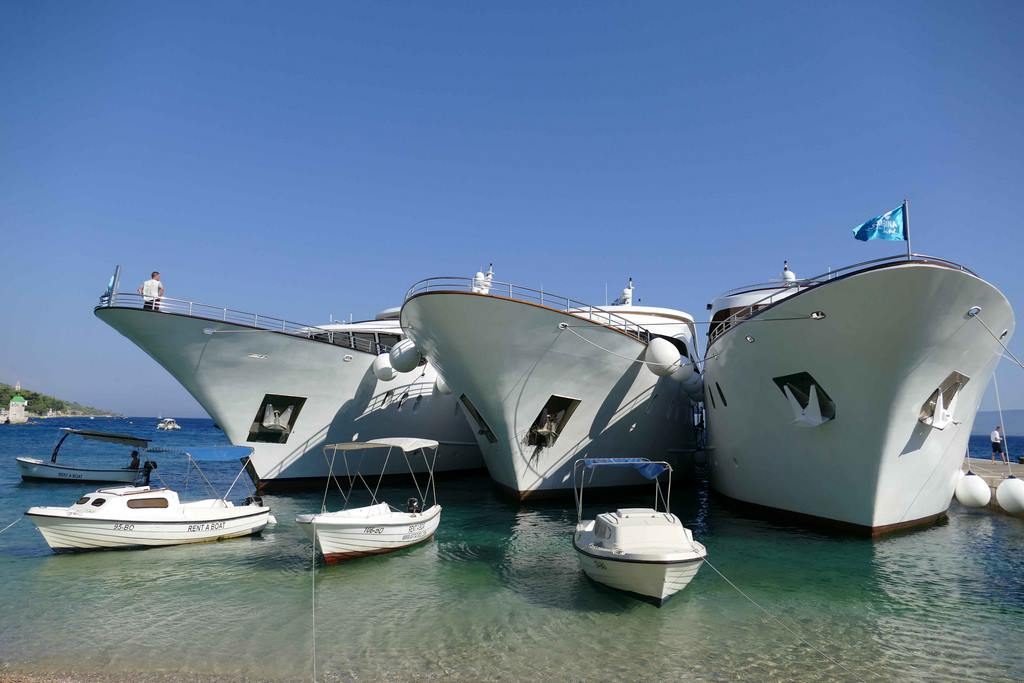
The Croatian company Katarina Line has a fleet of 66 boats in 6 different categories. It supports and donates one euro per passenger to the Down's syndrome association, i.e. 30,000 euros in 2017.
The Admiral yacht is one of the most luxurious. The rooms are very spacious, the staff very attentive and the common areas provide spaces where everyone's privacy is preserved. Capacity for 39 passengers: 19 double cabins and one single cabin. Heated Jacuzzi and spacious sun deck. Excellent local cuisine.
An English-speaking guide accompanies passengers on some cruises. https://www.katarina-line.com/