Table of Contents
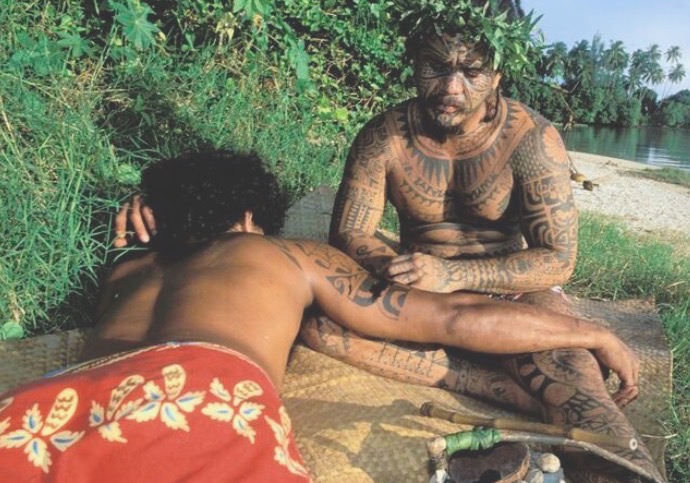
In the heart of the Marquesas archipelago, tattooing - tā moko, or Te patutiki - is not a simple body adornment. It is a living memory and an indestructible link between the individual, his community and the world of his ancestors. Long threatened by colonisation and missionary prohibitions, this ancestral art has been enjoying a genuine revival since the 1990s, symbolising a rediscovered pride and a profound cultural reappropriation.
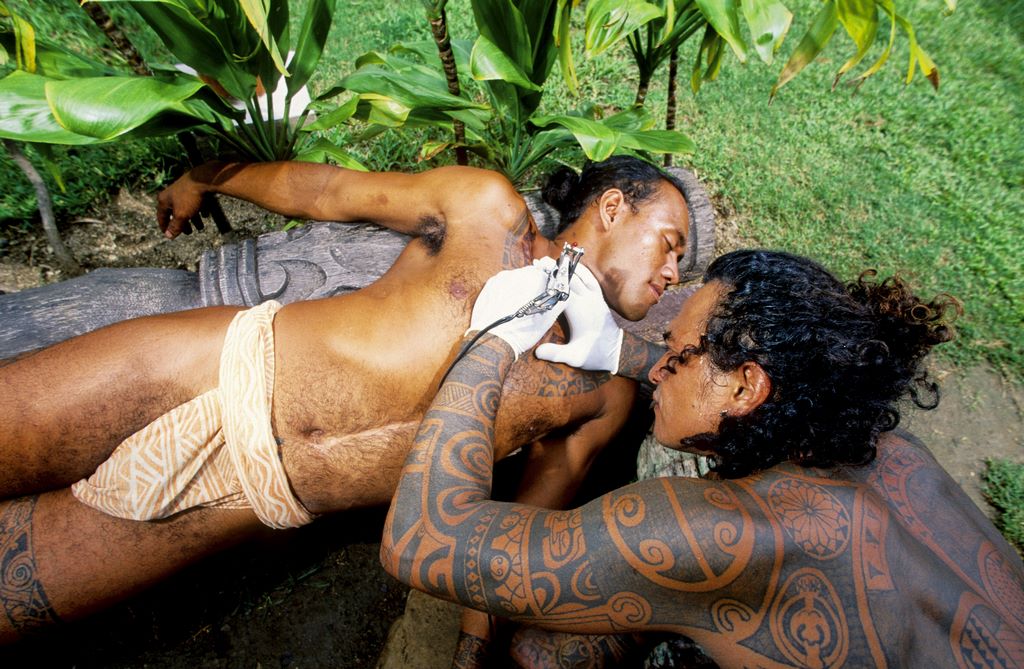
Marquesan graphic art matatiki is practised, in its traditional dimension, in the Marquesas archipelago, named Te Fenua Enata/Te Henua Enana (Land of Men, in Marquesan). This archipelago comprises six inhabited islands: Nuku Hiva, Hiva Oa, Ua Pou, Ua Huka, Tahuata and Fatu Iva. It is one of the five archipelagos of French Polynesia. In these islands, tattooing has reached an exceptional degree of extension and sophistication.
Heir to Lapita (1) and more broadly Austronesian traditions, the matatiki is one of the fundamental languages through which people have inscribed their identity in the world. This practice, which has existed since the most distant past of the Eurasian «old world», was one of the «discoveries» of the first voyages of James Cook (1728-1779), who gave it its name, derived from the Polynesian : tattoo.
The first accounts of Marquesan tattooing
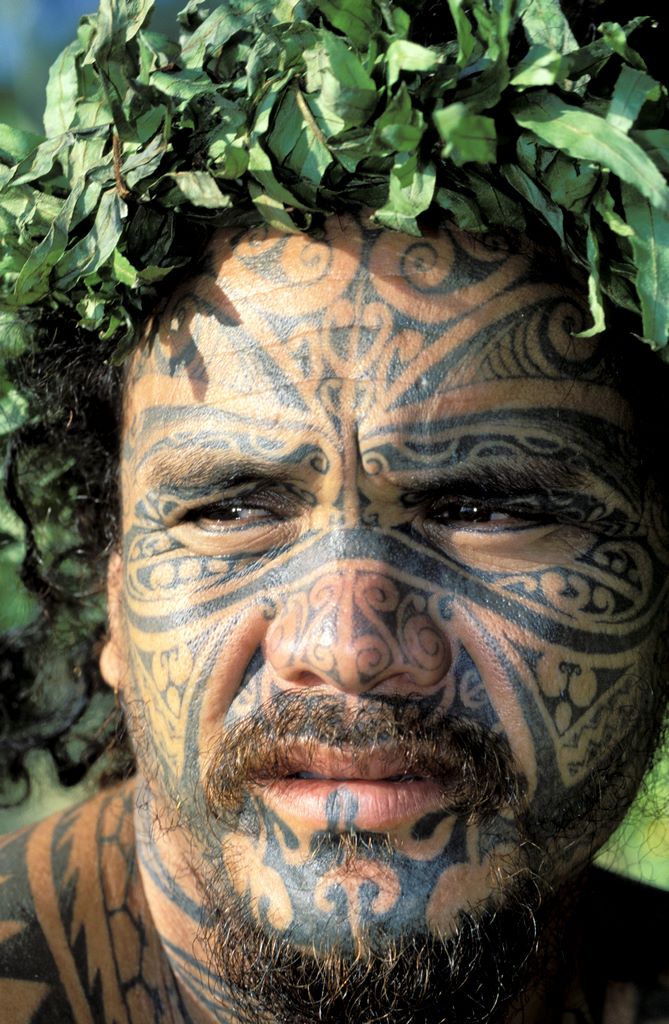
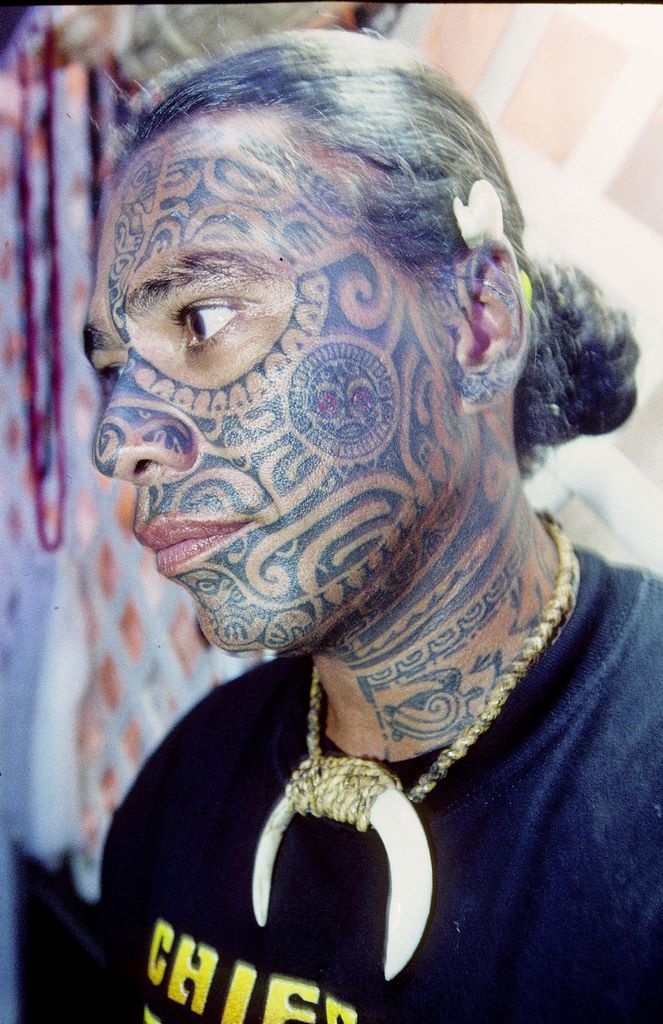
By plunging into the heart of this oral society, for which no ancient writings were available, the first explorers, such as James Cook in 1774 and Sydney Parkinson (1745-1771), the illustrator on Cook's first voyage who produced numerous drawings of tattooed Polynesians, provide the first visual evidence of this. They show elaborate designs on the islanders' faces, arms and torsos, attesting to a variety of motifs and a sophisticated aesthetic.
Georg Forster (1754-1794), a German naturalist who sailed on theHMS Resolution with Cook on his second voyage, highlights the variety of designs and the extensive body coverage of the tattoos, noting that they vary according to the rank of the person and the island. Forster relates in his book A Voyage Round the World ,published in 1777, that the « the inhabitants looked almost black, being dotted (tattooed) all over their bodies »and that the motifs were not simply recognisable figures of animals or plants, but « a variety of spots, spirals, bars, checkerboards and lines » evenly arranged on each leg, arm, and cheek... This shows that the tattoo was not just a random ornament, but a complex, coherent graphic composition.
Étienne Marchand (1755-1793), a French navigator who visited the Marquesas in 1791, also insists in his account Around the world, on the visual richness and the almost total coverage of the body, describing «men almost entirely black » due to the density of the motifs. He also observes that the inhabitants of Ua Pou are less tattooed than those of the southern group, which attests to a local variation in tattooing practices. patutiki depending on the islands in the archipelago.
In the 19th century, naval surgeon Dr Ernest Berchon (1825-1895) (2) revealed that Marquesan tattooing was deeply rooted in Polynesian history and culture. The motif called ‘enata (a stylised human figure) does not represent an abstract “man”, but an ancestor, a lineage or an alliance. According to the oral tradition recounted by the anthropologist Willowdean Chatterson Handy (1889-1965) (3), repeated human figures could indicate the continuity of a clan. Moreover, in the stories handed down from Ua Huka and Nuku Hiva, it is still said: « The body speaks of those behind us. "
Tattoos and identity: ethnographic testimonies
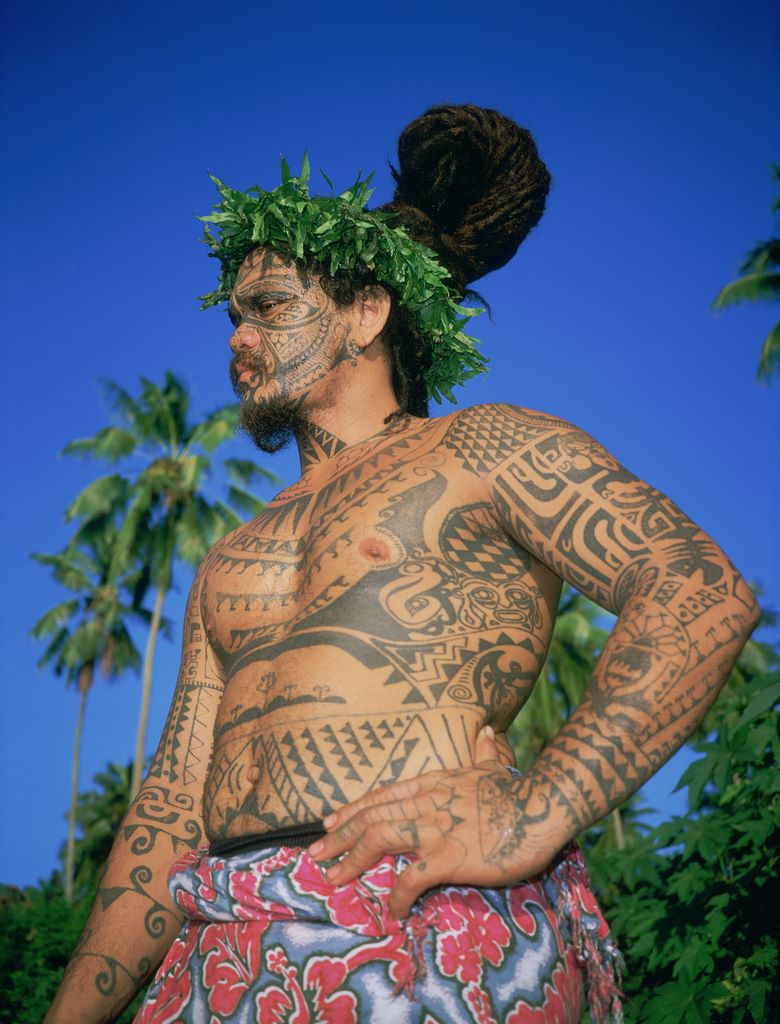
The first accounts of the natives collected in the XIXᵉ by ethnographers (in particular Karl von den Steinen (1855-1929), and those carried out in the 20thᵉ century by researchers from the Bishop Museum in Honolulu - Willowdean Chatterson Handy (1889-1965), Edward S. Craighill Handy - helped to rescue some of this memory from oblivion. In 1897, the Berlin Museum commissioned von den Steinen to carry out a mission to the Marquesas Islands in order to fill a major ethnological gap. He spent 6 months there, noting in his diary: « passing from one valley to another over the mountain ridges, all the villages of the six inhabited islands, I lost twenty kilos... I wrote down the words of the songs and genealogies that go back to the dawn of time... My personal interest led me to these sacred tales of the original homeland, Central Polynesia and other remote islands... ». Although he considered that many of the treasures of the ancient culture had already disappeared, he set about making a remarkable ethnographic inventory of Marquesan material heritage, photographing, drawing and describing more than 1,000 items. His work shows that Marquesan tattooing is more than just aesthetic: it is a key to social integration, a body language and a foundation of Marquesan identity. As Karl Von den Steinen points out: « We shouldn't conclude that this custom has no history simply because the wearer no longer knows anything about it! "
Tattooing: an art intimately linked to the sacred
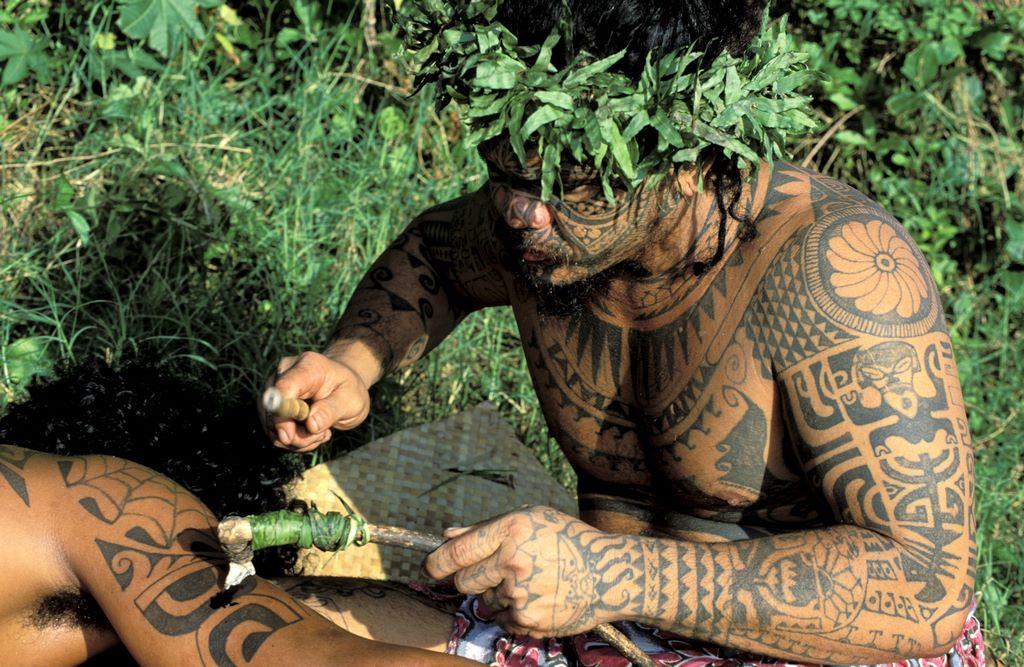
Much more than an ornament, the tattoo is a complex system of signs linking the individual to his clan, his ancestors, the gods and the social order. Spiritually speaking, tattooing was regarded as an art transmitted by the gods, requiring ritual preparation, sacred rules and rigorous discipline. Tattooed images were not interchangeable: they carried a specific power and were not to be used out of context. The skin, like the vegetable tapa that wrapped sacred objects, became a protection against evil influences and a receptacle for the mana, vital energy. Divine and ancestral figures - Tiki, Tupa and other entities - inscribed their power in the very body of the individual.
In ancient times, before writing, images and names carried power. As an old tattooist from the 1920s recalled: « In the old days, people knew the real images. There were images for skin and images for wood. They were different. It's madness to place images intended to adorn the body on a bowl for food... It's very bad to eat from dishes covered in images intended to adorn the body.... » These words speak for themselves. The tattoo was both a right of entry into the world of the living and a protective barrier against evil influences.
A highly developed body art, culturally codified and socially significant
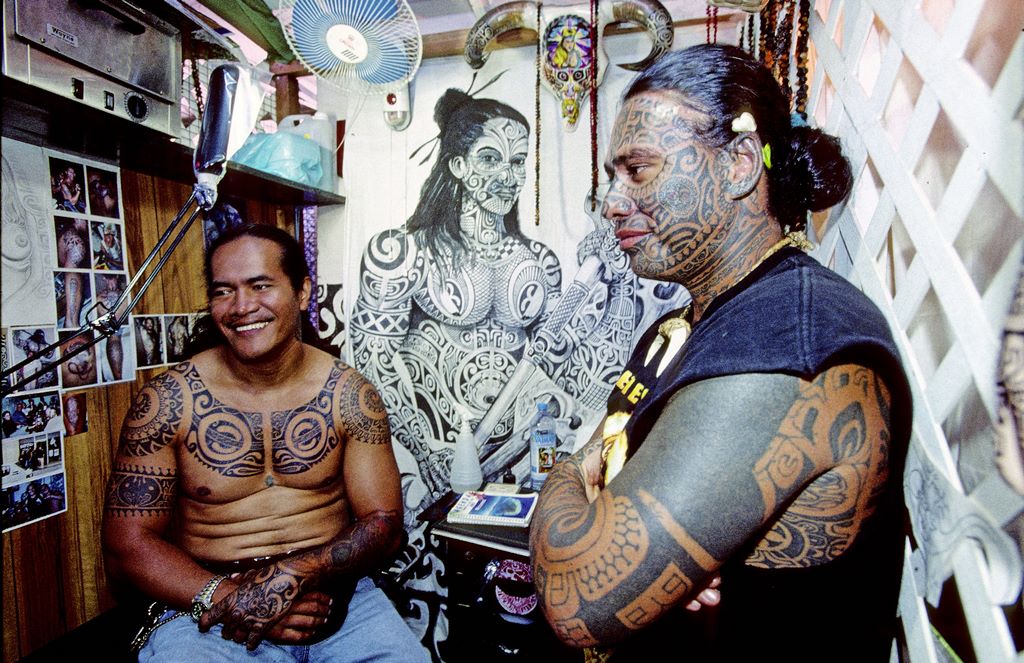
The tattoo was a fundamental social marker, attesting to maturity, integration into the group and membership of a lineage or speciality. It could only be acquired after rites of passage, demanding apprenticeships and the approval of elders. As the researchers point out, « These graphic expressions have an apotropaic role, anchoring the element or person bearing them in the sacredness and genealogical filiation perpetuated by oral tradition. Each symbol was read and understood in relation to the whole range of beliefs. ".
In a society with an oral tradition, the skin became the privileged medium of identity. The body thus displayed, for all to see, an image that was both indelible and evolving, reflecting the individual's place within the community. The diversity and arrangement of the tattoo's image-signs were at once sources of beauty, vectors of knowledge, transmitted memory and guarantees of power. Closely linked to the major stages of life, tattooing was a right of entry into the world of men - the ’Enata or ’Enana, They are also used as a protective barrier against disease and evil influences, symbolically strengthening the skin and body.
The body as a living archive
Tattooing was both a test and public proof of maturity, and could only be acquired following rigorous apprenticeships before being confirmed by acts sanctioned by reasons chosen and approved by a council of elders. The entire body became a medium of memory, status and power.
Each design told a personal and collective story, evolving with life and the merits acquired. The tattoo was thus a veritable biography inscribed on the skin.
As ethnologist and anthropologist Marie-Noëlle Ottino-Garanger points out: « Far from being an aesthetic caprice, Polynesian tattoos were intimately associated with the stages of an individual's life and were a key to their integration into society. ». Both a test and public proof, it proclaimed identity, protected against illness and the loss of mana, and inscribed the individual within a sacred continuity, made up of ancestral figures, divinities and living memory.
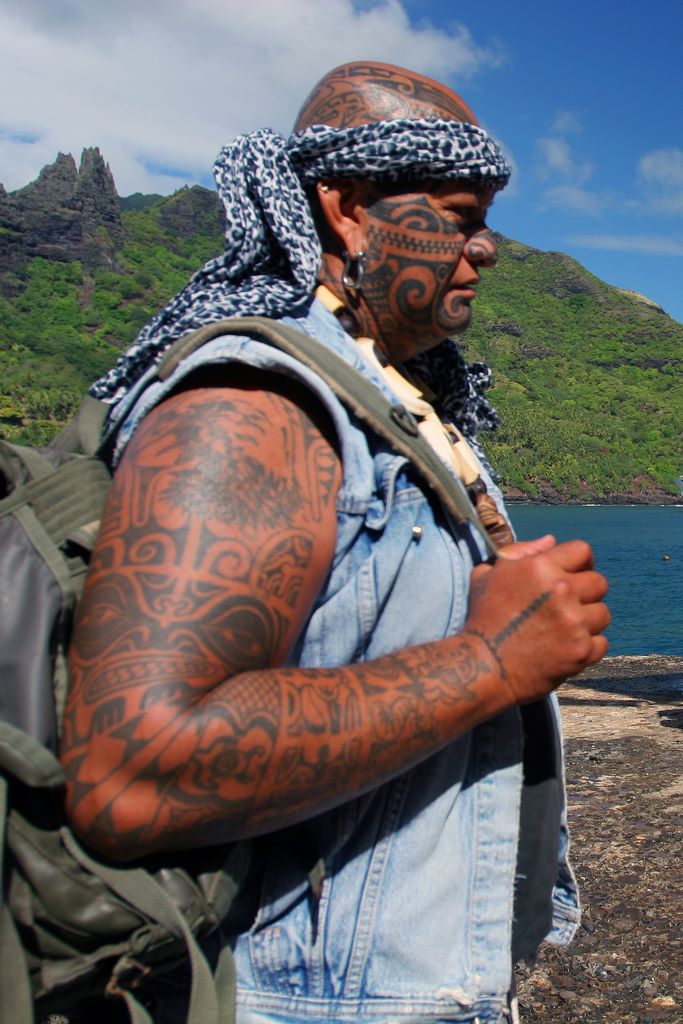
Pain, fertility and solidarity: tattoos as a test of life
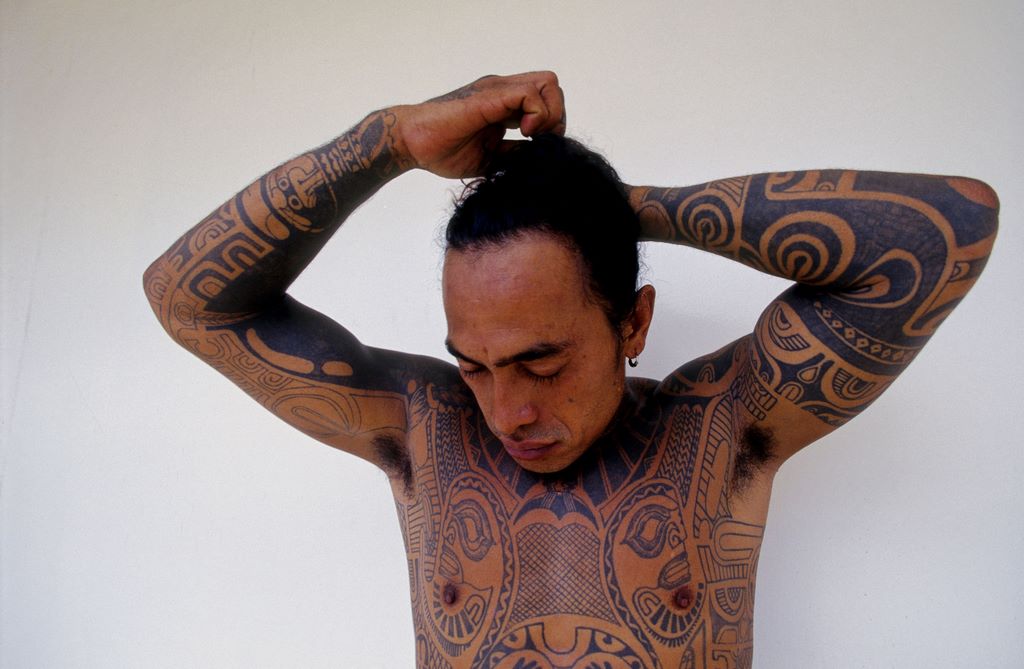
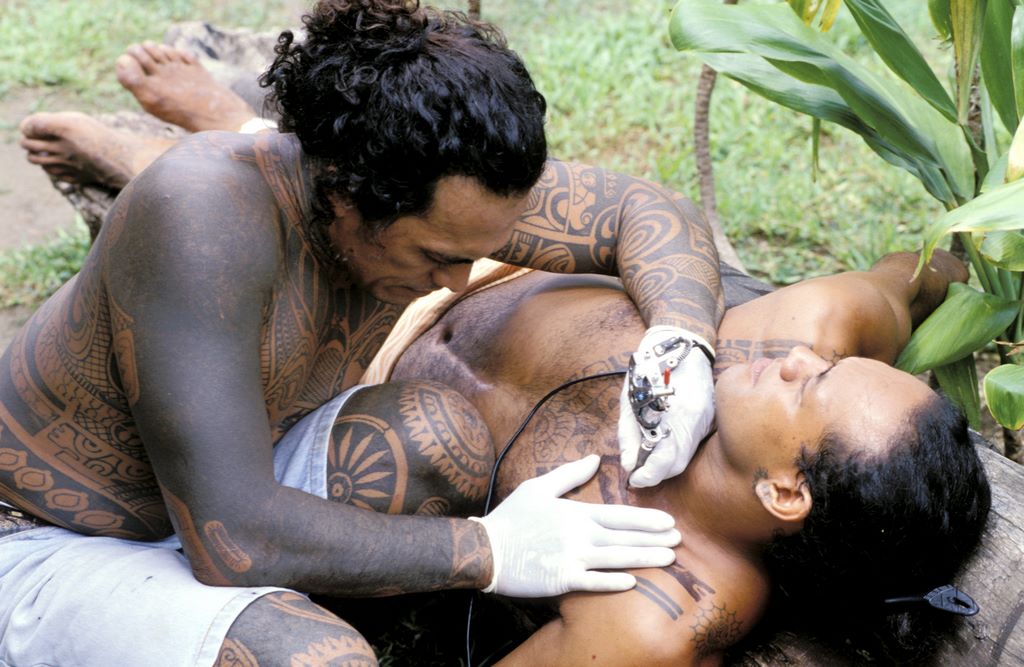
Tattooing was both a physical and moral ordeal, and the pain involved played a full part in its symbolic and initiatory value. Dr Berchon gave a vivid account of this in the Bulletins de la Société d'Anthropologie in 1860: « The patient's complaints were quickly followed by cries torn by the violence of the suffering; the tattooed man struggled and mixed prayers with vociferations; but the tattooist's numerous assistants held him down by force until the end of this veritable torture.. » This suffering, far from being in vain, consecrated the passage to a new social and personal state.
Tattoos were also central to seduction, fertility and vitality. Certain motifs, particularly those relating to the lower abdomen, were directly linked to procreation, continuity of lineage and youth.
In high-ranking women, this lower part of the body (ka'ake hope) was the object of meticulous care. Vast compositions covered these essential areas, combining ancestral figures and symbols of life (poka'a symbol of a «pocket of life»). The beauty thus produced was never superficial: it expressed strength, maturity and the ability to beget children. It is worth noting, however, that tattooing was not practised on pregnant women. But for all of them, it remained a « obligation rather than a distinction », says Dr Berchon. « They must show marks (lines on the sides of the fingers) at least on their right hand as soon as they reach the age of twelve or thirteen, otherwise they would not be allowed to prepare popoi (4), to make pakoko (5), or to carry out the arduous task entrusted exclusively to them of rubbing the dead with coconut oil until they are mummified, a preparation known as hakapahaa. »
Finally, tattooing played a part in social and economic organisation, particularly in times of food shortage. It made visible the links of mutual aid between groups and consolidated the role of chiefs as guarantors of redistribution and collective well-being. In these contexts, certain tattooing sessions were fully in line with the logic of solidarity and reciprocity, linking individual trials to the equilibrium of the social body. « Depending on the reason for belonging to a group, people owed each other help and assistance. The chiefs, who were personally responsible for the well-being of the tribe and the abundance of the fruits of the breadfruit tree, had to ensure that they were redistributed in these circumstances », explains Marie-Noëlle Ottino-Garanger.
From imposed oblivion to rediscovered memory
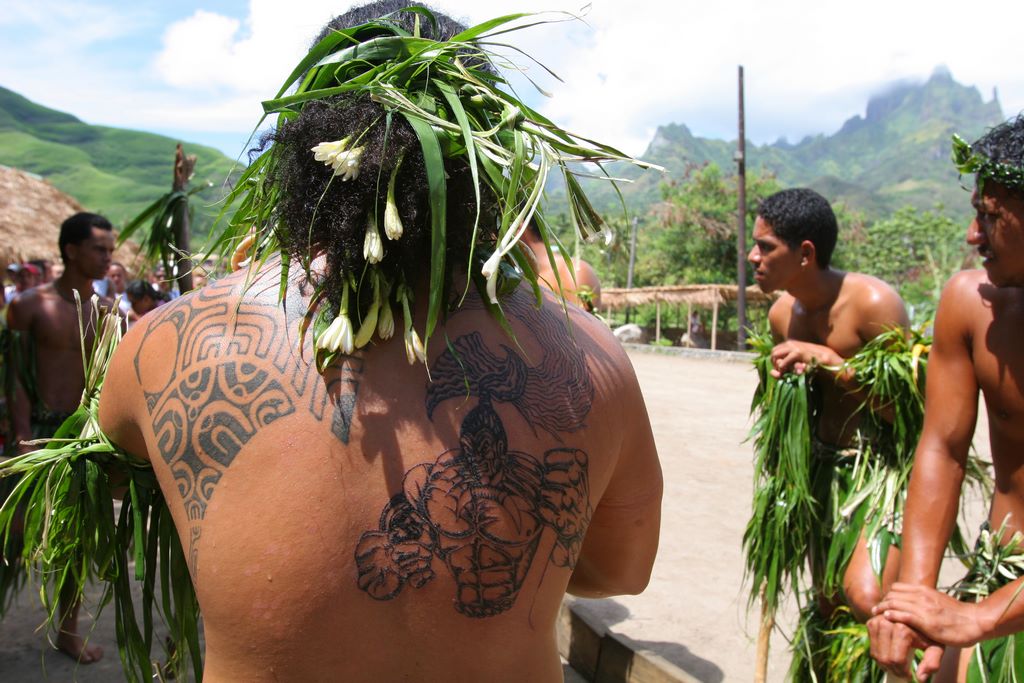
However, from the 1830s onwards, under the impact of European contacts, the exoticizing gaze and above all religious pressure, the deeper meaning of tattooing began to be lost. Gradually tolerated, then condemned, it eventually faded away in the first half of the XXᵉ century, at the same time as the traditional society that gave it meaning disintegrated. All that remained of it were fragmentary motifs and memories often emptied of their symbolic significance.
It was under the impetus of Anne Lavondès (founder of the Musée de Tahiti et des Îles) that the place of tattoos in Marquesan society was studied from 1984 onwards, providing an insight into this distinctive feature of Polynesian culture. After analysing the testimonies and iconographic documents preserved in libraries, Marie-Noëlle Ottino-Garanger (CNRS) and Pierre Ottino-Garanger, a doctor in prehistoric archaeology and researcher at the IRD (6), are looking into the territorial organisation of the family groups that populated the archipelago, work that complements their work in the field. With this research, « the whole soul of a people was touched, in the past as in the present », recalls Marie-Noëlle Ottino-Garanger.
The Marquesan tattoo has been enjoying a revival since the 2000s, driven by a broader quest for identity in Polynesia. Rediscovered, reinterpreted and sometimes rewritten, it is re-emerging as a strong sign of cultural survival, recognition and continuity. Today, it is at once a claim to identity, an artistic legacy and a living heritage, bearing witness to a creative genius that extends beyond the Marquesas Islands. As a sign and a profound mark of an assertion of identity, those who wear it today show their concern for recognition and cultural survival. As the legacy of an aesthetic sense and creative genius, it can be claimed as part of humanity's cultural heritage. Through its powerful motifs and singular aesthetic, the Marquesan tattoo tells the story of a people who continue to inscribe their culture in flesh and time.
Matatiki
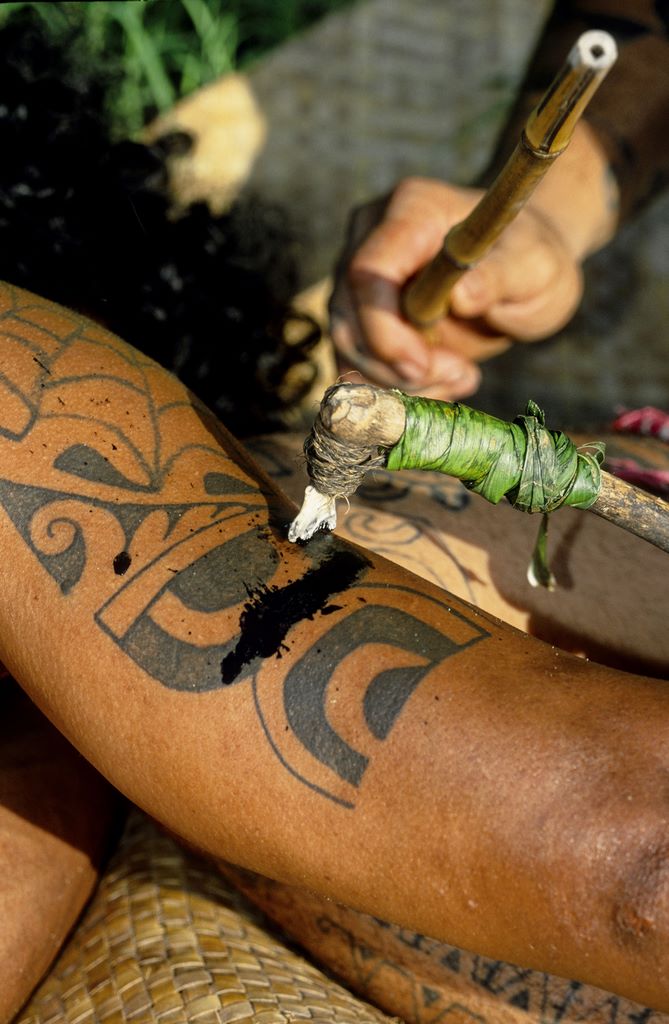
Matatiki expresses mata, the meaning of portrait or face, of « Tiki », the first of mankind, and, by filiation, the idea of image or representation. The iconographic forms of matatiki are the result of the unlimited fragmentation of the body of Tiki. The graphic art of matatiki is a collection of inscribed motifs and symbols expressed in all cultural practices involving materials. These motifs can be found on the skin in the form of patutiki, the art of tattooing, as well as in the form of the haatiki or ketutiki, this art form brings together sculptures, engravings, petroglyphs, pyrographed bamboo or tapa ornate (bark cloth).
The patutiki Te Patutiki o te Henua Enana (Man and His World tattoo) is the best-known form of the matatiki. " Patutiki ", literally translates as «to hammer (of) Tiki », the tattooist's comb and mallet making «appear» Tiki through tattooing.
The characteristics of patutiki differ from other Polynesian tattoos mainly because of the symbols taken from the body of the Tiki. Another distinctive feature of Marquesan tattooing is the combination of shapes, size and density of the designs on the body.
1 - The Lapita are descended from peoples who came from South-East Asia, probably from the islands of Taiwan or the Philippines. They were among the first great navigators of the Pacific, travelling in double-hulled pirogues and gradually colonising the archipelagos of Melanesia and then Polynesia.
2- Dr Ernest Berchon, Discourse on the origins and aims of tattooing, Date of original edition: 1886. Digitised by the BNF.
3 - Willowdean Chatterson Handy,Tattooing in the Marquesas, published by the Bernice P. Bishop Museum in 1922. This work is one of the most detailed studies of Marquesan tattoo motifs, methods, social meanings and stylistic variations. The work contains drawings and photographs based on direct sources from the islanders of the time.
4 - The term “popoi” refers to a food preparation made from the starch of the fruit of the breadfruit tree (uru or Artocarpus altilis).
5 - Making pakoko corresponds to the circular movement of the index and middle fingers around the wooden bowls in which the popoÏ at mealtimes, in order to handle this food.
6 - Institut de recherche pour le développement (I.R.D.), formerly Office de la recherche scientifique et technique outre-mer (ORSTOM).
Read
Die Marquesas-Inseln (The Marquesas Islands)) by Karl von den Steinen. His notes detail the social and ritual significance of tattoos, in particular their link with rank, family, alliances and power (mana). In his work, published in 1899, he emphasised the difference between male and female motifs, the diversity between islands, and the regularity of geometric and figurative motifs.
Willowdean Chatterson Handy,Tattooing in the Marquesas, published by the Bernice P. Bishop Museum in 1922. This work is one of the most detailed studies of Marquesan tattoo motifs, methods, social meanings and stylistic variations. The work contains drawings and photographs based on direct sources from the islanders of the time.
Ottino-Garanger M.-N. and P. 1999: Te Patu Tiki, the art of tattooing in the Marquesas Islands. Ed. Gleiza
Text : Brigitte Postel
Photos : Sylvain Grandadam