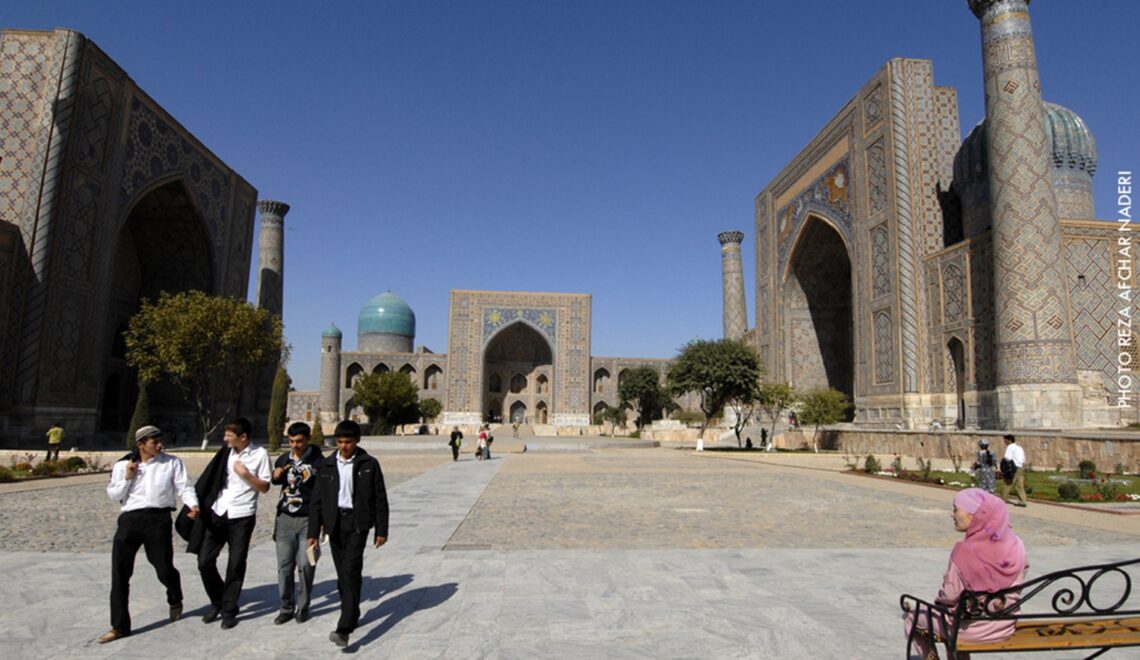
At the millennial crossroads of major trade routes, a familiar territory for the legendary conquerors of the Asian continent, Uzbekistan was to be rediscovered and, more specifically, its legendary capital, Samarkand, on the occasion of the opening of the IFTM Top Resa exhibition in Paris from September 15 to 17, 2026. Let us add a literary escapade to the work of great Persian poets who recounted the fabulous city with words that have spread over centuries between the Near East and Central Asia.
Table of Contents
An Oriental Versailles where architecture reigns supreme
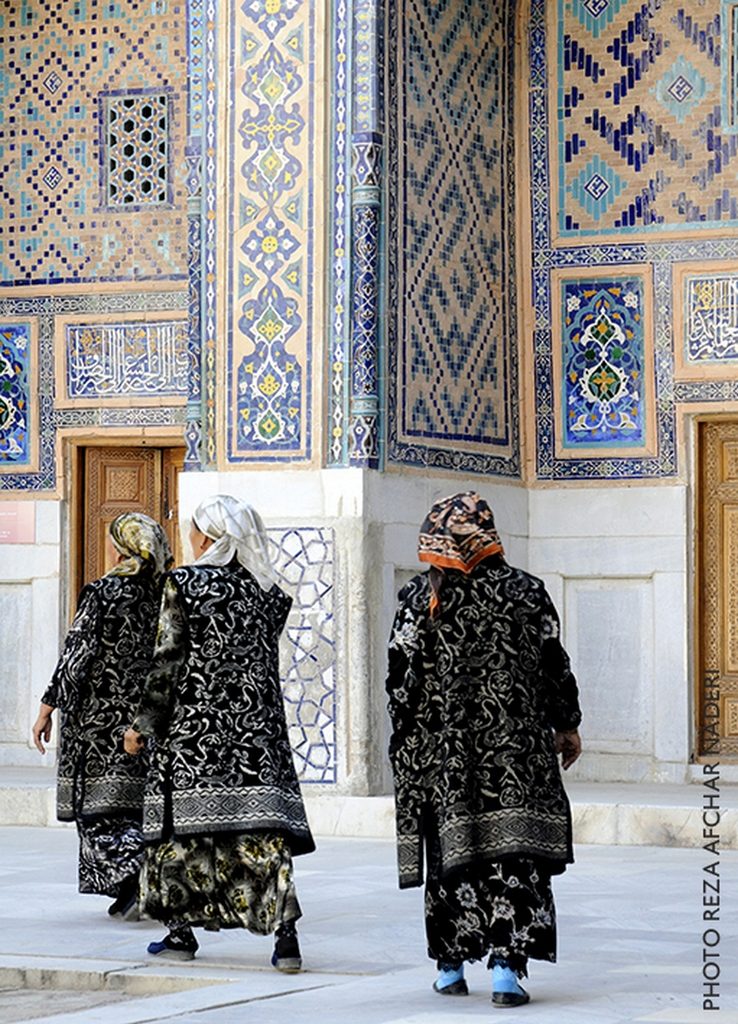
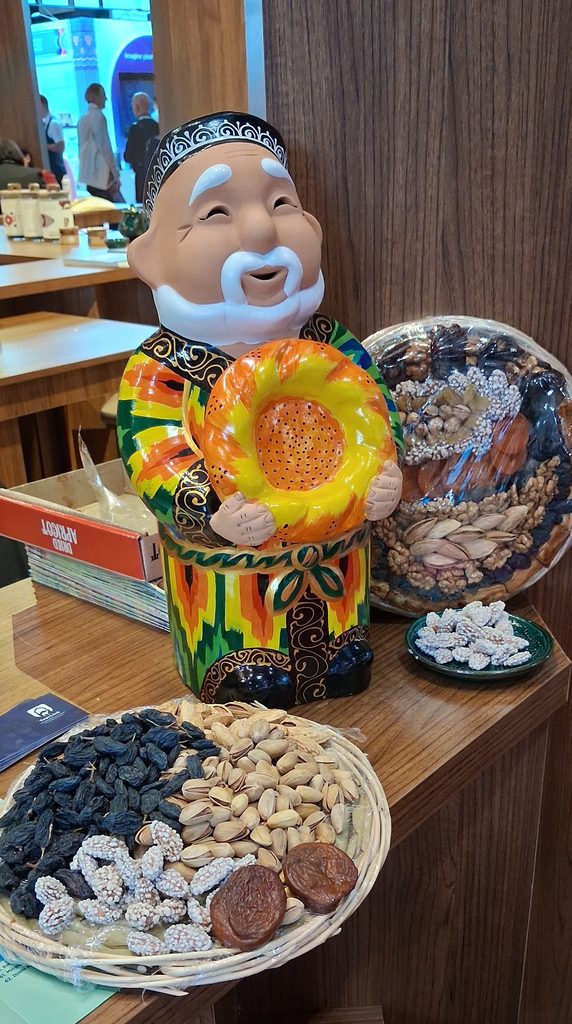
A leading tourist destination, Uzbekistan was the guest of honor at the event. IFTM salon 2026. There are no shortage of superlatives to describe the famous city of Samarkand with its abundance of refined architectures and its madrasas (Qur’anic schools) and their palettes of turquoise blue.
Undoubtedly, this capital, as lofty as it was refined, was named after the sovereign. Tamerlan What Versailles was to Louis XIV, King of France. In other words, a royal city that was both a symbol of power and a model of civilization. Such a symbol was meant to make itself heard across borders and continents to testify to the absolute power and civilizing genius of the conqueror.
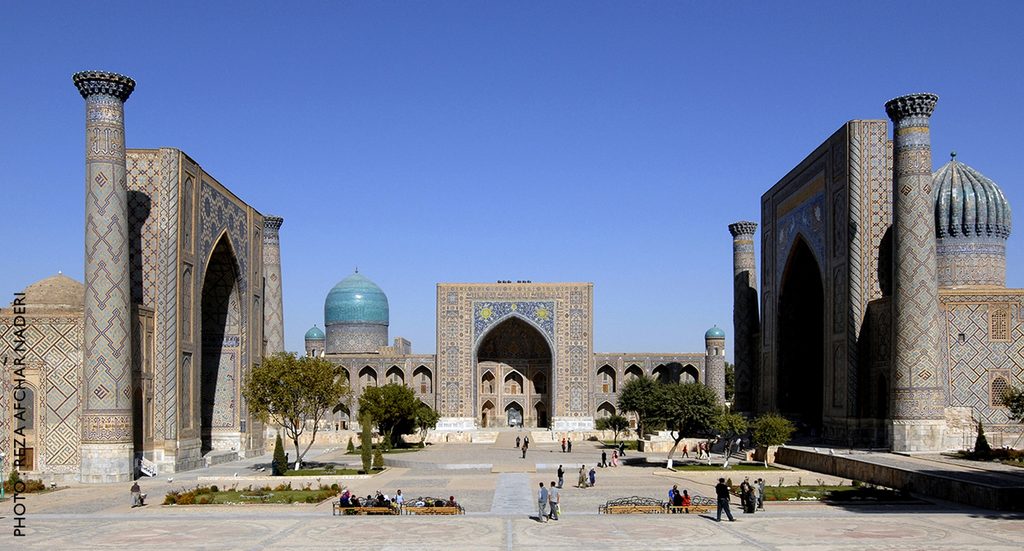
The first place goes to Registan which appears to be the most striking facade of this destination. It takes its name from a word of Persian origin, « reg » («gravel») and « stan »The Place« (in other words, »the sand plaza«). On this esplanade, once the caravans from India, Persia, Russia or China used to converge. What immediately catches the eye is no less than three madrasas surrounding the plaza and arranged at right angles.
Madrasa Tilla Kari
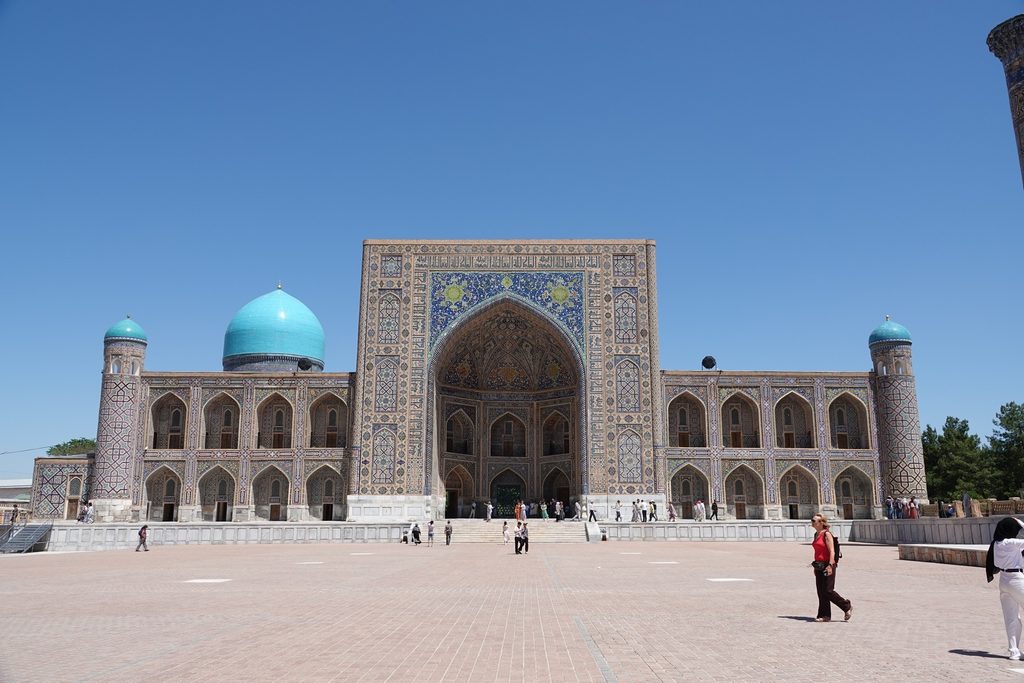
In the middle, on the north side, facing the visitors, there is the Madrasa Tilla Kari, The foundation of which dates back to 1660. The name means «covered with gold». It is enough to note the dazzling decorations inside the dome.
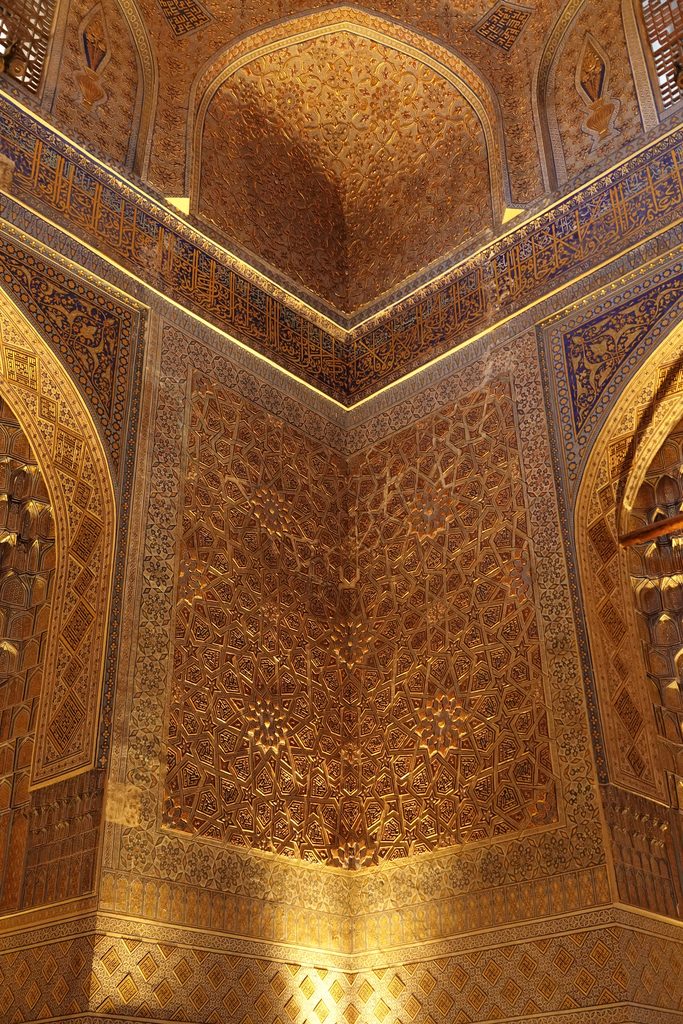
Madrasa Ulugh Bek
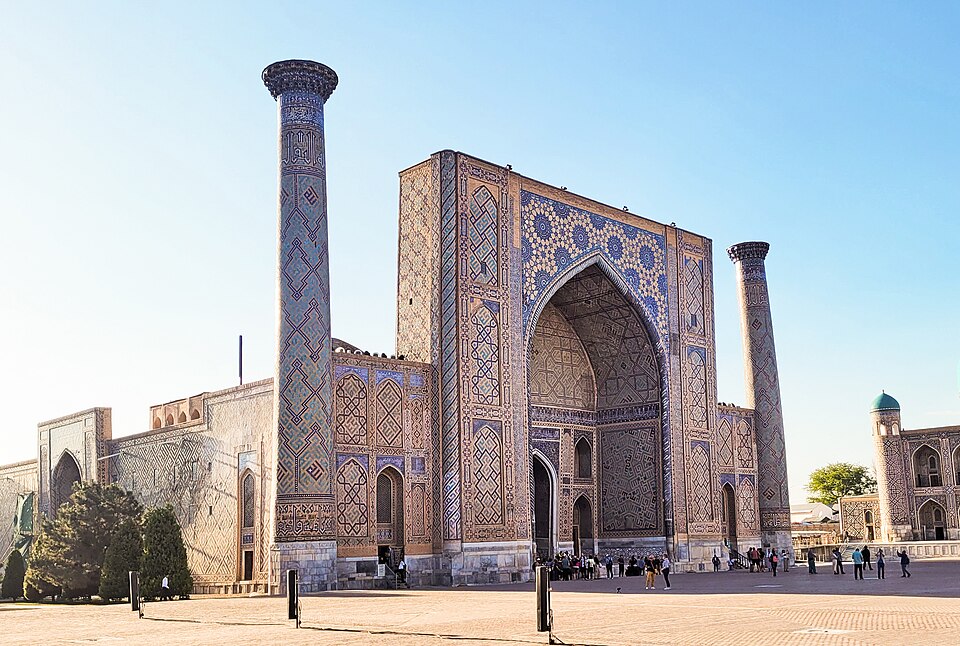
On the left of the Registan Square, facing the visitor, there is Madrasa Ulugh Bek, The oldest of the three, with always this spiritual and educational vocation of the 15th century.
What was considered the largest university in Central Asia bears the name of the great scholar and astronomer Mirza Ulugh Bek (1409 – 1449), grandson of Tamerlan. This madrasa is a classic example of higher education institutions in the Muslim East.
Madrasa Chir Dor
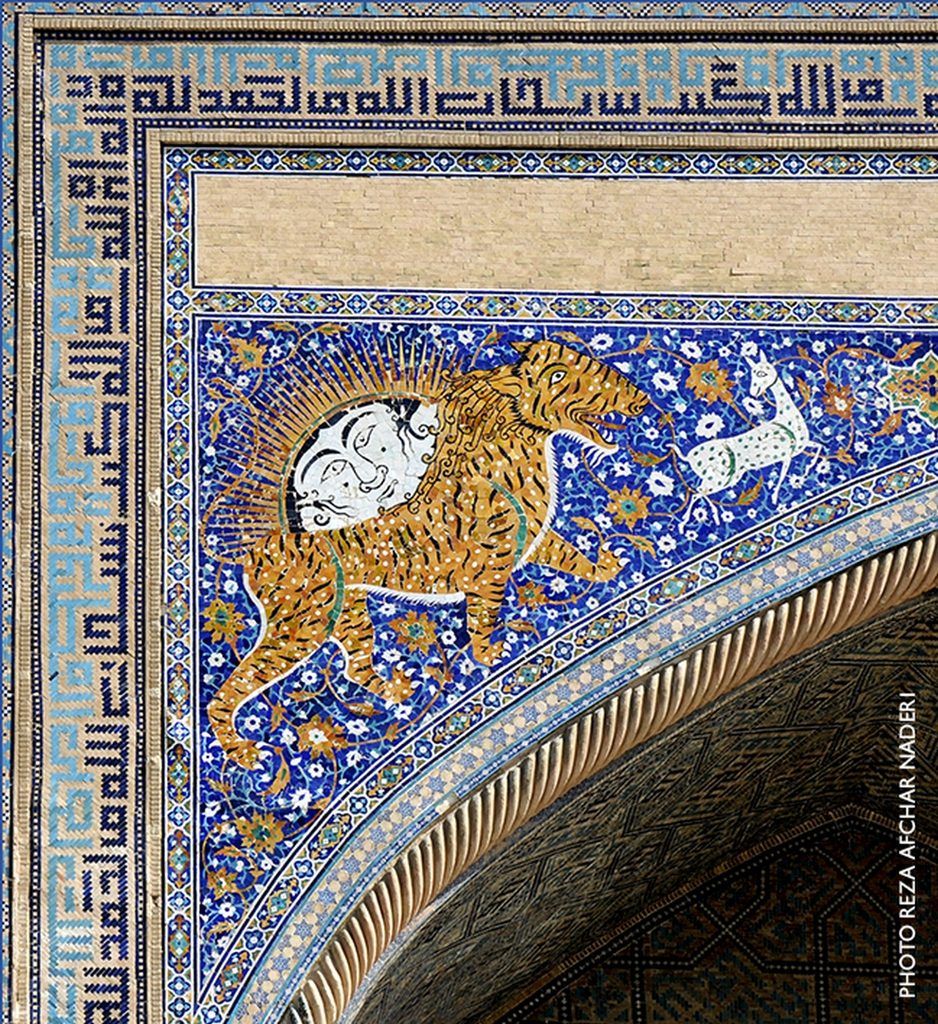
Always facing the visitor, along the right side of the prestigious space, the Madrasa Chir Dor («Door of the Lion»), was erected two centuries later in 1636.
On its facade is a «lion with a tiger» crowned with sunlight, emblematic of the kingdom's power. This symbolism refers to the god Mithra in its Mongolian version. The cult of Mithra is a mystery cult that emerged in Persia during the 2nd century BC.
The master of the place: a legend not as «creepy» as one might think
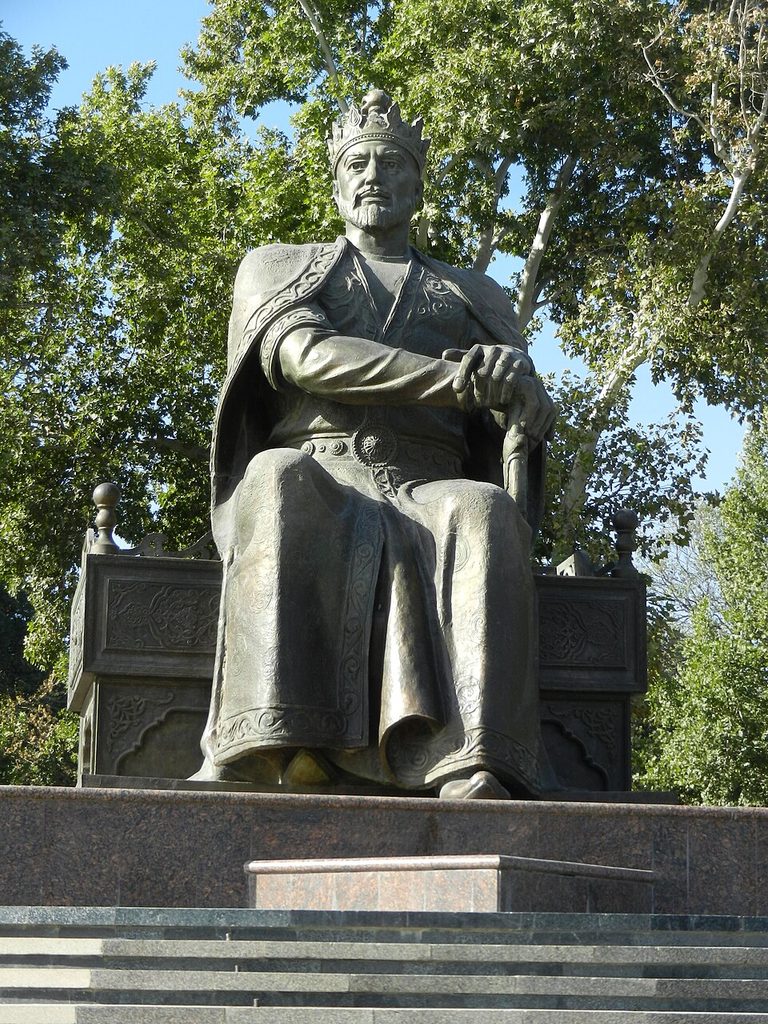
Amir Timour, the sovereign who in the West is called the «Iron Conqueror» bears the name Timur as his original surname (Timur = fer) to which the prefix "pre" has also been added amir meaning «lord». However, he is better known by the name of Tamerlan, the suffix «lan» being a deformation of the Persian « lang » meaning «creepy». The nickname followed an injury to his knee that had permanently affected him.
It is obvious that the title « Amir »It certainly suits the Uzbek people better. Today we can observe the conquering lord, represented in Samarkand where his statue stands, his hands resting on the handle of his formidable sword that shook the empire of more than one empire.
His cenotaph is carved from a single block of dark green jade symbolizing strength and solidity.
The sword and the hilt recall his title of «Lord of Iron» and his status as an implacable conqueror whose empire extended from India to Anatolia.
Mosques, mausoleums and famous graves
Mosque Bibi Khanum
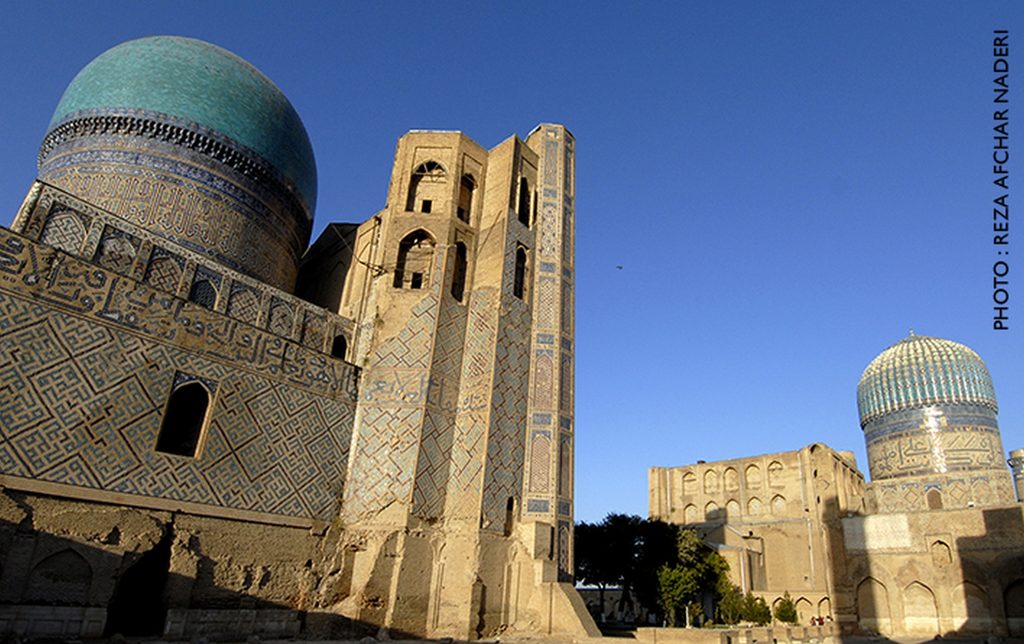
The Mosque Bibi Khanum It stands out among these world-renowned architectural ensembles due to its extraordinary proportions. Grandeur and power are present in this mosque dedicated to the conqueror’s favorite wife. It was to this Mongolian princess (1341 – 1406) that the majestic mosque built by artisans from Khorassan Iranian, from Azerbaijan and India.
The main entrance, a gigantic arch, was originally flanked by minarets 50 meters high. They were built to celebrate Timur’s victories in India. The dome, on the other hand, stood at a height of 40 meters
The mosque was promised to become the largest in the Islamic world. What we see today is a partial reconstruction that began in the 1970s.
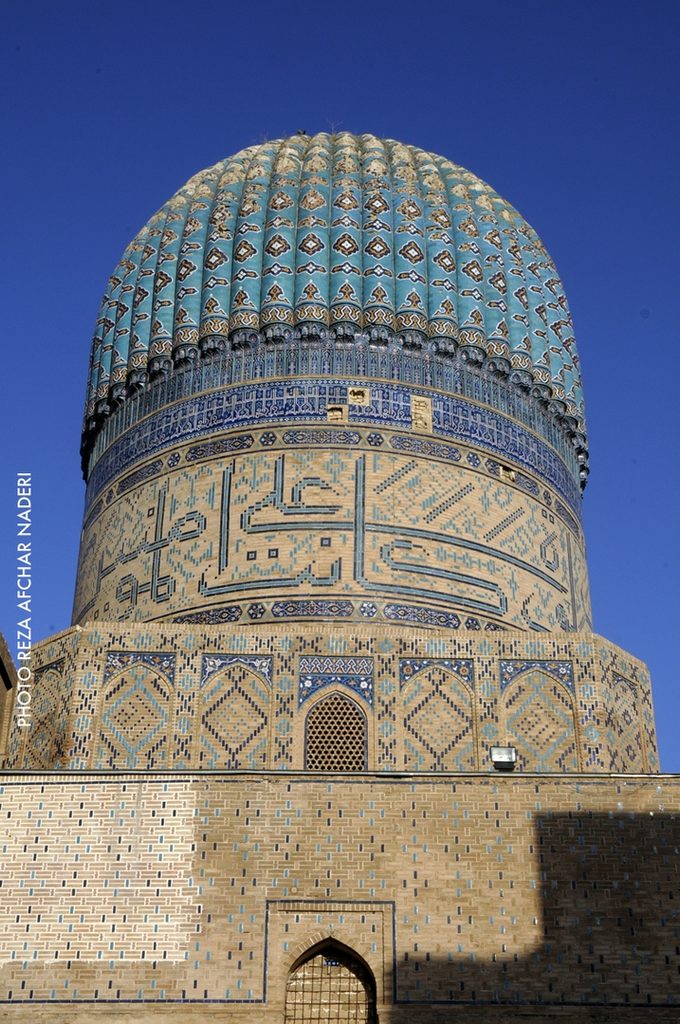
Opposite Bibi Khanum Mosque is the Mausoleum of the same name, erected at the end of the 14th century. This mausoleum is a funerary building of the Timurid era, traditionally associated with the women of the Tamerlane family. Smaller than the neighboring mosque, it stands out for its turquoise dome, whose elegant lines dominate a sober architecture. Inside, a second dome, adorned with decorative motifs, testifies to the refinement of the artisans of the time. The building, deeply marked by centuries and earthquakes, has undergone extensive restoration.
© Reza Afchar Naderi.
The tomb of Tamerlan
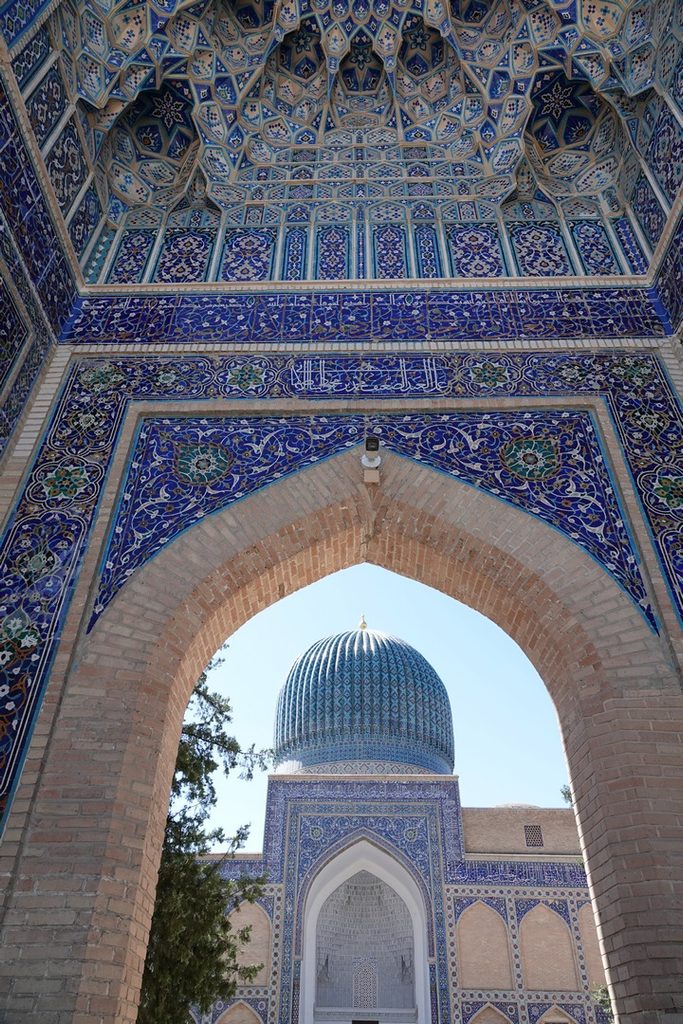
Famous for its magnificent ribbed dome, Gur Amir Mausoleum, («Tombeau du Prince»), the burial place of Tamerlan, is a dynastic mausoleum that is said to have inspired the Taj Mahal, This is a large Mongolian burial site in India. This mausoleum with turquoise domes houses the remains of Tamerlan and several members of his family, including his grandson Ulugh Bek.
Its turquoise dome with 64 ribs, spectacular for its proportions and its decoration of glazed ceramics, is among the most remarkable achievements of Central Asian architecture.
© B. Postel.
Complex Chah-i Zinda
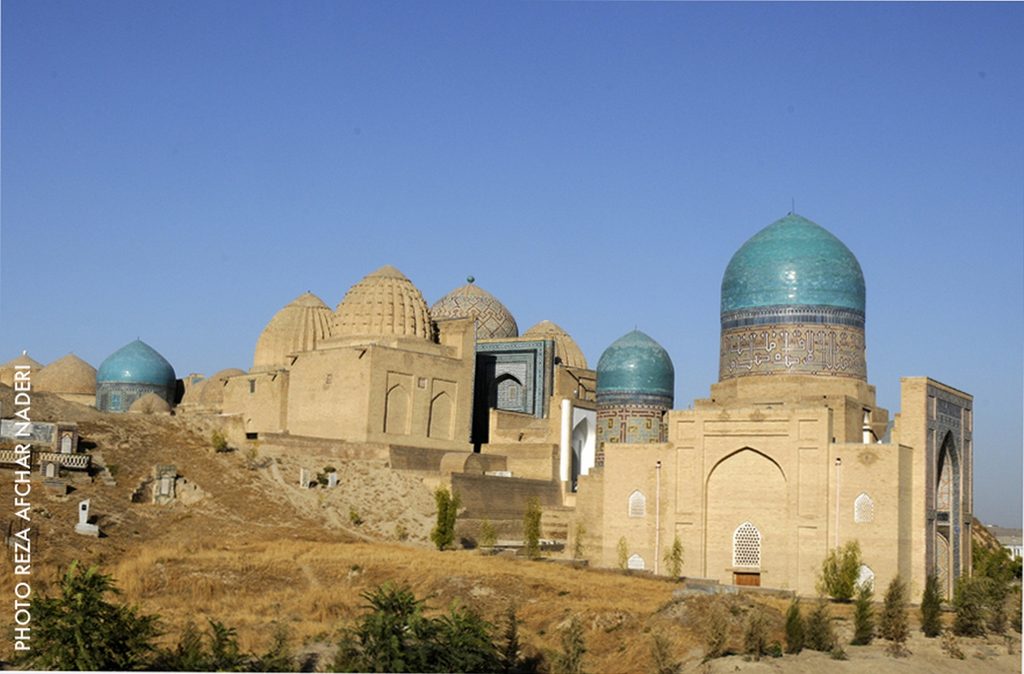
A few minutes' walk from the Bibi Khanum Mosque is the Complex Chah-i Zinda («Living King»). A necropolis that includes about twenty mausoleums erected between the 11th and 19th centuries. This necropolis refers to the Zoroastrian myth of the Judges of Hell dating from before the Islamic conquest and tells how the king Afrasiyab he continued to reign over the kingdom of the dead.
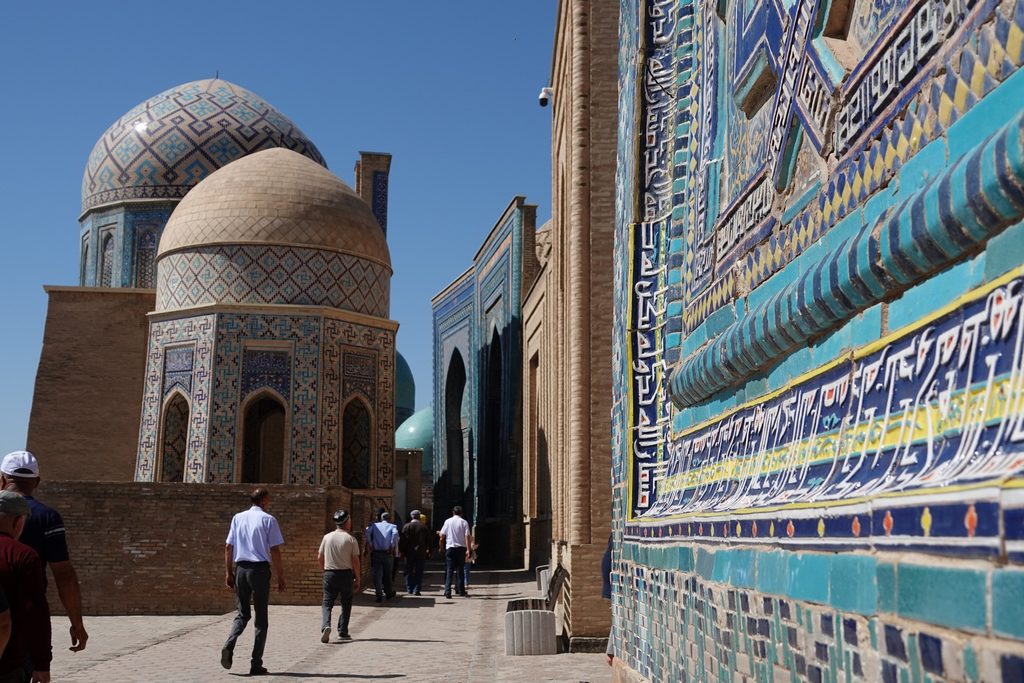
At nightfall, these architectural gems open up spaces for caravanserais where Persian poetry evenings can be held, focusing on the mystical meaning of wine, the gazes of the great lyrical poets or the philosophers on the passing of time and the perishable beauty of the beings and things of this world.
The great poets inspired by the royal city of Samarkand
An invitation to a poetic journey through time and space with compositions by two classical Persian poets celebrating the charms and magic of the legendary city. This city holds great symbolic value, having served as a refuge for scholars and theologians during the medieval era, as well as for poets and philosophers.
Omar Khayyam, a scholar and visionary poet
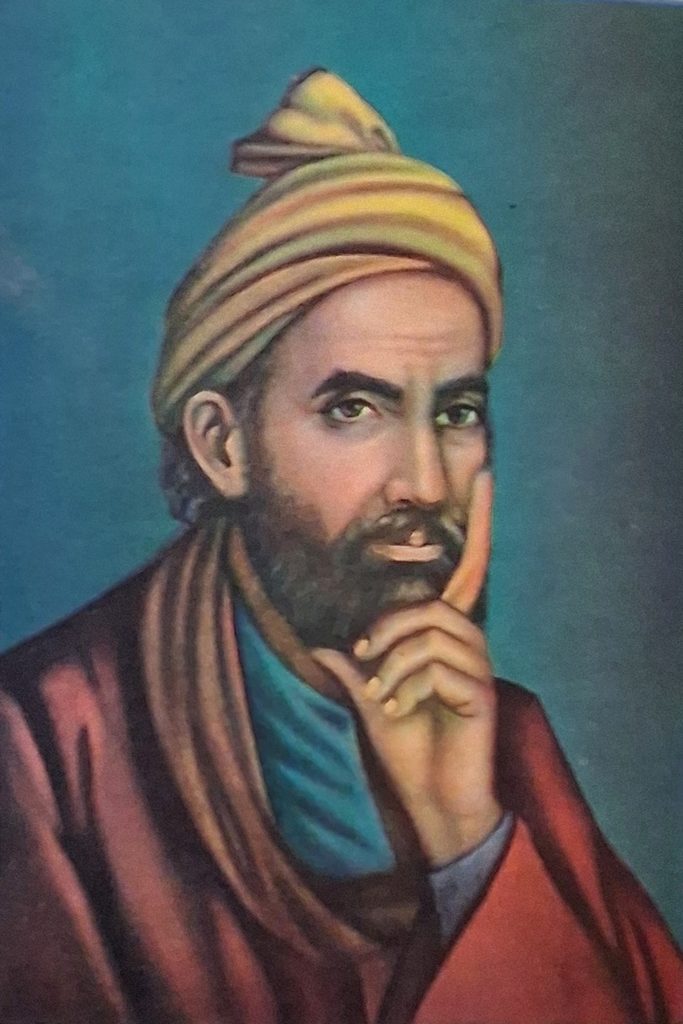
Among these great poets: Omar Khayyam, originally from the city of Nichapour Located in Iran in the Khorassan province. Khayyam’s work spans several fields such as mathematics, astronomy, and philosophy, but he is best known for his poems and especially his « Robai » (Quatrains).
At the age of 24, the poet expresses himself through metaphors and allegories on the theme of time passing and the futility of earthly attachments. Sometimes the setting is the «Taverne», a meeting place for material pleasures where the beauty that fades with age intersects with the pleasures of a time that is ever shorter than one might think.
Khayyam of Nichapour
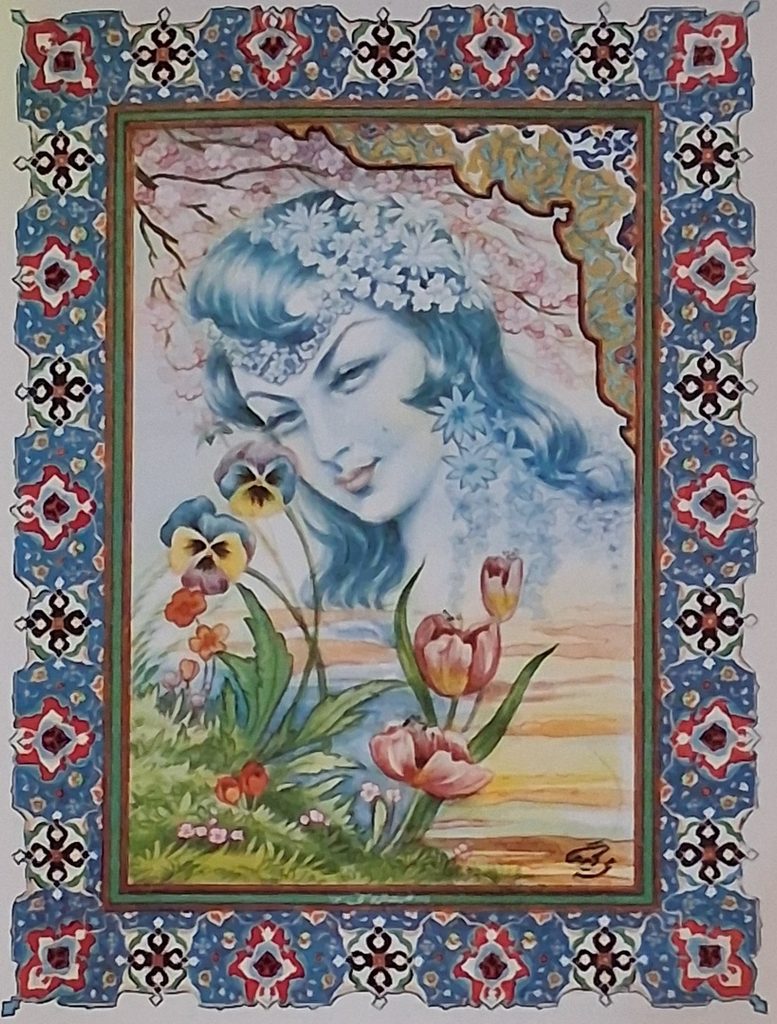
Fifth Robaï (Quatrain No. 5)
Well, despite this beautiful shade, this face is so pleasant
And this face like a tulip that has burst open, this size of a cypress tree
No one will know in this earthly abode of pleasures
Tell me why the painter of the Eternal has endowed me with so many charms.
The name and the legend surrounding Khayyam's life will resurface in our contemporary century with the publication of the book « Samarkand »by the French-Lebanese writer" Amin Maalouf. Here we discover the story of a manuscript created in the 11th century, lost during the Mongol invasions and rediscovered centuries later, intertwining the destinies of Omar Khayyam and of the Hassan Sabbah, Founder of the Order of the «Assassins» («Hashishin»), one of the most feared sects of the medieval East.
Hafez of Chiraz, the singer of love and mystical intoxication
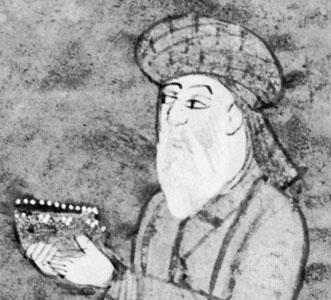
Hafez of Chiraz, Born around 1325 in Fars, a province in the south of Iran, the birthplace of the Persian language – by his pen name Chams ed-Din Mohammad Hafez-e Chirazi – is a contemporary poet of the Timurid empire.
Author of the famous « Divane »A collection of lyrical poetry, he is considered one of the most popular poets of Iran as well as of Central Asian countries and Persian-speaking regions. His nickname «Hafez,» meaning «Guardian,» evokes the one who managed to memorize the entire Quran by heart. Mohammad Shams ed-Din Hafez, detail of an illumination from a Persian manuscript of Hafez’s Divan, XVIIIth century. Held in the British Library (London).
Having left this world at the age of 64, he leaves us his famous collection, in which a poem celebrating the charms of Samarkand and Bukhara is placed in third place, through the unparalleled beauty of an «idol» from Chiraz, his hometown and capital of Fars. The lyrical poem begins as follows:
Hafez of Chiraz
Ghazal No. 3 from Divane
If this Turk from Chiraz
He came to conquer our hearts
For its Hindu grain of beauty
I will donate to Samarkand and Bukhara
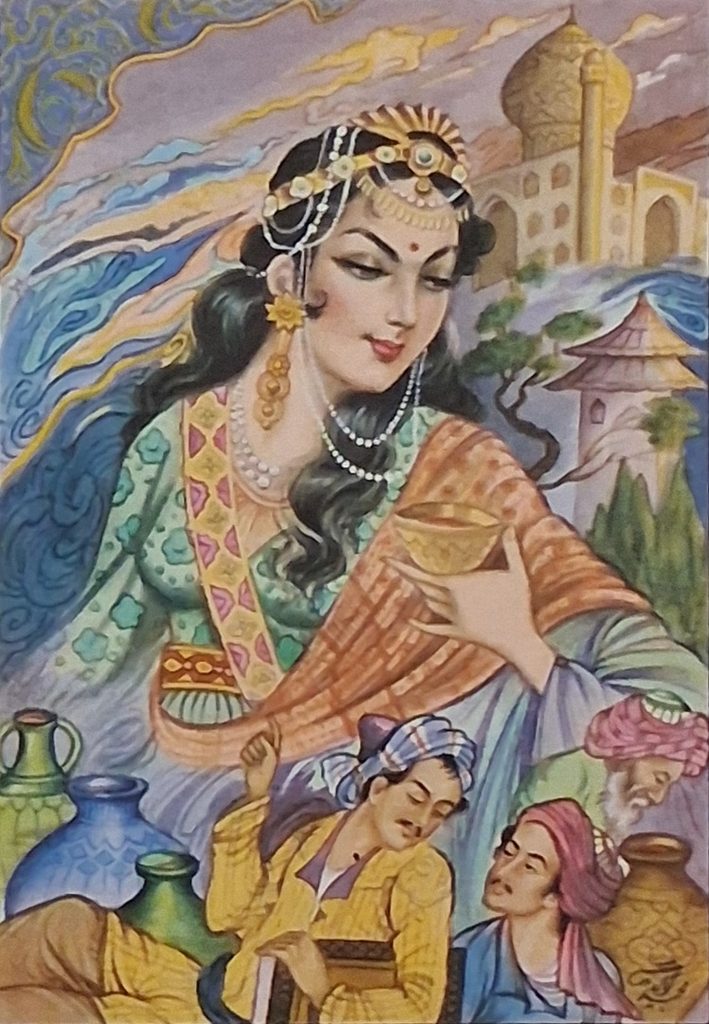
This illustrates the degree of fascination that the legendary cities of Samarkand and Bukhara exerted on the sophisticated minds and scholars of the time. A fascination that remains present today and that this year’s IFTM salon will have helped to rekindle.
Bibliography
- Uzbekistan, Petit Futé, Éditions Les Nouvelles de l’Université, 335 p. 2025.
- Samarkand, a novel by the Franco-Lebanese writer Amin Maalouf, published by Jean-Claude Lattès Editions in 1988.
- The Divan of Hafez of Chiraz.
Translated from Persian and commented by Charles-Henri de Fouchécour, éditions Verdier / Poche, 2006. Lyric works of a Persian spiritual poet in the 14th century. 1273 p. - Divân (collection of poetry) by Hafez of Chiraz
Amir Kabir edition, 1976. Drawings, paintings and images by Mohammad Tadjvidi. Engravings by Abdollah Bagheri, - Robaït (collection of quatrains) by Hakim Omar Khayyam of Nichapour, the great philosopher of Iran
Edition Cherkat-e Sahami ya Tahrir-e Iran, 1964. Illustrations by Ali Karimi and the Tadjvidi brothers
For more information
Embassy of Uzbekistan in France
- Address: 22, rue d’Aguesseau, 75008 Paris
- Email: contact@ouzbekistan.fr
- Phone: 01 53 30 03 53
- Official website: Embassy of Uzbekistan in France
Text : Reza Afchar Naderi
Photos : Reza Afchar Naderi unless otherwise stated
Poems by Omar Khayyam and Hafez of Chiraz translated by Reza Afchar Naderi.