
If Rio is the heart of Brazil, Salvador de Bahia is its soul. Undeniably African. A stopover in this baroque, festive and colourful city, between capoeira, samba and spirituality.
Table of Contents
Salvador, Brazil's first capital during Portuguese colonisation from 1549 to 1763 and now the capital of the state of Bahia in the Northeast, was a hub of slavery until 1853, the year the trade of Black and Indigenous people ended. From this sad history, the city has retained strong African roots and a mixed-race population. However, the celebration of Brazilian mestizaje, much vaunted by travel agencies, poorly conceals the latent racial and social apartheid that governs Brazil's major cities.
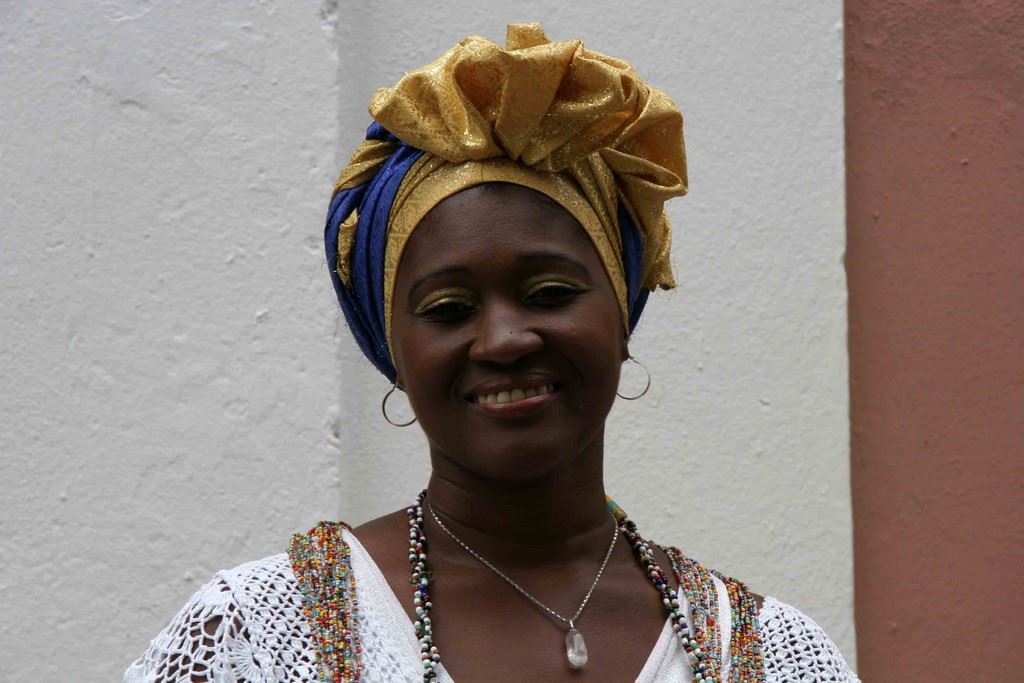
Pretty Bahian woman in festive costume.

Or how to attract tourists to local shops!
In this tropical land of coconuts and caipirinha, the ancient city vibrates all year round to the powerful rhythms of capoeira, maculélé, macumba and candomblé.

Capoeira dancer.
As soon as the sun goes down, the alleyways of the old Pelourinho district are invaded by musicians, adults and children, the Baianos, who gather at every street corner to play their favourite tunes. The percussion instruments range from matchboxes to gleaming chrome drums and congas worthy of the greatest orchestras. The main thing, of course, is to do better than your neighbour so that onlookers can get their feet moving and give a few coins!
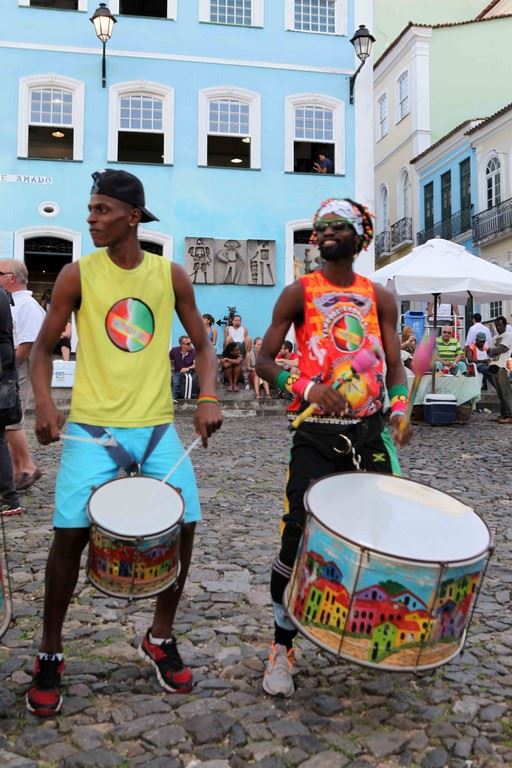
Here, music is a way of life.
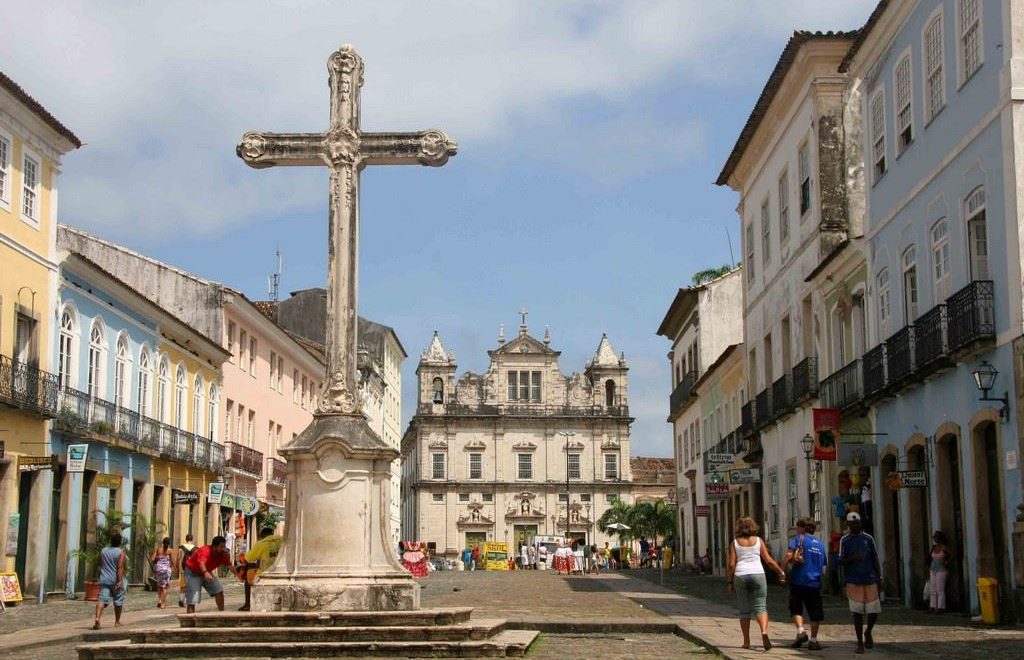
The historic Pelourinho district (the name Pelourinho comes from the pillory, the place where slaves were tied up to be punished) has been a UNESCO World Heritage Site since 1985. As a result, it is very popular with visitors and therefore very safe. The police are clearly visible on every street corner.
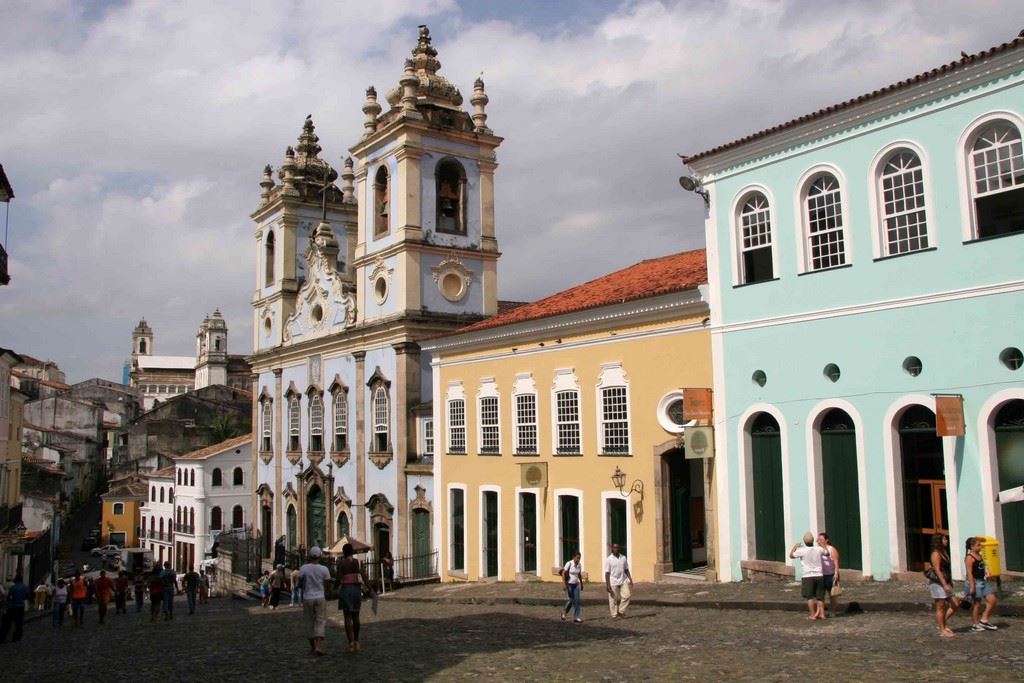
Pretty pastel facades in pinks, blues and greens line the main streets of the historic centre.
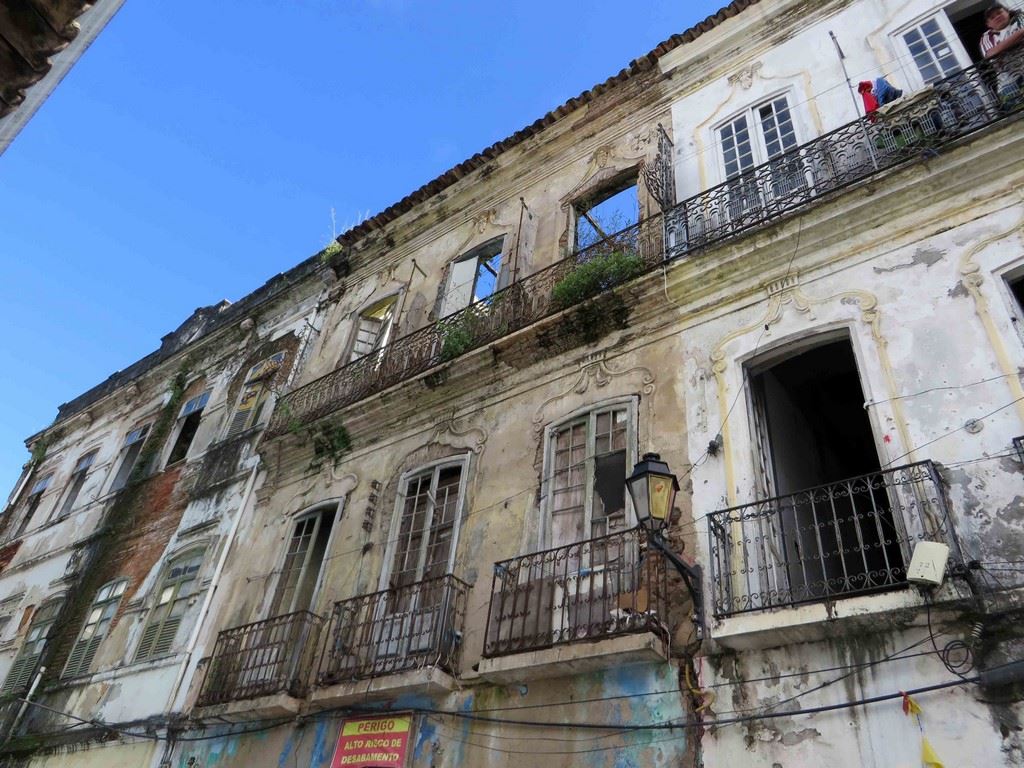
As soon as you move a few metres away, you come across leprous facades, washed away by the rain, where the window frames frame the sky.
The capital of all bewitchments
The year is punctuated by religious festivals, celebrated with processions and parades, culminating in Carnival. The religion and mysticism that animate the city are reflected not only in the name Salvador (saviour) and the bay that bathes the peninsula (the bay of all the saints), but also in its many churches and during candomblé ceremonies, an Afro-Brazilian religion, inherited from slavery, that combines Catholic saints and Yoruba divinities.
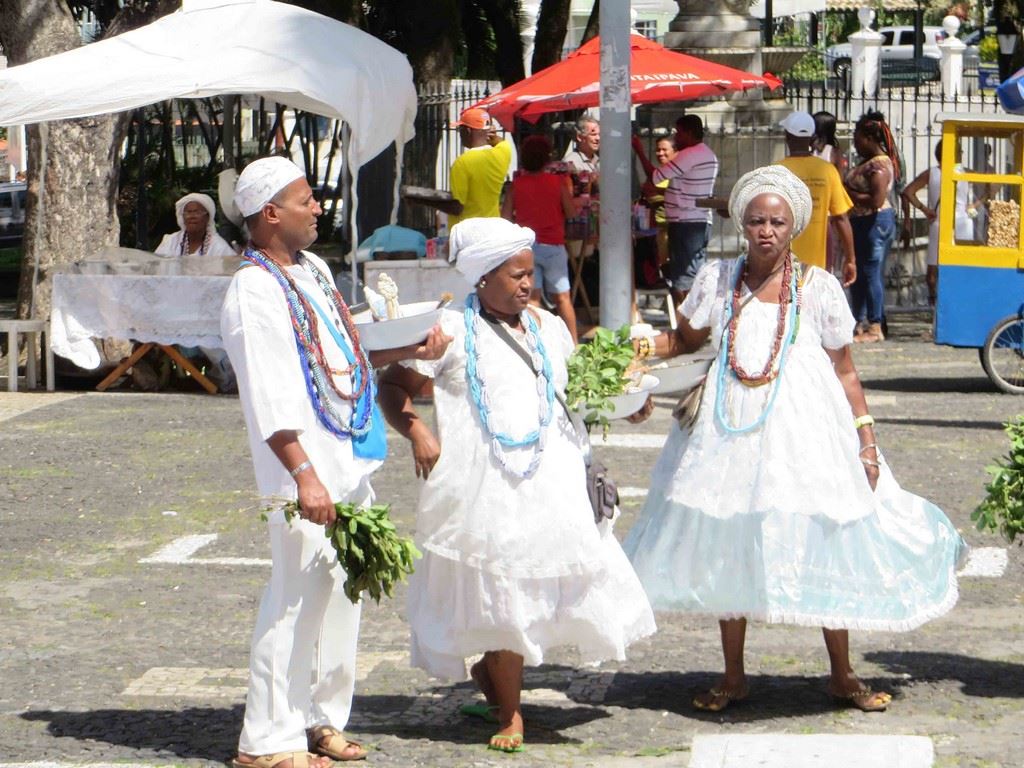
Candomblé priestesses.
To get a better idea of the importance of this Afro-Brazilian cult, which permeates the daily lives of the Bahian people, you can visit a place called a terreiro, where candomblé ceremonies take place. They usually start at around 8pm and last for several hours. The dance, typically African, combines songs in the Yoruba language, incantations, percussion and female trances. Photographs are not permitted, and clean and correct clothing is required.
Nosso Senhor do Bonfim

Located on the Sacred Hill on the Itapagipe Peninsula, Nosso Senhor do Bonfim ("Our Lord of Good Ends") is a colonial-style church housing the representation of Christ from Setubal in Portugal.
For the Bahians, Nosso Senhor do Bonfim is sacred. Captain Theodózio Rodrigues de Faria had promised that if he survived the storm he faced in the bay in 1745, he would take a copy to Brazil to thank God for saving him and his crew. This first ex-voto was installed in a chapel that was later replaced by the present-day church. The tradition of ex-votos continues today, with a dedicated room where the faithful leave a photo or reproduction of the part of their body that is ill, in order to ask God for healing. As a souvenir, they leave with small multicoloured ribbons supposed to bring good luck: the fitas de Bonfim. The Afro-Brazilian population of Salvador equates Nosso Senhor do Bonfim with Oxala, one of the Orixa often compared to Christ, son of the supreme god of Candomblé: Olorum. Despite initial opposition from the Church, a significant cult has grown up around this representation.
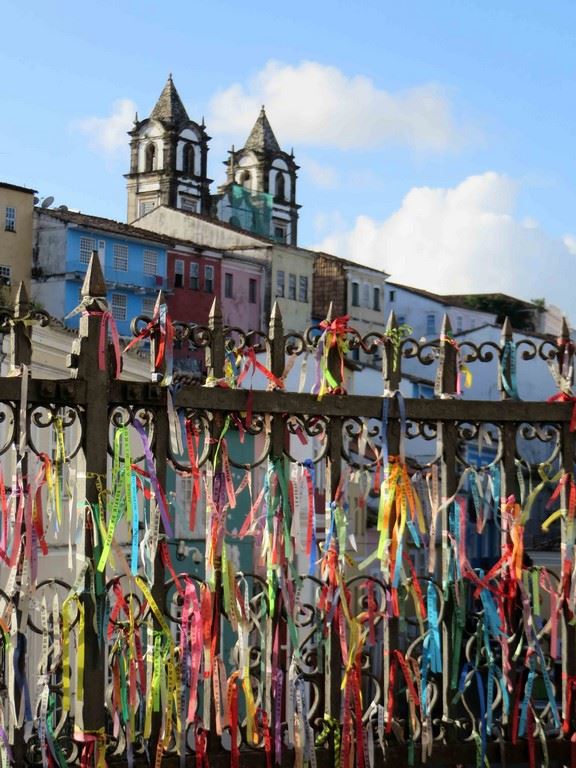
The fitas de Bonfim hang on the railings in front of Salvador's churches.
Accommodation
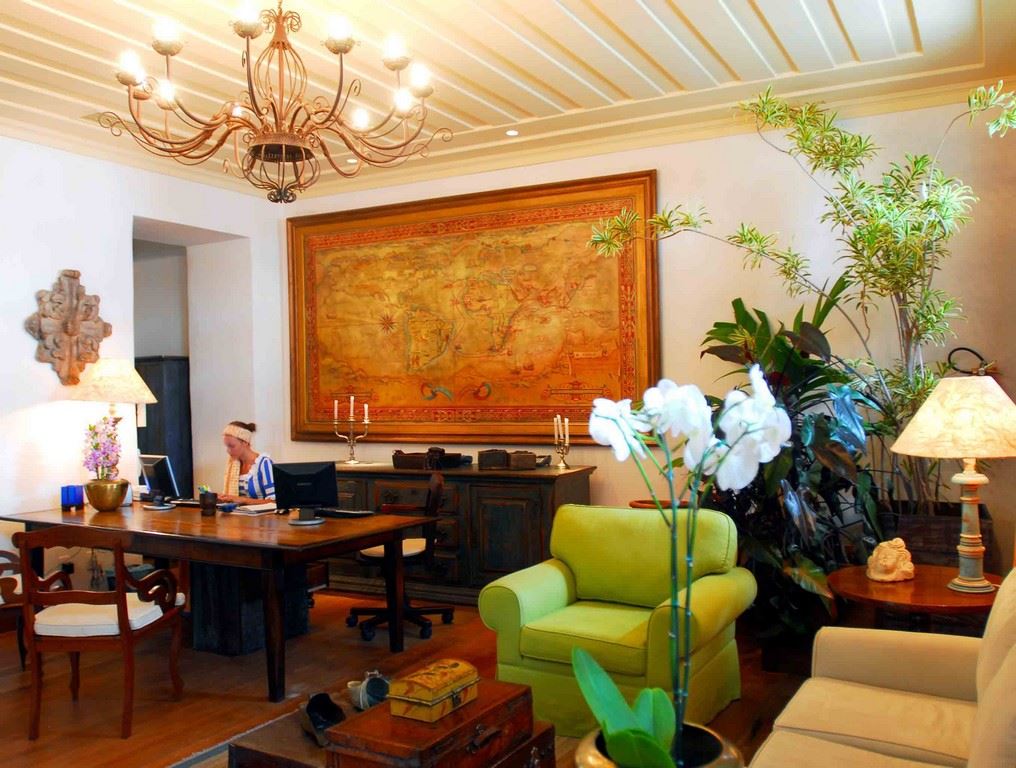
Hôtel VILLA BAHIA
Largo do Cruzeiro de Sao Francisco, n. 16-18
PELOURINHO - SALVADOR - BAHIA
BRAZIL
For your stay, we offer you the unique setting of Villa Bahia, a charming hotel in the heart of Pelourinho, made up of two 17th-century mansions. Each of the 17 rooms tells the story of the great Portuguese navigators and evokes their trading posts in Africa and Asia. The restaurant and bar take up the theme of the Spice Route!
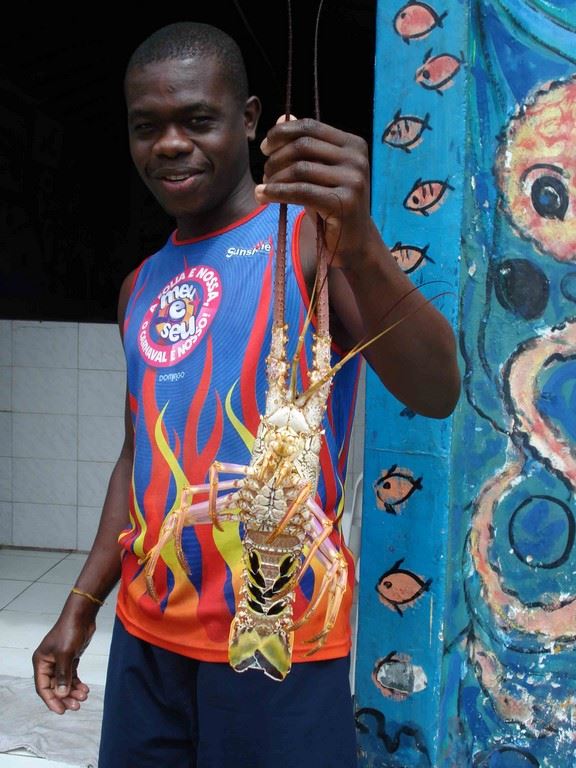
Lobster is on the menu.
http://www.lavillabahia.com/pousada-bahia
Text and Photos : Brigitte Postel