
Ayurveda, or the «science of life», is the world’s oldest system of healthcare. This holistic Indian system of medicine is based on the fundamental principle of seeking balance between the mind, body and spirit, whilst maintaining a constant connection with nature. At the heart of this way of life, diet plays a central role.
Table of Contents
As in other traditional medical systems, diet is one of the pillars of health and forms part of a holistic approach in which each individual is regarded in their own unique way. It is not limited to nourishing the body: it also affects the mind and consciousness. Ayurveda therefore favours a vegetarian diet sattvic, which is regarded as promoting balance, health and wellbeing.
«You don’t eat food
You’re using up memory
Food is a sacred form of wisdom
Good food is a form of meditation that we swallow
Eat in silence
»Lamb’s lettuce with character’
Dr K.R.V. Mali, an Ayurvedic doctor,
https://ayurmali.com/
The three doshas
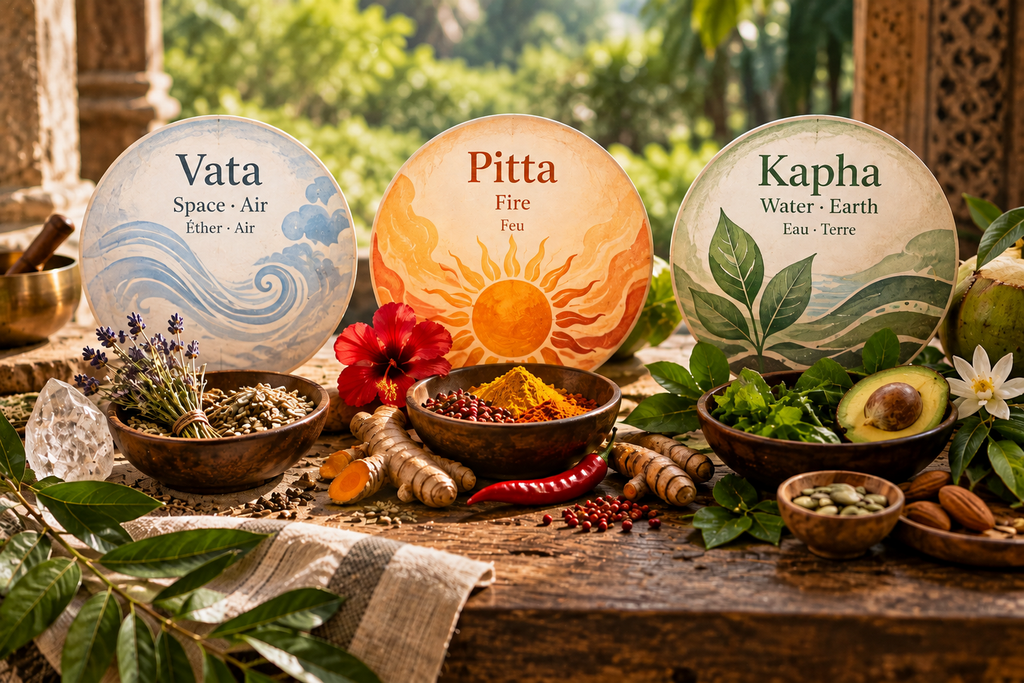
Every individual is born with their own constitution, known as prakriti, resulting from the combination of the five fundamental elements (ether, air, fire, water and earth), our genetic heritage, our parents’ doshas, our mother’s pregnancy and the state of the world at the moment of our birth. From this original fabric emerge three vital forces, the doshas, which organise and regulate all our functions. Known by the Sanskrit names of vata (space and air), pitta (late) and kapha (water and earth), the doshas are present in each of us in a unique proportion that defines our specific constitution on the physical, emotional, intellectual and spiritual levels. When their balance is maintained, health, longevity and well-being follow. When this balance is disrupted (by our lifestyle, diet, stress, the changing seasons, etc.), the door is opened to disorders and illnesses.
The three gunas
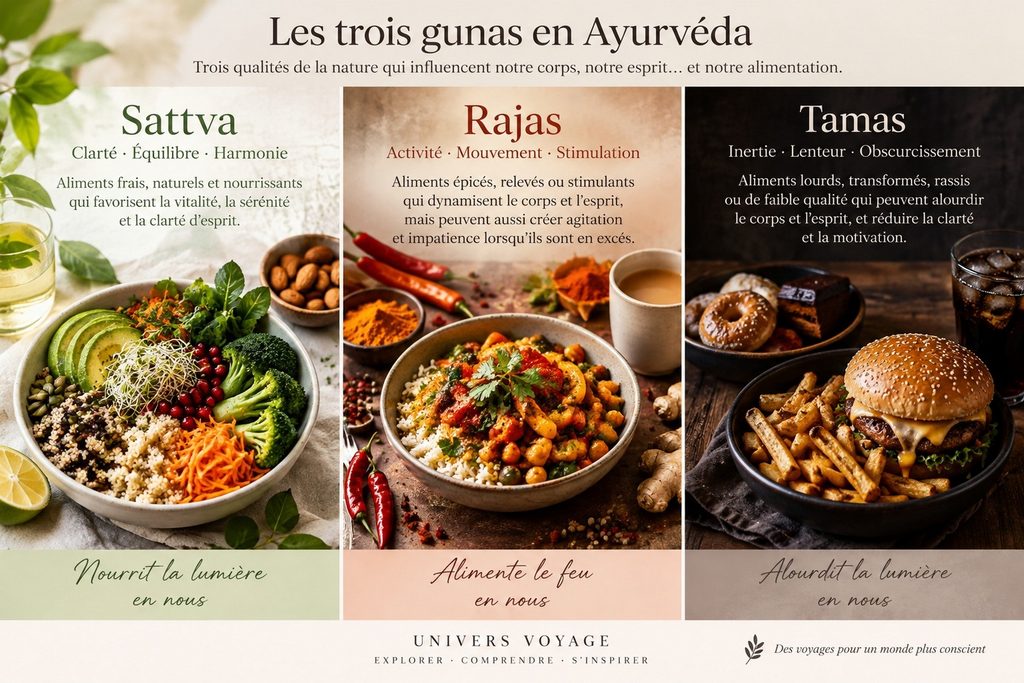
Beyond the doshas, Ayurveda is based on another fundamental framework: that of the three qualities, the fundamental qualities of energy and consciousness – indeed, of nature itself. « Each of us is influenced by a combination of these three gunas, which govern our psychological constitution. Thus, depending on their mental guna, one person may be more virtuous, another more passionate and yet another more apathetic », explain Sumitra Devi and Sylvain Porté (1). And diet plays a major role in maintaining their balance. These three qualities are present in each of us and influence our physical and mental well-being. Sattva (virtue): this is the quality of light, harmony and inner peace. It fosters a calm mind, clear perception and good health. Rajas expresses passion, movement and restlessness. Associated with action and dynamism, it can be stimulating but may also cause stress, impatience and restlessness when it is excessive. Finally Tamas refers to inertia, heaviness and darkness. These three forces coexist within each of us and manifest themselves both in our minds and in the way we live and eat.
Prioritise a sattvic diet
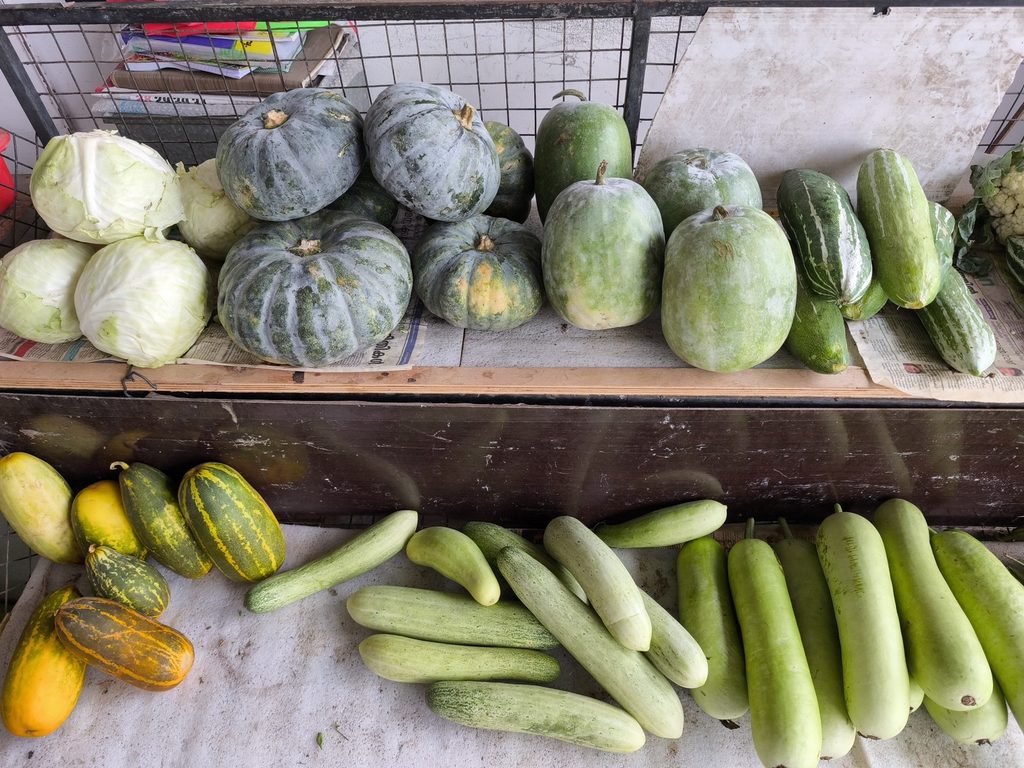
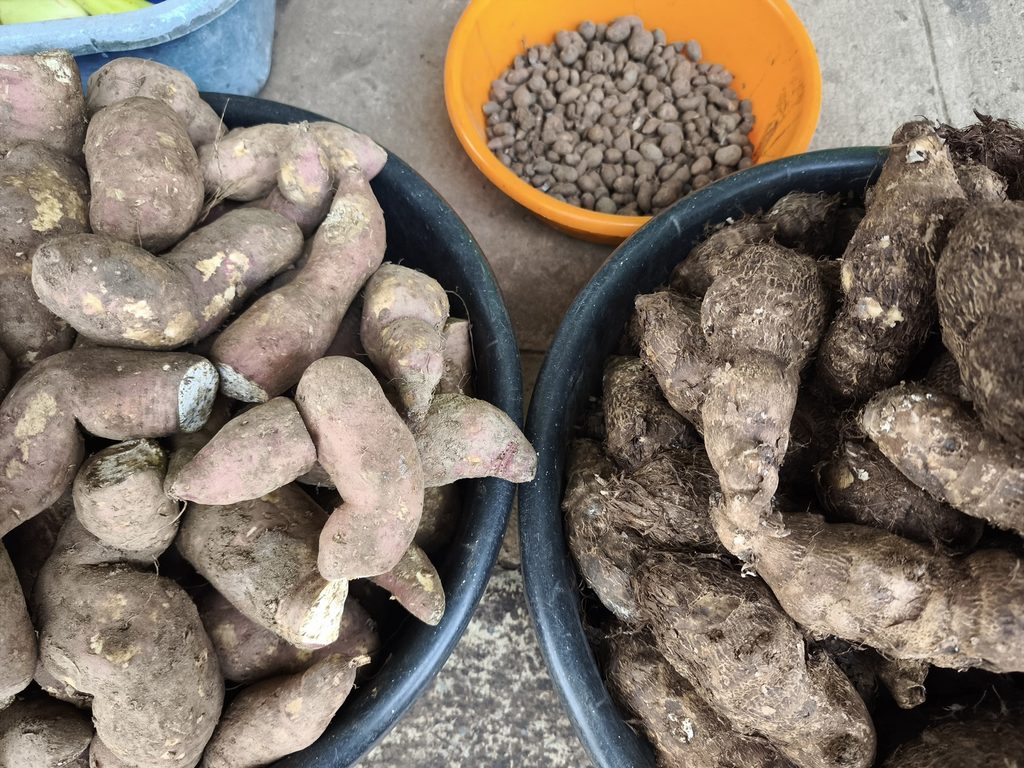
Ayurvedic cuisine aims to cultivate Sattva, not by completely excluding the other qualities, but by prioritising what fosters clarity, stability and inner harmony. A sattvic diet is therefore a way of eating and a set of practices that promote physical health, a calm and clear mind, and stable energy. Sattvic foods are those considered to be pure, natural and fresh: fresh fruit and vegetables, whole grains (rice, quinoa, oats), pulses (lentils, chickpeas), nuts and seeds, mild spices (turmeric, coriander, cumin, fennel, etc.) and, in some traditions, fresh milk and dairy products. Conversely, non-sattvic foods include processed and fried foods, meat and alcohol, as well as stimulants such as coffee, hot chillies, etc. Ayurveda advises eating minimally processed foods, prepared simply and eaten fresh (not reheated several times). Eating when not hungry, too late, too quickly, or without chewing are all ’errors of judgement« that profoundly disrupt balance. Understood in this way, Ayurvedic cooking goes far beyond the question of »what to eat?«. It brings us back to a more fundamental question: how do we relate to what we eat? For beyond the foods themselves, it is the way we choose, prepare and consume them that determines their true power. Thus, dietary recommendations are not merely dietary rules; they all aim to preserve and support Agni, the digestive fire, which encompasses all the processes of digestion and assimilation.
Eating: an act of conscience
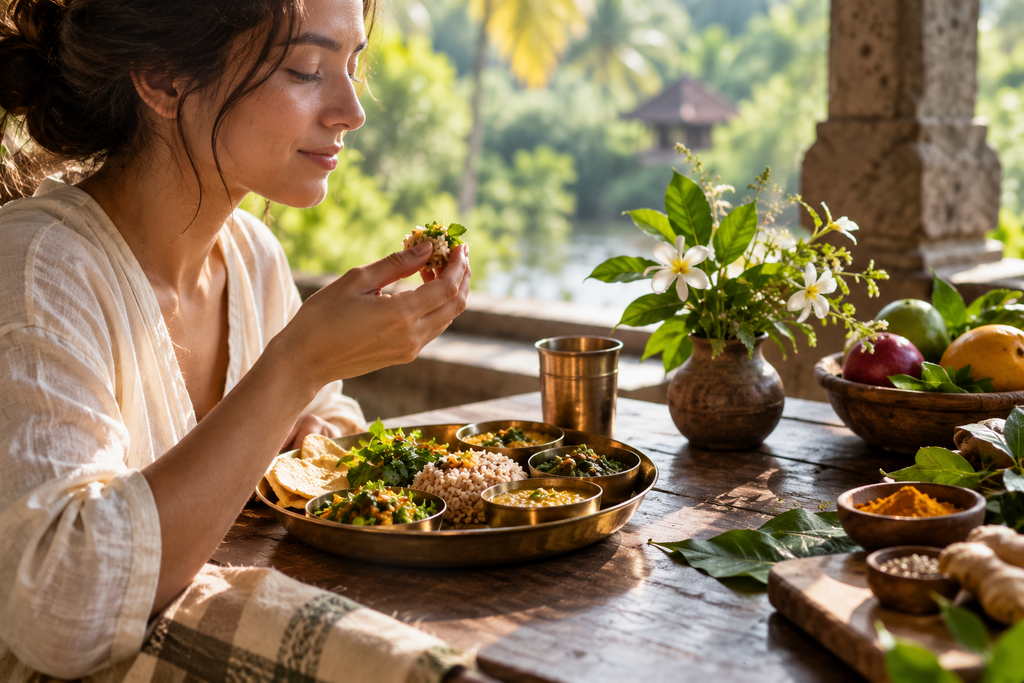
However, Ayurvedic cuisine is not simply a matter of mechanically adapting it to our doshas. " Eating is not merely about filling the body. Food is consciousness manifesting in the form of food. If you eat in a hurry, the mind becomes agitated. If you eat mindfully, the mind becomes clear. Whilst eating, remain inwardly silent. Your state of mind permeates the food, and the food shapes the mind. Just as the body is shaped by what you eat, so consciousness is refined by the way you eat. When eating becomes a conscious act, even a simple meal becomes a step towards freedom. », reveals Dr Mali, who runs a renowned clinic near Calicut (Kerala). In the Ayurvedic tradition, cooking is not simply a matter of recipes. It is a living practice, a subtle link between human beings and nature, between the visible and the invisible. It is not simply a matter of nourishing oneself, but of connecting with life itself. « Ayurvedic cuisine is therefore based on a broader understanding of food, Dr Mali continues. Food is life, and it is a substance that creates life… and much more besides. Food is information from the outside world; it is not just calories, nor is it just vitamins. It is a process of interconnection between nature and you. As we are not complete beings, we need this food from the outside world. It nourishes you with information and memories from the universe, creating a balance between you and nature. For food is part of that universal consciousness which tradition calls Brahman ".
Food as a record of life
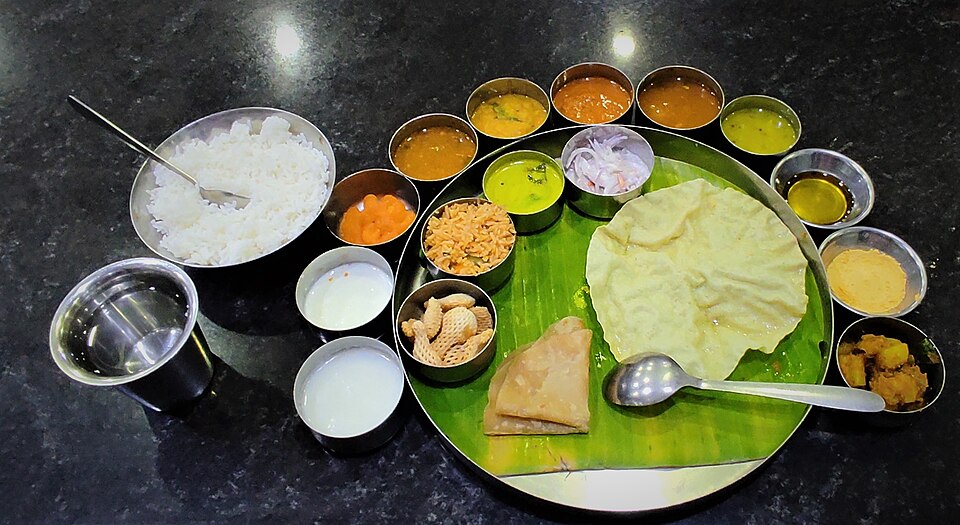
In the Ayurvedic view, food is therefore much more than just nutrients. It is living information, a record of the universe. We need this external substance to maintain our balance, explains Dr Mali: « Food carries within it this memory of life. Fruit and vegetables are stored solar and lunar energy – condensed information from the sun and the moon. When this information is altered by mistreatment, pesticides, fertilisers… and when love is absent from the preparation, when we do not pay farmers fairly in the belief that we are saving money, then we receive negative information. When we eat, food becomes part of our body and our consciousness. It is both life itself and the substance that creates life. Food is a flow from nature, carrying information and wisdom. It sustains the body by creating a balance against its destructive forces. ".
An evolving view of life
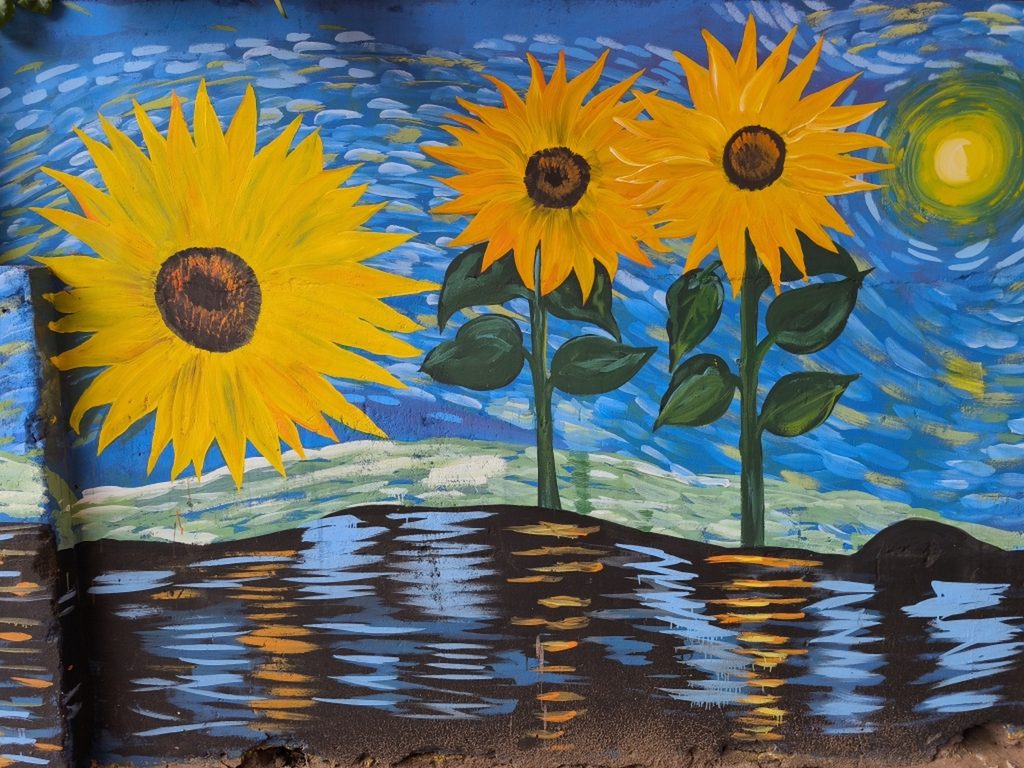
In Indian philosophy, the ultimate purpose of life is moksha, liberation. This refers to the origin of life, to the moment when everything came into being. Whether we are aware of it or not, everything that has come into being returns to its origin. There are various stages of evolution or refinement within this process. We perceive a certain degree of life in plants, a slightly more active life in animals, and an even more developed life in human beings. Even the earth, which seems inert, plays a part in this evolution: its subtle nutrients permeate plants, becoming fruit, leaves and roots, then food, before in turn nourishing human consciousness.
Most Ayurvedic cookery books recommend a diet based on doshas. However, Ayurvedic cuisine is not a rigid diet. It is an invitation to rediscover a mindful relationship with food. Eating then becomes an act of listening, of being present and of respect for oneself, for nature, and for the flow of life of which we are a part. For, ultimately, as this age-old tradition reminds us, « We don’t just eat food. We ingest the memory of the world. "
1 – Sumitra Devi and Sylvain Porté. The best of Ayurvedic cuisine : Authentic and delicious recipes for your enjoyment and good health. Le Courrier du livre. Published by Trédaniel. 2022.
For more information
Dr Mali’s Clinic
Ayurvedam at Sreenilayam, https://ayurmali.com/
Anne Vanackère
https://www.ayurvedamodernexperience.fr
annekv@ayurvedamodernexperience.in
+ 33 (0)6 30 34 53 28
+ 91 (0)92078 42992
Text and Photos : Brigitte Postel otherwise.
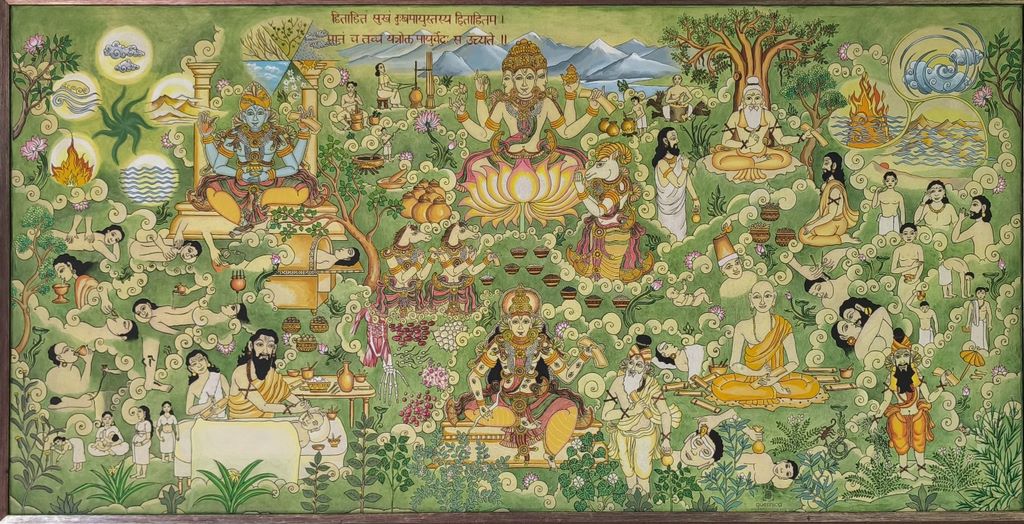
Photo opening : India. Kerala. Representation of the Ayurvedic pantheon painted by Aleksandra Korneeva.