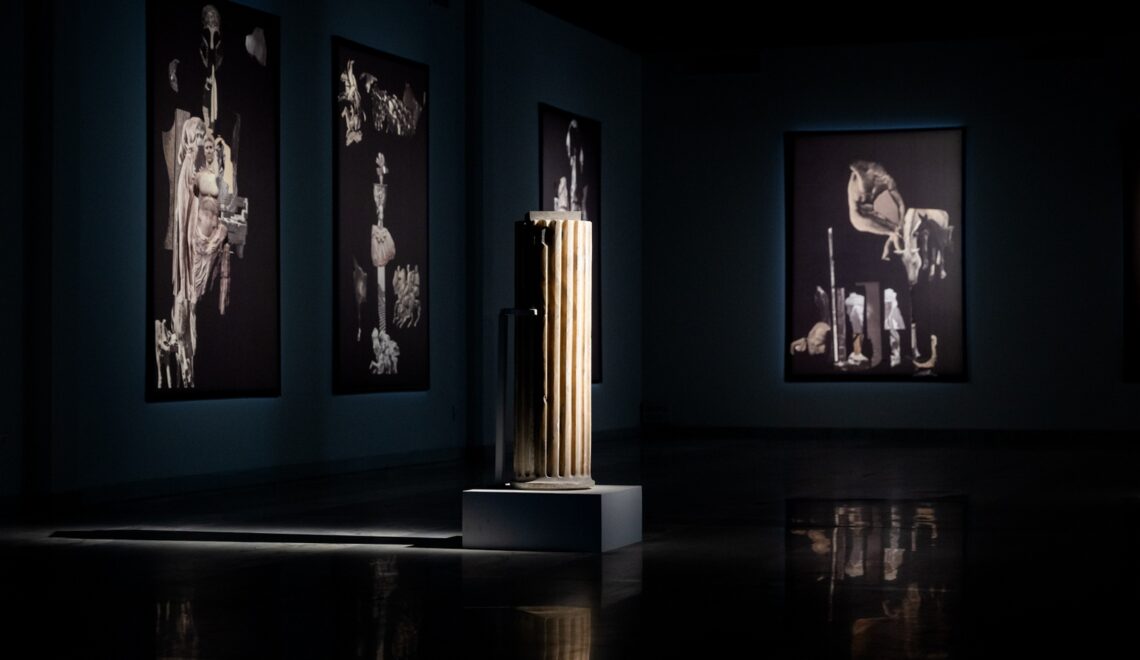
The Marseille Museum of Contemporary Art (MAC) is hosting Louisa Babari’s exhibition *Africa* until 3 January in its [mac]room space, which is dedicated to experimental art projects. The French artist, of Algerian and Russian origin, winner of the AWARE Award in the ‘New Perspectives’ category (2023), set out to uncover the hidden history behind her name. This journey led her to the Amazigh people, the heirs to a millennia-old civilisation long overshadowed by the narratives of the powers that once ruled over them.
Table of Contents
It is the story of the Amazigh people and their encounter with the Roman world that the artist seeks to bring to life through a series of works – collages, photographs of antiquities and a soundtrack – which she envisages as an inseparable whole.
Louisa Babari: in search of her family history
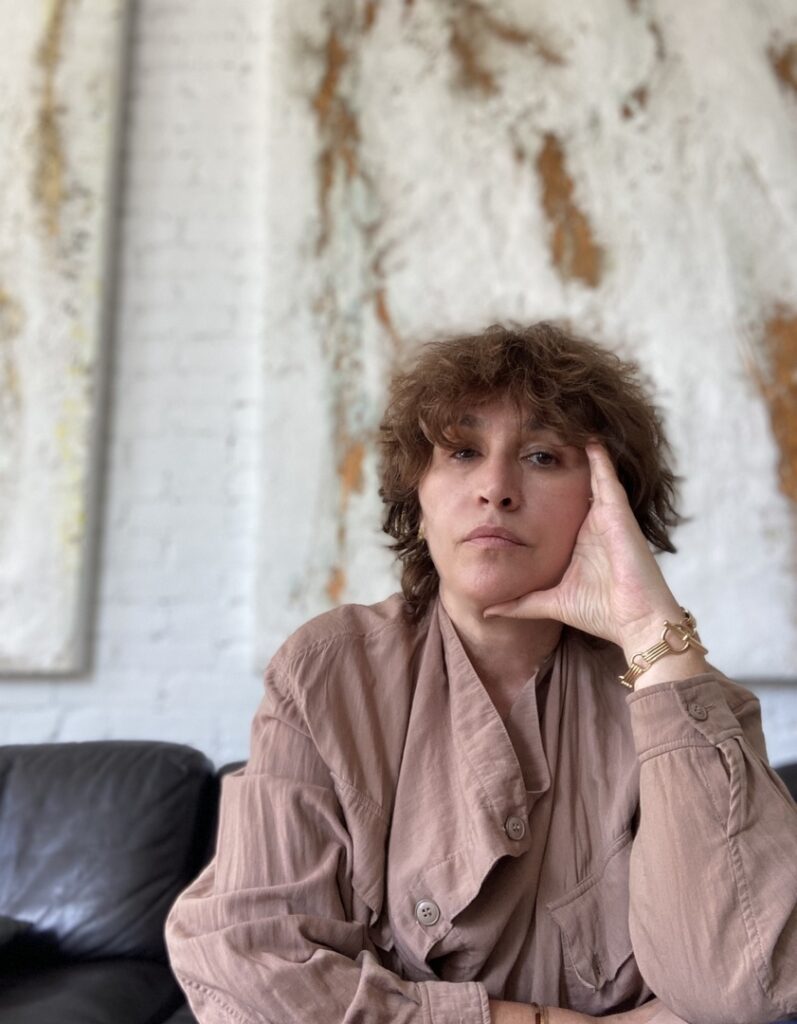
Born to Russian-Algerian parents in 1969 in Moscow and having grown up between that city and Algiers, Louisa Babari is a French national. This artist has always been immersed in a cultural and family environment that straddles two cultures. This is evident in one of her early works, now held at the Mucem, then at the MAC in Marseille, Diary of an Algerian student in Moscow, a 9-minute silent slideshow that traces his father’s life between 1962 and 1972, using family archives.
She also made a name for herself in the project Public Voices in Dakar, which involved public readings of texts from Pan-African literature by visual artists, opera singers, actors, poetry enthusiasts and others… This year, the artist – a specialist in Russian studies and cinema and a graduate of the National Institute of Oriental Languages and Civilisations (INALCO) – invites us to delve even deeper into history, starting with an exploration of her own name.
The surname Babari: a reminder of ancient Africa
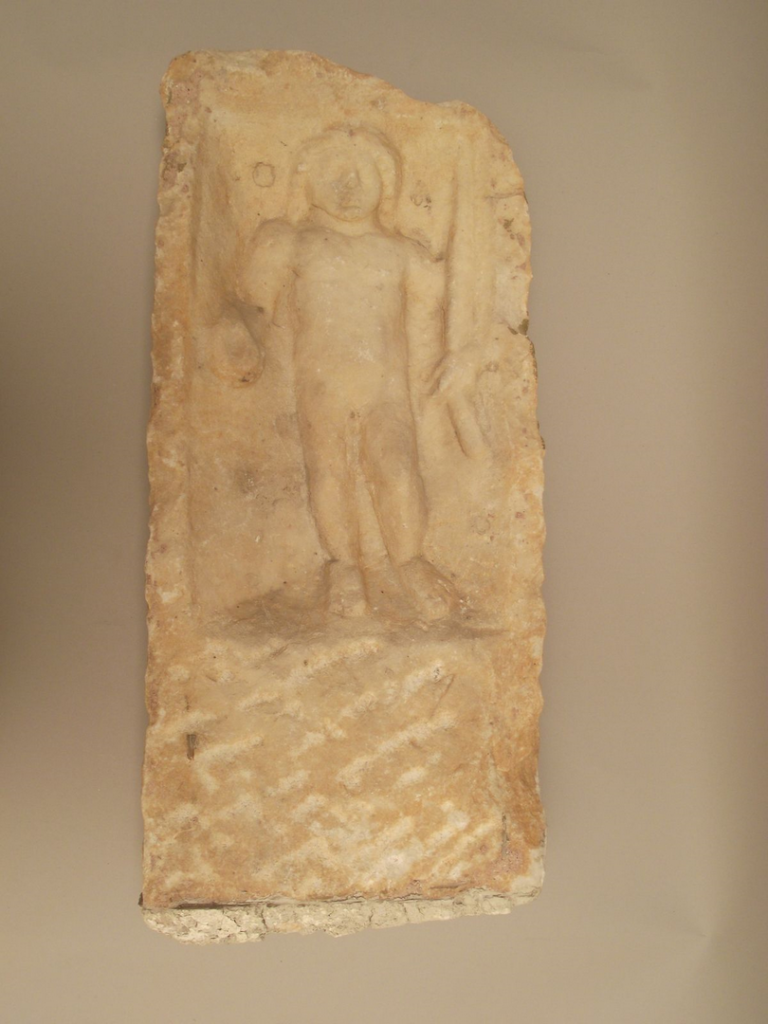
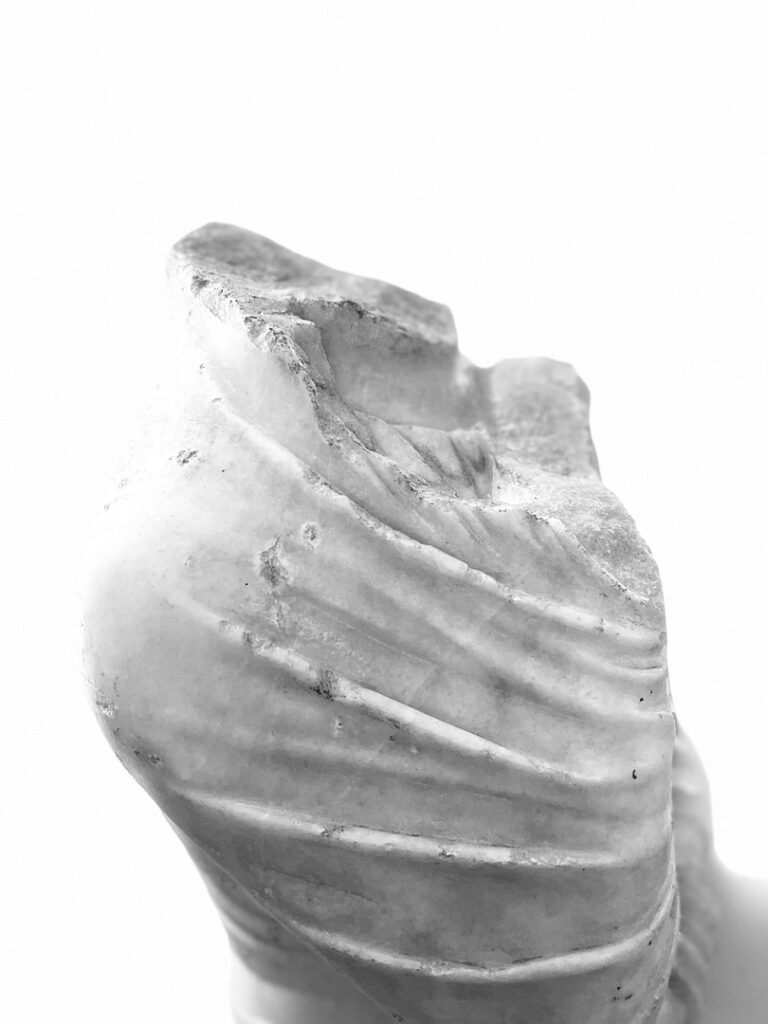
Based on *Fragment of a statue of a woman*, Constantine, Algeria.
© Louisa Babari
The surname Babari, sometimes transcribed as BBR, has always intrigued the artist, who sensed that the name had very ancient origins. His intuition is borne out by history: the name is attested as early as the 3rd century AD on a stele discovered by the archaeologist Ahmed M’Charek in ancient Caesarea of Mauretania (1), a Roman province corresponding to part of what is now northern Algeria (Cherchell). This inscription reveals that the surname Babari does not stem from Latin heritage, but derives from the Babari tribe, originally from the Aurès Mountains. It forms part of the Amazigh linguistic tradition, which predates the Romanisation of North Africa by a considerable margin.
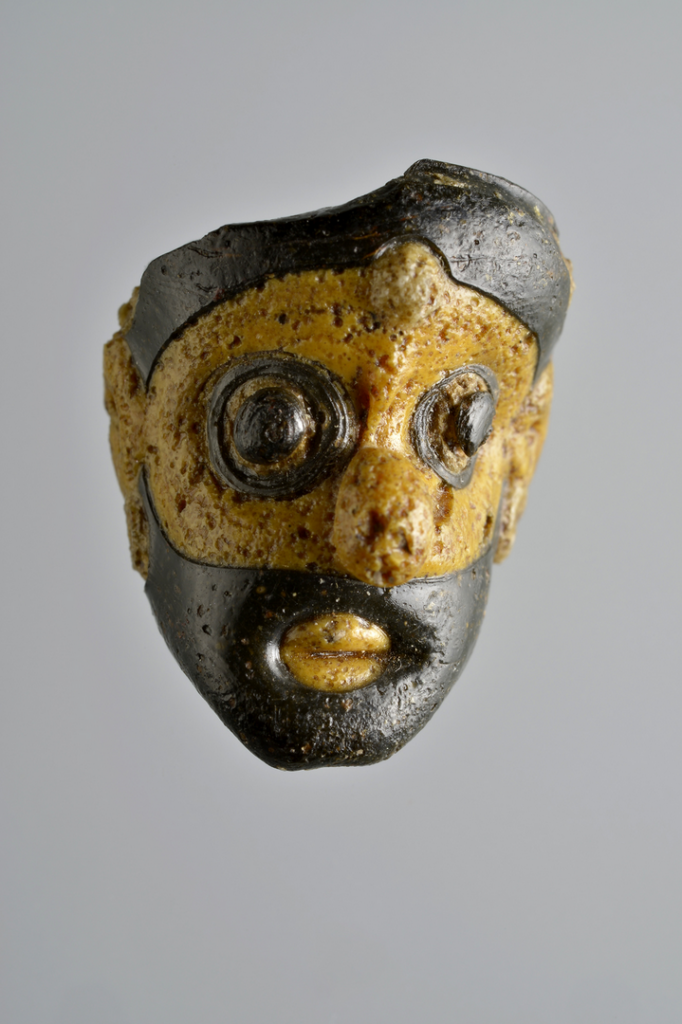
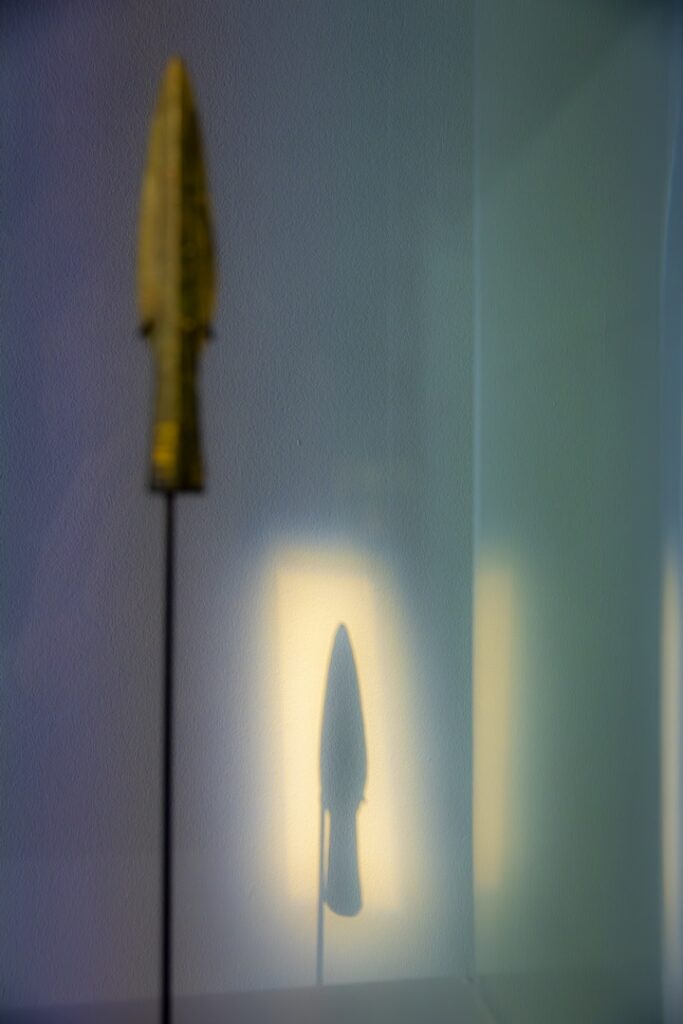
The Amazighs are, in fact, the collective term for all the indigenous peoples of the Maghreb, who have inhabited the southern shores of the Mediterranean since prehistoric times. Long before the arrival of the Romans, they had established their own kingdoms, notably those of Numidia and Mauretania, whilst maintaining complex relations with the powerful Phoenician city of Carthage. Following the destruction of Carthage by Rome in 146 BC, and the subsequent gradual annexation of the Amazigh kingdoms, North Africa was incorporated into the Roman Empire. The Arab conquests of the 7th century then ushered in a new period in its history, before the French colonisation of part of the Maghreb from the 19th century onwards.
To explore the traces of Amazigh memory, the artist begins by presenting a series of ancient artefacts from the Roman period, which bear witness to an encounter between local cultures and the Roman Empire. She then installs her collages in the [mac]room – a body of work in which she uses artistic expression to imagine the possible forms of a blended Roman-Amazigh heritage.
Amazigh culture in the face of Romanisation: an identity that has endured through the centuries
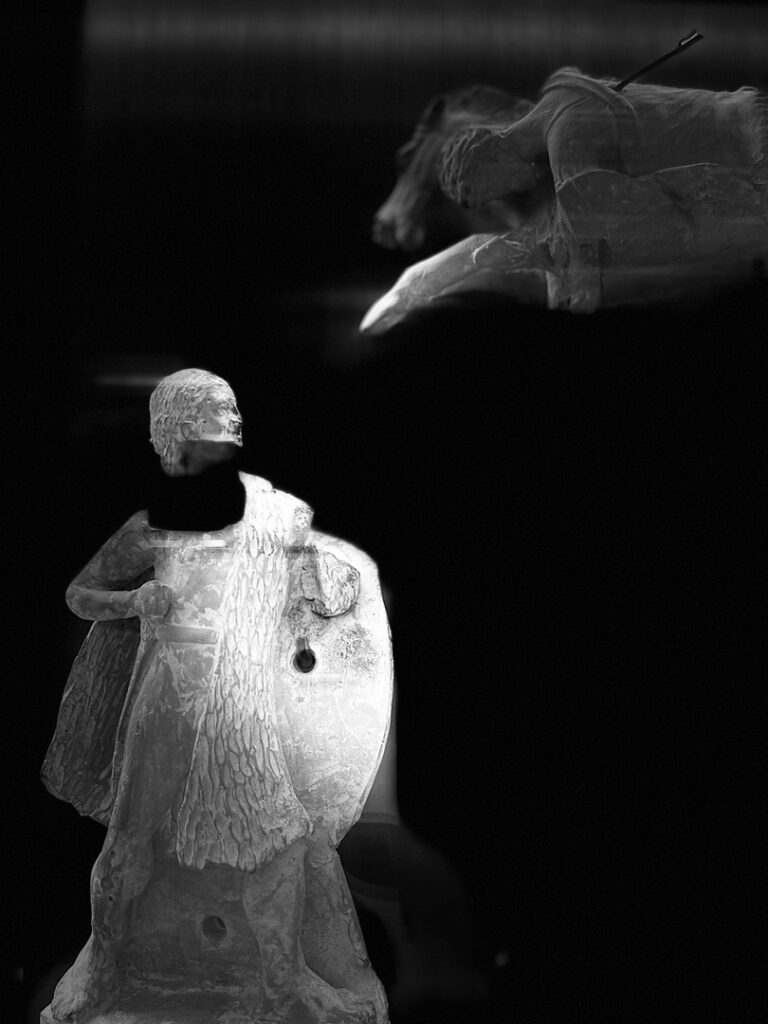
collage (detail) – printed paper on tarpaulins,
145 cm × 205 cm.
© Louisa Babari
Following the Roman conquest, the Amazigh peoples were gradually integrated into the Empire whilst retaining some of their traditions. Ancient authors referred to them by various names: Numidians, Moors or Getules, depending on the regions they inhabited. Later, Arab chroniclers popularised the term «Berbers», which has now largely been replaced by the ethnonym «Amazigh», the term preferred by the peoples concerned.
The Amazigh religion is no exception to this process of transformation. Among its deities is Ifri (or Ifru), which some historians believe may have given rise to the name ‘Africa’, although this theory is not universally accepted. As in other provinces of the Empire, the Romans practised a interpretatio romana which involved associating local deities with their own pantheon. The depictions discovered at ancient sites, notably at Rusicada (now Skikda), bear witness to this gradual Romanisation of the cults rather than their sudden disappearance.
Despite successive periods of rule – Roman, Arab, Ottoman and then French, depending on the region – the Amazigh identity has never disappeared. For several decades now, it has been the subject of a significant movement towards cultural and linguistic recognition. Tamazight became an official language in Morocco in 2011 and in Algeria in 2016, whilst Tifinagh, its modernised traditional alphabet, is now taught and used in institutions in both countries.
Compiling an Amazigh-Roman memoir
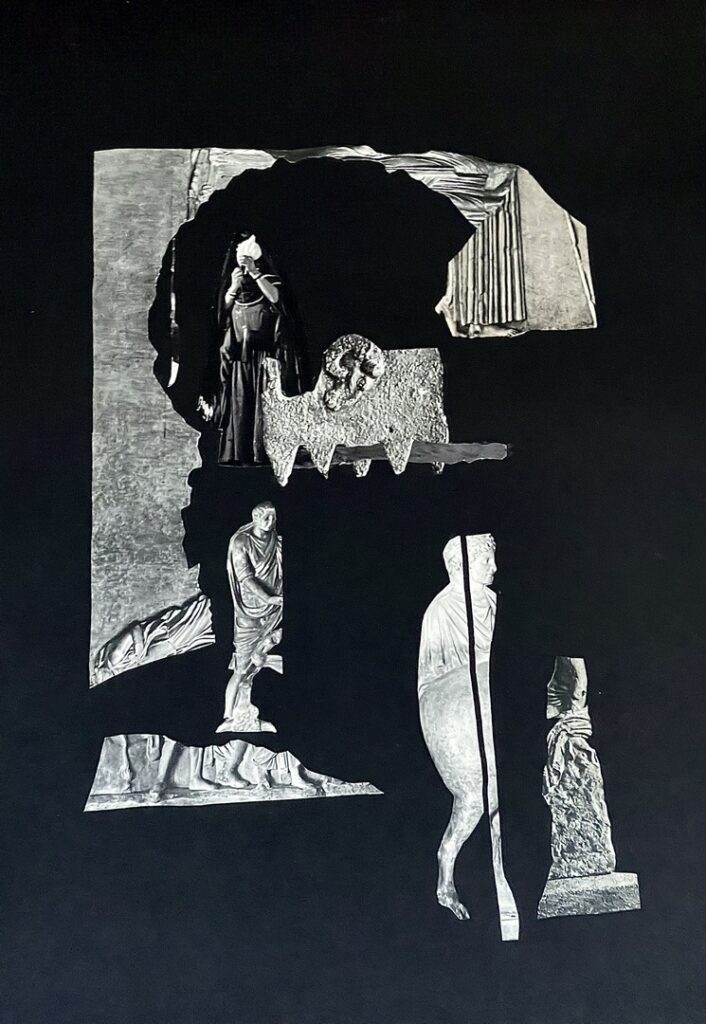
The Amazigh aesthetic, comprising geometric and animal forms symbolising both indigenous and foreign deities, is also increasingly being recreated on pottery. The younger generation is the main driving force behind this revival of Amazigh culture, particularly through the medium of tattooing! However, what interests Louisa Babari is not the resurgence of this assimilated culture, but its hybrid nature, its fusion with Roman culture. The artist thus presents what might be described as « architectural reconfiguration » of portraits, or figures drawn from the various cultures present in North Africa throughout its history. The aim of her approach is not historical: she leaves the reconstruction of the past to the archaeologists. However, drawing on their work, she proposes a new intercultural aesthetic, spanning the different eras of a region. Using symbolic objects – imbued with meaning from each respective culture – as her building blocks, Louisa Babari cuts out and juxtaposes various elements, such as portraits and photographs of architecture, which then come together to form Amazigh-Roman fusions.
Pastorale © Louisa Babari 2025
Horses and togas: two contrasting cultures coming together
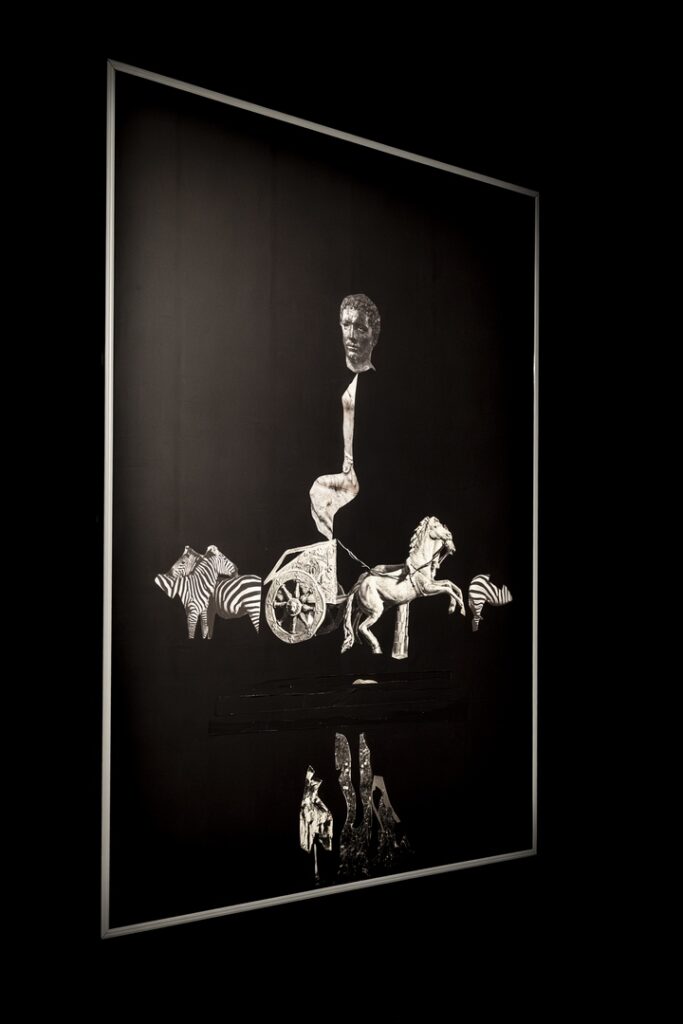
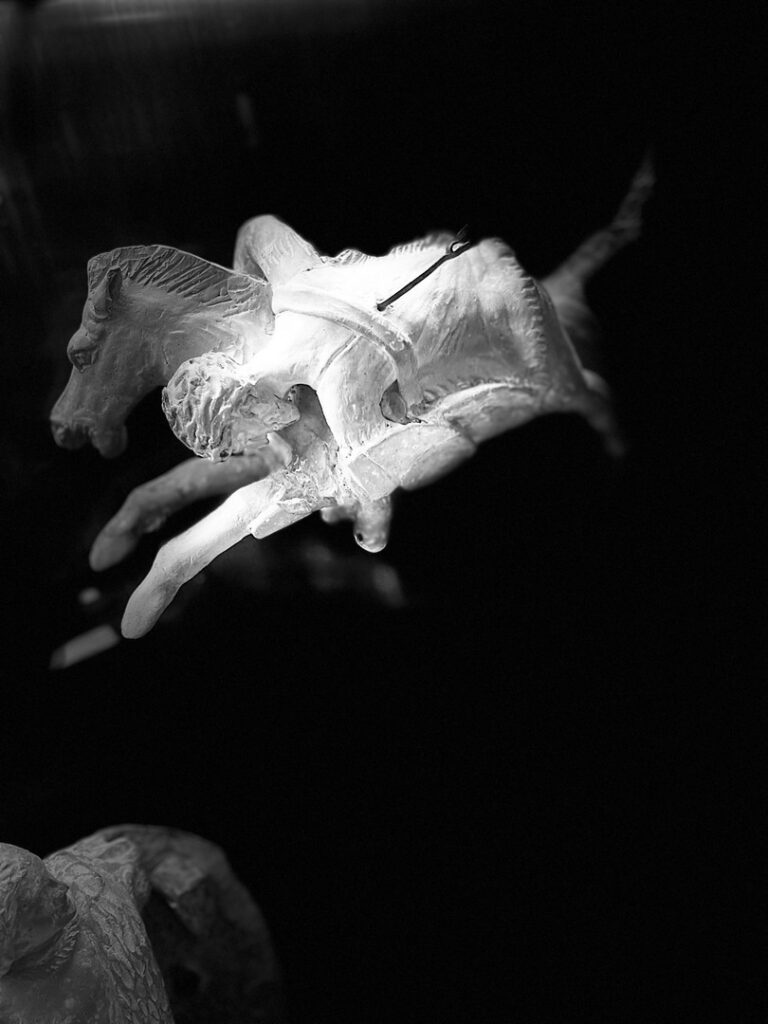
To embody the Amazigh and Roman cultures she juxtaposes, Louisa Babari draws on two powerful symbols: the drapery of the togas and the figure of the horse. The toga represents Roman power – that of the conquerors who impose their political and cultural codes. It becomes the emblem of a dominant order, much like the white uniform of the French colonial administration would later come to symbolise. In contrast, the horse embodies the Amazigh peoples. Ridden bareback, the horses bear witness to the intimate relationship their riders shared with them – a bond that both fascinated and unsettled the Romans.
By bringing these two worlds together in a single work, Louisa Babari does not seek to pit two civilisations against one another in a rigid manner, but rather to show how they encountered one another, clashed, influenced one another and ultimately intermingled. Her work thus reconstructs the complex, multicultural reality of ancient North Africa, at the crossroads of Amazigh, Numidian and Roman heritages.
Louisa Babari, AFRICA, 2026, collage.
© Louisa Babari
The artist describes his approach as « visual search ». This terminology, borrowed from archaeology, is by no means trivial. Louisa Babari draws extensively on artefacts unearthed by archaeologists to inform her reflections on Amazigh civilisations. She consults with researchers at excavation sites and also draws on a wealth of photographic material from scientific journals devoted to North African antiquities. Through this approach, she offers a sensitive interpretation of archaeology, in which artistic creation builds on scientific discoveries and breathes new life into memories that have long remained in the shadows.
A new artistic approach to archaeology
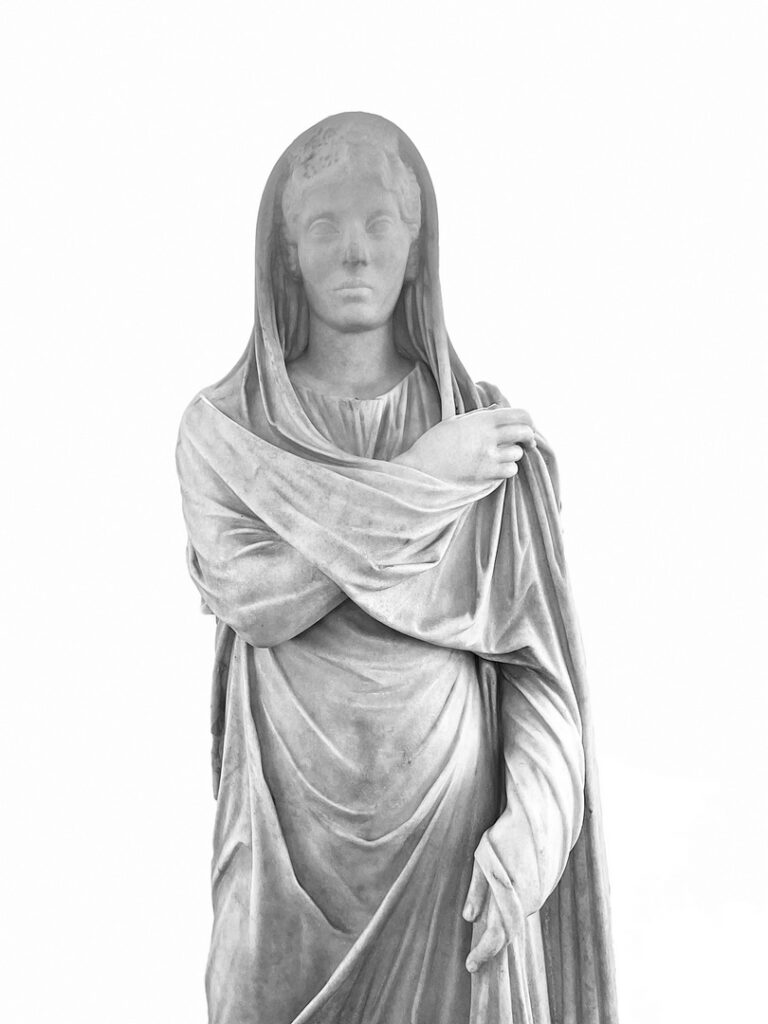
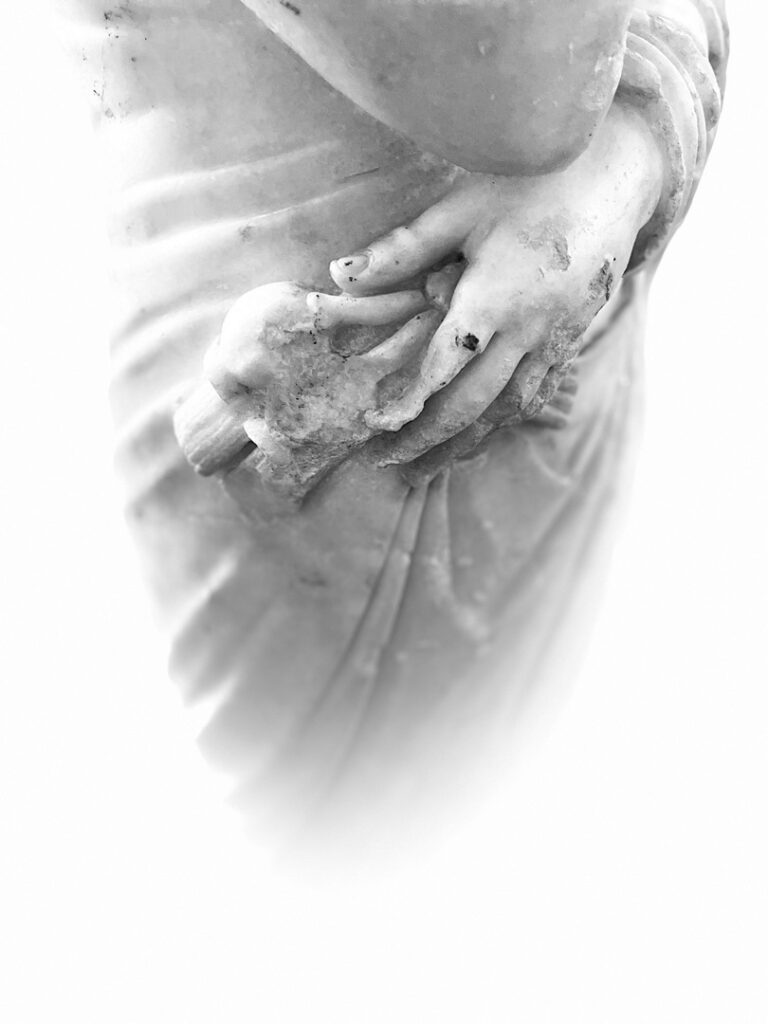
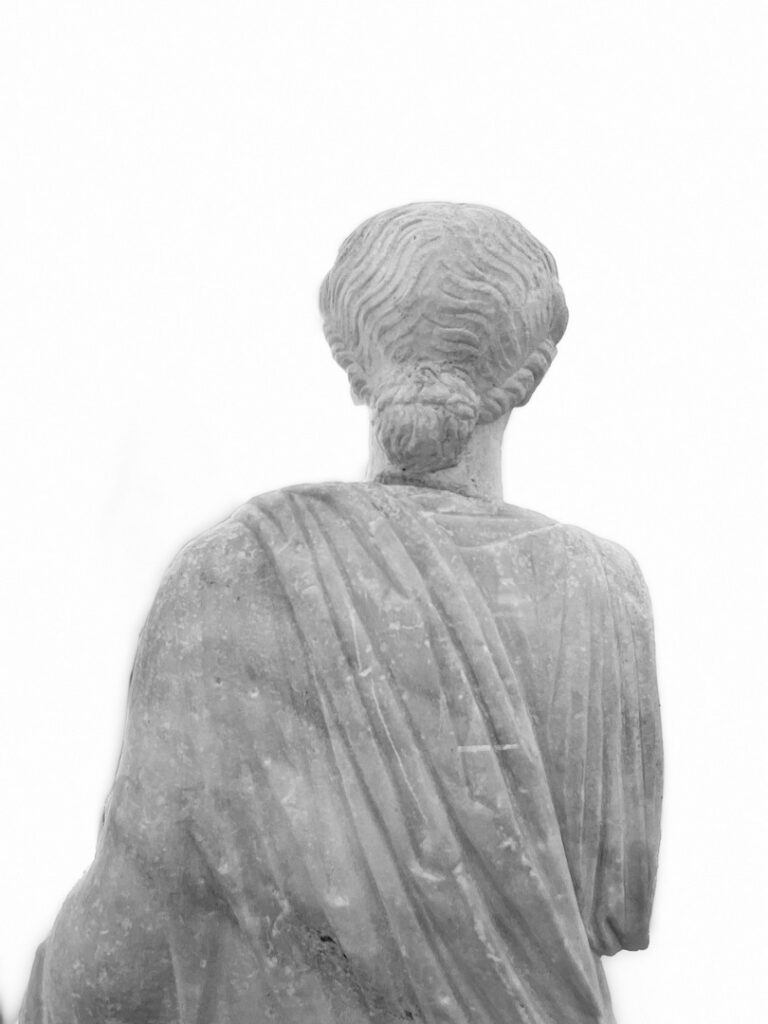
From the antiquities collections of the Louvre Museum to those in Algiers and Constantine, Louisa Babari photographs desacralised sculptures – now works of art – to bring the Roman past to life. The face, the back and various bodily forms are captured in close-up. Bathed in pale light, with the surrounding frame darkened, these human figures take on a spectral appearance, haunting the present to represent the past. Naturally, Amazigh sculptures are interwoven with the already well-known Roman sculptures. The artist thus creates a visual historical mediation, in which the permanence of certain Roman sculptures plays off the disappearance of others and, above all, the (re)discovery of Amazigh statuary. To complement this panorama, the artist rounds off his work with a truly unique creation: an original soundtrack from the past.
Giving Antiquity a Voice Once Again
This exhibition also sees Louisa Babari realise an age-old historian’s dream: to reconstruct an element of human hearing that has been lost forever – the sounds of bygone eras. To reconstruct the auditory identity of Amazigh-Roman antiquity in this way, the artist gave free rein to the students of the Pierre Barbizet Conservatoire from Marseille. They have created a soundscape that powerfully captures the connections and power dynamics between Roman and Amazigh cultures. An atmosphere of violence and death – heightened by the near-darkness in which the exhibition is bathed – is created by the clanging of weapons, human cries and the whinnying of horses. We can thus hear these ancient battles, which are no longer conveyed to us solely through historical knowledge, but also through artistic creation. So, when we leave the [Mac]room, we are reminded of the words of the writer Donna Tartt About the mythological novel The Song of Achilles of Madeline Miller : « All the wildness and excitement of Antiquity ".
1- Mauritania meant «land of the Moors».
Exhibition in partnership with the Passages Centre for Contemporary Art in Troyes.
Exhibition accredited by ‘Saison Méditerranée’ – Institut français
Exhibition featured in the Grand Arles Express programme at the Rencontres d’Arles 2026
Exhibition recognised as part of the Bicentenary of Photography
Address
Museum of Contemporary Art
69 Haifa Avenue,
13008 Marseille. Tel.: 04 13 94 83 51. Tel.: 04 13 94 83 56.
From 15 May 2026 to 3 January 2027
Text : Sacha Hernando
Photos : as indicated