


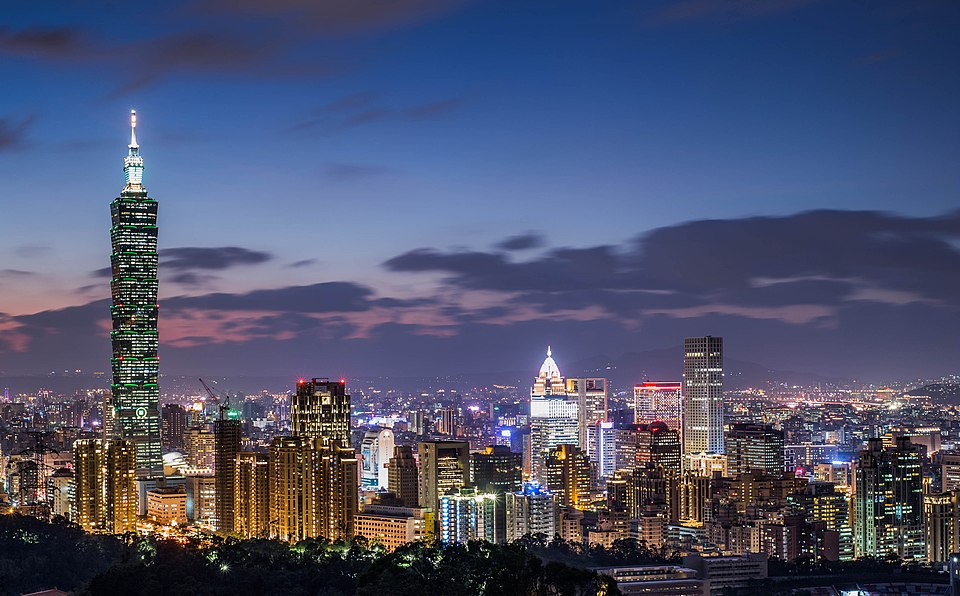
The gateway to the island of Taiwan, Taipei stands out as a strategic metropolis and a booming tourist destination. An elusive capital, both bustling and contemplative, it defies clichés and sets its own pace.
Table of Contents
Amidst its iconic skyscrapers, bustling night markets, and centuries-old temples, Taipei is a microcosm of contemporary Asia. Behold Taipei 101. It ascends into the sky with a quiet confidence. It was once the tallest, it no longer is; but it remains a visual landmark in an urban landscape dominated by a forest of modern towers, often slender and glass-fronted, designed to withstand typhoons and earthquakes.
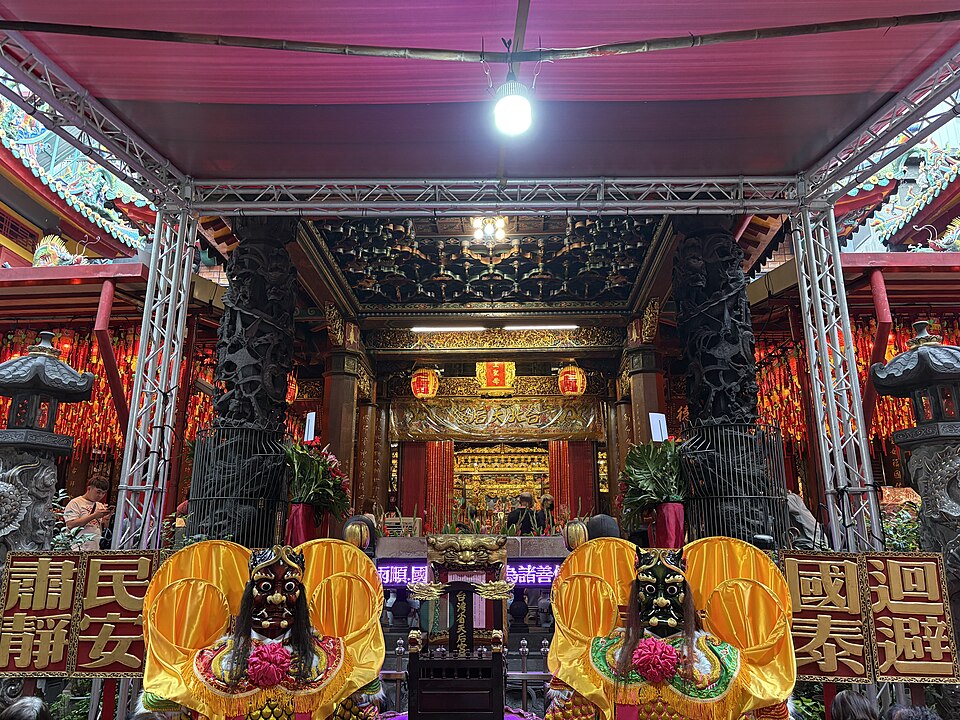
In Taipei, nothing imposes itself immediately, and that's precisely what is disquieting. The city doesn't present itself all at once; it unveils itself. Around a street corner, a temple overflows with incense and murmured prayers; a few steps further on, the neon lights of the night markets crackle, the heat sticks to your skin. Beneath its unassuming metropolis facade, Taipei orchestrates a constant dialogue between Chinese heritage, Japanese influences, and innovation. A capital that doesn't seek to impress, but which ends up captivating you, slowly, surely.
«Belle Isle», as it was nicknamed by the Portuguese navigators who discovered it in 1590, was colonised by the Dutch, the Ming Empire, and then occupied by Japan from 1895 to 1945, after the Treaty of Shimonoseki and attached, during the Second World War, to the Republic of China led by Chiang Kai-shek (1887-1975). He fled the power of the communists and Mao and proclaimed independence in 1949. Since then, Taiwan has become a democratic state and is committed to preserving its balance and autonomy, even though the pressure exerted by China remains.
Japanese influences
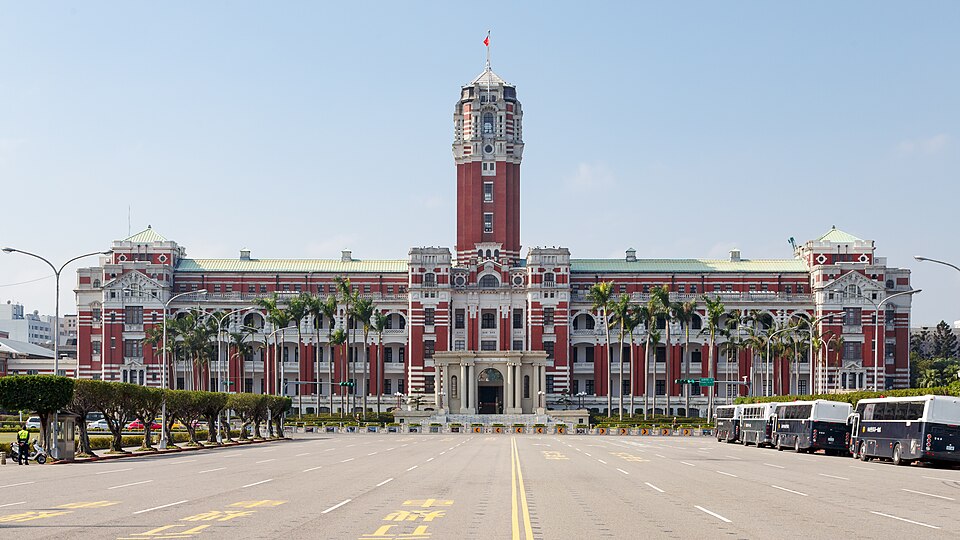
Of this eventful history, the Japanese period remains one of the most formative, permanently leaving its mark on Taipei's architecture and organisation. The traces are discreet, but they profoundly structure Taipei's identity. Even today, this influence can be seen in certain preserved or restored buildings, such as Presidential Office Building, whose monumental architecture dates from this period. It is also evident in districts where traditional Japanese wooden houses still stand, recognisable by their low roofs, clean lines and openness to the garden. This is also seen in infrastructure planned according to modern standards for the time: roads, rail networks, administrative organisation. The district of Dadaocheng and some former official residences bear discreet witness to this.
It is also found in everyday life. The fondness for public baths, the cleanliness of urban spaces, and a certain discipline on public transport all recall Japanese codes. Even in gastronomy, the influence is apparent: Bento boxes (lunchboxes), breaded dishes, or consumption habits inherited from this period.
Finally, there is a more diffuse, almost cultural dimension. Japan introduced an educational system, artistic practices, and an aesthetic sensibility to Taiwan that have left lasting marks. Even today, Japanese popular culture – manga, design, music – fits naturally into Taipei's cultural landscape. It should be noted that these influences are neither static nor overtly claimed. They coexist with Chinese heritage and contemporary dynamics.
The Chiang Kai-shek Memorial Hall
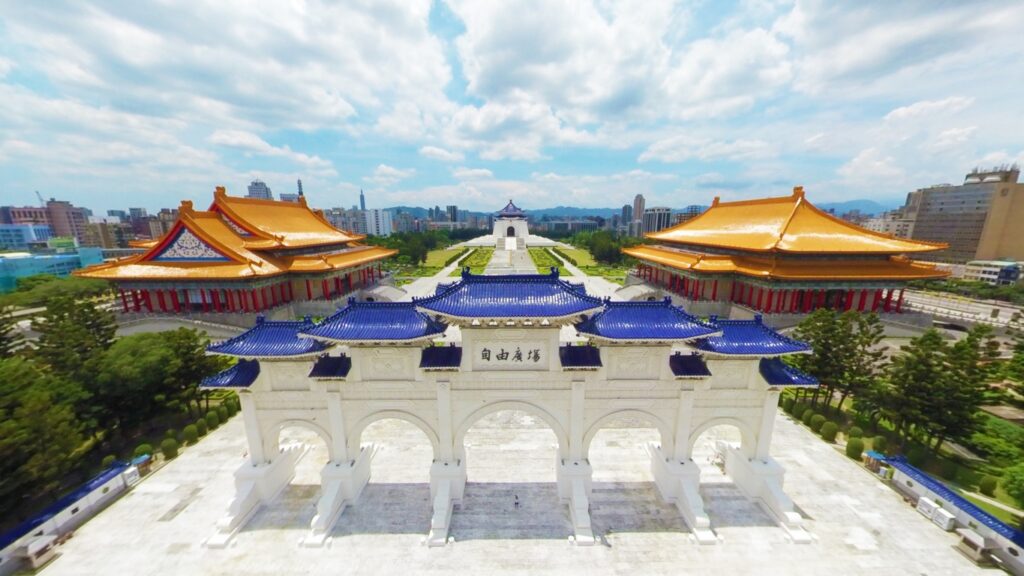
You access the Chiang Kai-shek Memorial Hall via Liberty Square, through a public garden planted in the colours of the Republic of China's flag: red, white, and blue. On the esplanade, the visitor is first struck by the order. The organisation of the place immediately imposes a certain restraint: school groups, visitors, and soldiers coexist in a vast space where movements seem regulated.
The monument is imposing with its size and majestic architecture.
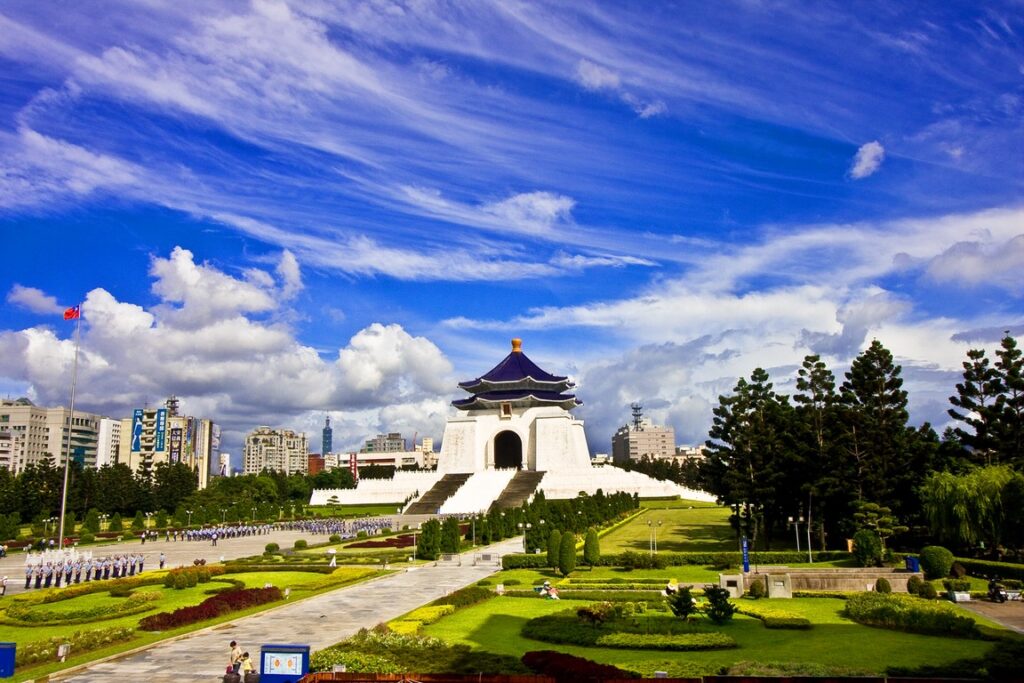
Built from white marble, topped with an octagonal roof of deep blue tiles inspired by the Temple of Heaven From Beijing, it rises over three levels of terraces. 70 metres high, it is accessed by a staircase of 89 steps, a direct reference to the age of Chiang Kai-shek at his death. The ensemble is part of a classic staging of power, where monumentality establishes the leader's eternal legitimacy. A statue of the Generalissimo occupies the central space. © Taiwan Tourism Office.
Around, the changing of the guard is carried out according to a strict protocol, in almost total silence, where the precision of the group's movements takes precedence over any individuality. This ceremony contributes to the solemn dimension of the place.
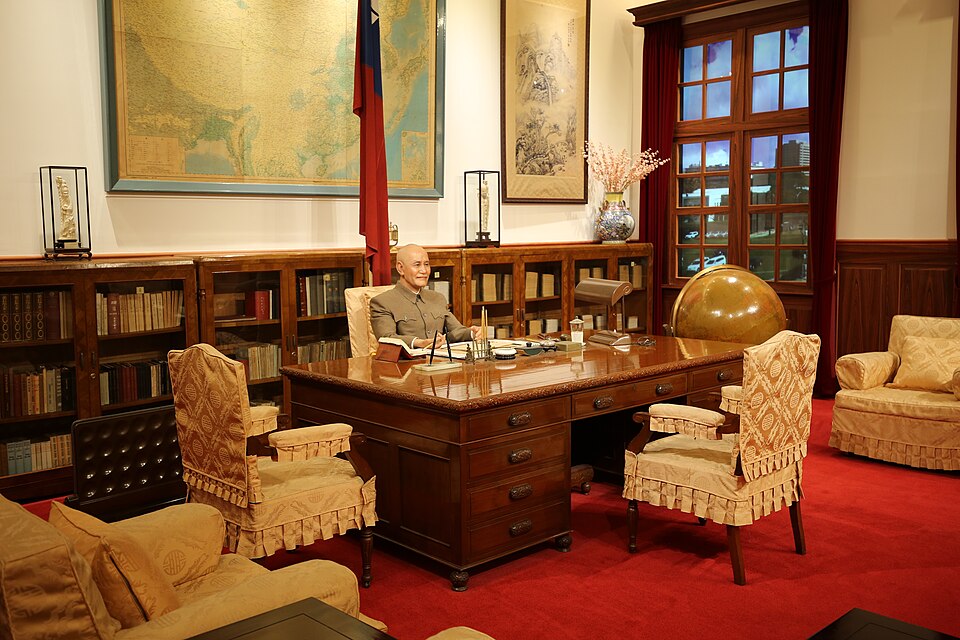
Opened in 1980, five years after Chiang Kai-shek's death in 1975, the memorial is part of a desire to pay tribute to a central figure in Taiwanese political history. Head of the Nationalist government which retreated to the island after 1949, and opponent of Mao Zedong, he led an authoritarian regime before the island gradually began its democratic transition.
Since the lifting of martial law in 1987, Taiwan has undergone profound political transformation. Chiang Kai-shek's place in national history is now the subject of contrasting interpretations: a founding figure for some, a symbol of a period of repression for others. The memorial reflects this ambivalence, oscillating between a place of remembrance and a space for historical debate.
National Palace Museum
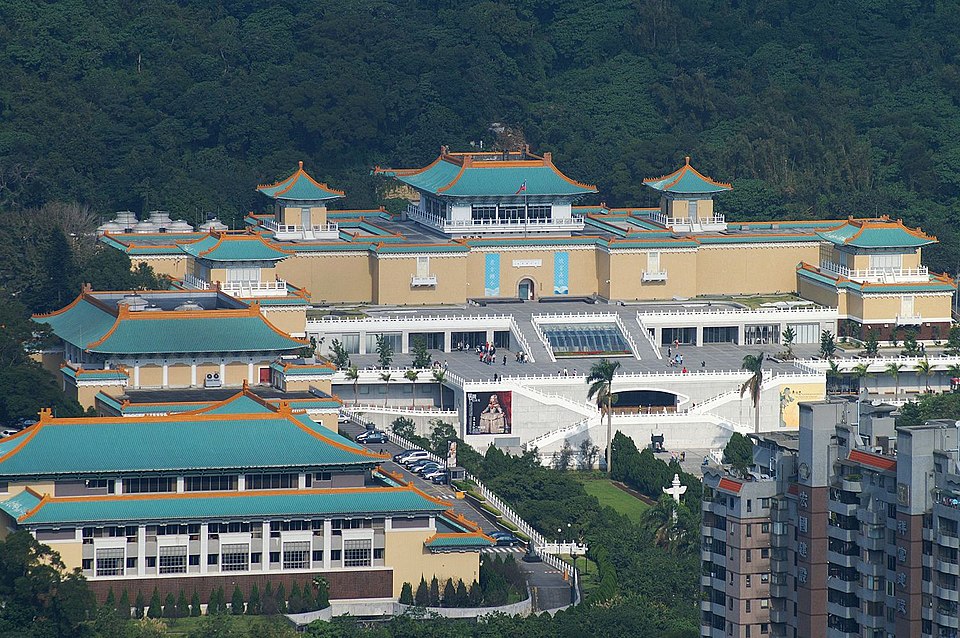
In the bustling Shilin district, the National Palace Museum offers another face of China, older, based on attention to detail and refinement. Here, there is no spectacular monumentality: the staging is deliberately minimalist to focus attention on the works. Its collections are among the most important in the world for Chinese art. They were not formed in Taiwan, but transferred at the end of the 1940s by the Nationalist government, which sought to shelter this heritage from the advance of Communist forces. Ancient bronzes, calligraphy scrolls, jade objects: these pieces are not just works of art history; they also embody a cultural continuity claimed by a regime in exile. Their movement tells a political as well as an aesthetic story, that of a power that asserts its longevity by safeguarding its heritage.
In front of a display case, a miniature jade cabbage captures the attention of visitors. The object fits in the palm of the hand, yet it condenses centuries of artisanal mastery. A guide details its creation and symbolism while visitors observe, take photographs, and linger for a few seconds. Further on, a calligraphy scroll attracts a smaller audience. An elderly man stands motionless in front of the display case, his hands clasped behind his back. He follows the ink's traces as one reads a text, in a slowed-down rhythm that contrasts with the flow of visitors in other rooms.
The Longshan Temple: a heritage carved in stone and bronze
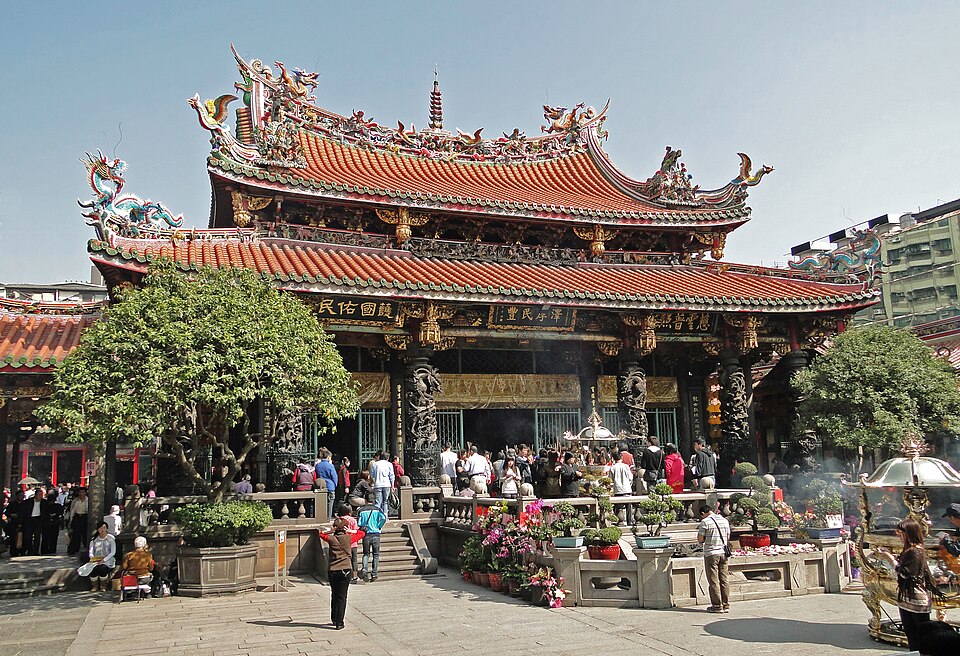
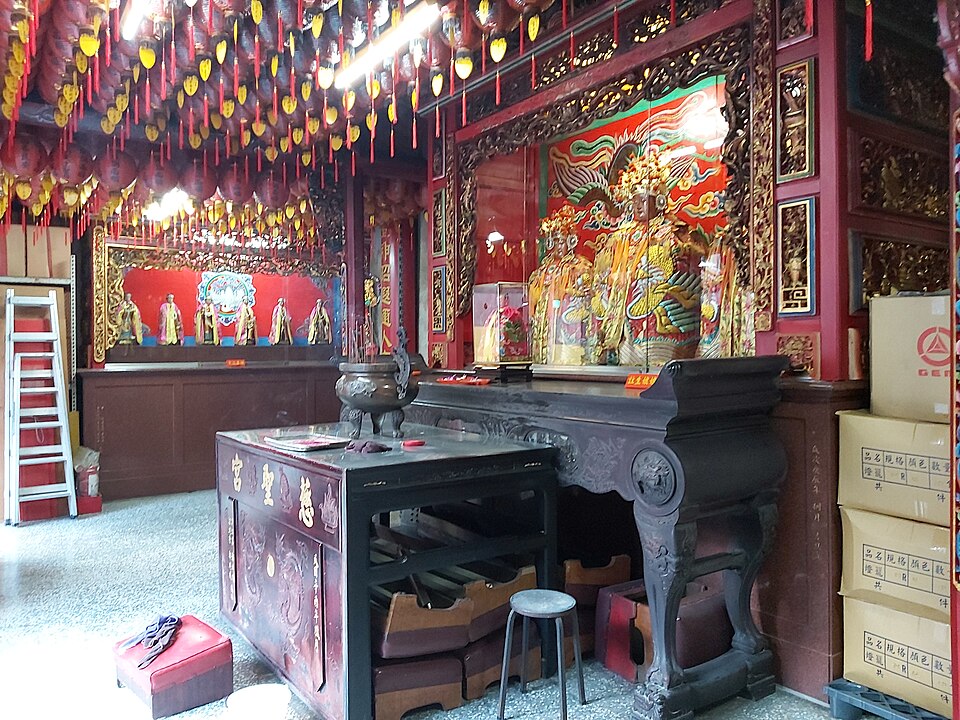
In the heart of Taipei's oldest district, Wanhua, stands the Longshan temple. It was built in the 18th century by immigrants from Fujian (mainland China). It is one of the city's oldest and most popular places of worship. Classified as a national historic monument in 2018, it embodies the classical style of southern China. Rebuilt after the earthquakes and then the Allied bombardments of 1945, the temple is a living space, where traditional religious practices are part of everyday life. As soon as they enter, visitors are greeted by swallowtail roofs of rare finesse and bronze columns unique to Taiwan, where sculpted dragons seem to come to life. The hustle and bustle of the city fades behind the smoke of incense sticks and prayers. Devotees place offerings of flowers and fresh fruit on long red tables. The temple is home to over a hundred deities. The central figure is Guanyin, the Goddess of Mercy, whose statue miraculously survived the bombings of the Second World War intact.
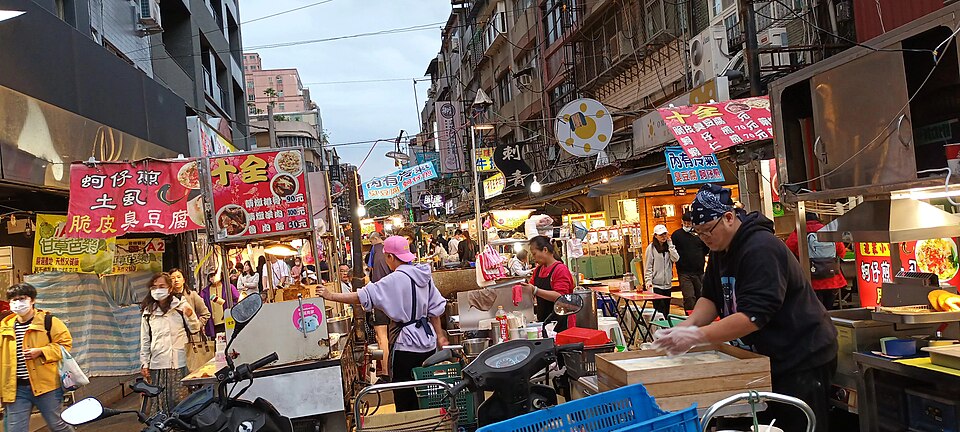
In the streets of Taipei, daily life continues late into the night. After the temples, museums, and skyscrapers, the city reinvents itself each evening in the buzz of its night markets like Shilin or Raohe. It's a tight squeeze, you stop at a stall at random, without ceremony: an omelette, a crispy chicken, a piping hot soup gobbled down on the go.
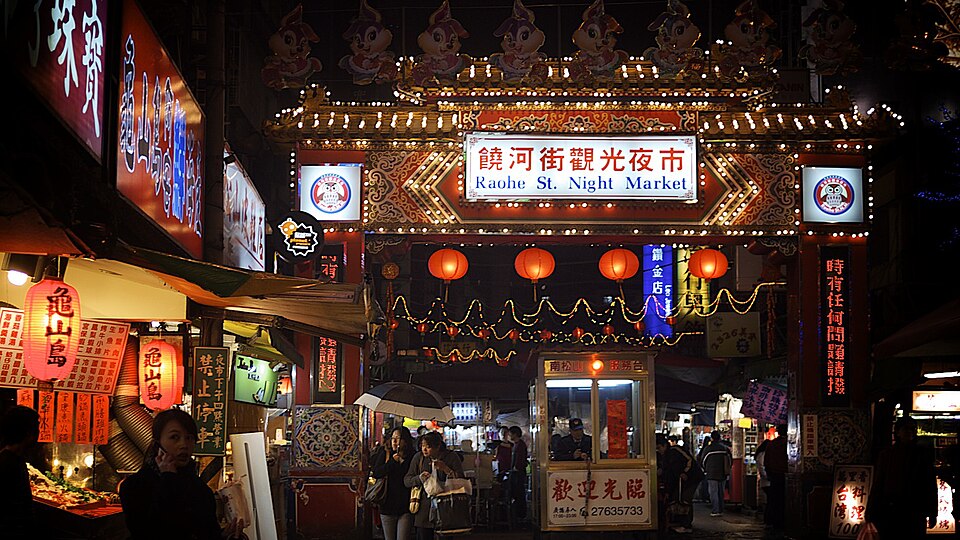
Taipei isn't a city you simply visit; it's one you savour, often standing up, in a side street thick with the steam from bamboo baskets. It's a metropolis with flavour, with a kick, and a troublesome tendency to make you forget your return journey. This city proves that you can be at the cutting edge of tech while still pausing to burn incense. If you're looking for a destination where modernity doesn't look down on you (unless you're at the top of Taipei 101), look no further. Pack your bags, but leave some room: your heart and your stomach will likely want to bring everything back. In short, stop scrolling and go: your Instagram account will thank you, and your diet, well, it'll forgive you... one day.
Text : Michèle Lasseur
Photo opening : ynes95/CCommons
Other photos : As indicated.
Formalities :
Passport (valid for at least 6 months from the date of entry) and return ticket.
Taiwan Arrival Card (TWAC), which must be completed online before travel.
For information on visas: contact the Representative Office of Tapei in France.
Taiwan Tourist Office
C/O AVIAREPS - 122 avenue des Champs Elysées - 75008 Paris
Tel : +33 (0)1 53 43 33 97
taiwantourisme.france@aviareps.com
www.taiwantourisme.com
www.facebook.com/taiwantourisme
www.instagram.com/taiwantourisme
contact@taiwantourisme.com
Getting there
Rated 5 stars by Skytrax for the 10th consecutive year and the first airline in the world to launch the Premium Economy cabin concept, EVA Air is renowned for the excellence of its service. The airline operates a daily flight between Paris-Charles de Gaulle airport and Taipei on board its Boeing 777-300ER.
EVA Air also offers departures from Milan, Munich, Amsterdam, London and Vienna.
The company also offers pre-routing from other airports in France to reach these European airports.
https://www.evaair.com/en-fr/index.html

I saw one of these in Finland and I bought one.