
Depicting rain in painting and printmaking is a challenge for artists. How can one paint or draw something that is translucent and fleeting, yet profoundly alters the landscape? From the early 19th century, with the first plein air painters, right up to the present day, the responses have been varied. The 150 works on display at the Rouen Museum of Fine Arts show how artists such as Caillebotte and Courbet , even the great photographers of the 20th century rose to this challenge.
Table of Contents
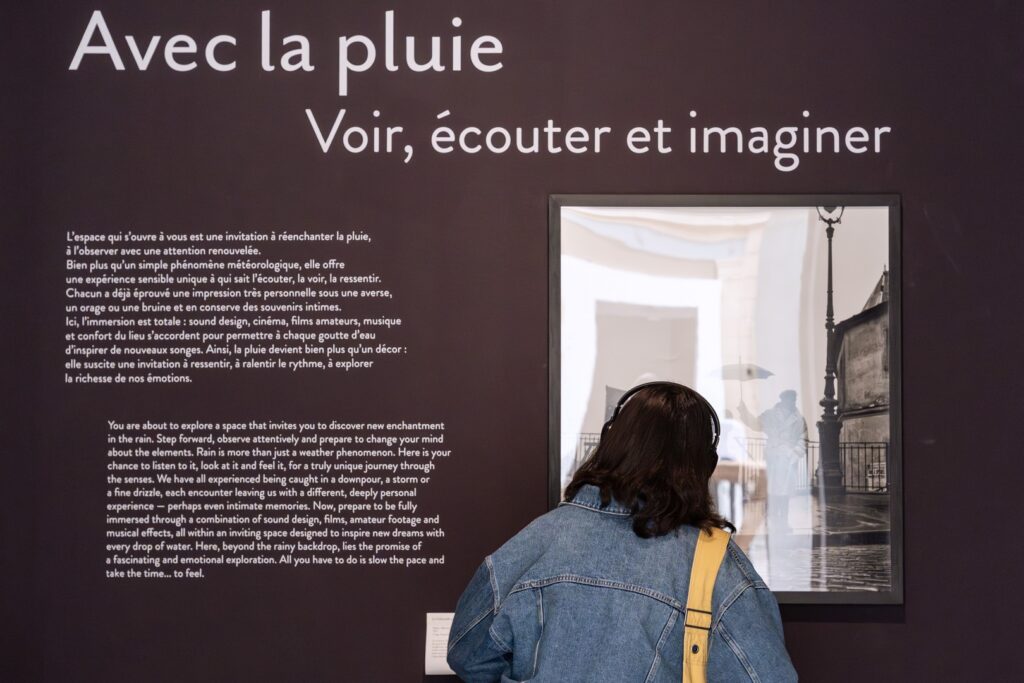
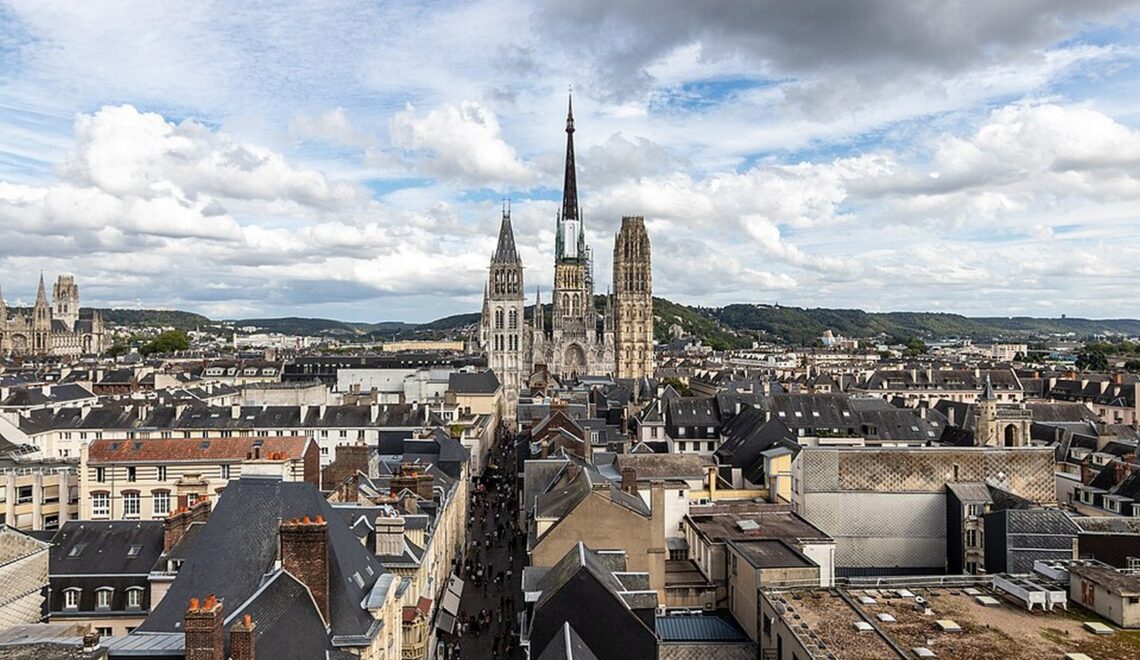
In Rouen, all it takes is for a cloud to linger over the Seine for the city to change. The church spires fade into a milky light, the cobblestones are coated with a film of water, and the façades seem to waver between their reflections and reality. It is in this city, where Claude Monet tirelessly captured the ever-changing appearance of the cathedral, that the Musée des Beaux-Arts is dedicating an exhibition to a subject long considered impossible to depict: rain.
Rain: a challenge for artists
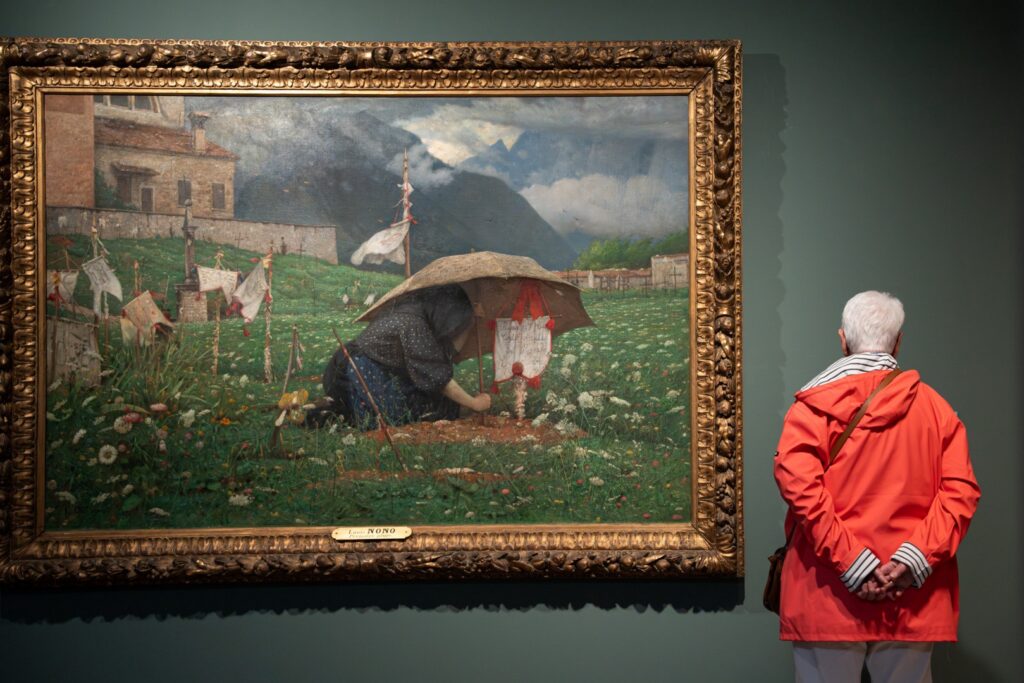
How can one paint something that has neither form, nor colour, nor contours? How can one capture that transparent veil which blurs the horizons without ever revealing itself? The exhibition is structured around this question, which is simple in appearance but dizzying for artists.
With A view of Rouen in the rain of Léon-Jules Lemaître (1850–1905), the city seems familiar and yet transformed. The monuments disappear behind a curtain of water, whilst the streets come alive with a quiet crowd: Rouen is perhaps one of the finest possible backdrops for telling this story.
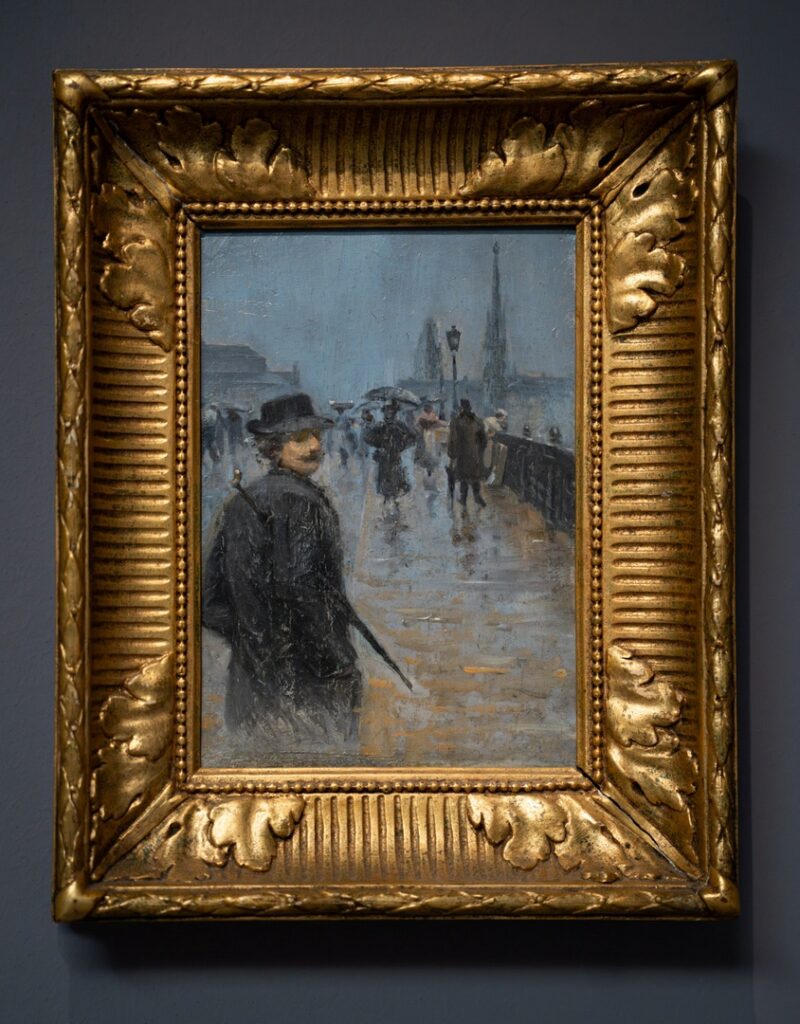
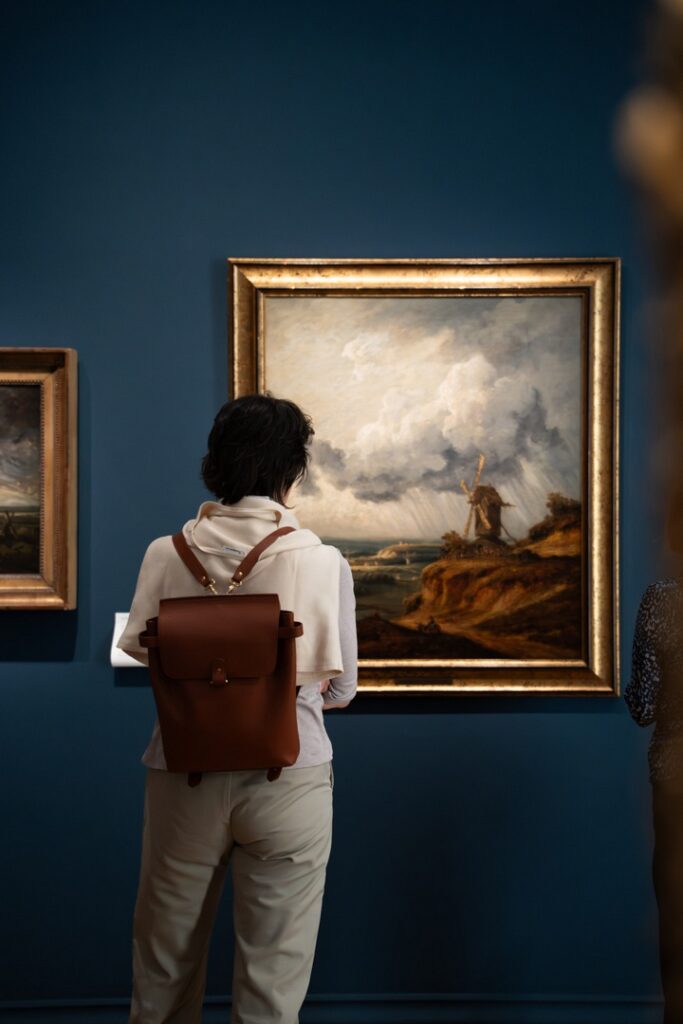
Right from the very first rooms, visitors discover that rain is a conquest. In the romantic landscapes of Turner (1775–1851), the light dissolves into the clouds; in Courbet (1819–1877), the stormy skies foreshadow a powerful and almost unsettling force of nature. Then come the prints by Japanese painters Hokusai (1760–1849) and Hiroshige (1797–1858). Their oblique rain showers, reduced to a few strokes of ink, challenge the Western perspective. They show that rain can be a form of landscape expression rather than merely a meteorological phenomenon.
Rain in Impressionist Paintings
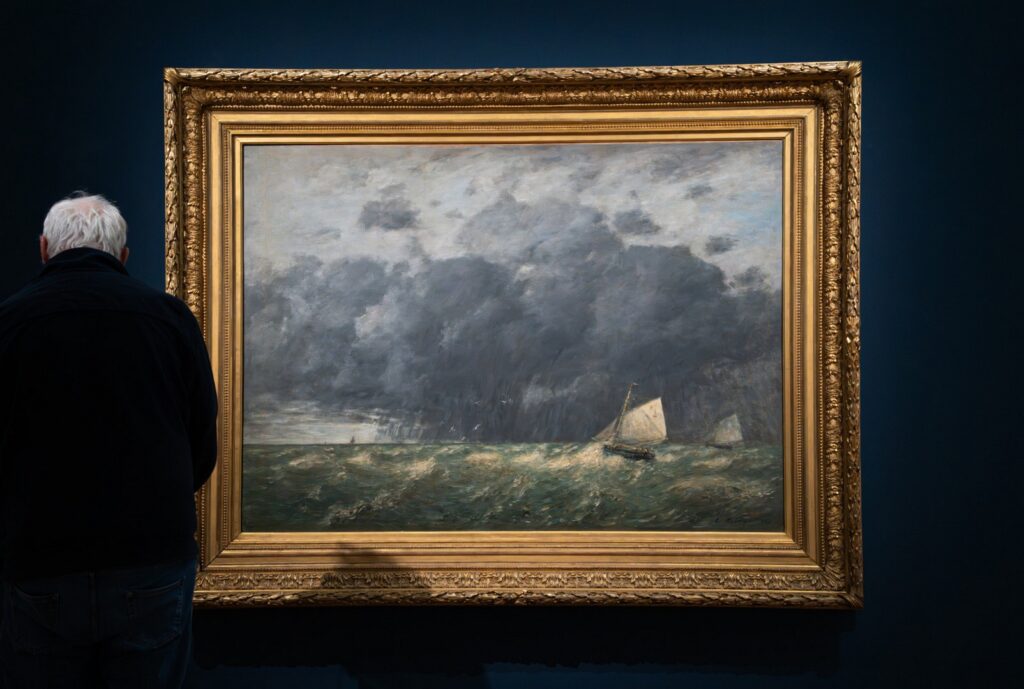
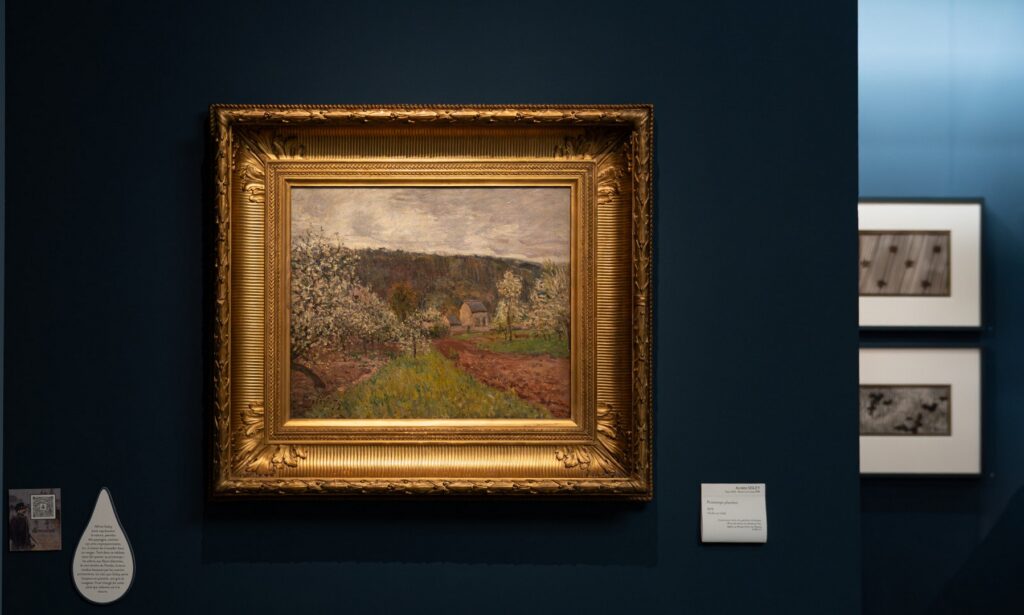
With the Impressionists, everything changed. Monet (1840-1926), Pissarro (1840–1903) or Sisley (1839–1899) no longer sought to depict individual raindrops; they painted the damp air, the vibrations of light, that atmosphere in which the sky seems to merge with the earth. The rain ceases to be visible; it becomes something one can sense. The painting no longer depicts a weather event; it conveys a sensation.
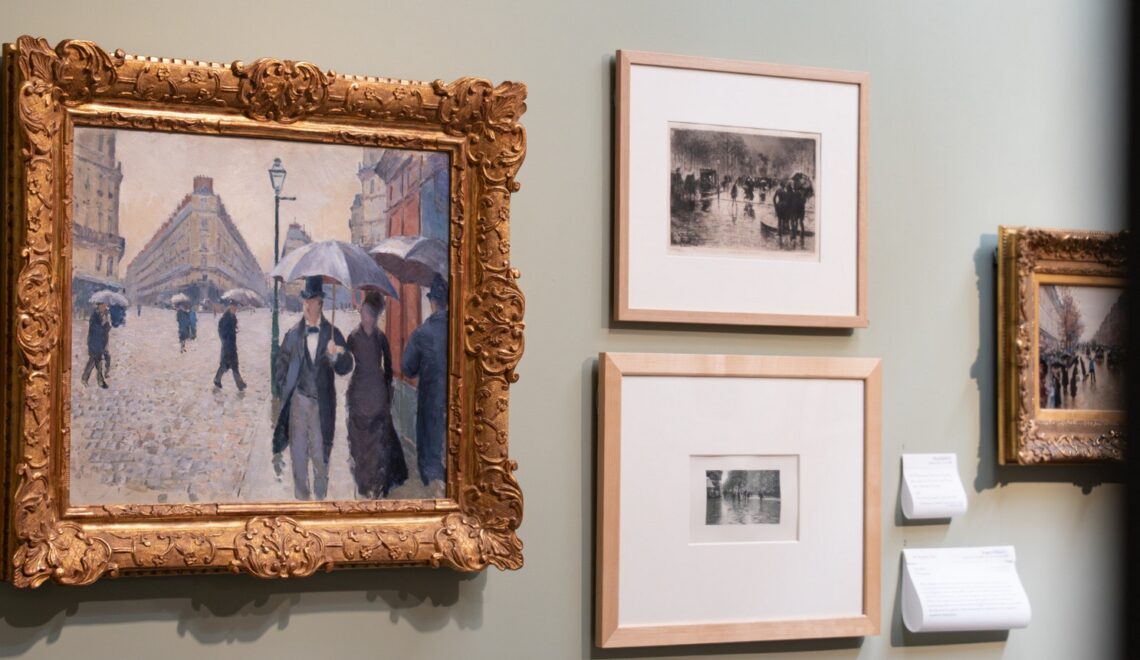
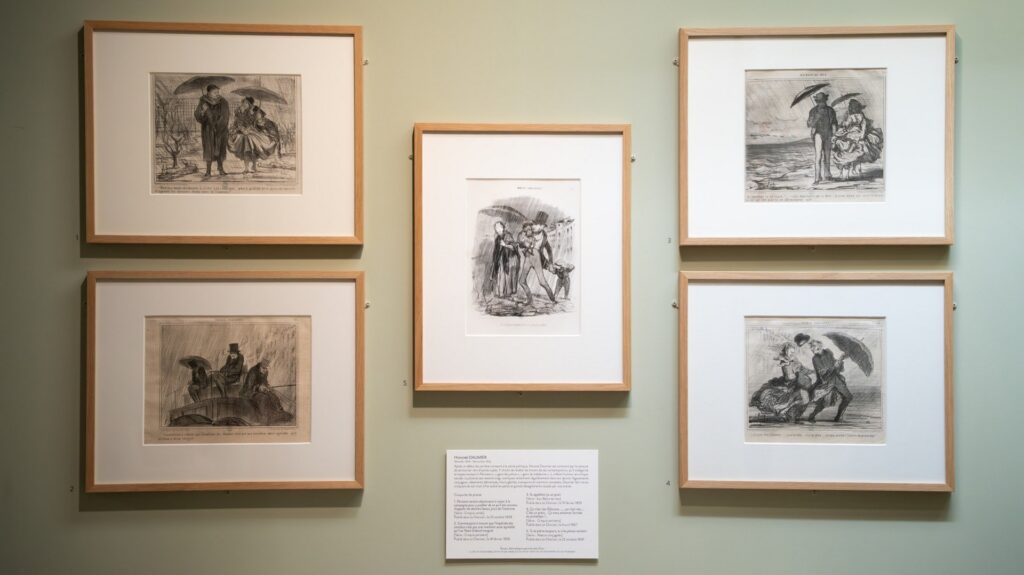
The scene shifts to the capital. This is undoubtedly the most astonishing part of the exhibition. On the boulevards of 19th-century Paris, elegant ladies quicken their pace, horse-drawn carriages glide over the sodden pavements, and shop windows reflect a myriad of images. Everything is in motion. It’s impossible not to pause in front of the famous » Rue de Paris, a rainy day » by Gustave Caillebotte (1848–1894). This work tells the story of the invention of a modern city where the rain shapes a new way of moving about, of passing one another by, of ignoring one another. The wet cobblestones become a second canvas amidst the hustle and bustle of the capital.
Photographers and the rain
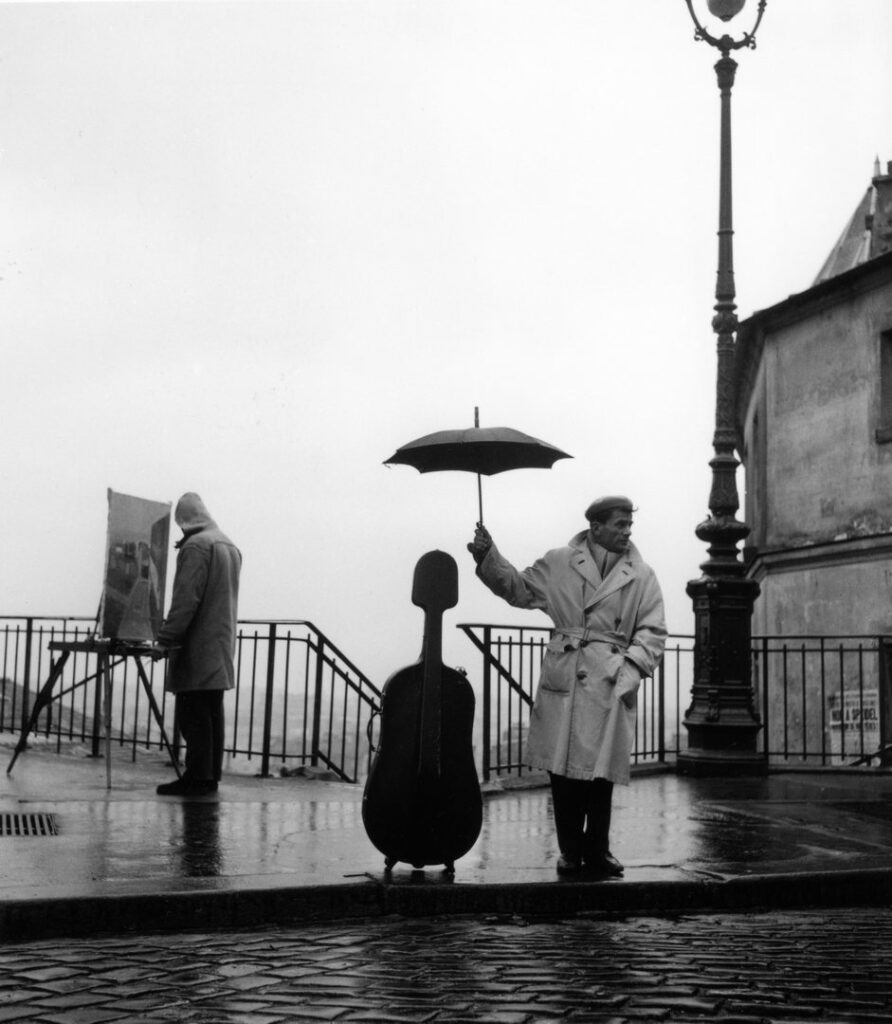
Photographers excel at this art of capturing the fleeting moment. In just a few images, they tell a story. A child jumps into a puddle with the carefree spirit of childhood. Two lovers, sharing an umbrella, walk side by side, close together. Further on, a solitary passer-by disappears down a glistening street, whilst the reflections of the shop signs dance on the tarmac. The rain reveals the tenderness of the simplest gestures.
At Robert Doisneau (1912–1994), the cellist Maurice Baquet stands in a Paris street in a light rain; with Willy Ronis (1910–2009), passers-by become anonymous figures, captured in a moment of everyday life. The rain is no longer merely a play of light; it becomes an emotion, sometimes a private revelation.
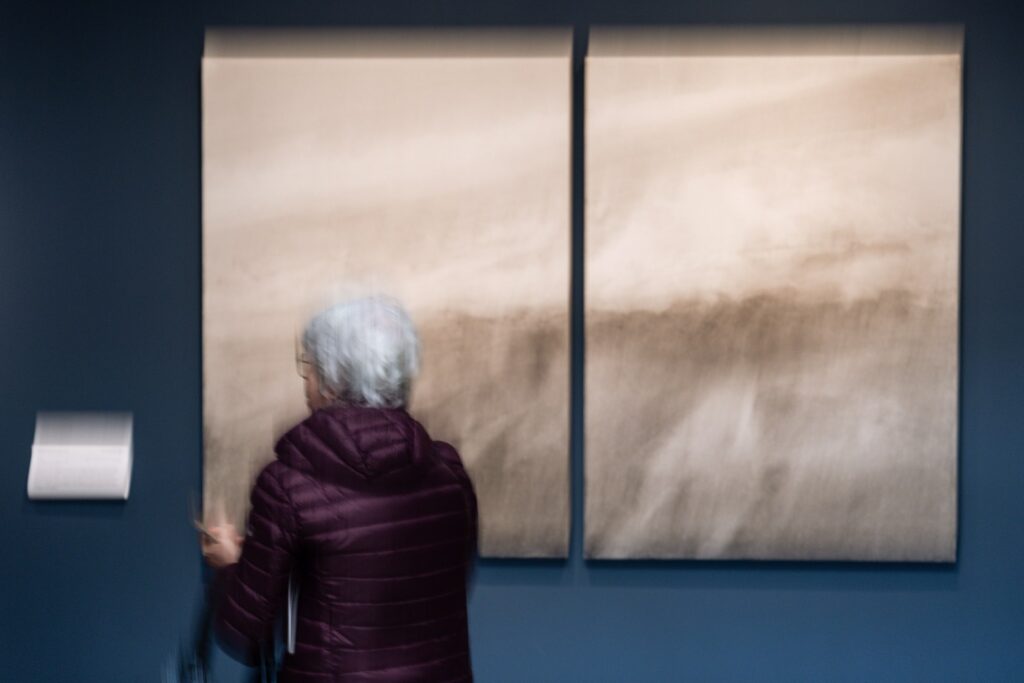
The tour concludes with contemporary works in which rain ceases to be a motif and becomes an experience. Sounds, images, installations and sensory experiences invite visitors to listen to the raindrops, feel the dampness, and reflect on the role of water in a world now facing climate change. This dialogue between art history and contemporary concerns lends the exhibition an unexpected depth.
As I leave the museum, I look up at the sky over Rouen. A few drops are beginning to fall. The cobblestones start to glisten like those in Caillebotte’s paintings, whilst the anonymous figures are reminiscent of Doisneau’s photographs. The rain does not erase the landscapes; it reveals their true nature. This is undoubtedly the greatest achievement of this exhibition: showing us that there are forms of beauty that only a cloud-laden sky is capable of revealing.
«Painting, living and dreaming in the rain»
Exhibition runs until 20 September 2026
Museum of Fine Arts
Esplanade Marcel Duchamp, Rouen
www.visiterouen.com/inspirations/magazine/exposition-sous-la-pluie
Text : Michèle Lasseur
Photos : Charlotte Thomas