
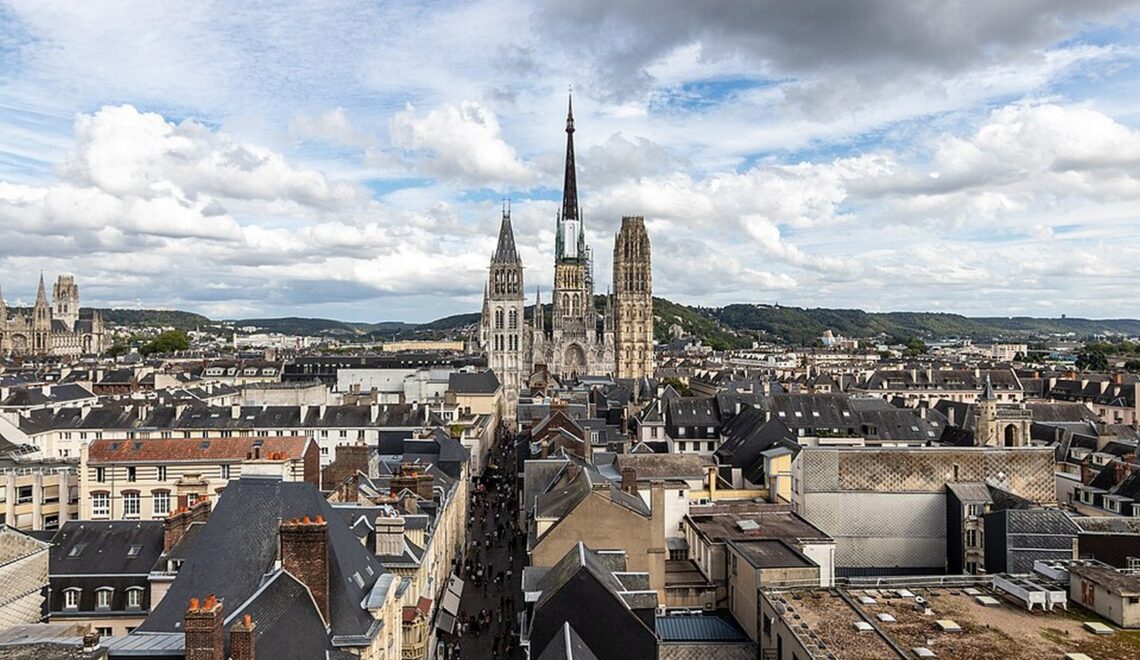
Rouen is more than just its famous skyline, dotted with church spires. It was the scene of the tragic fate of Joan of Arc, muse of the Impressionists and the setting for the most beautiful pages of Flaubert, Hugo or Maupassant, it boasts an exceptional heritage where eight centuries of history blend with the typically Norman way of life.
Table of Contents
The Memory of the River
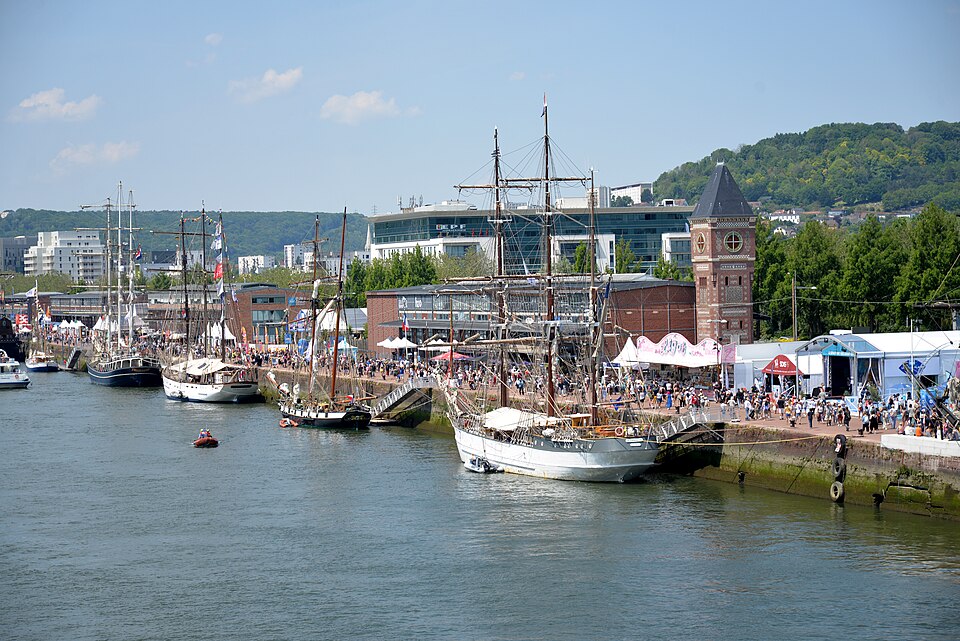
You should reach Rouen via the Seine, just as the Romans did, as did the Viking longships from the north, and as the great sailing ships still do today, which occasionally sail up the river right into the heart of the city.
The Seine flows from Paris, meandering between its banks before continuing its course towards the sea. It is the great highway of history, the voice of merchants and conquerors, the companion of kings, bishops, navigators and painters. Rouen has made its home there, in a bend of the river, like a sentinel.
It has shaped the city’s destiny. Today, its waters appear peaceful. But one must imagine a different era: we are in the 9th century. Ships appear on the river, with sails and carved ship figureheads : the Vikings, men from the North. They sail up the Seine, plunder, burn and leave. Then they return again and again.
The Frankish kings proved unable to stem the Viking raids. In 911, they therefore opted for negotiation. In Saint-Clair-sur-Epte, the king Charles III known as Charles the Simple, concludes an agreement with the Viking chieftain Rollon. The terms were clear: land around Rouen was granted to him in exchange for his pledge to defend the Seine valley against further invasions. The Scandinavian warrior became a prince; the pagan was baptised and integrated into the Frankish kingdom. This marked the birth of the Normandy, of which Rouen naturally became the first capital.
Notre-Dame de Rouen, a symphony in stone
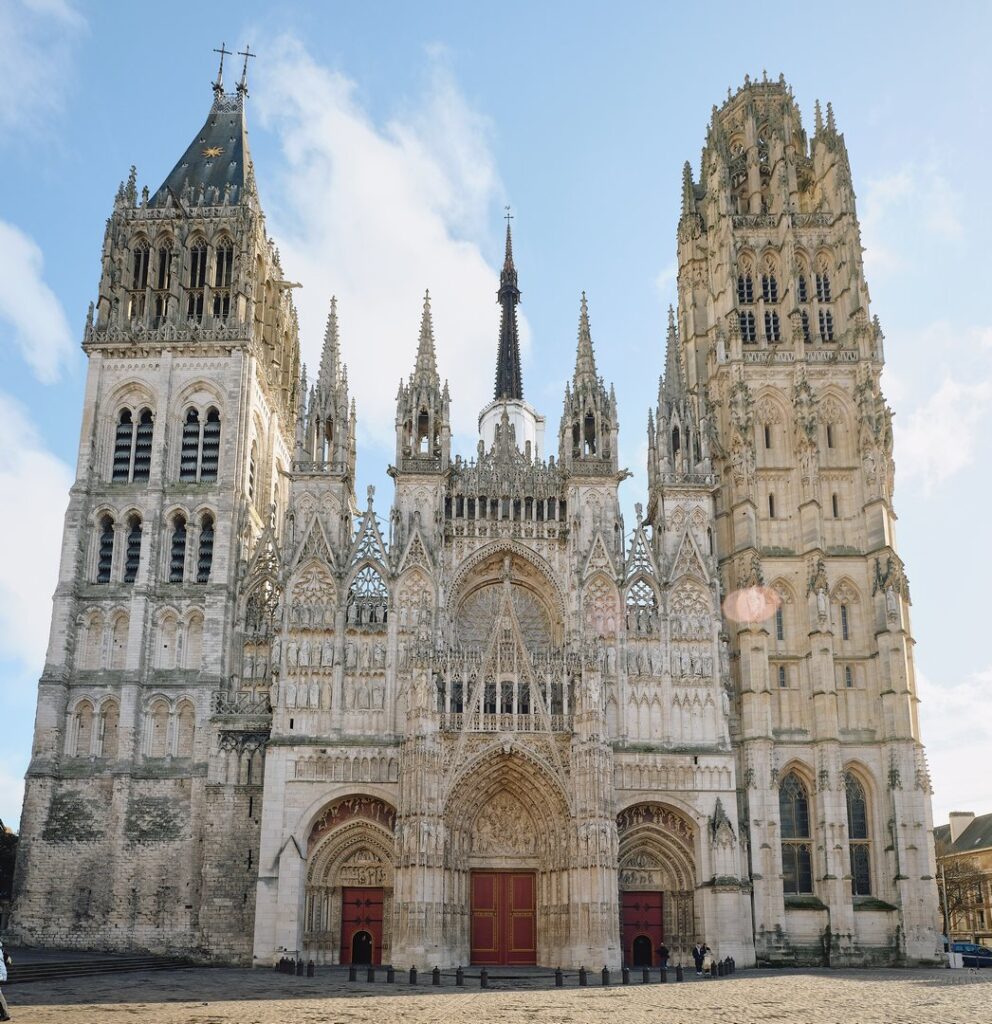
Rising above the rooftops of Rouen is the silhouette of Notre-Dame. This building remains a veritable book carved in stone, where every doorway, every statue and every gargoyle tells a fragment of history. With its spire rising to a height of 151 metres, it is still the tallest cathedral in France. When its cast-iron spire was completed in 1876, it was even the tallest monument in the world, before being surpassed a few years later by the Cologne Cathedral.
The cathedral that fascinated Monet
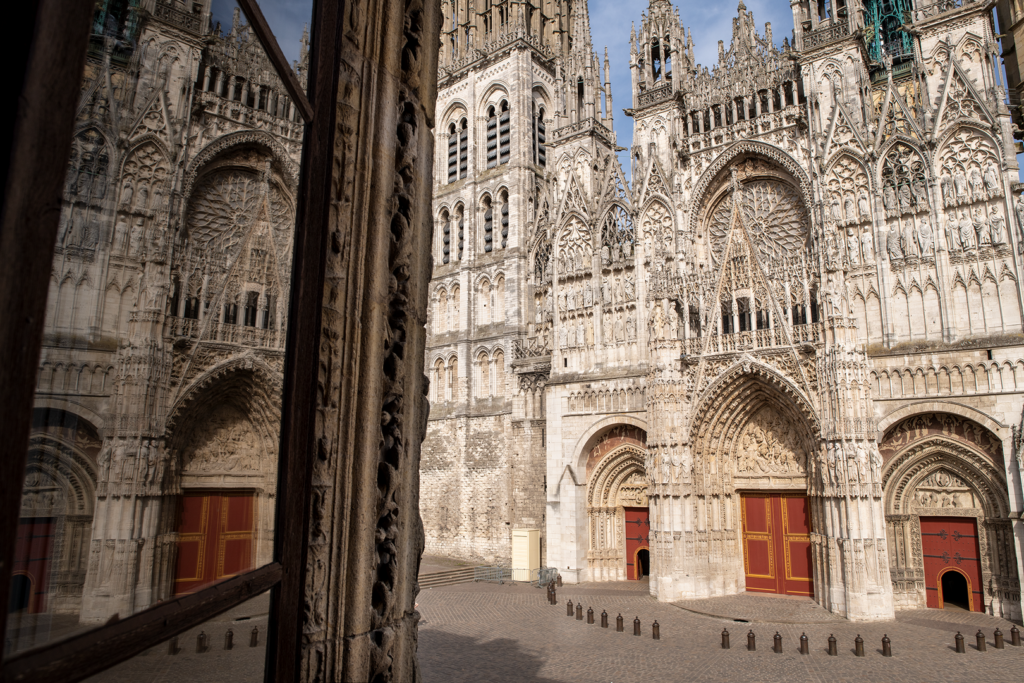
We think we know her. We’ve seen her a hundred times before, in the famous paintings by Claude Monet who painted it at daybreak, in the blazing sunshine, in the Normandy mist or in the last glimmers of twilight. Based on the first floor of the former Tax Office, directly opposite the western façade, where he had been granted permission to work, the master of Impressionism tirelessly observed the ever-changing play of light. More than a monument, he painted the passing of time. Each canvas depicts a different hour, a different sky, a different emotion. The art dealer Daniel Wildenstein has documented twenty-eight views of the western façade. There is an anecdote that still amuses the people of Rouen: before completing this now legendary series, Monet had contented himself with observing the cathedral from the outside, without ever stepping inside.
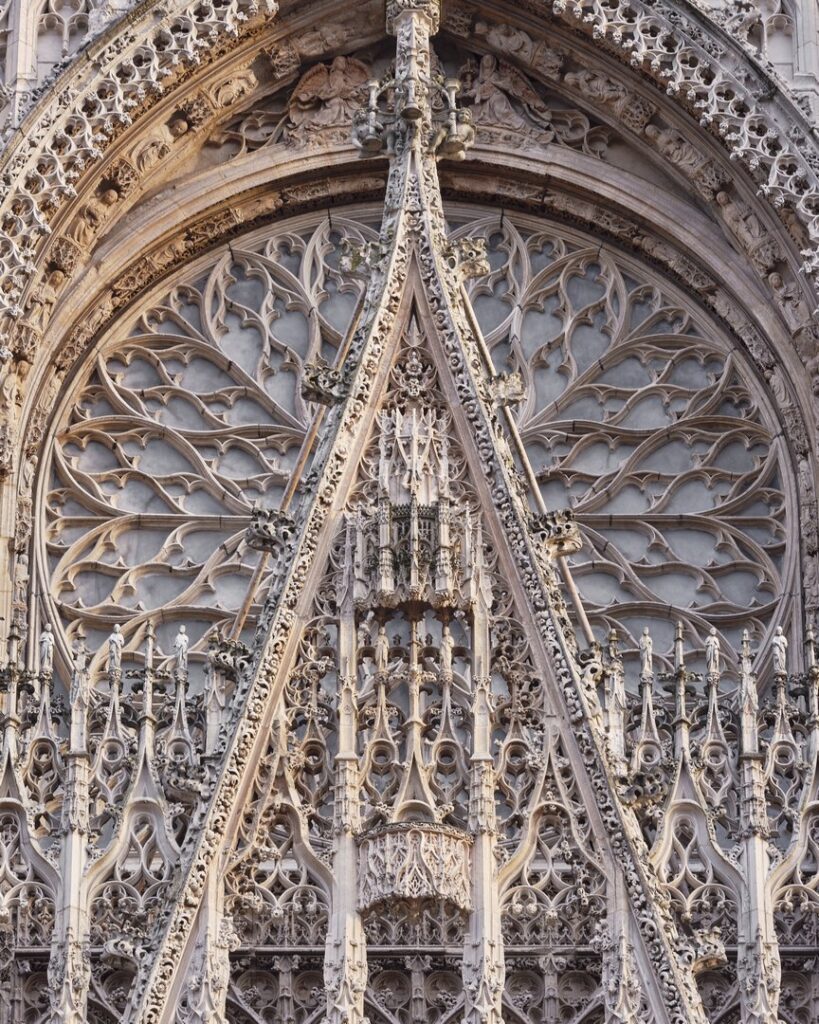
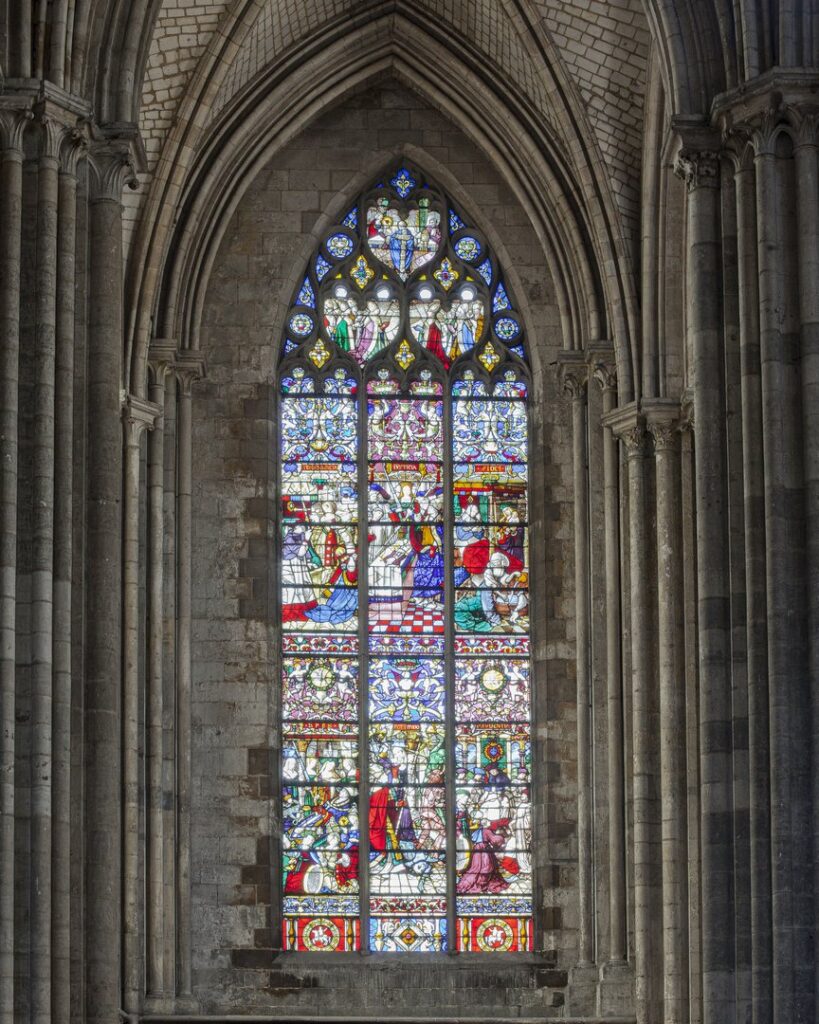
Once through the door, the monument reveals a whole new dimension. Officially known as the Primatial Cathedral of Notre-Dame-de-l’Assomption, it is one of the finest masterpieces of French Gothic architecture. Built on the foundations of a Romanesque cathedral begun in the early 11th century, it was rebuilt from the mid-12th century onwards and further embellished until the early 16th century. The completion of the Beurre Tower in 1506 marked the end of nearly five centuries of construction work.
From builders to illustrators
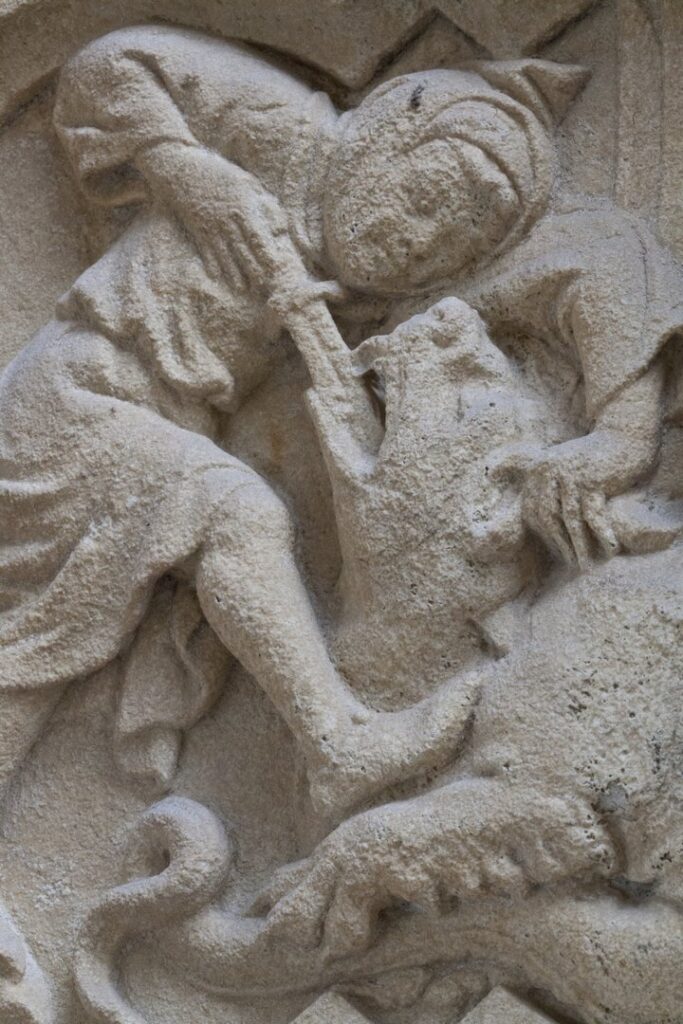
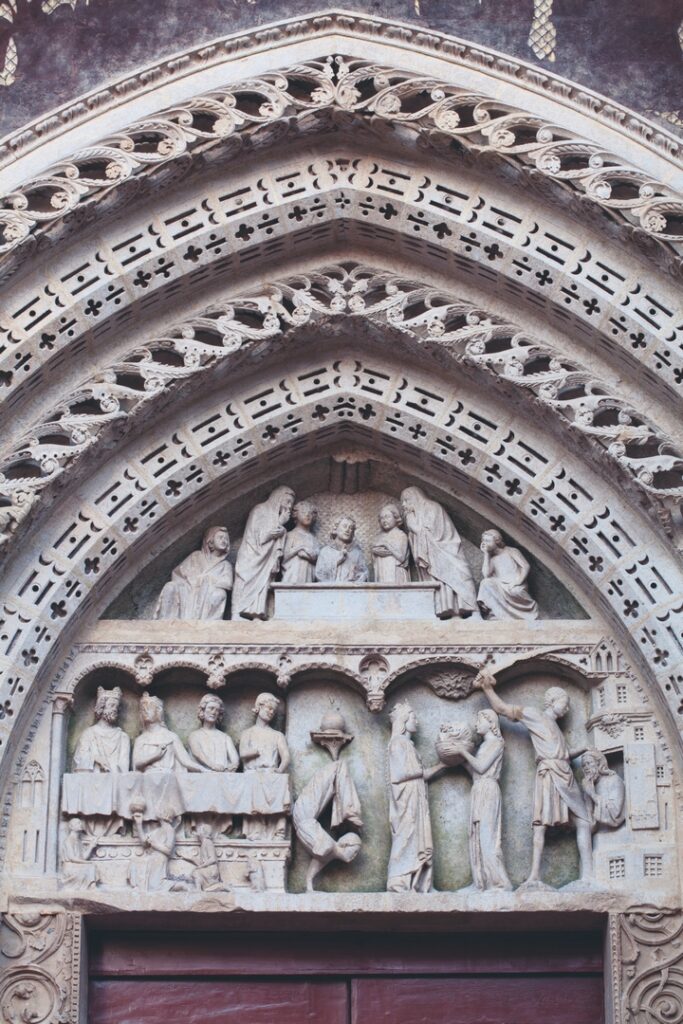
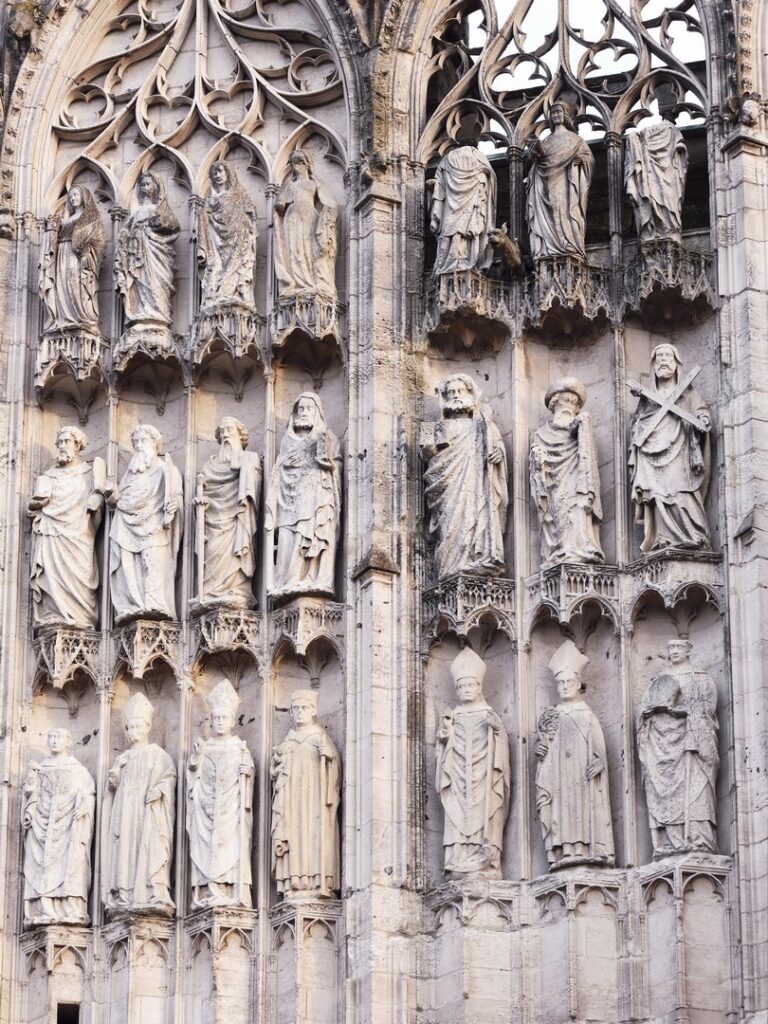
Its façade displays a magnificent lacework of stone, featuring some seventy large sculpted figures in succession. Behind each of them lie generations of builders who devoted their lives to erecting vaults, carving capitals or chiselling faces, without ever seeing the finished work.
The sculptors occasionally allowed themselves a touch of whimsy. Above the Last Judgement portal, a bearded figure appears to be swallowing two swords, like an astonishing sword-swallower. The image is, however, highly symbolic: it depicts Christ of the Apocalypse, shown with the double-edged sword which, according to the biblical text [«out of his mouth comes a double-edged sword » (Revelation 1:16)], emerges from his mouth to embody the power of his word and his judgement.
From the Vikings to the Plantagenets
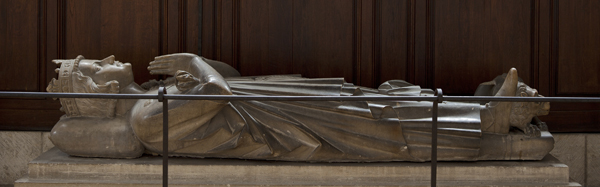
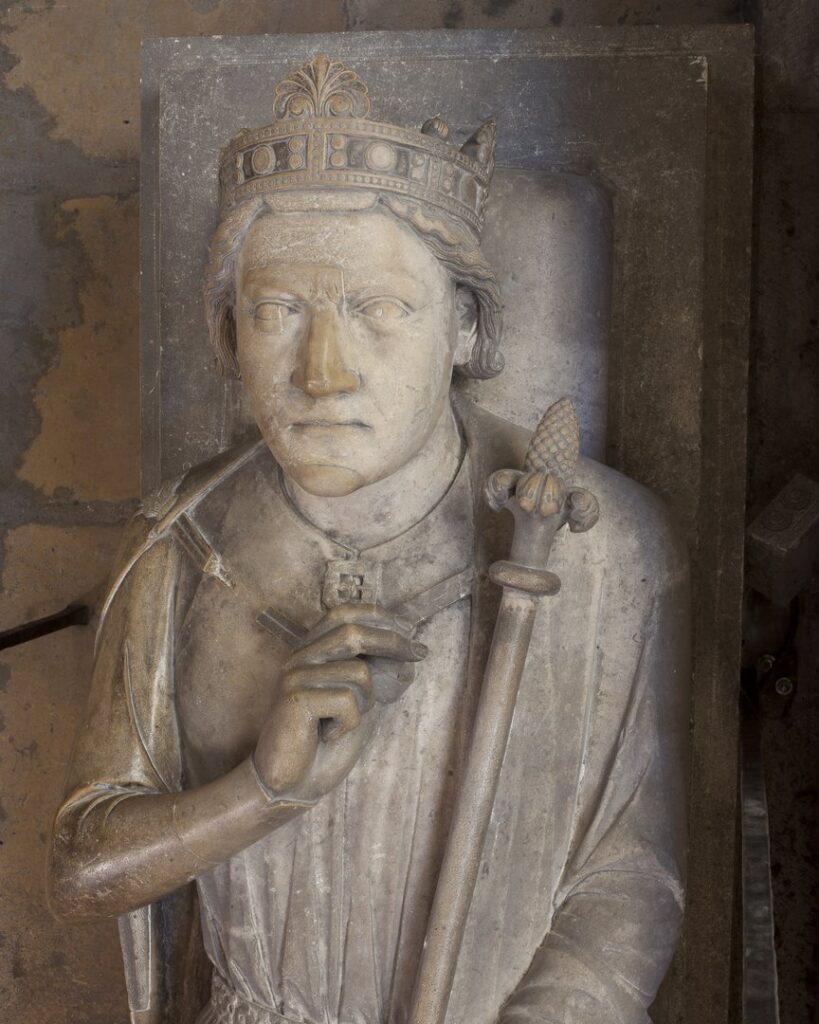
In the dim light lies Rollon – or at least his recumbent effigy. The monument visible today is a reconstruction: the original was destroyed during the bombings of 1944. Some historians, however, suggest that his remains were transferred to Fécamp Abbey in the 17th century, although there is no conclusive evidence to support this theory.
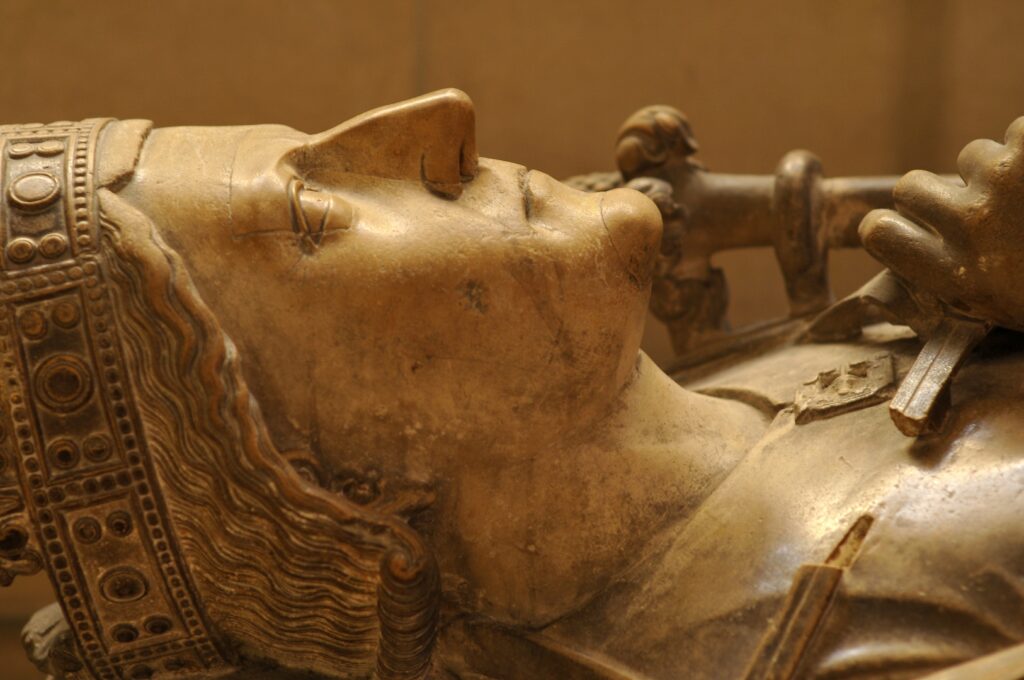
As you continue towards the chancel, another illustrious name catches the eye: that of Richard the Lionheart. Duke of Normandy, but also of Aquitaine, Count of Poitiers, Maine and Anjou, he was, above all, King of England. A historical paradox: during his ten-year reign, he spent little more than six months on English soil.
Proof of his attachment to Normandy: his « invincible heart », who was embalmed after his death in 1199, was placed in a lead urn, which was later topped with a recumbent statue bearing his likeness. The inscription can still be read there: Here lies the heart of King Richard of England (« Here lies the heart of Richard, King of England »).
© Rouen Normandy Tourism.
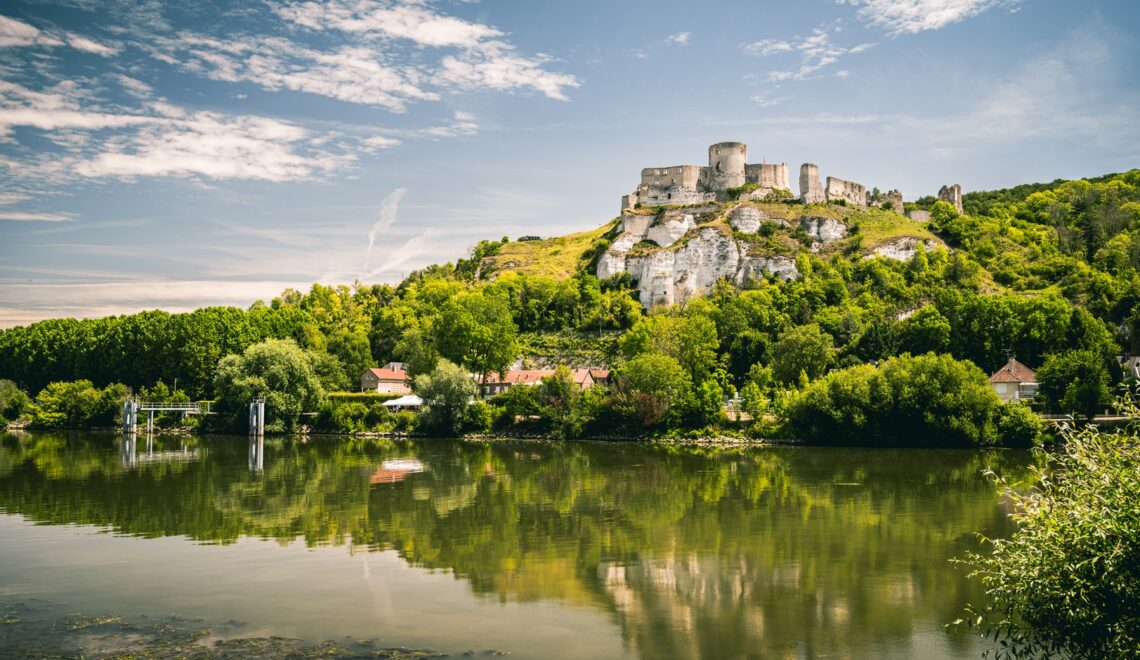
Château-Gaillard: Richard the Lionheart’s final challenge
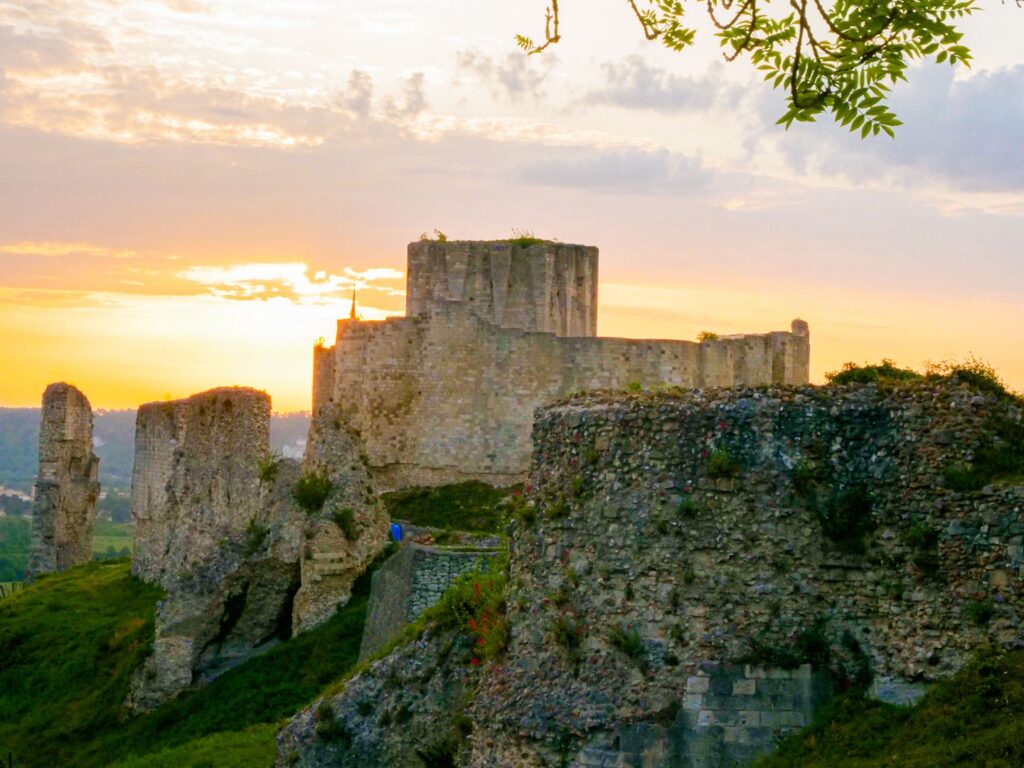
More than eight centuries have passed. The vast empire of the Plantagenets fell apart, Château-Gaillard, its impregnable fortress, is now nothing more than a stone silhouette clinging to the cliffs of the Andelys. Yet, within Rouen Cathedral, there remains a unique presence: that of the heart of Richard the Lionheart. Every year, visitors from across the Channel come to pay tribute to this figure, who continues to foster a close bond between Normandy and England.
From the Gros-Horloge to the Place du Marché
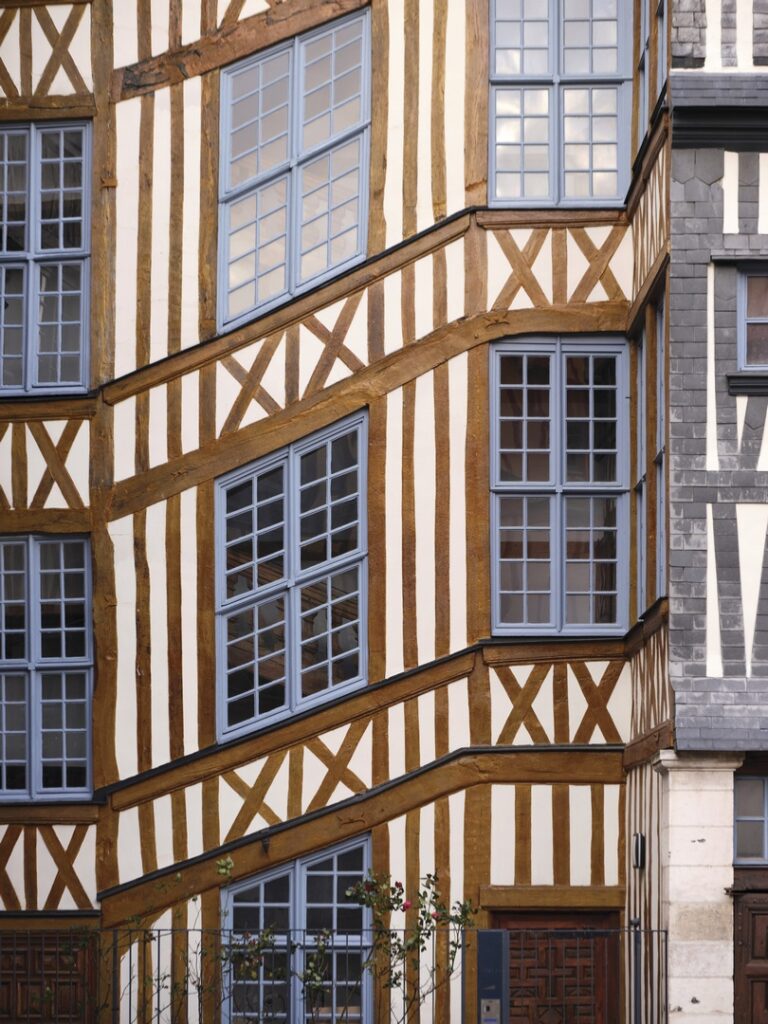
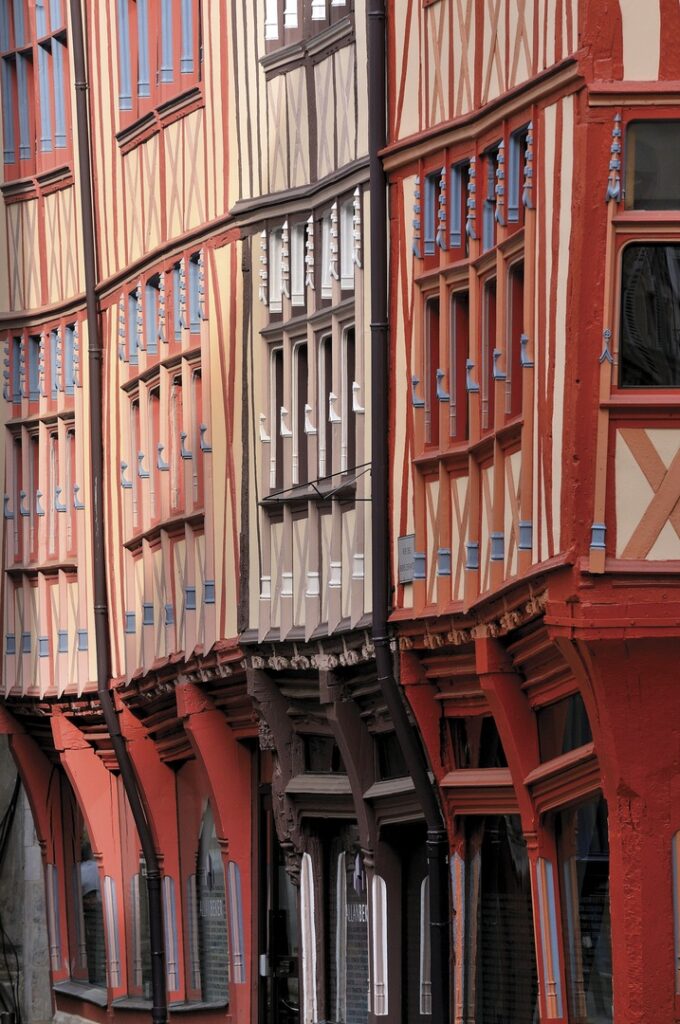
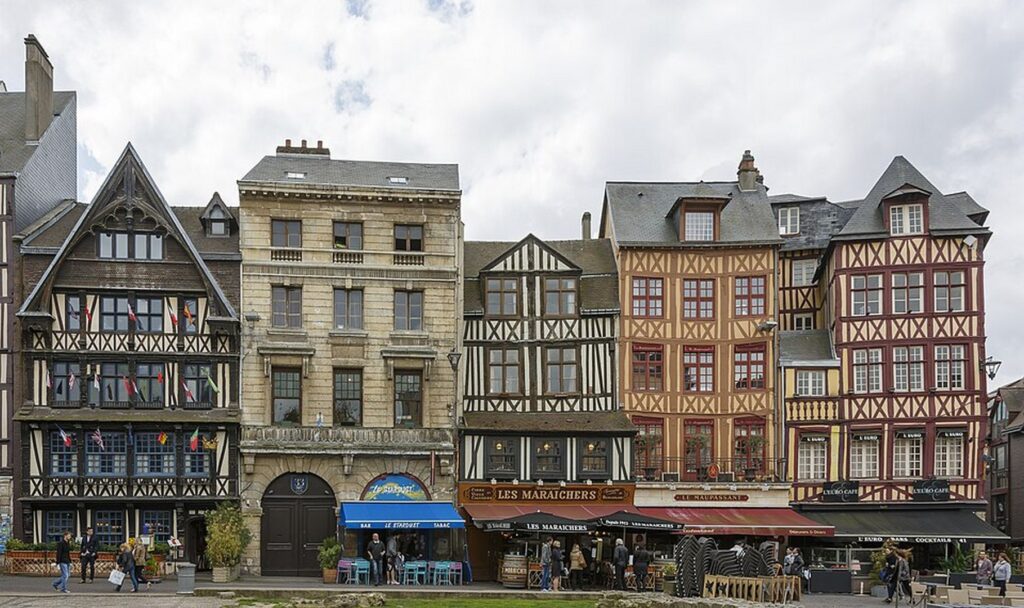
Around the cathedral, Rouen gracefully unfolds its medieval labyrinth. The half-timbered houses form elegant, irregular patterns, wrought-iron signs sway gently above the cobbled streets, whilst the squares emerge like clearings at the bend of an alleyway. In just a few minutes, you reach one of the city’s most iconic streets: Rue du Gros-Horloge.
All you have to do is forget the Rouen of today. Imagine the clatter of hooves on the cobblestones, the creaking of carts, the cries of the merchants. In the Middle Ages, Rouen was one of the most prosperous cities in the Kingdom of France. The River Seine brought it wealth: ships sailed up from the coast laden with cloth, wine, grain, spices and other goods from all over Europe. Merchants thrived, churches were built, and mansions sprang up. The city asserted its power.
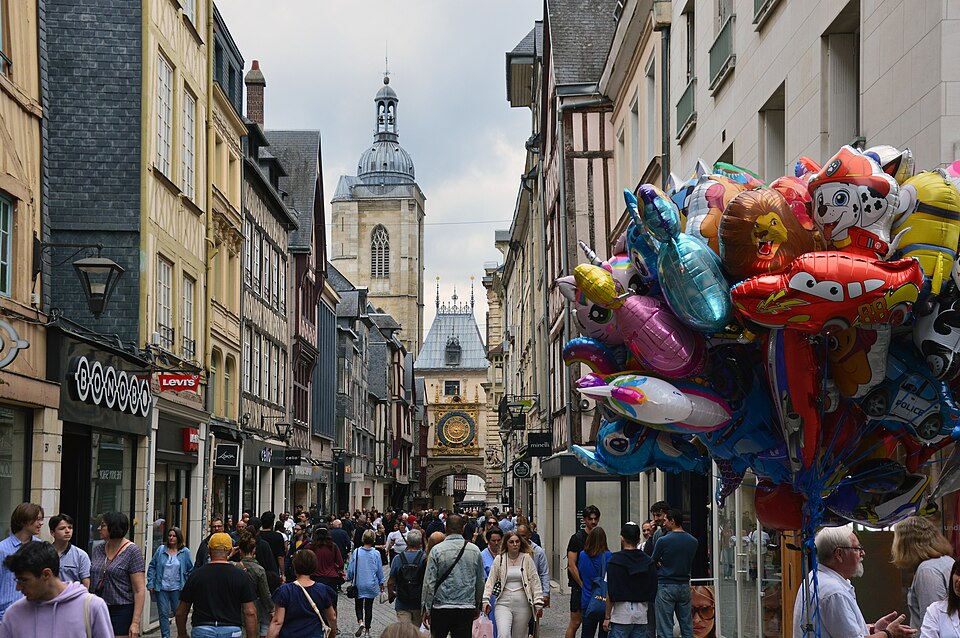
Passing under the Renaissance arch of the Gros-Horloge marks the entrance to the famous pedestrianised street of the same name. Look up: the astronomical clock, installed at the end of the 14th century, continues to mark the rhythm of life for the people of Rouen. For over six centuries, its face has witnessed religious processions, royal processions, popular uprisings, epidemics and wars.
© Dimi Talen/Commons.
At the heart of the memory of Joan of Arc
A few hundred metres further on, we arrive at the Place du Vieux-Marché, where Joan of Arc was burned at the stake on 30 May 1431.
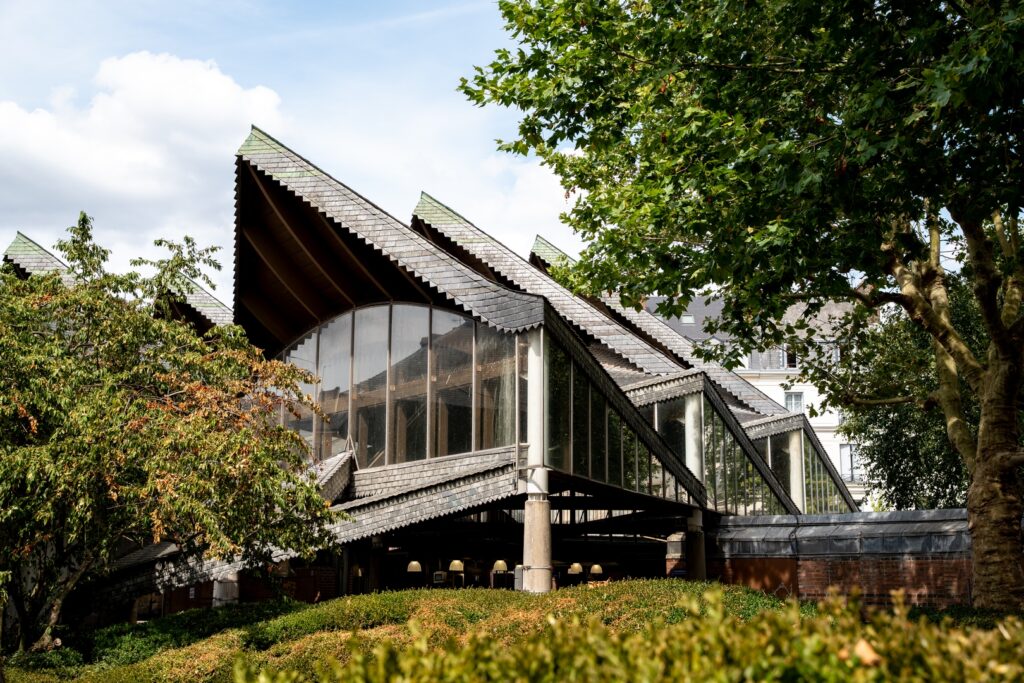
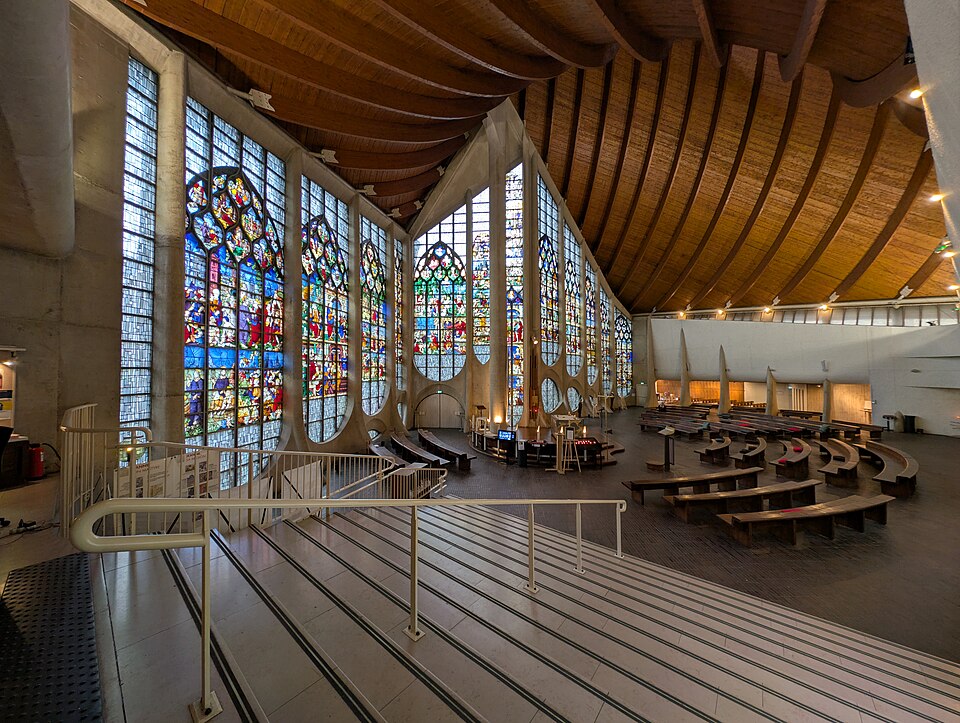
What remains of that moment today? A statue and a church. Built nearly five and a half centuries after the execution, theChurch of St Joan of Arc was consecrated in 1979. It first strikes visitors with its modern architecture. Designed by Louis Arretche, it seems to rise up from the square like a huge ship that has run aground in the middle of the old town. Some see it as the upturned hull of a Viking ship. Others see the flames of the stake. Perhaps it is both. Near the church, a large cross marks the site of her execution. And a statue depicts Joan at the stake.
Inside the Church of St Joan of Arc in Rouen. © Andi Li/Commons.
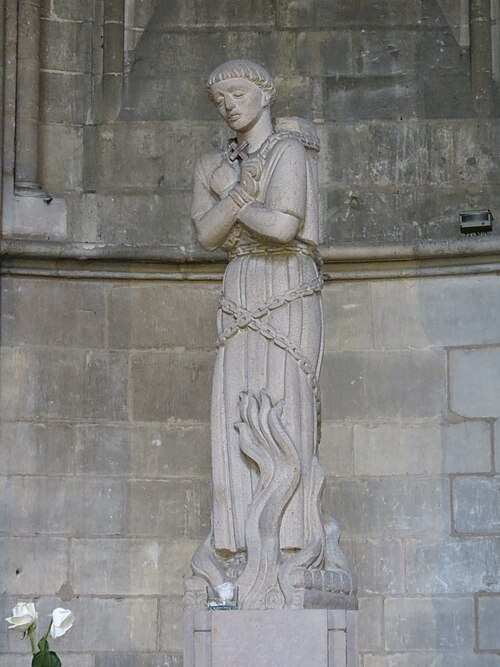
It is 30 May 1431. The Hundred Years' War The kingdom is in ruins and Rouen is in the hands of the English. A nineteen-year-old girl is led to the stake: Joan of Arc. Two years earlier, she had liberated Orléans before leading Charles VII in Reims for her coronation. Captured near Compiègne and sold to the English, she was tried for heresy in Rouen. In the square, she asked for a cross to be handed to her. Then the fire was lit. The flames engulfed her, but her fate became the stuff of legend.
Joan of Arc at the stake, a work by Maxime Real del Sarte produced in 1927 in collaboration with Roger de Villiers. With her hands clasped across her chest and her eyes turned towards the heavens, the young martyr is depicted in a final act of faith, whilst flames rise at her feet.
© Giogo/Commons.
Rouen, a city that’s as much a delight to savour as it is to explore
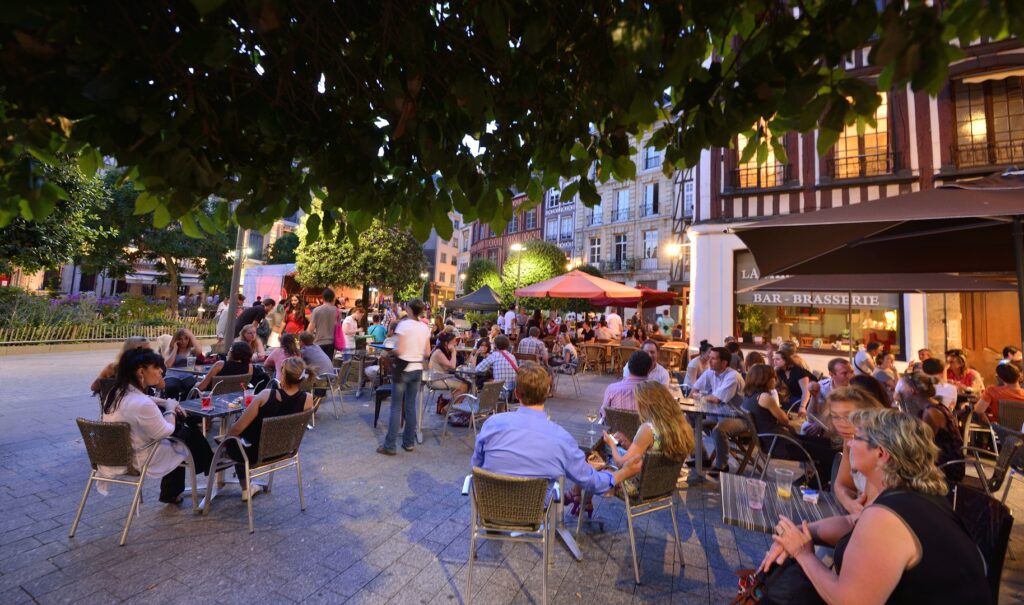
We’d come to admire a cathedral. In the end, we found ourselves lingering in the whole town. A terrace overlooking an old square, a glass of cider, a few oysters from the Normandy coast, a mature cheese from the Bray region or an apple dessert make the walk last a little longer. Here, the landscape is reflected on your plate: the Seine, the orchards and the pastures all come together to form a single landscape of flavour.
At the dinner table, Normandy continues to tell its story. The Rouen-style escalope, the « Joan of Arc’s tears », the mirliton from Rouen or the teurgoule – a rice pudding baked slowly in the oven and delicately flavoured with cinnamon – keep the journey going long after your last visit.
We leave Rouen feeling as though we have journeyed through more than a thousand years of history. And we set off to visit the fortress of Château-Gaillard.
Text : Michèle Lasseur
Photos : As indicated
Photo opening : Benoît Eliot
Rouen Tourist Office
Esp. Marcel Duchamp
76000 Rouen
Telephone : 02 32 08 32 40