
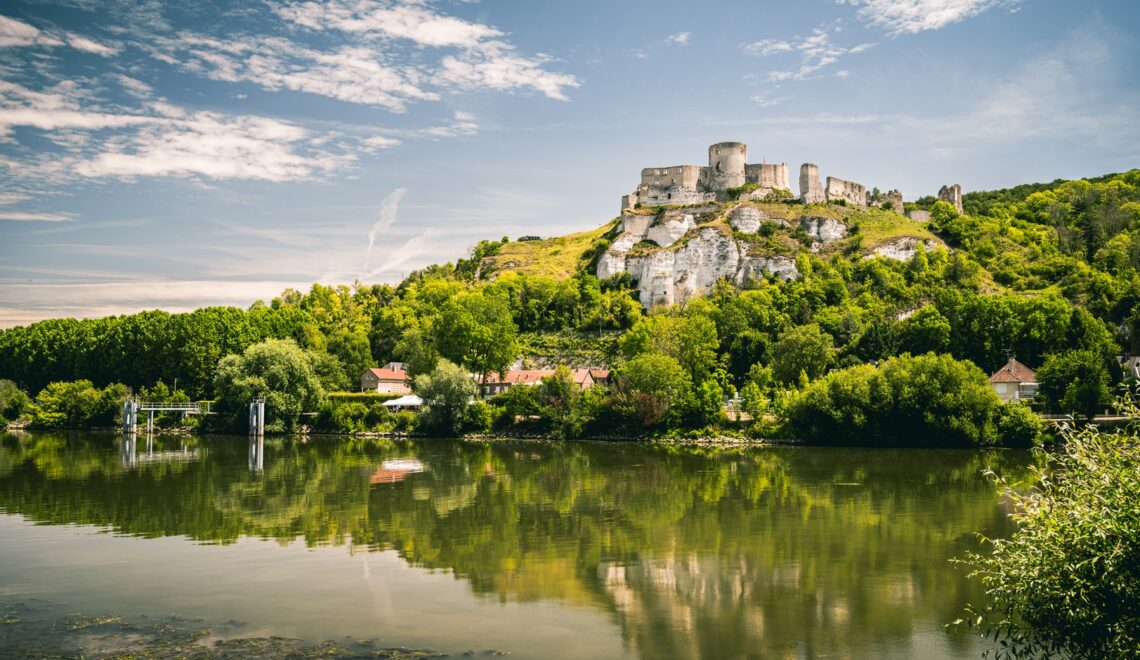
Overlooking one of the Seine’s most beautiful meanders for more than eight centuries, Château-Gaillard remains the symbol of medieval Normandy. Built by Richard the Lionheart to protect Rouen, this fortress is a meeting point of history, architecture and exceptional landscapes. From the chalk cliffs to the narrow streets of Les Andelys, from the light-drenched ramparts to the panoramic views that inspired Turner and Signac, this journey through time is an invitation to contemplate one of France’s most beautiful valleys.
Table of Contents
The most scenic route to Château-Gaillard begins in Petit-Andely. Old houses line the banks of the Seine in peaceful tranquillity, whilst, high above the slate-roofed houses, the silhouette of the fortress seems to float between the sky and the cliff. It dominates the valley so naturally that it is hard to imagine the landscape without it.
The climb to Château-Gaillard: the gateway to Rouen
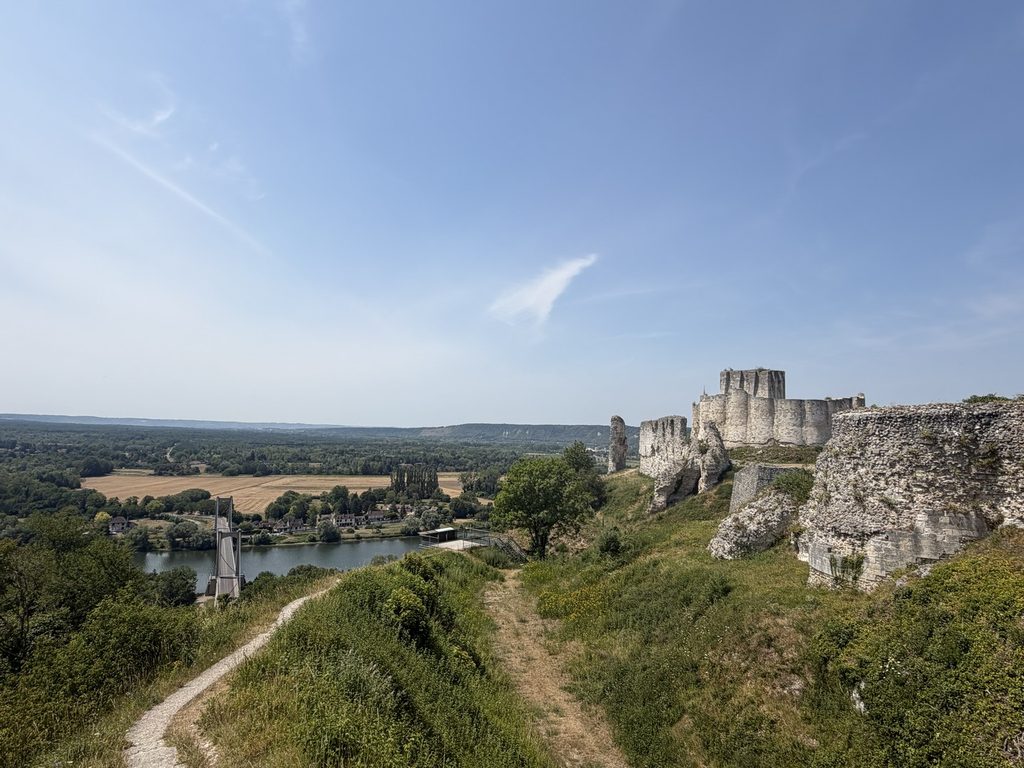
The path climbs gradually up the limestone hillside. The gardens give way to dry grasslands, where wild orchids, thyme, wild thyme and other plants typical of the Normandy cliffs bloom in spring. In the sky, peregrine falcons soar on the updrafts, whilst the wind carries the scents of the sun-warmed grasses.
With every bend, the view widens. The Seine winds its way through wide meanders amongst poplars, meadows and wooded hillsides. Barges glide along the river; they have replaced the merchant ships that once brought wealth to Normandy.
Richard the Lionheart, Lord of the Cliff
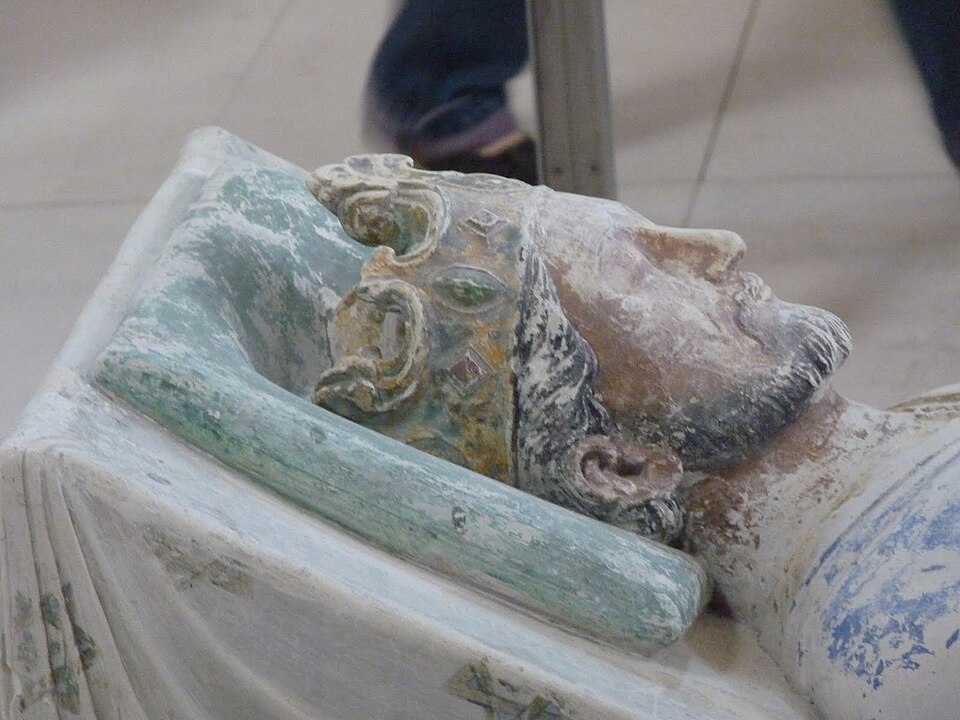
Imagine a king standing on a chalk cliff, looking out over the winding course of the River Seine. The wind blowing up from the valley lifts his cloak as his gaze follows the river as far as Rouen, the capital of his Duchy of Normandy. This man is Richard the Lionheart. He has just returned from the Crusades, having been held captive first by the Duke of Austria and then by the Holy Roman Emperor Henry VI (1165–1197), confronted Saladin ; but his fate now hangs in the balance on this hilltop in Les Andelys. Faced with the view, visitors immediately understand why Richard had chosen this strategic vantage point to command the entire valley.
The year is 1196. Normandy is under threat. Richard is facing the growing ambitions of the King of France, Philip Augustus (1165–1223). Rouen, the city of the archbishops, a major port on the Seine and the capital of the duchy, was under threat. Whoever wished to rule Normandy had to hold Rouen. And to defend Rouen, one had to control the valley.
Richard therefore decided to build a fortress capable of controlling the Seine valley, blocking the route to Rouen and reminding Philip Augustus that the Duchy of Normandy is not to be taken.
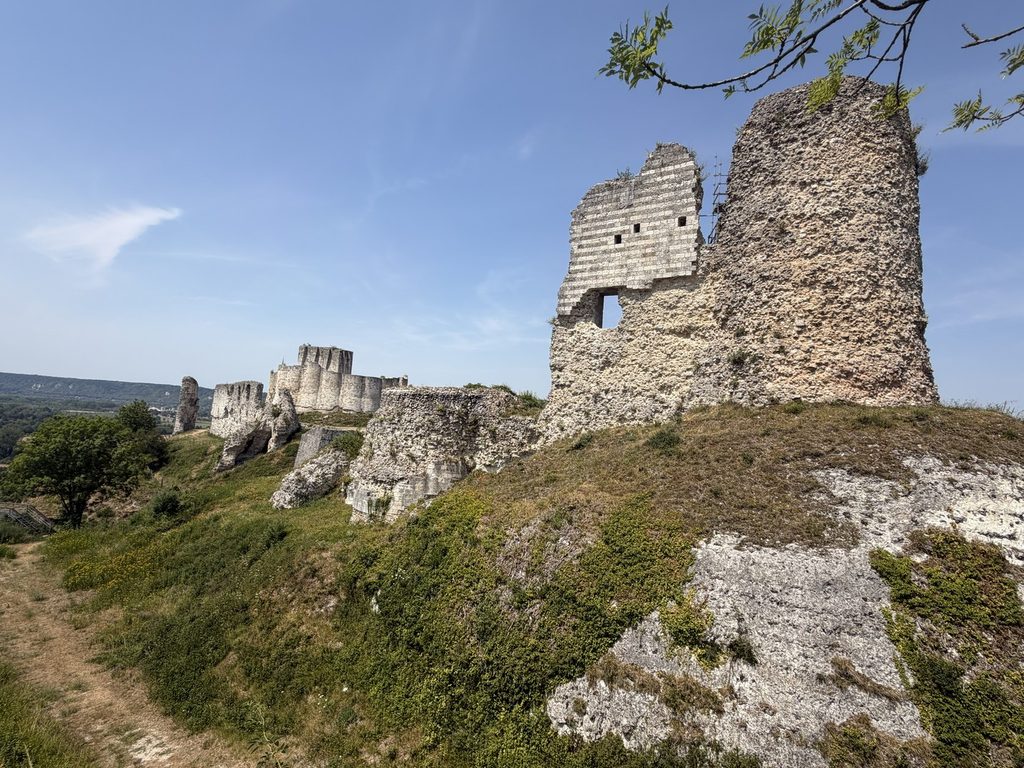
In less than two years, the fortress rose above the cliffs. Thousands of labourers hewed the chalk, erected walls and dug moats into the rock. The name Château-Gaillard reflects its ambition: a bold, powerful, almost defiant castle. Curved ramparts, three successive walls and an imposing keep make it one of the masterpieces of medieval military architecture.
Richard is looking on as the work progresses and is so proud of it that he is said to have remarked: « My one-year-old daughter is so beautiful! » As if this building had become an extension of his own destiny."
But history is cruel. Three years after the completion of Château-Gaillard, Richard died in 1199 outside the castle of Châlus-Chabrol, in the Limousin region, struck by a crossbow bolt.
The fortress reputed to be impregnable
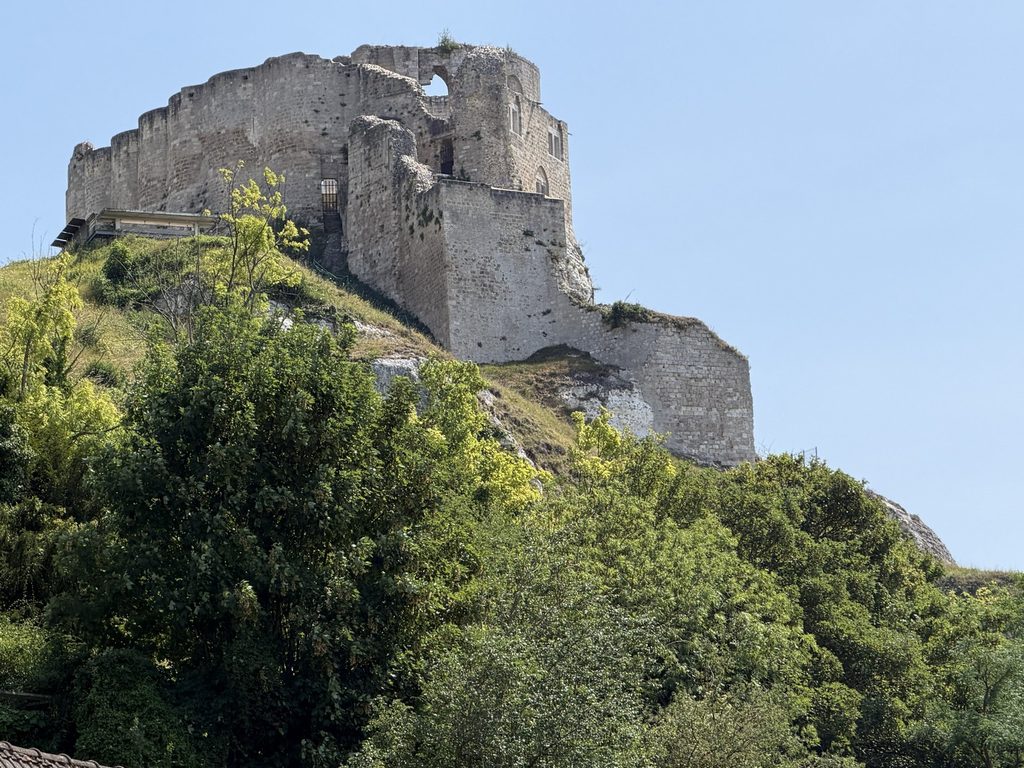
Philippe-Auguste was biding his time. In 1203, he laid siege to Château-Gaillard. For months, those under siege held out. Gradually, the French managed to breach the various lines of defence and, in March 1204, the fortress, reputed to be impregnable, fell.
The road to Rouen is now open. The capital of Normandy has surrendered and opened its gates to Philip Augustus. With the fall of this stronghold, the King of France’s conquest of mainland Normandy is complete. And so ends a history spanning nearly three centuries, which began with the first Norman dukes, whose descendants went on to conquer the throne of England.
But even in death, Richard continues to watch over this Norman land that he had sought to protect with one of the most daring fortresses of the Middle Ages. His heart rests in Rouen Cathedral, not far from his ancestor Rollon, the first Duke of Normandy, whilst his body was buried at theFontevraud Abbey.
A stroll through the fortress
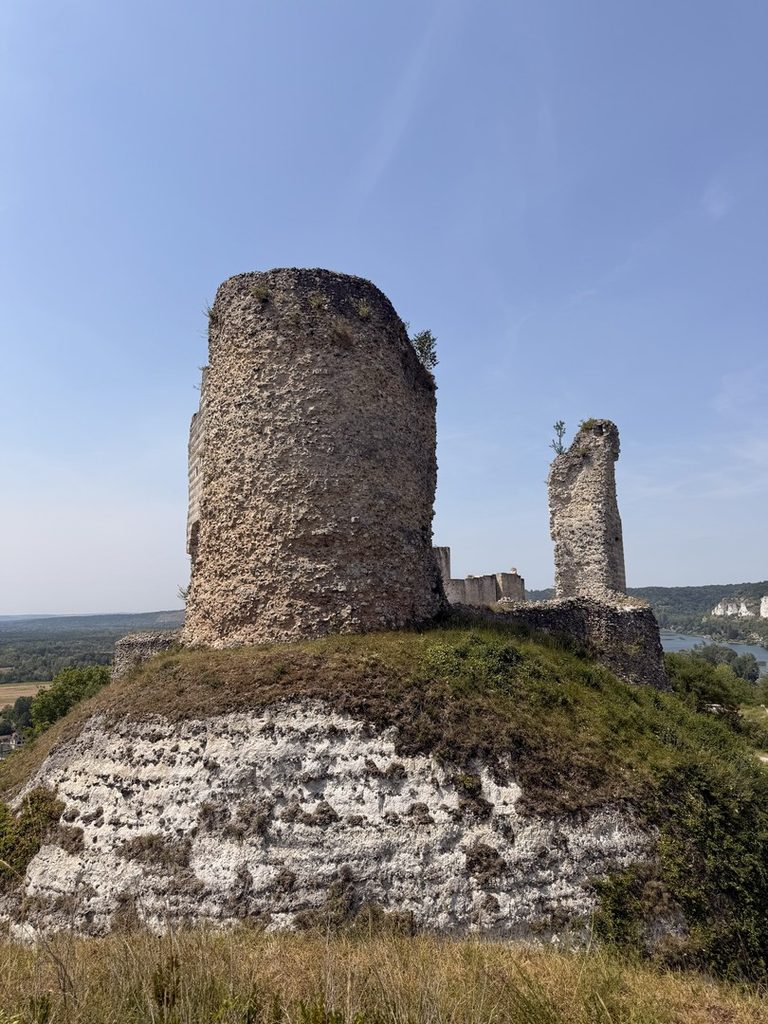
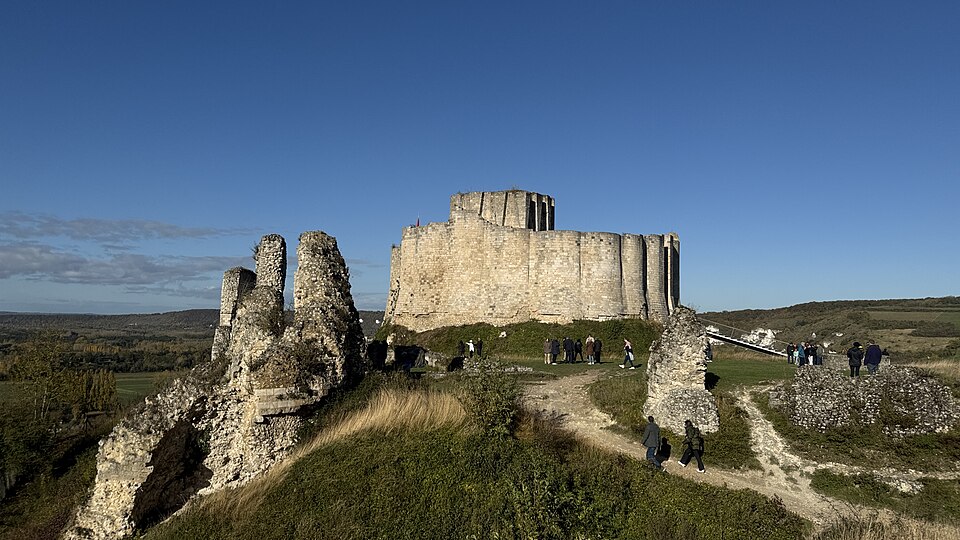
On this July afternoon, Les Andelys seems to lie dormant at the foot of the fortress ruins: the towers stand open to the sky, the walls blend into the whiteness of the cliffs, and the Seine winds its way several tens of metres below. The fortress was the gateway to the Seine valley, the sentinel of Rouen, and the shield of the ducal capital.
The ruins tell the story of the Middle Ages. Upon entering the castle, visitors discover the remains of the ramparts, which reveal the ingenuity of the builders, whilst the moats carved into the rock bear witness to the project’s defensive ambition.
The walk leads to the ancient courtyards and the bases of the towers. From the keep, the view is breathtaking. The Seine flows like a silvery ribbon, and the lush green hillsides invite you to lose yourself in reverie.
It then becomes clear that Château-Gaillard is not just a fortified castle: it is a vast viewpoint overlooking Normandy that seems to have been created for painters.
An artists’ landscape
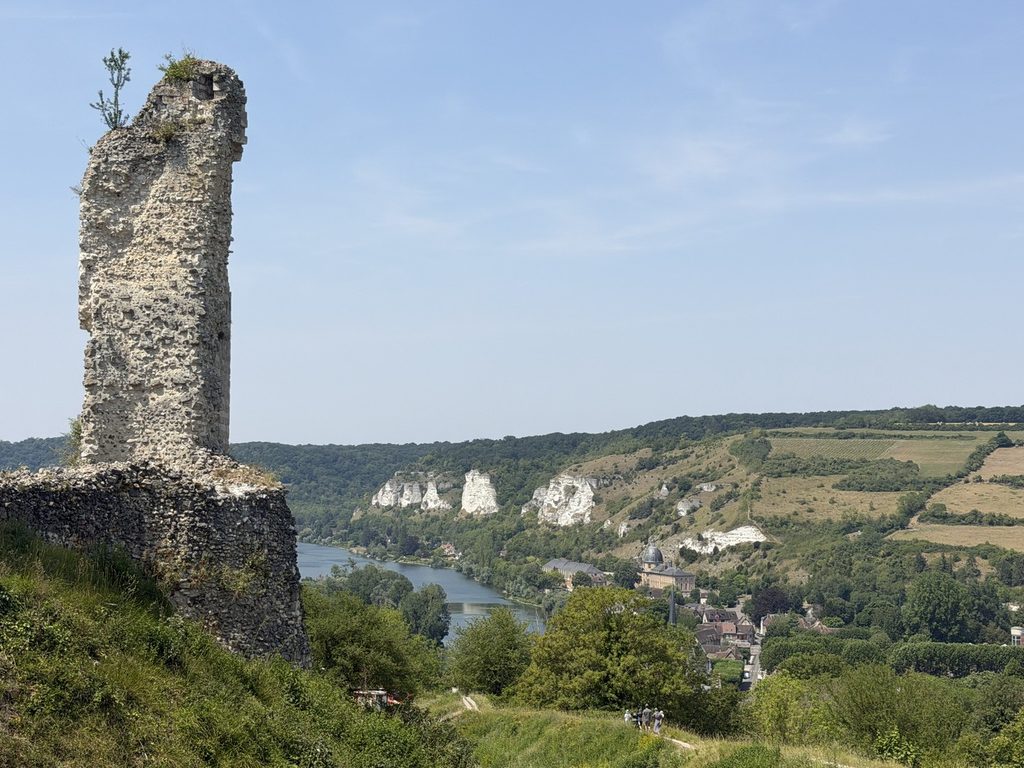
Turner: Light Before the Ruins
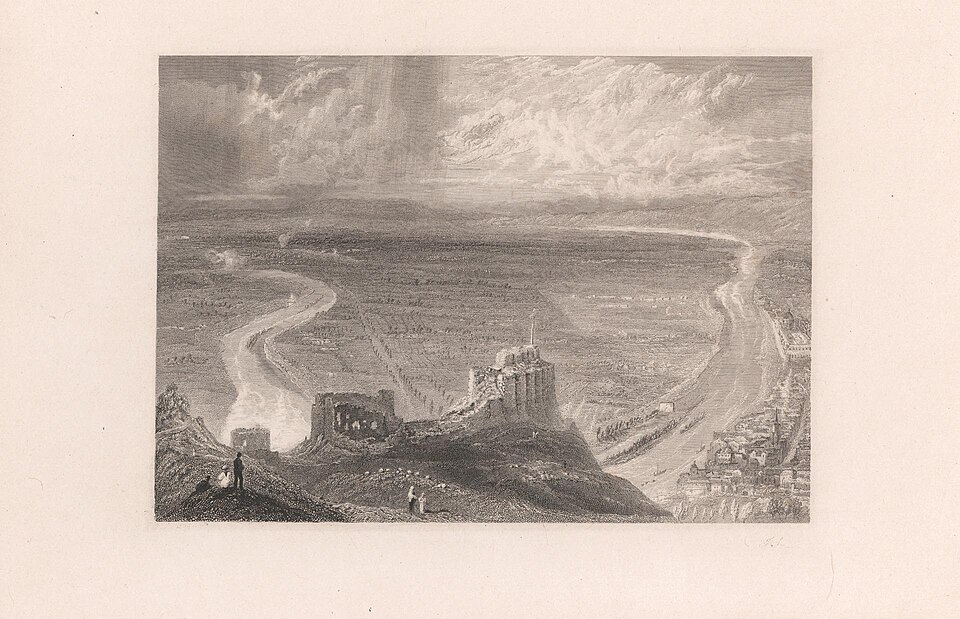
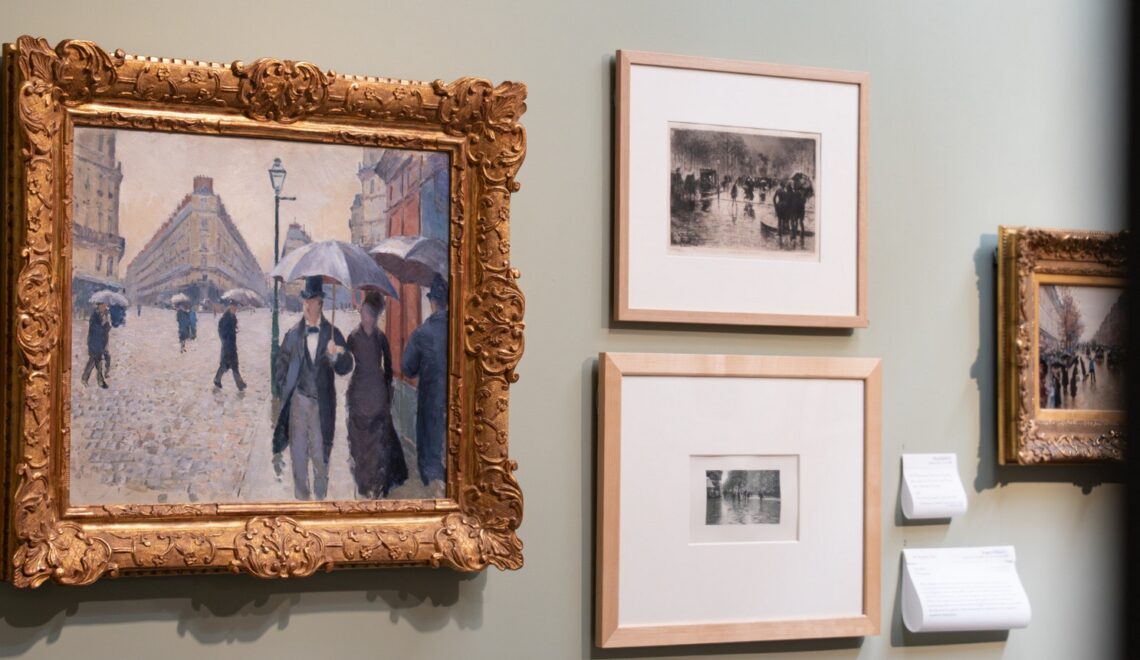
In the spring of 1832, Joseph Mallord William Turner (1775–1861) discovered Les Andelys and Château-Gaillard. From the heights, he produced numerous sketches of the fortress, the river and the valley, which would form the basis for several watercolours, including Château Gaillard, from the south and Château Gaillard, as seen from the east. In this latter painting, the ruins open out onto the vast meander of the Seine: even more so than the fortress, it is the landscape that takes centre stage, with the river’s curves, the cliffs and that shifting light, which Turner has already made the true subject of the work. The ruins occupy a discreet place here; the true heroine is the valley of the Seine, bathed in an almost unreal light. Turner was already captivated by the play of light, the reflections on the river and the variations in the sky which, a few decades later, would fascinate the Impressionists.
Signac: The Seine in Colour
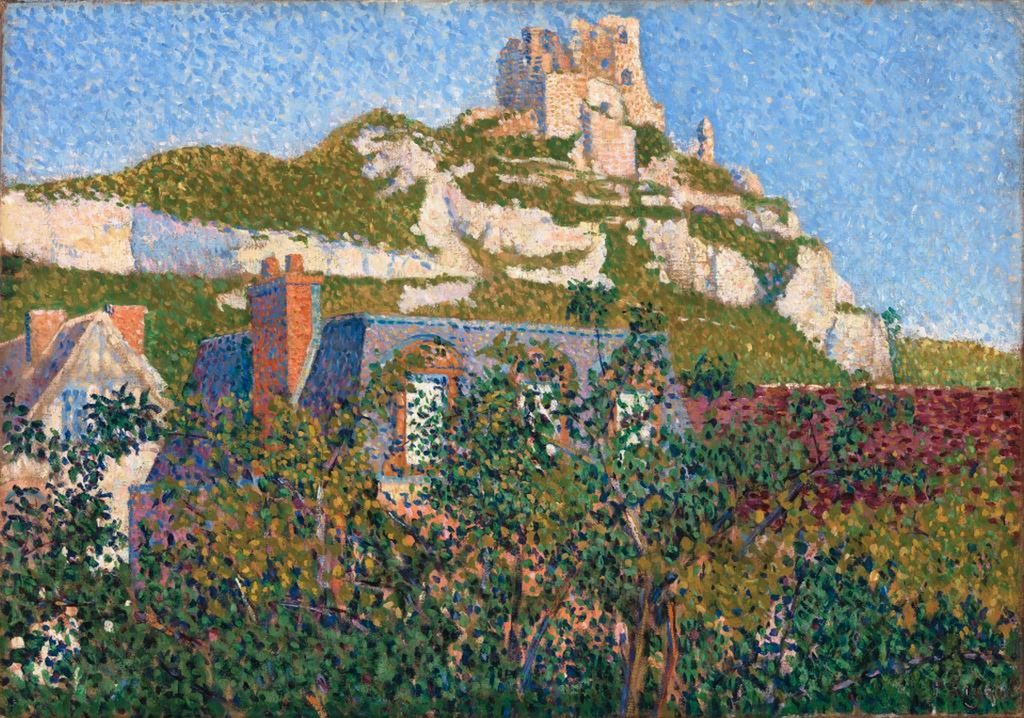
When Paul Signac (1863–1935) stayed in Les Andelys in 1886; he was only 22 years old. There, he met, amongst others, Lucien Pissarro (1863–1944), son of Camille Pissarro (1830–1903), with whom he painted during the summer. Settling in Petit-Andely for three months, Signac tirelessly explored the valley, the banks of the Seine, the cliffs and the silhouette of Château-Gaillard. The same scenery that Turner had contemplated half a century earlier. He sketched the valley and produced watercolours of the suspension bridge, the riverbanks and the cliffs before setting up his easel in front of the fortress. The light changes with the passing hours, and the waters of the Seine reflect the clouds: the landscape becomes a veritable laboratory of colour.
That year, as the Neo-Impressionism, he produced several major works, including Château-Gaillard, as seen from my window (Petit-Andely) and Les Andelys, the riverbank (at the Musée d’Orsay): the painter depicts the river flowing in the summer light. Other paintings, such as Les Andelys, the Quay or Les Andelys, downstream side, bear witness to this same fascination with the meeting of the river, the cliffs and the fortress.
Under his brush, the ramparts blend into a mosaic of colours, where the green of the hillsides, the grey-green of the Seine and the dazzling whiteness of the cliffs all come to life. The medieval fortress is now an integral part of the landscape.
A landscape that keeps coming back
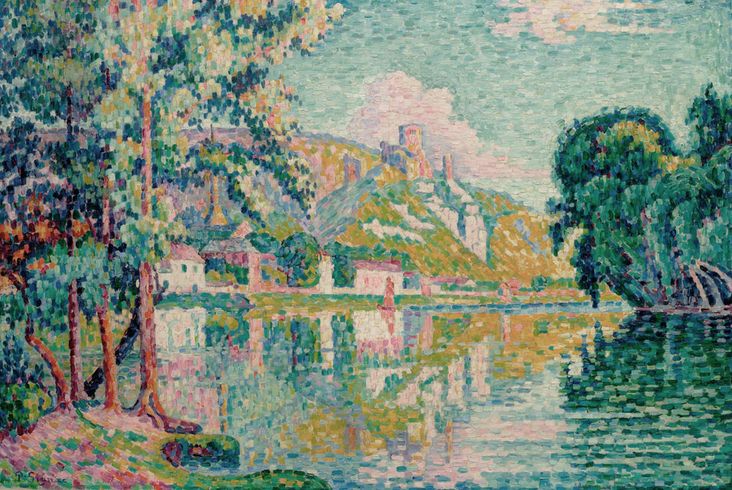
35 years later, Signac returned to this motif with Les Andelys, Château-Gaillard (1921). His artistic vision had matured, and his palette had grown richer. The castle was no longer merely a medieval fortress; it became the focal point of a panorama in which the Normandy light seemed to dissolve the stones in a flash of blues, greens and ochres.
As the sun sets over the meandering course of the Seine, Château-Gaillard is much more than just a ruined castle. It is a magnificent vantage point overlooking the valley and an ideal spot from which to appreciate just how much the Seine has shaped Normandy’s landscapes, history and trade over the centuries.
Les Andelys and the Seine Valley
Hiking enthusiasts will find plenty of trails on the hillsides, whilst cyclists can join the “La Seine à Vélo” cycle route, which links Paris to the sea as it follows the river. A river cruise also offers a magnificent view of the cliffs and the castle.
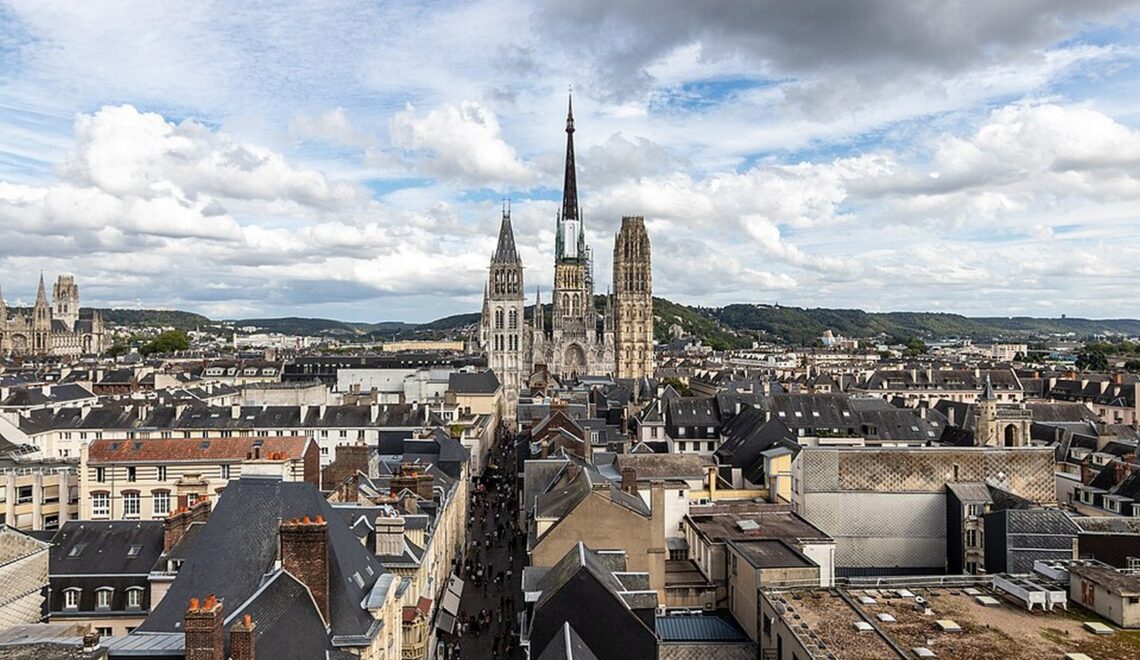
About 40 kilometres downstream, Rouen continues this journey through history. Its cathedral, half-timbered houses, the Saint-Maclou district and the redeveloped quays serve as a reminder that the capital of Normandy was long protected by Richard the Lionheart’s fortress. A city not to be missed.
Les Andelys Tourist Office
2 Rue Grande
27700 Les Andelys
02 32 21 31 29
http://www.nouvelle-normandie-tourisme.com
Rouen Tourist Office
Esp. Marcel Duchamp, 76000 Rouen
Tel. 02 32 08 32 40
www.visiterouen.com
https://www.rouen.fr
Text : Michèle Lasseur
Photos : Michèle Lasseur and as indicated
Photo opening : OT-NNT © Aurelienpapa