
During a holiday with CroisiEurope, we discovered one of Africa’s most beautiful nature reserves: Chobe National Park in Botswana, the country’s third-largest wildlife park (after the Central Kalahari Game Reserve and Gemsbok National Park). A combination of boat and land safaris takes you deep into unspoilt wilderness where the only predators you’ll encounter are lions, leopards and crocodiles. Total escape guaranteed.
Table of Contents
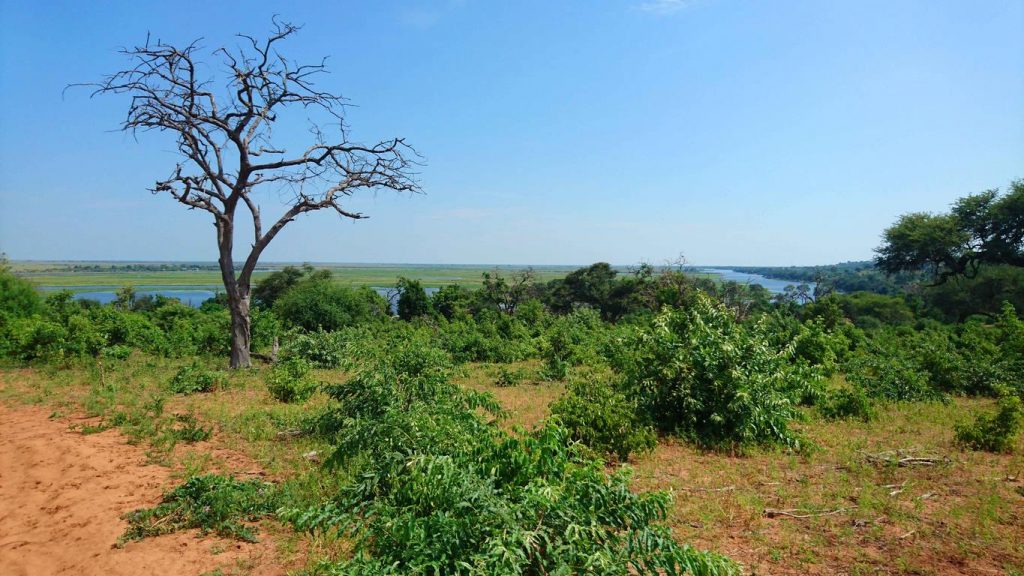
A small aeroplane is taking us from Johannesburg (South Africa) to Kasane in Botswana. Kasane is known as the gateway to the Caprivi Strip, a narrow strip of Namibian territory that winds its way between Angola, Botswana, Zimbabwe and Zambia. Surrounded by water and marshes, crossed by the Zambezi River and bordered by the Chobe River, which serves as a natural boundary with Botswana, this region is the ideal place to observe Africa’s iconic wildlife. A tributary of the majestic Zambezi River, the Chobe River winds its way through a vast plain, a lush green oasis in an otherwise rather arid region.
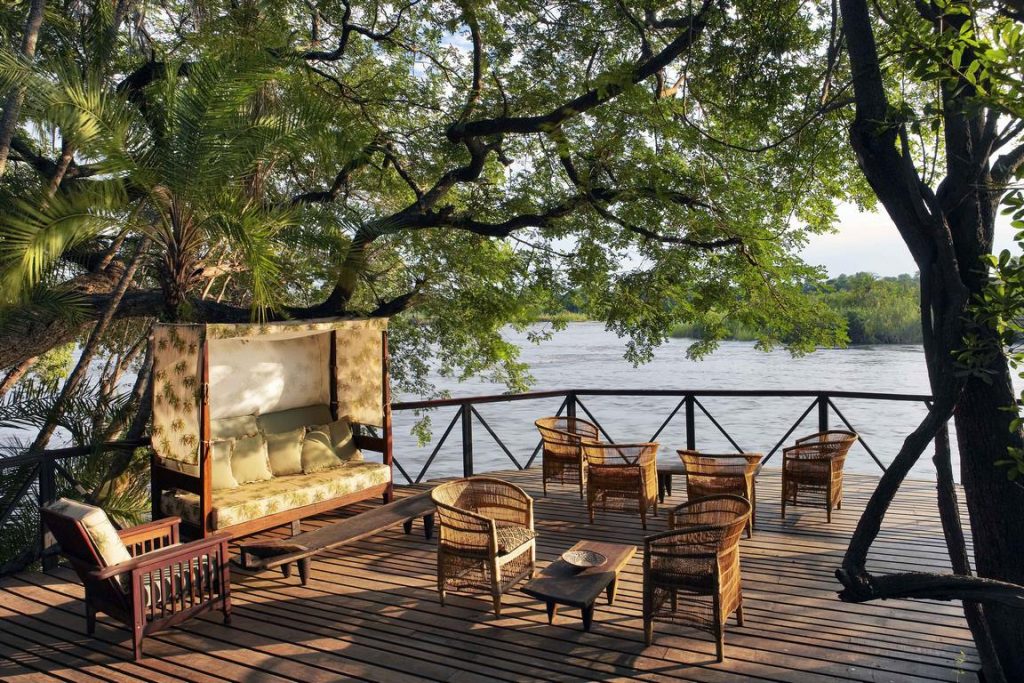
The CroisiEurope lodge is situated in Namibia, whilst the Chobe National Park – where the safaris in Botswana take place – is also located there. It is an exceptional spot for spotting the wildlife that lives there. Every day, we’ll cross the borders to reach this 12,000 km² haven, nestled between Namibia, Zimbabwe and South Africa. This unique wildlife reserve combines a landscape of vast plains, marshes and forests.
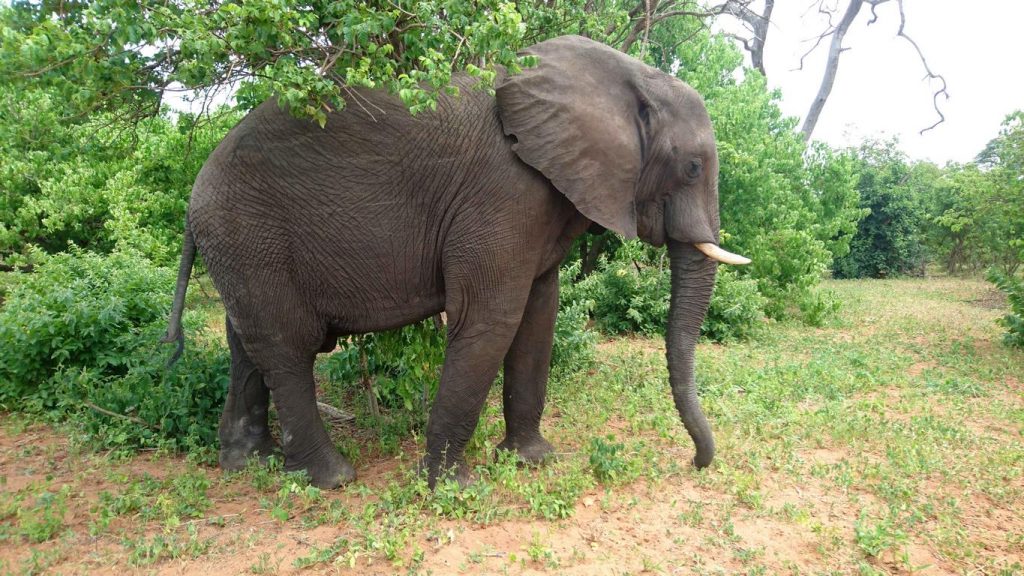
With great agility, the elephant uses its trunk to pick grass
Cascades Lodge
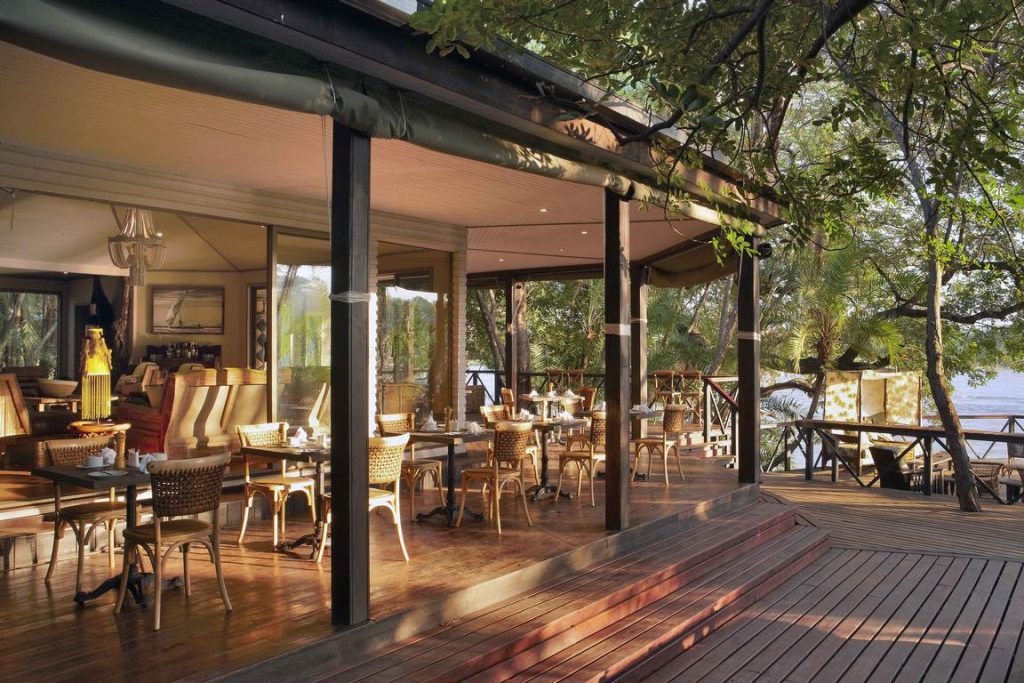
A haven of peace in the middle of nature, it will be our starting point for numerous excursions on the river, in the savannah and in the neighbouring villages.
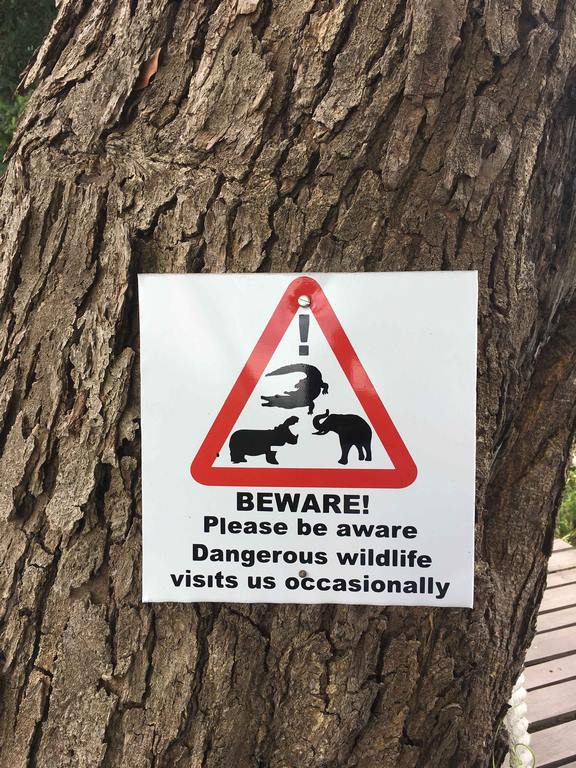
The eight 80 m² bungalows have been built with noble materials, wood and stone, and are decorated in a sober, chic colonial style, each with its own private outdoor pool. From the terraces of the light-coloured wooden rooms, overlooking the mighty Zambezi, you can hear the rolling of the river, the songs of the birds, the roars and hoarse grunts of the hippos wallowing in the nearby swamps. These bellowing sounds increase in intensity when they fight with their fellow hippos, sometimes at the cost of bloody battles, to conquer a female. At nightfall, they come out of the water to explore the riverbanks and go inland to graze. This is why an armed ranger keeps watch around the lodge at night.
In the kingdom of the big five
Every day, the animal theatre of the savannah stages its most legendary actors: the big five. That means lions, elephants, leopards, buffalo and hippos.
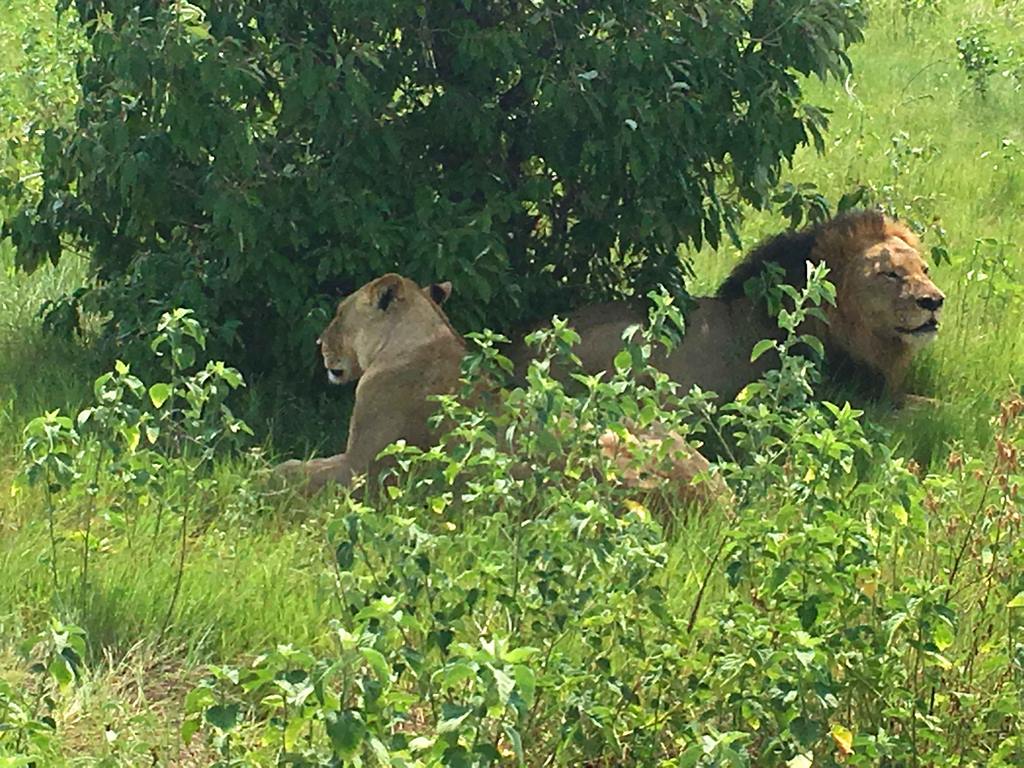
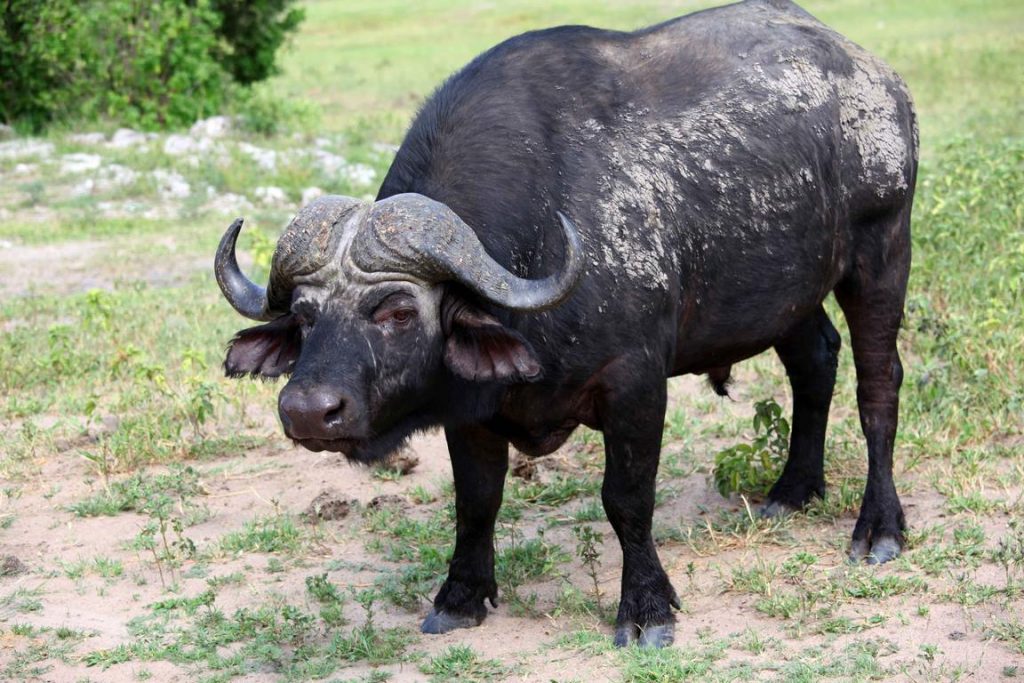
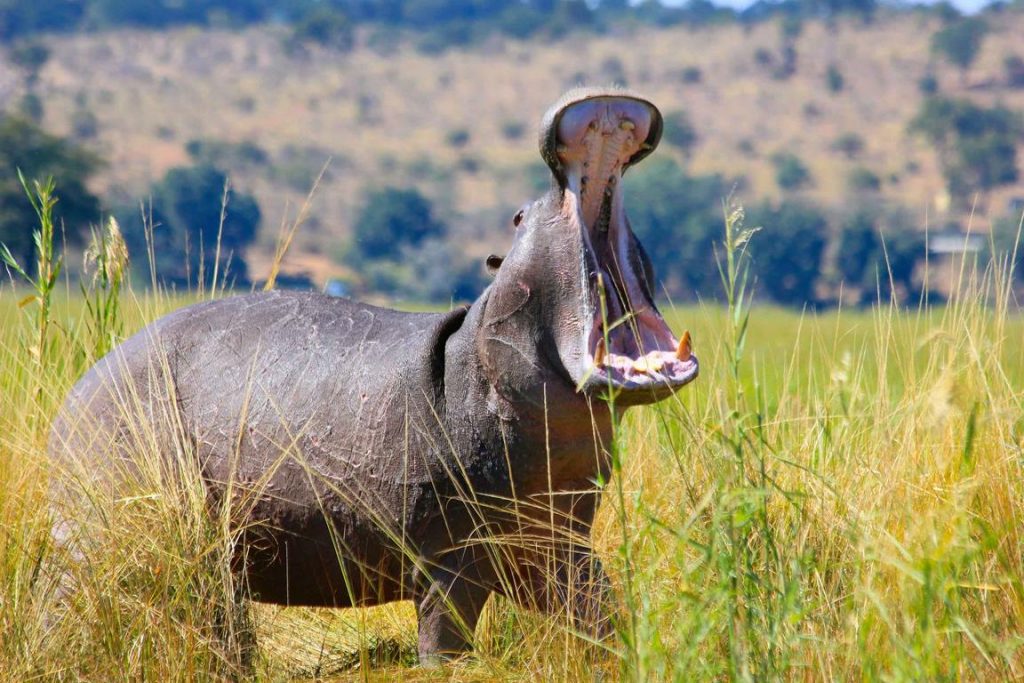
There are no rhinos here: they have been transported to private reserves in the Tuli region, near the South African border, for better protection. These animals are under increasing threat, not least because of their horns, which are highly sought after on the Asian market for their supposed aphrodisiac properties.
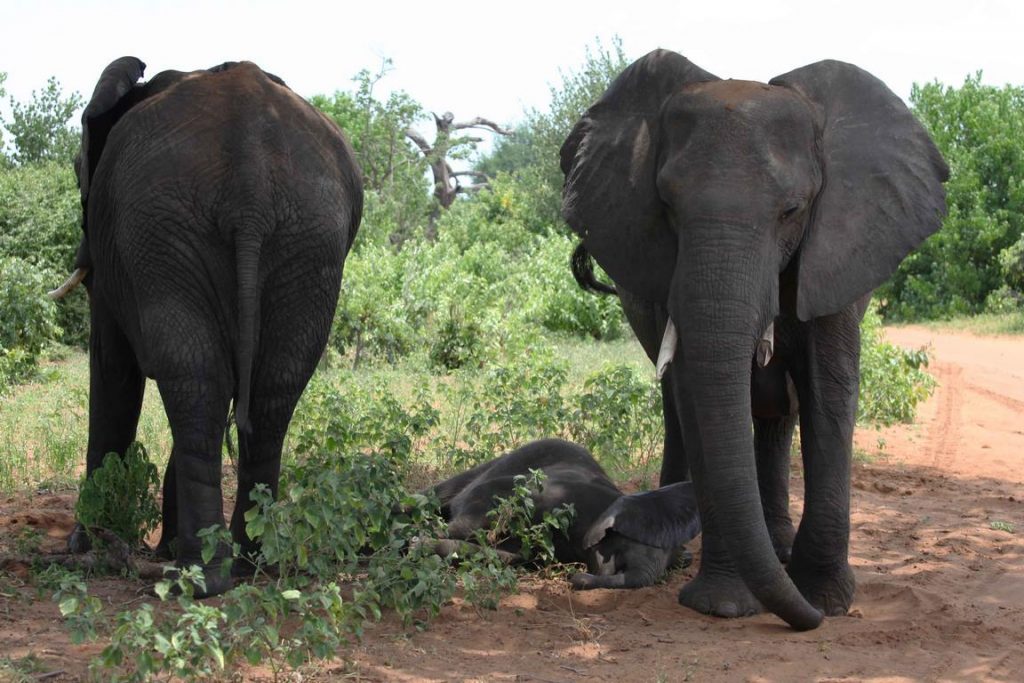
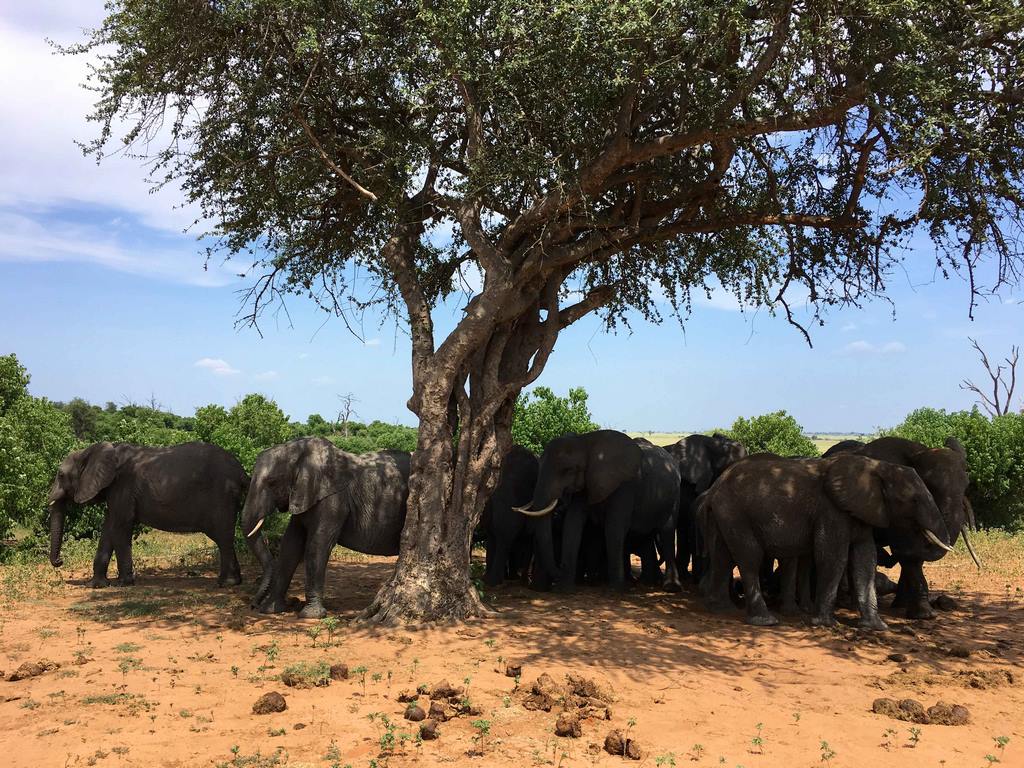
It's fascinating to come across a family of elephants crossing in front of us on a sandy track, without seeming to mind our presence. "They have priority", the tracker accompanying the small group of 4 laconically tells us. We can't imagine them passing in front of our trunks! From our jeep, whose driver systematically cuts the engine as soon as animals are in sight, we can observe the herds of elephants going about their business: in the shade of a large acacia or a mopane tree when the sun is at its zenith and the baby is tired, speeding up to quench their thirst, barking to warn of a possible danger or feasting on tufts of grass.
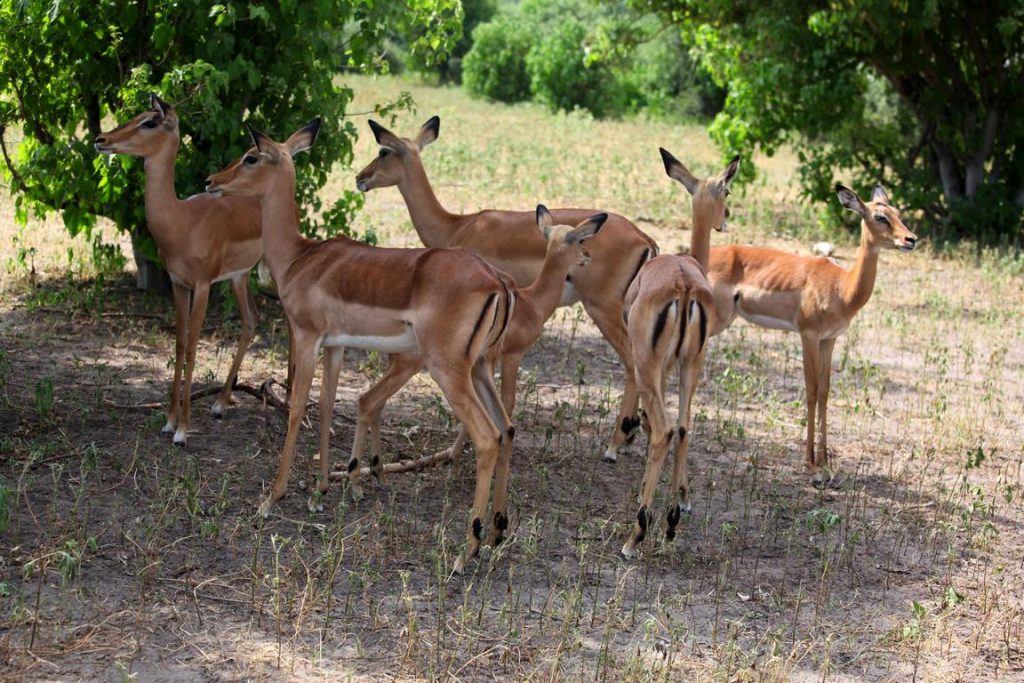
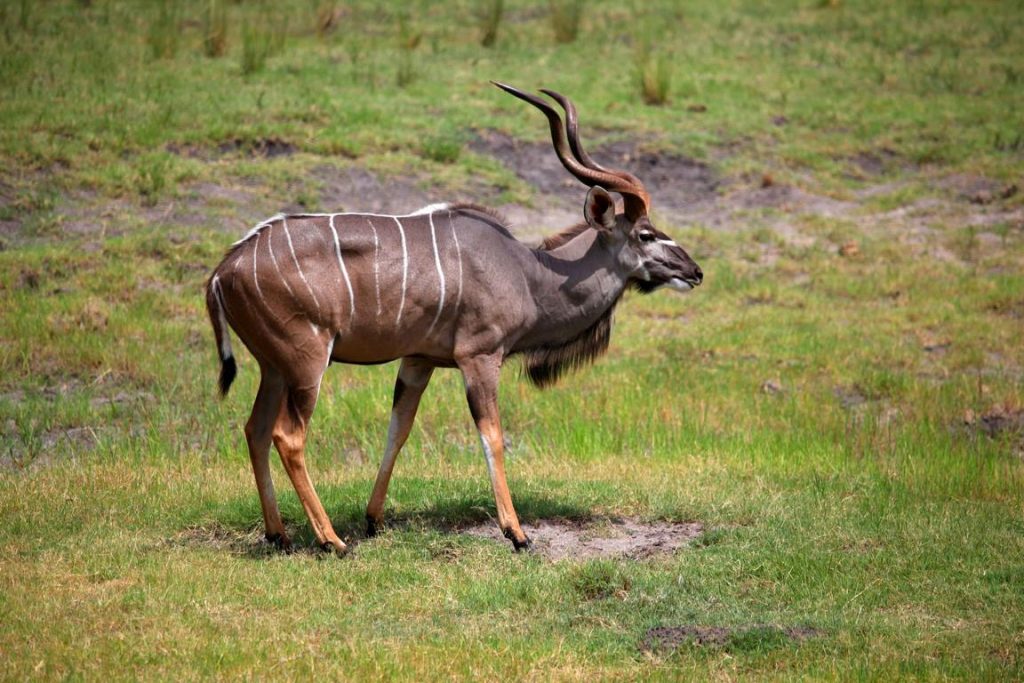
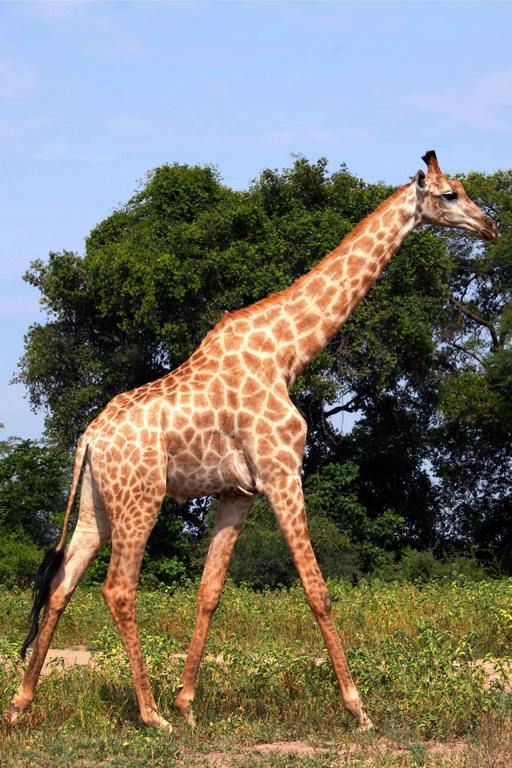
As we approach the river, a few hopping impala come into view. Large herds follow, always watched over by a dominant male who jealously guards his harem. Then we come across kudu, zebra, giraffe, baboon and warthog, which the rangers refer to as "the black buffalo". (speedy bacon) because of their ability to run fast.
In the arms of the Zambezi and Chobé rivers
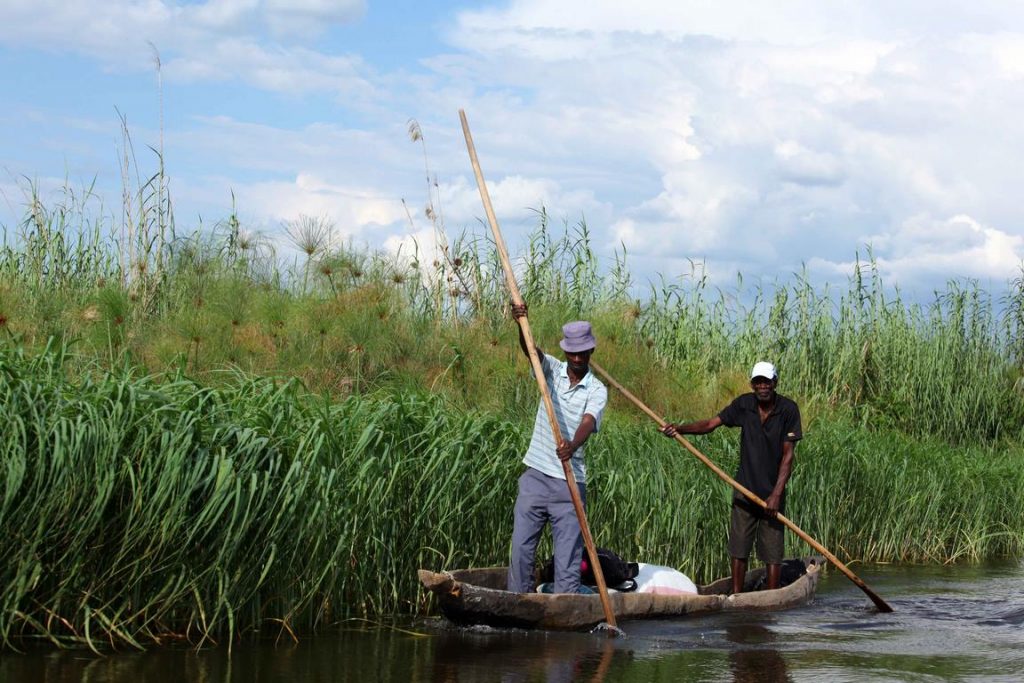
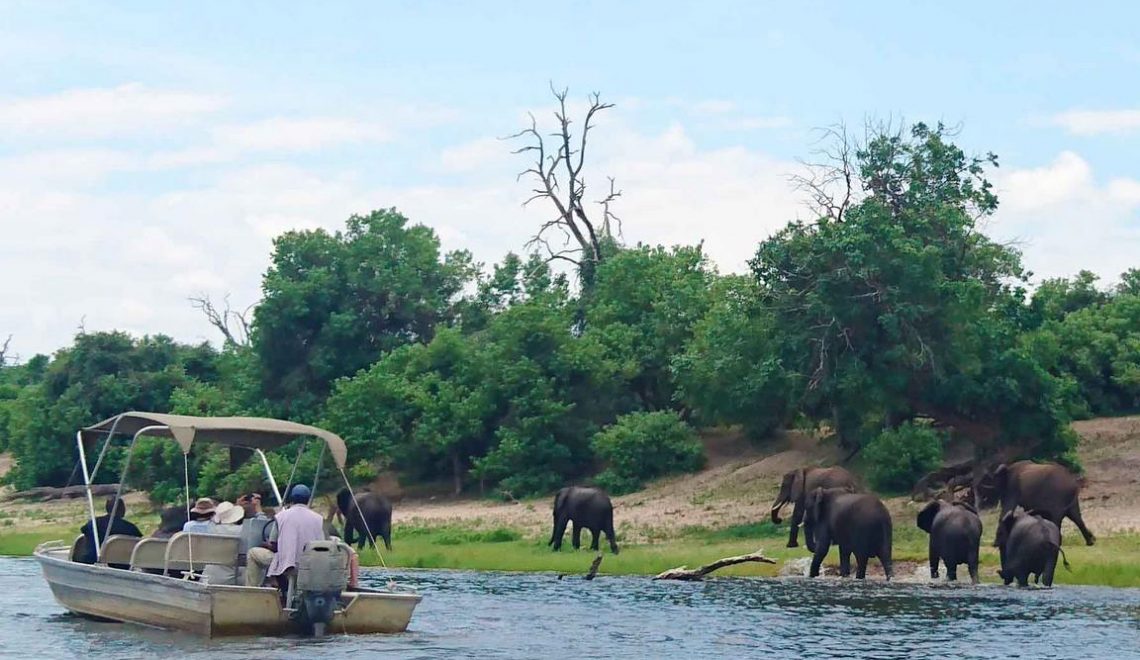
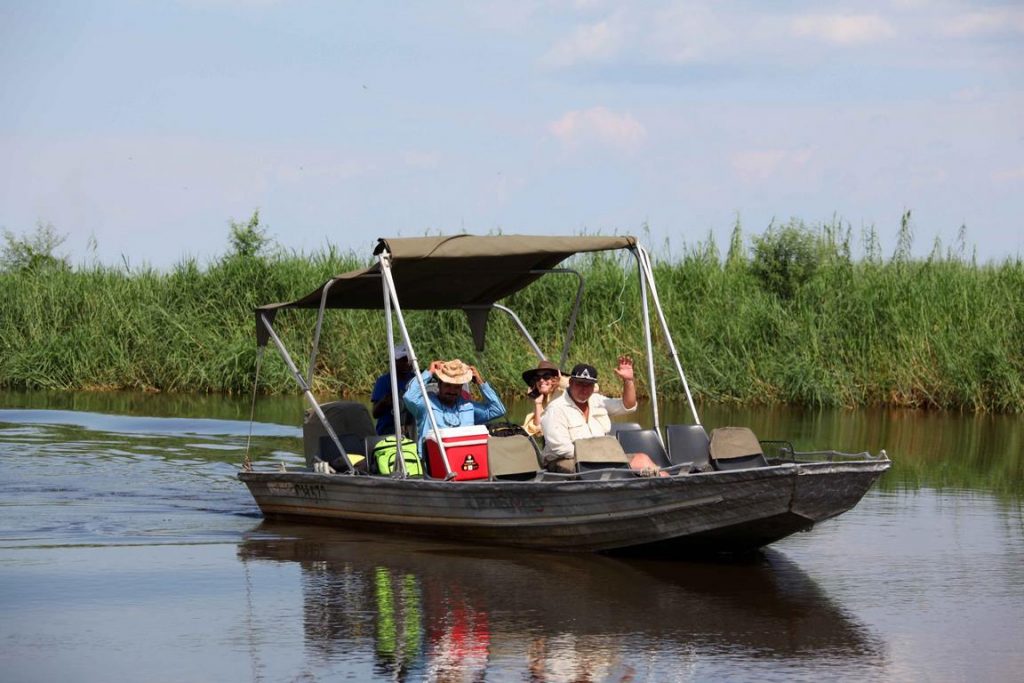
After the land safari, we set off on a boat trip to observe the animals congregating on the banks. A slow boat ride that allows us to contemplate the life of the river, the vast pastures lining the banks where cows graze, some of which are sometimes eaten by crocodiles, or the farmers who travel by boat.
The vast grasslands that stretch along the banks and the thorny savannahs are the favourite haunts of impala, kudu and other antelope, and the refuge of many birds. It is also the larder of the lions, who try to advance lying down for a feast that often fails. The monkeys have spotted them and sounded the alarm in a language that all the animals understand.
Safaris between savannah and river
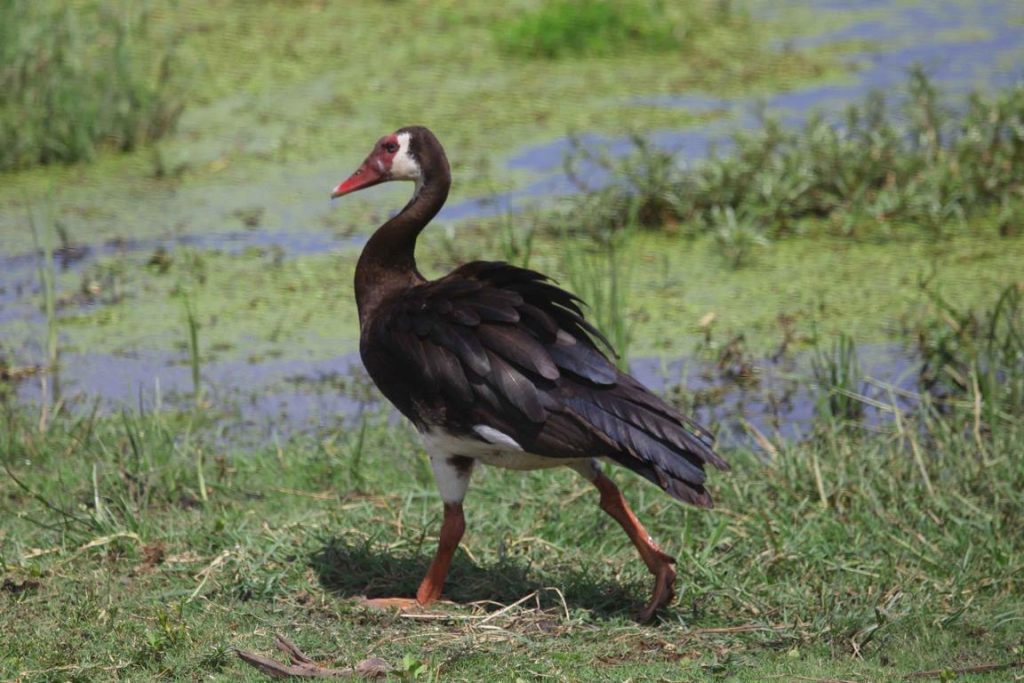
Always flowing, even in the dry season (May to October), the Chobé River attracts large herds of pachyderms and many other animals. It's also an ideal place for birdwatching, with Egyptian geese, bustards and slate-coloured egrets stretching their wings in the sun. Each day we alternate between savannah and river safaris. These wildlife-watching outings take place in the early hours of the morning and before sunset, when the animals are most active.
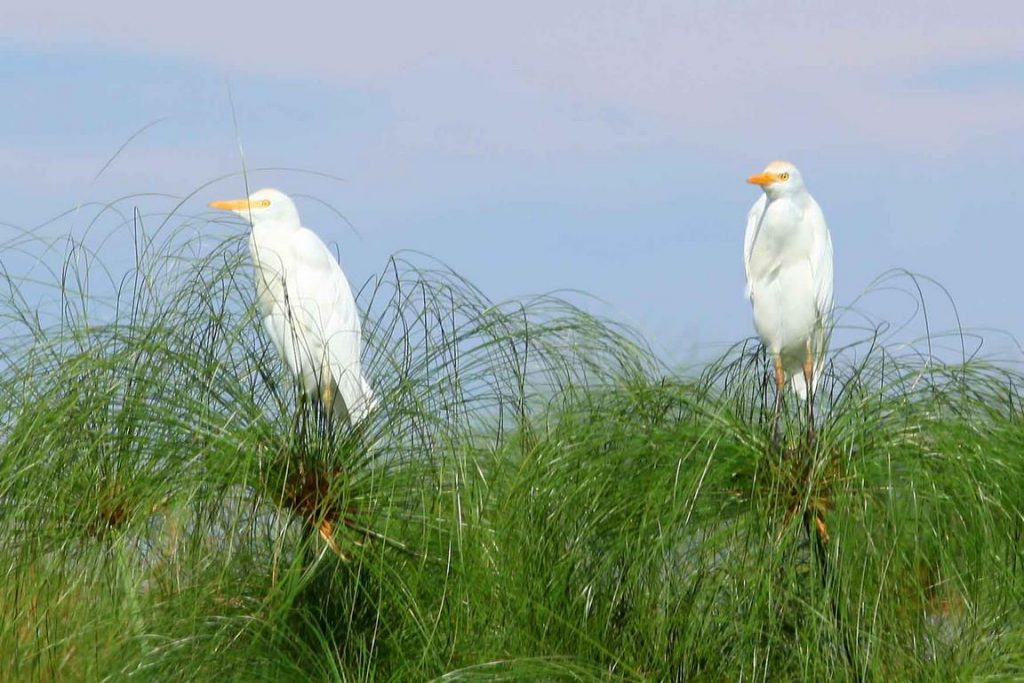
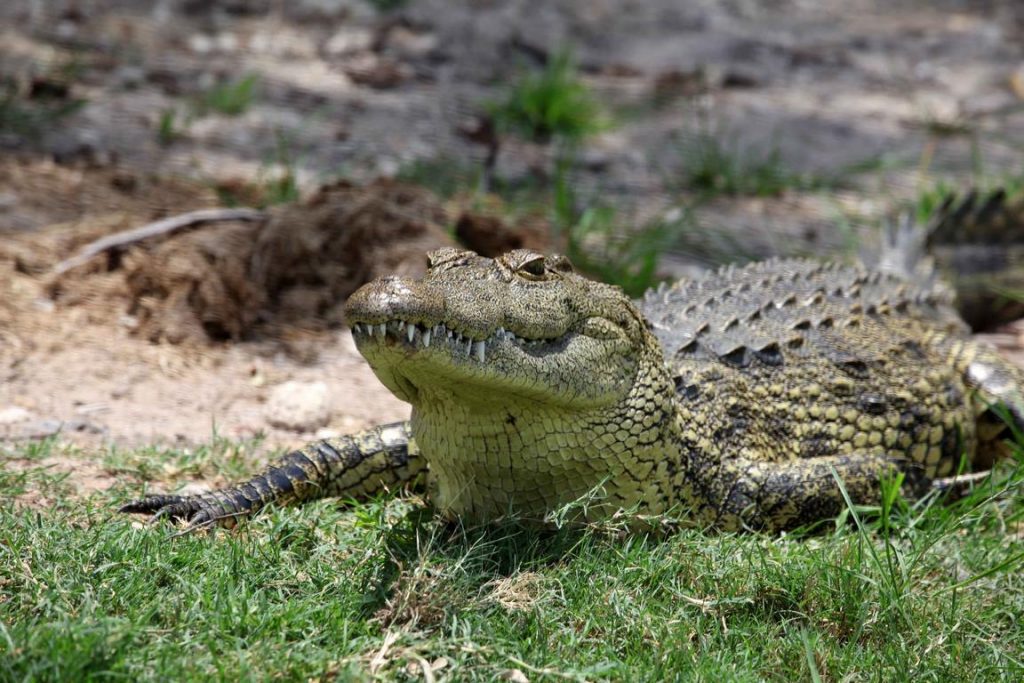
How can we fail to marvel at the permanent spectacle before our eyes? In the marshy meanders of the river, you can barely make out the hippos. Or the crocodiles on the banks, so motionless they look like stuffed animals. Perched on a branch, a fish eagle, Zimbabwe's emblem, watches for its dinner.
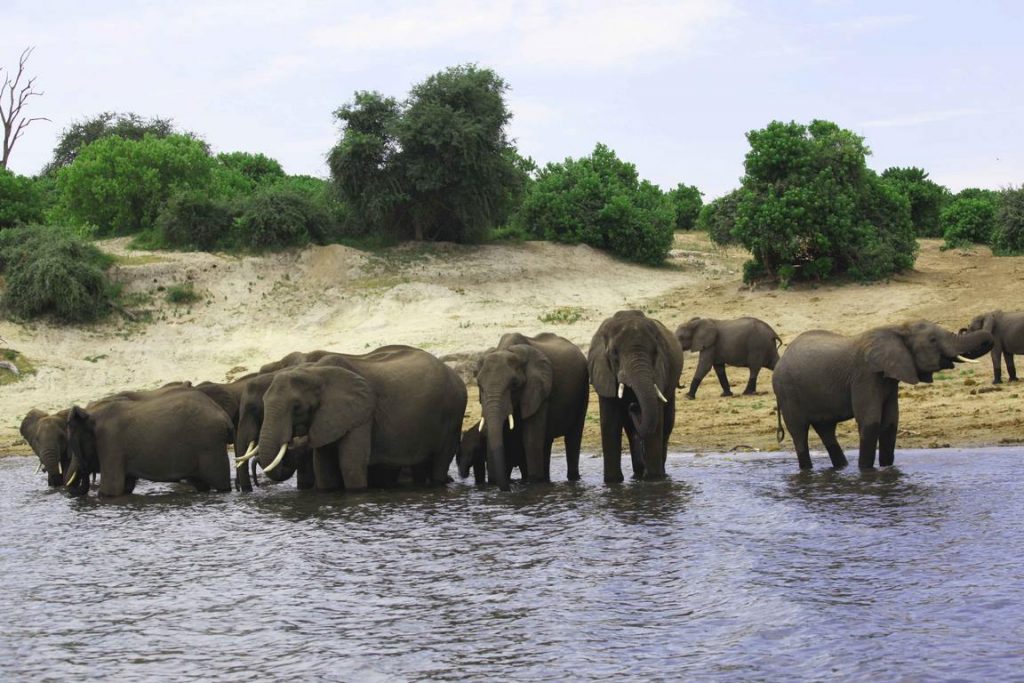
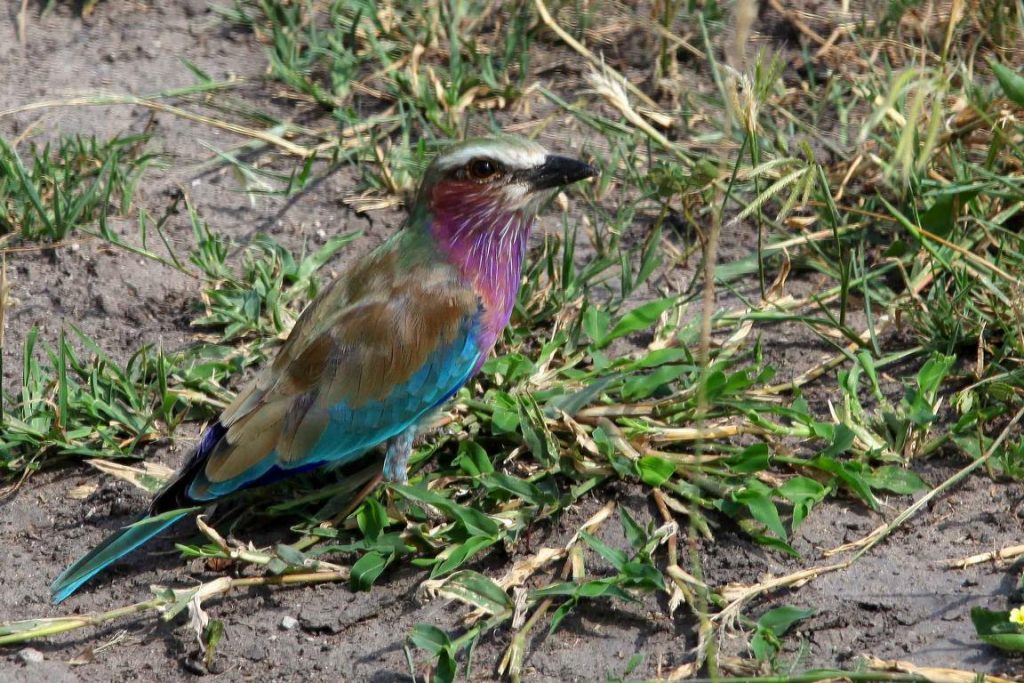
This excursion in a small boat allows you to get up close to the animals, in particular the elephants and multicoloured birds that live in this exceptional environment. In particular, Botswana's national bird, the Lilac-breasted Roller.
Further on, herds of elephants come as a family to quench their thirst and bathe, their babies still protected by the adults. Before our very eyes, one of the mothers pushes her calf with her trunk as it struggles to climb back onto the bank. During these cruises, we sometimes come across fishermen who come to tease the famous tiger fish (tigerfish), bream (bream) or tilapia. We can't get enough of these water and land excursions. After the morning's observations, we return to the lodge for lunch and a siesta, during the hottest part of the day. In the evening, night falls gently over the savannah, giving it that distinctive orange colour. We listen to storytellers from the village on the neighbouring island of Impalila tell us about local life and the history of Namibia. Before drifting off to sleep, lulled by the surrounding sounds. Atmosphere Out of Africa guarantee.
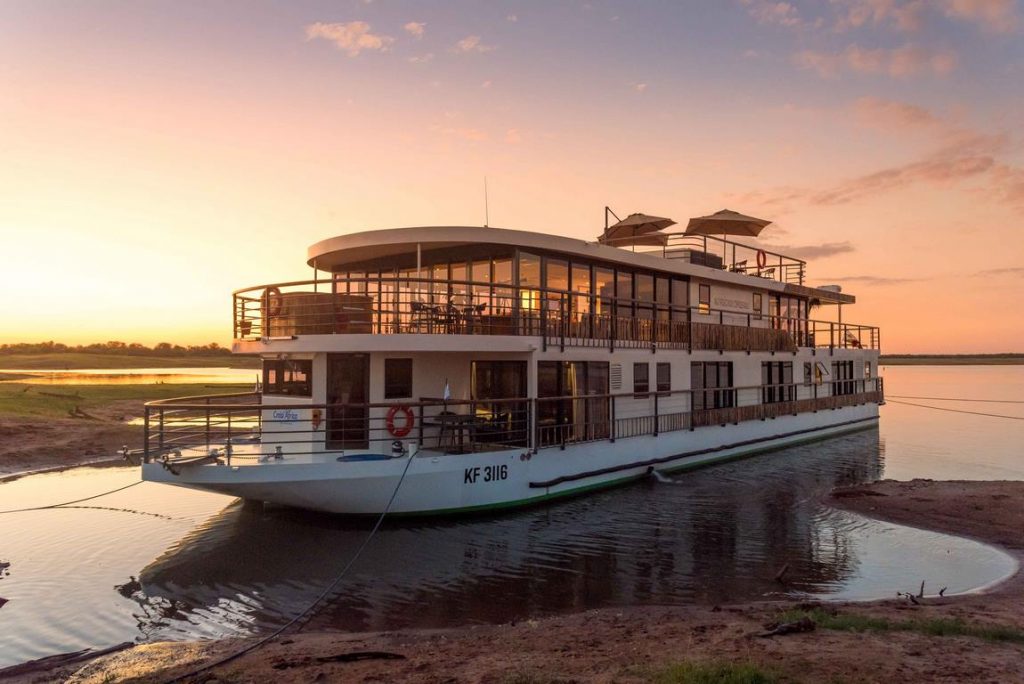
The Strasbourg family company CroisiEurope fleet, A specialist in river cruises, offering a unique immersion in Southern Africa combining safaris and navigation aboard the African Dream, a 5-anchor vessel that she recently launched. Fully panoramic, with its various decks and large lounge, it offers 8 sober and air-conditioned suites (including 2 with balconies).
Accommodation in Namibia at Cascades Lodge. Open to the outside, the restaurant allows you to admire the surrounding wildlife while enjoying refined gastronomy. Large terrace with a view of the Zambezi River rapids.
Optional: helicopter flight over Victoria Falls and 4-night extension on the Cape Peninsula. 0826 101 234
https://www.croisieurope.com/croisiere/afrique-australe-experience-inedite-confins-monde-7-classique
Text and Photos (unless otherwise stated) Brigitte Postel