


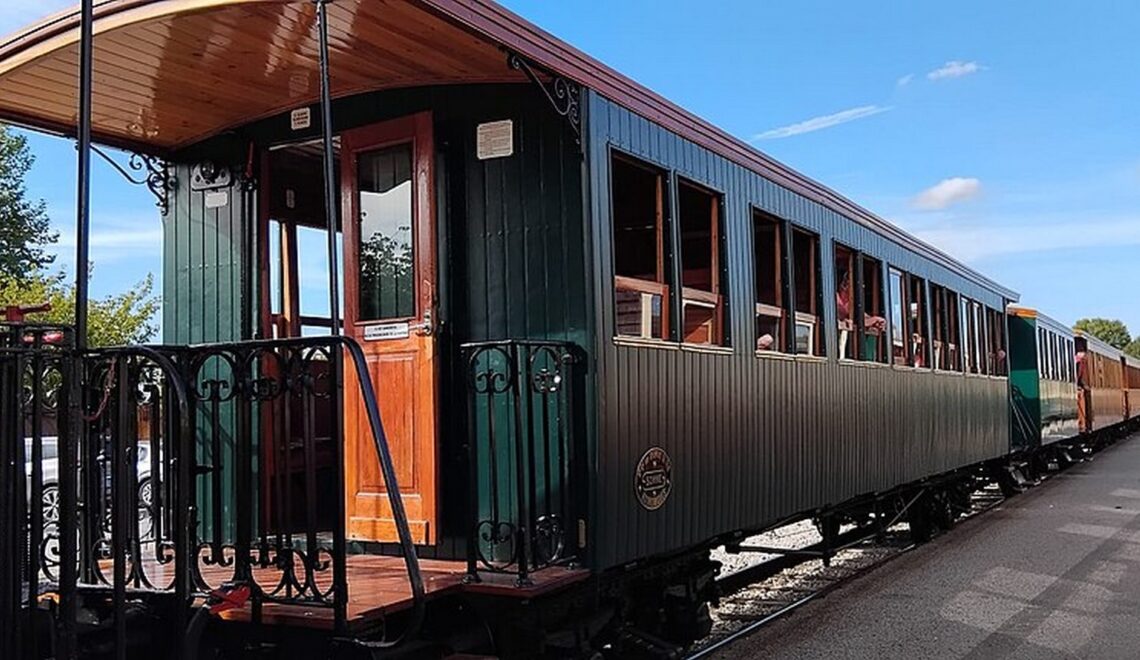
The Baie de Somme Railway offers trips on a heritage train along the Baie de Somme. It serves three seaside resorts: Le Crotoy, Saint-Valery-sur-Somme and Cayeux-sur-Mer. Enjoy your journey on the Bains de Mer railway network!
Table of Contents
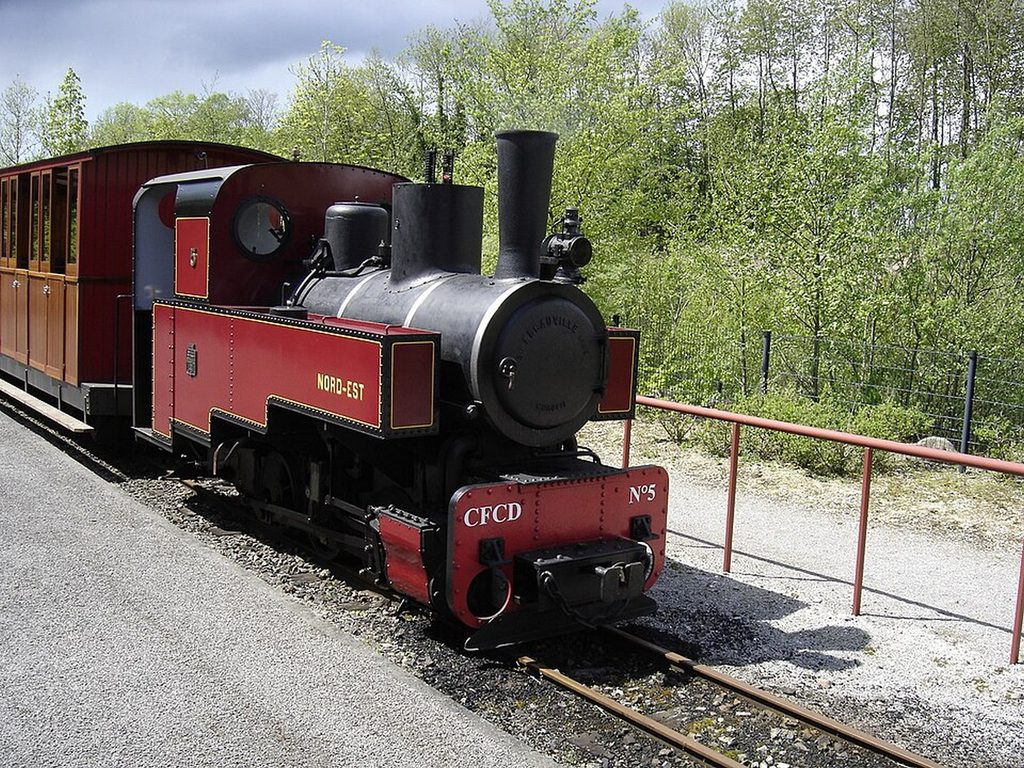
The Baie de Somme Railway is a non-profit organisation established under the 1901 Act. The train, which has been operating in the Baie de Somme since 1887, transports passengers back to the early 1900s. Speed: 25 km/h. A locomotive «Decauville» black and gleaming, shines from the canopy above the quay. A whistle blows. A white cloud. A few car doors slam shut. Off they go. With the sea as a backdrop and, in the pastures, the salt-meadow sheep pré-salé and the horses Henson with a golden hue.
Henson, a horse in the colours of the bay
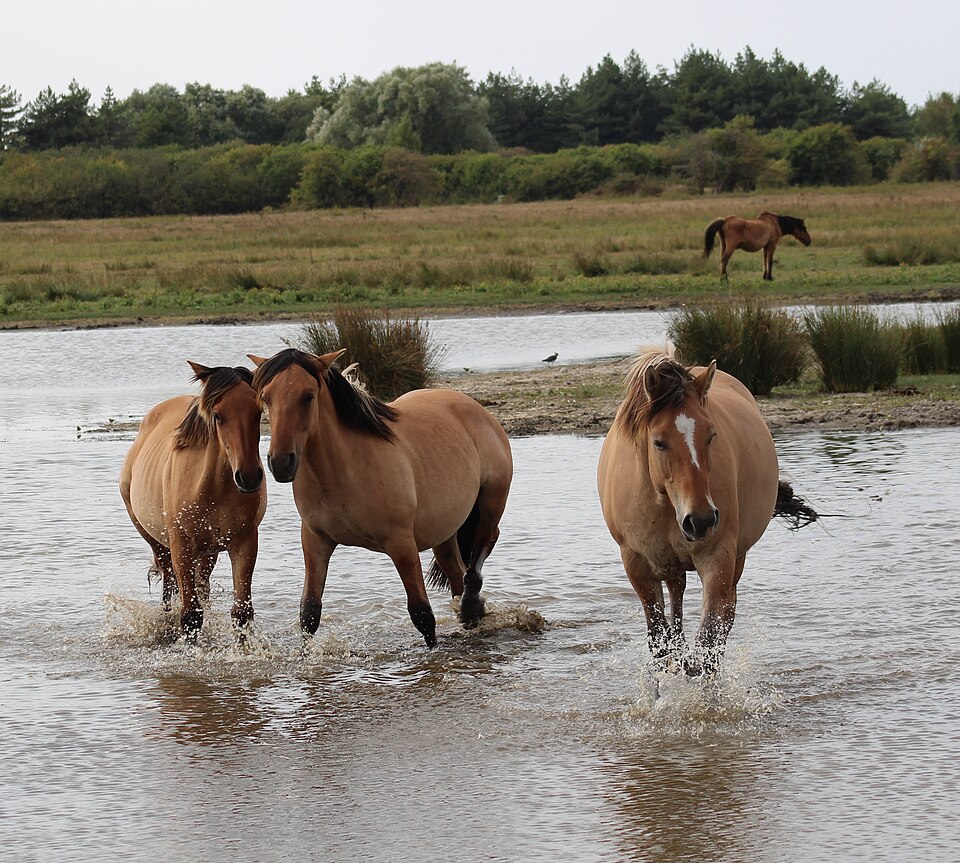
With its sandy-gold coat, dark mane and the black stripe running down its back, the Henson appears to have been shaped by the landscapes of the Baie de Somme. However, contrary to what its rustic appearance might suggest, it is not an ancient breed. The Henson was developed in the 1970s through crossbreeding between saddle horses and the sturdy Fjord, an ancient Norwegian breed, with the aim of creating a hardy horse perfectly suited to riding in the great outdoors. But a legend offers a far more poetic explanation of its origins. It is said that God, gazing upon the Bay of Somme as it was battered by winds and tides, wished to preserve something of its beauty. He gathered a handful of sand, blew on it and brought it to life: thus was born a horse with a dune-coloured coat. Perhaps finding the animal too pale, he then ran a finger along its back, leaving a dark line there, like a divine signature. This dorsal stripe, characteristic of the Henson, is said to be " the imprimatur divine". © APictche/Commons.
A train to the seaside
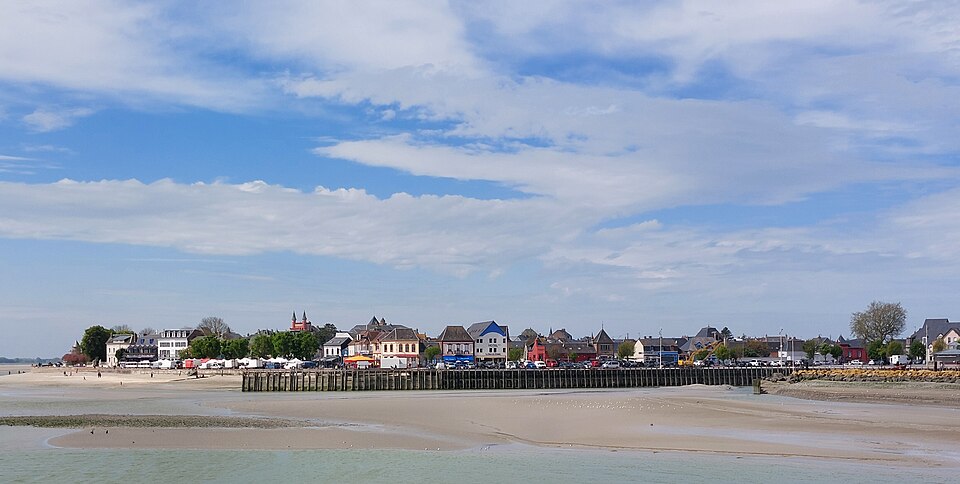
The Baie de Somme is not to be conquered. The small train makes its way along at the leisurely pace that once defined travel. We drive towards Le Crotoy, a fishing village transformed into a seaside resort thanks to the arrival of the railway and the establishment of a sea-bathing centre by the perfumer Pierre Guerlain (1798–1864). Through the window, the salt marshes, the ditches, the clumps of willow and the low, windswept farmhouses pass by.
In the footsteps of Jules Verne
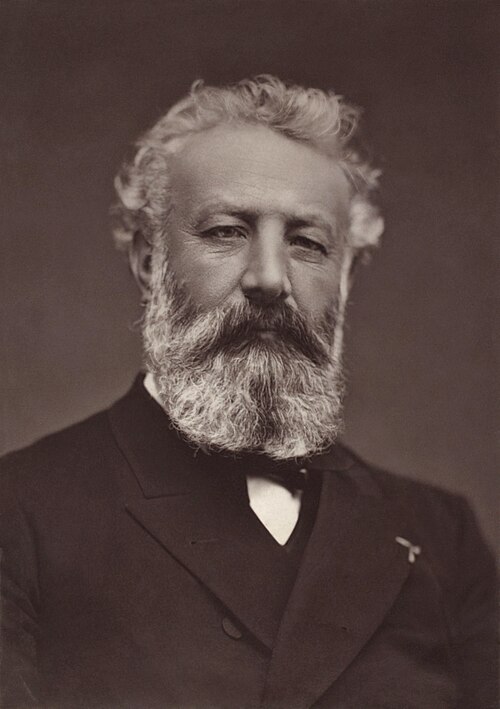
When he first visited Le Crotoy in 1865, Jules Verne (1828–1905) first stayed there for health reasons. Charmed by the little harbour and the vastness of the bay, he soon began returning there every summer with his family. It was here that he began writing Twenty Thousand Leagues Under the Sea, feeding his imagination through his interactions with sailors and his voyages aboard the Saint-Michel, an old fishing boat which he had fitted out so he could set sail. In the mornings, he writes in a little cottage surrounded by greenery, called Solitude ; in the afternoons, he would watch the harbour, strolls around the waterfront, or reflects on his novels on the beach. By 1869, his attachment to Le Crotoy was such that he considered leaving Paris to settle there permanently and rented a larger house on Rue Jeanne-d’Arc on a yearly basis. But in July 1871, he finally chose Amiens, the birthplace of his wife Honorine. He lived there until his death in 1905, writing the bulk of his work, including Around the World in Eighty Days in 1872. Le Crotoy did not, however, disappear from his life: until 1875, he returned there every summer to visit his Saint-Michel in the little harbour on the Baie de Somme. Jules Verne by Étienne Carjat/Commons.
In 1887, when the lines from Noyelles to Le Crotoy and from Saint-Valery to Cayeux were opened, the railway was by no means a tourist attraction. It was the very embodiment of «modernity». It carried locals to the markets and holidaymakers to the seaside, but also transported beetroot to the sugar refineries, chicory, shellfish and tonnes of flint pebbles from Cayeux, which were in demand even in pottery workshops. Families from Paris or Amiens would board the wooden carriages with their trunks, hats, children and servants. The middle classes were discovering the benefits of the sea air. People would set off «to the seaside». The term still had a somewhat medical connotation. Le Crotoy, Saint-Valery and Cayeux were becoming holiday resorts.
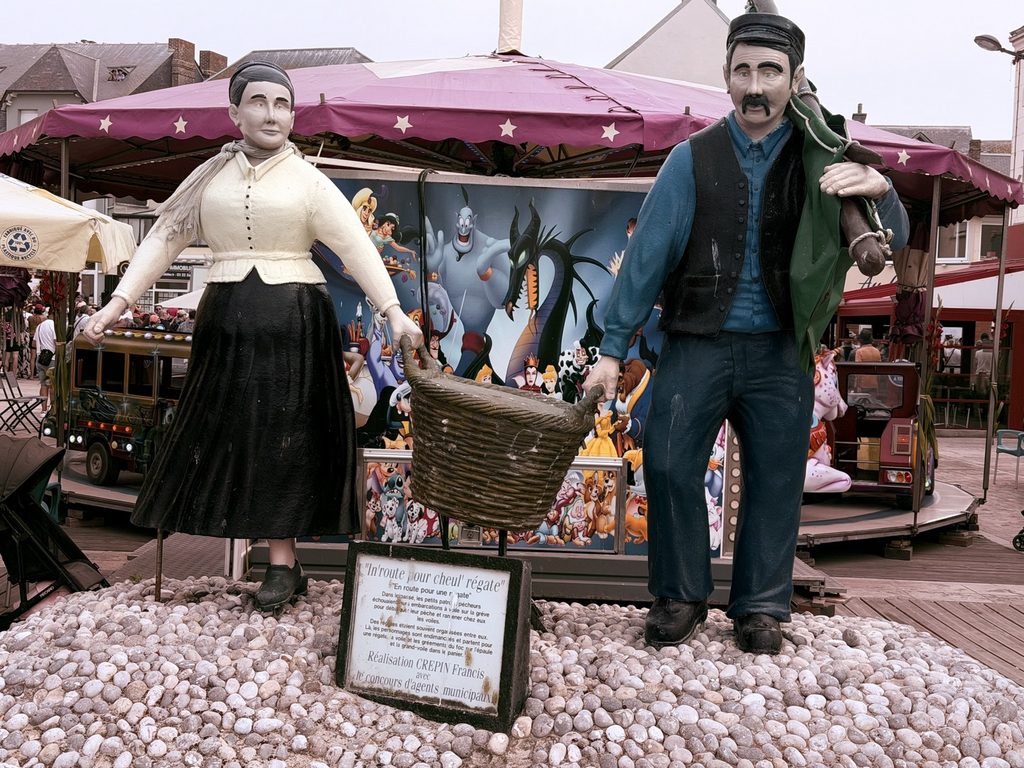
At Noyelles-sur-Mer, our locomotive performs a shunting manoeuvre. The driver steps down and then back on board. Then the station disappears behind a white cloud. Here, ducks and swans like to nest in the reed beds. And waterfowl hunting takes place from August to February.
From Saint-Valéry to Les Bas-Champs, to the rhythm of the steam train
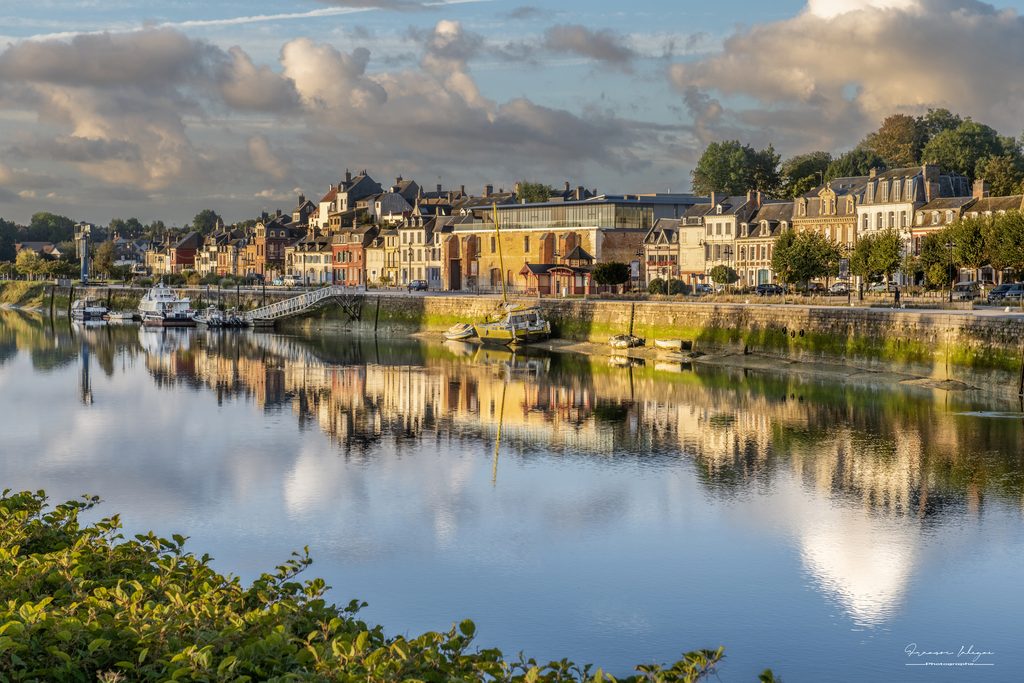
The train is heading towards Saint-Valéry-sur-Somme. The sea has receded a long way, revealing the vast expanse of salt marshes where salt marsh sheep graze, feasting on glasswort and sea aster. No wonder the sheep’s meat has a briny taste.
For centuries, Saint-Valéry was an important fishing and trading port, which reached the height of its activity in the 18th century. But the town is also associated with one of the most famous episodes in European history. In September 1066, William, Duke of Normandy, gathers his fleet before setting sail for England. He left the bay on 28 September; on 14 October, his victory at Hastings paves the way for the English throne. He will be crowned king at Westminster on Christmas Day.
From the train, the upper town catches the eye, with its old houses, slate roofs and the Church of Saint-Martin overlooking the bay. Then Saint-Valery recedes into the distance. The line reaches Lanchères before crossing the Bas-Champs towards Cayeux-sur-Mer, a route that has been in use since 1887. Then the line stretches towards this pebbly coastline, where the English Channel casts a brighter light. The locomotive struggles a little more. A plume of grey smoke rises into the sky. Travelling at 20 or 30 kilometres per hour, passengers have plenty of time to take in the scenery: a horse behind a fence, a heron in a ditch, a fisherman by the side of a waterway.
Cayeux, the seaside terminus
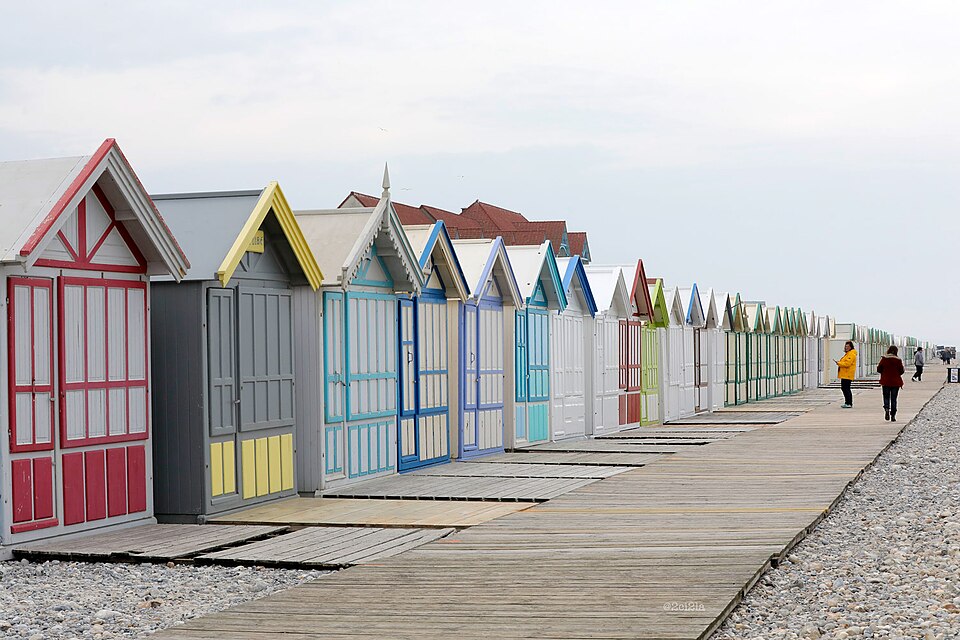
Next comes Cayeux-sur-Mer station, an 800-metre walk from the seafront. On the beach, a 2-kilometre-long boardwalk is lined all summer long with 400 beach huts. Every year, their installation marks the return of spring. 1,350 planks are laid on the sea wall.
Another of the bay’s treasures is the blue pebbles of Cayeux, smoothed by the sea and formed by the erosion of the chalk cliffs of the English Channel. From the 19th century onwards, they were collected by hand along the coast and then used as a genuine industrial raw material.
Nowadays, the pebbles from Cayeux-sur-Mer, after being calcined and crushed, are used in road construction, building works, paints and so on.
Getting there
Somme Bay Railways
https://chemindefer-baiedesomme.fr/fr/chemin-de-fer-de-la-baie-de-somme
Cayeux Tourist Office
www.cayeux-sur-mer.fr
Somme Bay Tourist Office
Tel. 03 22 24 27 92
www.tourisme-baiedesomme.fr
Text : Michèle Lasseur and as indicated
Photos : Michèle Lasseur and as indicated

It was with great pleasure that I read Ms Lasseur’s articles on Amiens and the little train of the Baie de Somme. As a native of Amiens, I really enjoyed the tone of this invitation to explore a region that is somewhat overlooked, yet full of charm.
Thanks for your feedback. I'll forward this to Ms Lasseur.