
Forget the spa, the overflowing pool and the coconut oil massage between two fresh fruit juices. The Ayurvedic center Sreenilayam, in the large suburb of Kozhikode, in Kerala, invites to a genuine immersion in Ayurveda. With its potions, daily treatments, massages with medicinal oils, rituals, prohibitions, and that strange feeling of being out of time. Wellbeing is undoubtedly present, but Ayurveda goes further: it is considered a holistic medicine and, more broadly, a way of life.
Table of Contents
Kerala has thousands of centers dedicated to Ayurveda: hotels, spas, clinics, wellness centers… For those wishing to embark on a genuine cure, it is difficult to find your way around. The offer is overwhelming, with prices that often vary widely and, behind the same name, practices can be very different. Because Ayurveda, still poorly known to many Western travelers, is experiencing a growing success, driven by the interest in traditional medicine and alternative approaches to health, at the risk of in some cases being reduced to a mere tourist attraction.
In this vast offering, Sreenilayam cultivates a very different approach, entirely focused on caring for and paying attention to the individual. Here, there is no ostentatious luxury or standardized program. The center accommodates a limited number of patients and prioritizes personalized care, tailored treatments, and daily follow-up.
Welcome to Sreenilayam
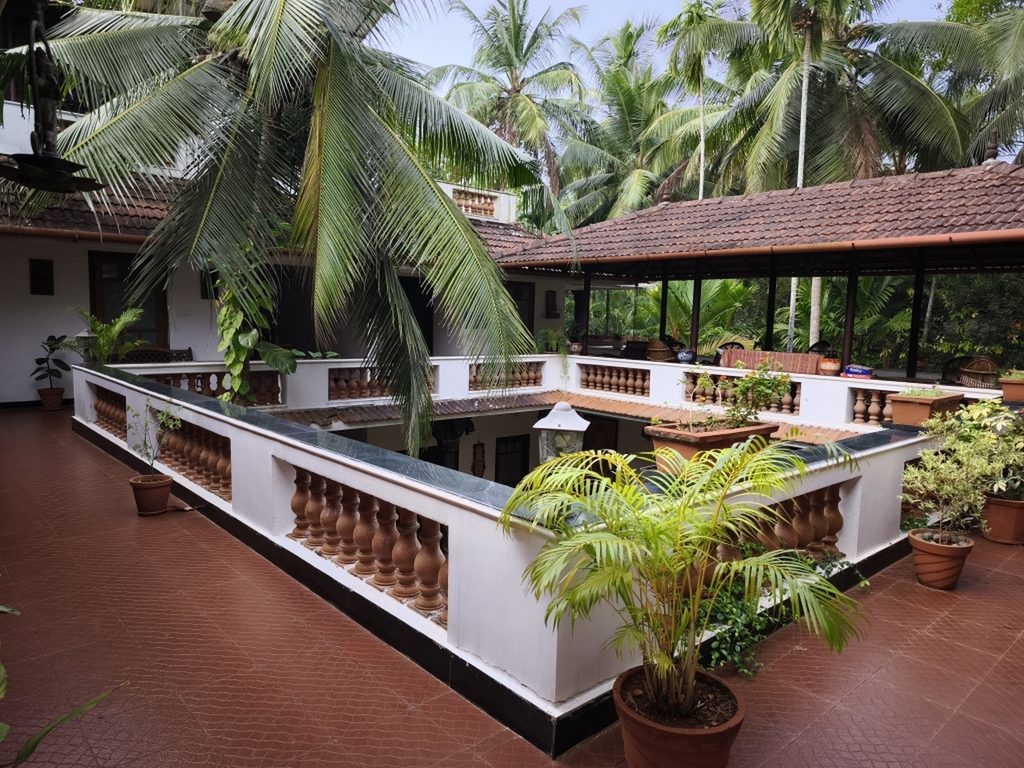
First, there are the birds. Multicolored, chatty, sometimes invisible under the thicket of coconut leaves, they seem to have gathered in Sreenilayam for a permanent competition of vocalizations. Songs, trills, chirps and strange cries echo from one tree to another.
Then come the rosebuds, the dazzling saris, the unfamiliar fragrances, the laughter and the conversations in the streets. Malayalam. And the warmth that envelops us as soon as we get out of the car. A tropical sun, veiled by vegetation, in a humidity that gives the air a strange density. And yet, amidst this profusion of vegetation, these polyphonic bird calls, a sensation takes hold: the feeling of being suddenly separated from the world.
The center is located in Chathamangalam, in the large periphery of Kozhikode, In the former Calicut on the Malabar coast. No beach resort. No sun loungers. No small bistro where you can order an espresso. Not even a swimming pool where you can have three rounds of beer between massages. Because Sreenilayam is not just an Ayurvedic resort. It is a clinic and nuance is important.
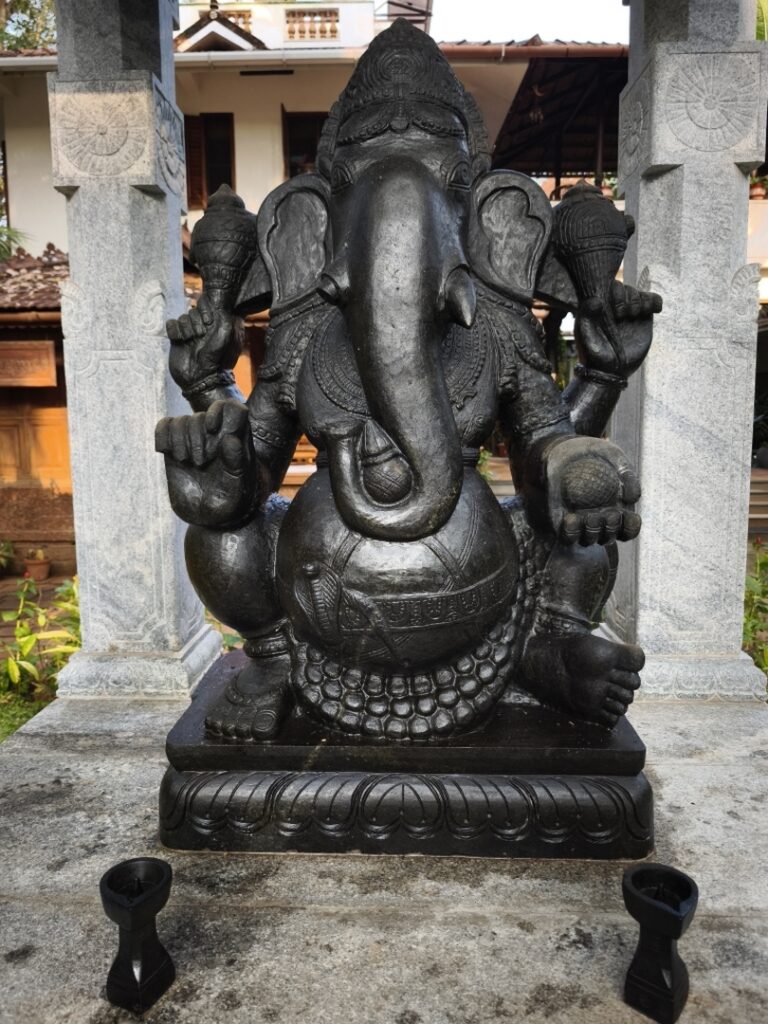
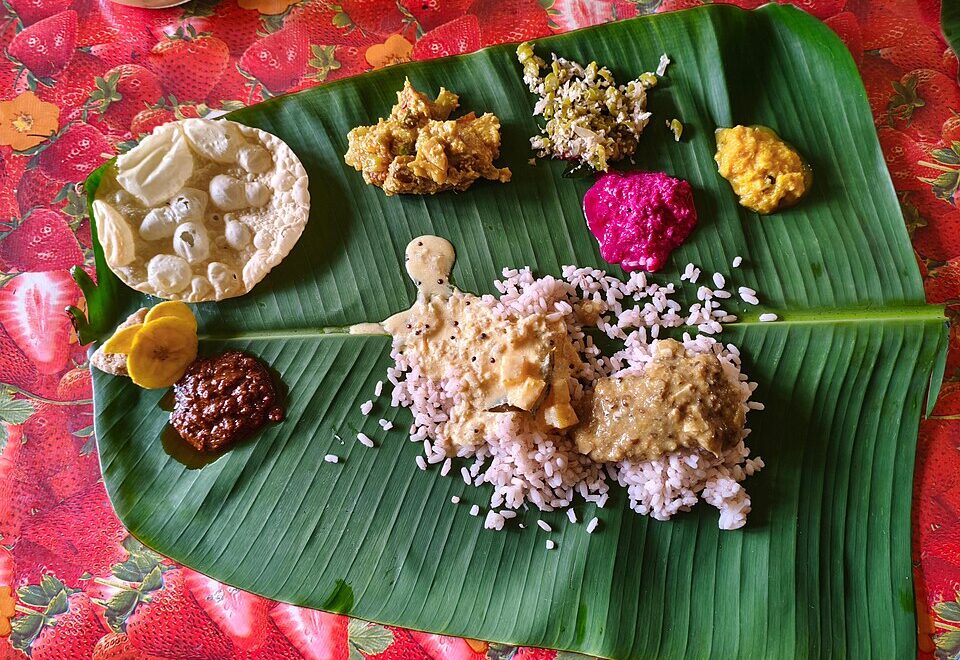
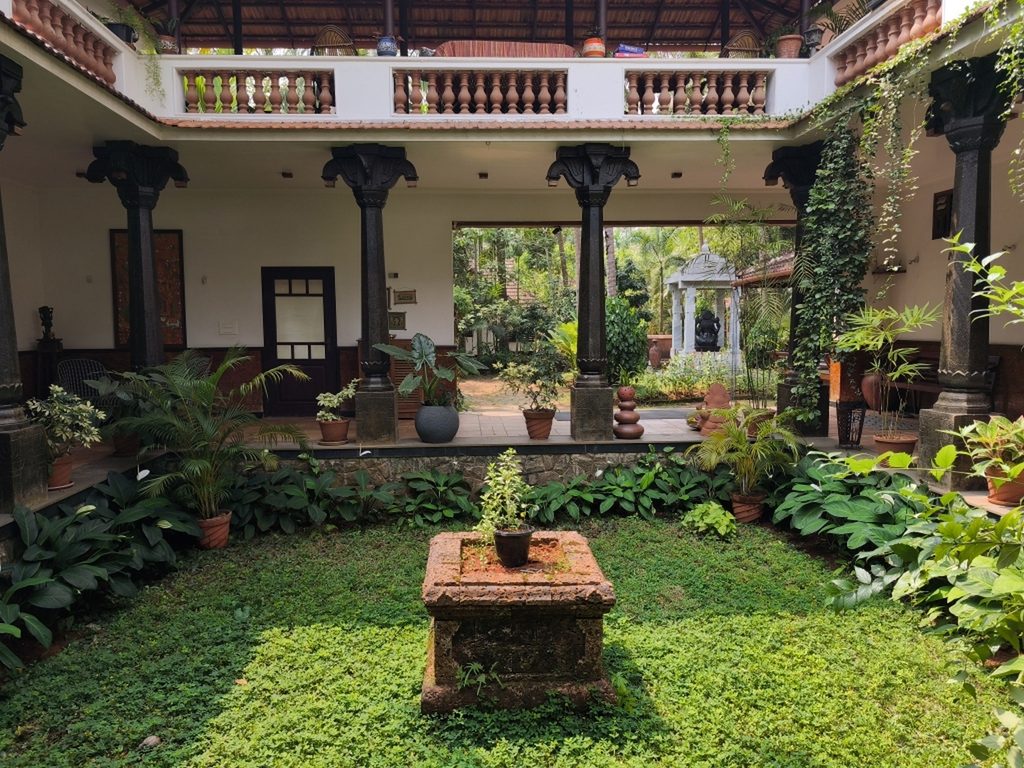
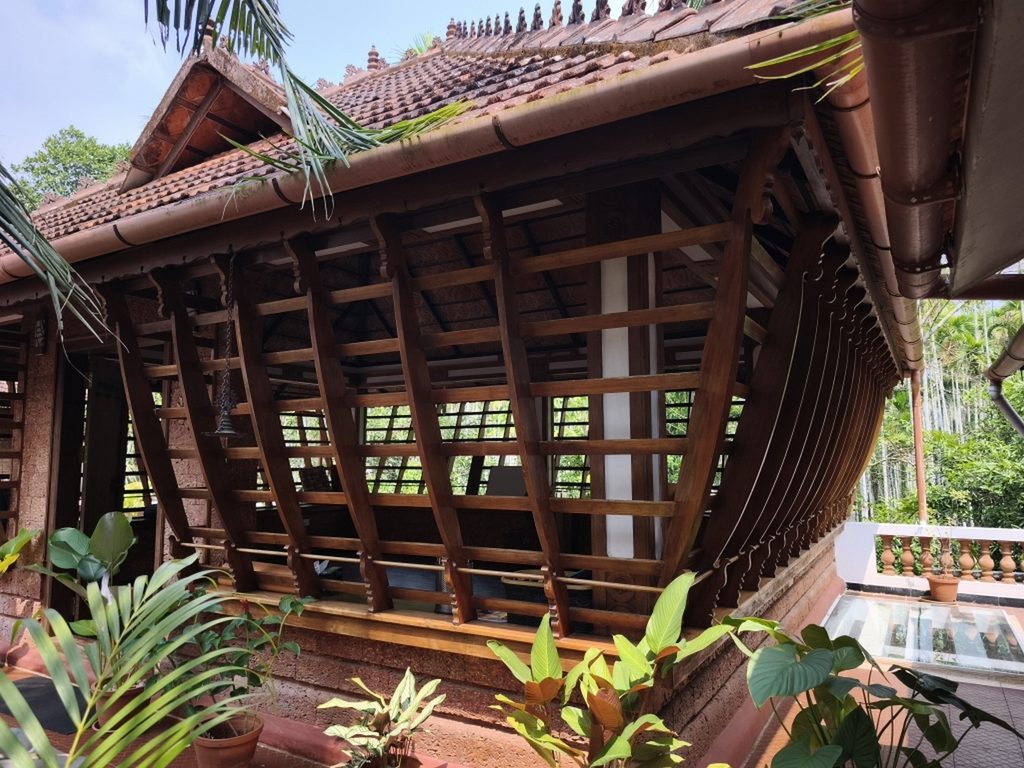
The building respects the traditional architecture of Kerala (Nalukettu) and the principles of Vastu (1) To promote the proper flow of energy. The two main buildings that make up the center can accommodate a maximum of fourteen patients. Seven double rooms are distributed over two levels. Add to this a flower-filled patio, treatment rooms, a large yoga room open to nature, a library, a dining room, and a kitchen where a small team prepares meals. Ayurvedic meals carefully designed for each individual, according to the instructions of the doctors: therefore, there is no point in hoping to negotiate the menu of the day! Because the diet is an integral part of the treatment. Your plate is only the beginning of the story.
Here, Dr. Mali reigns.
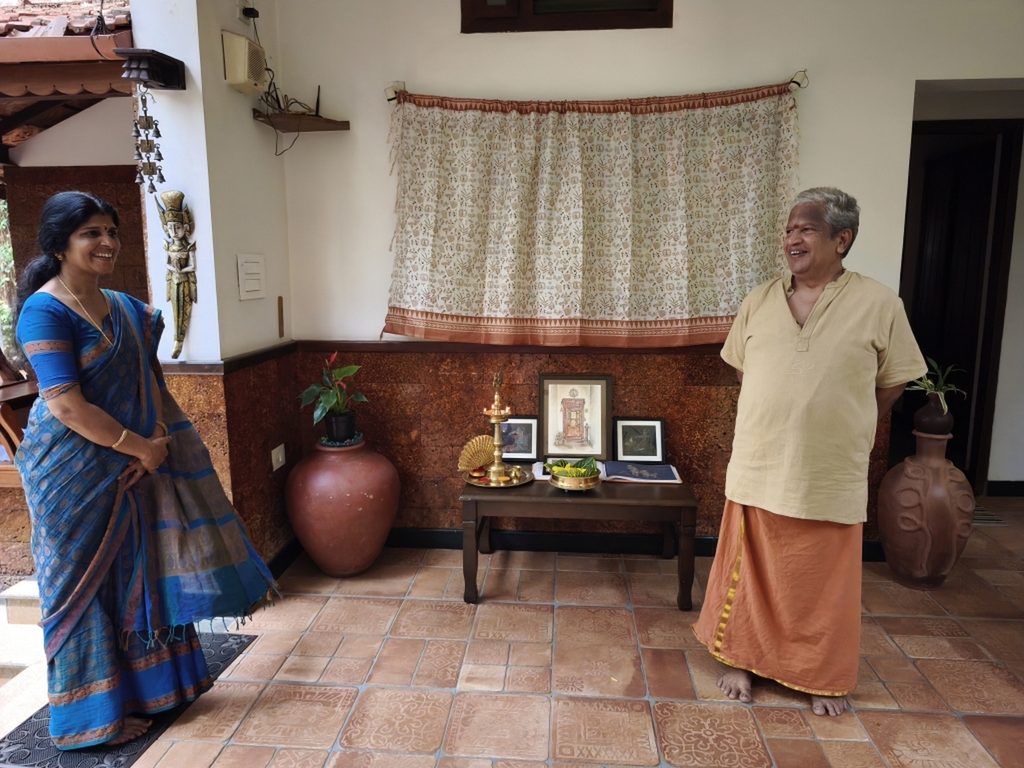
India. Ayurveda Sreenilayam. Dr. Mali and her wife whose kindness knows no equal to the attention they pay to their guests.
The master of the place is Dr. Mali, an Ayurvedic doctor, accompanied by one of his sons, also a doctor, and two female doctors. Two generations coexist around the same tradition, with a father and grandfather trained in the tradition of Ayurveda. Vaidyas, For whom care goes beyond the limits of the body.
To understand it, we must for a moment abandon our habitual ways of thinking. In the traditional conception of Ayurveda, health is not simply the absence of disease. It corresponds to a broader state of balance, in which the body, the senses, the mind, and the soul are in harmony with each other. the Ātman, (which can be roughly translated here as the deep self or the immutable spiritual essence of being), share a common harmony. The human being is not considered an isolated organism, but rather a part of a living universe with which he maintains constant relationships. This places the bar a little higher than the traditional «everything is fine, my tests are good.» Preventing imbalances, preserving health, adapting one’s diet, behaviors, and lifestyle are therefore integral to the approach. And when the balance is broken, it is necessary to try to restore it. That is precisely why we are at Sreenilayam.
First, pass it into the hands of the owner
On the first day, we have a consultation with Dr. Mali in person and one of the doctors. He asks questions, observes, and assesses each person’s health status before establishing the «program» of treatments. This program is in fact not set in stone: it will be adjusted as the stay progresses, depending on the patient’s progress. Here, no lengthy discussion is necessary to determine whether we are rather Vata, Pitta or Kapha, nor a scholarly dissertation on his prakriti (our own constitution). This is simply not the subject. Dr. Mali first focuses on the person in front of him, their current state, their thoughts, and what he considers necessary to treat. This is in contrast to the Westernized image of Ayurveda, which sometimes tends to reduce this millennia-old medicine to a simple typology of doshas.
A typical day
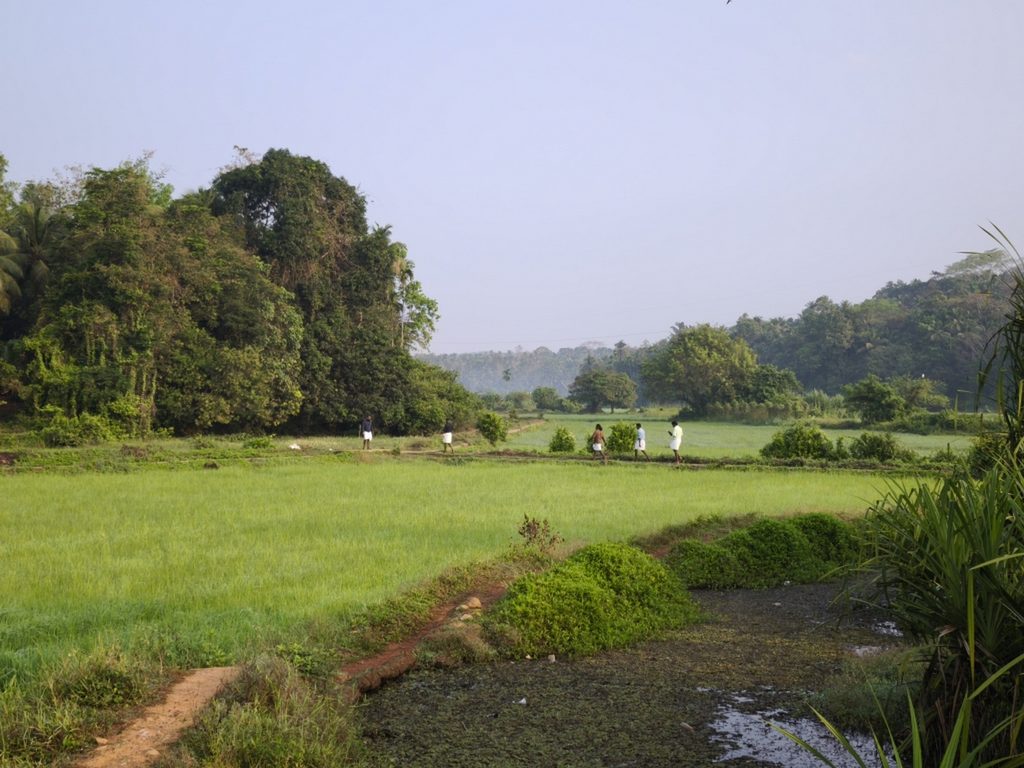
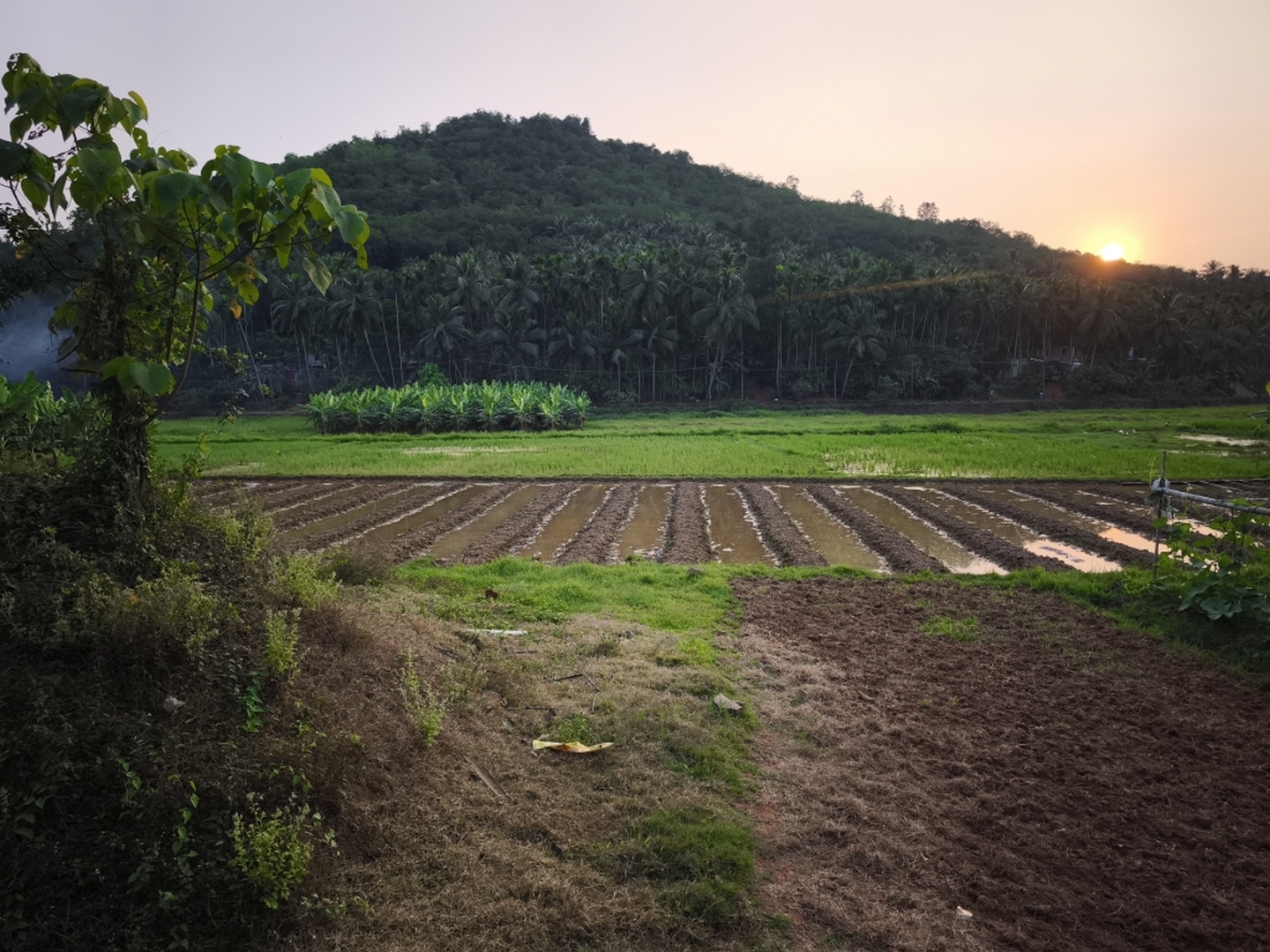
India. In the early hours of the morning, a walk in the Kerala countryside, between rice fields and fields where the farmers are already at work.
Forget the greasy morning. At 6:30 a.m., the day begins with the taking of the first medications and other Ayurvedic potions that Dr. Mali has prescribed. Some go almost unnoticed; others wake you up more surely than a double espresso, which, by the way, is strictly out of the schedule.
At 7 a.m., yoga mat time. And don't think you can get away with it! For an hour and a half, there will be postures, stretching, mantras, meditation, and breathing (pranayama) get the body moving under the watchful eye of the teacher. Some mornings, yoga gives way to a walk in the surrounding nature. A welcome escape amidst the tropical vegetation, while the birds, for their part, have begun their vocalizations well before anyone else.
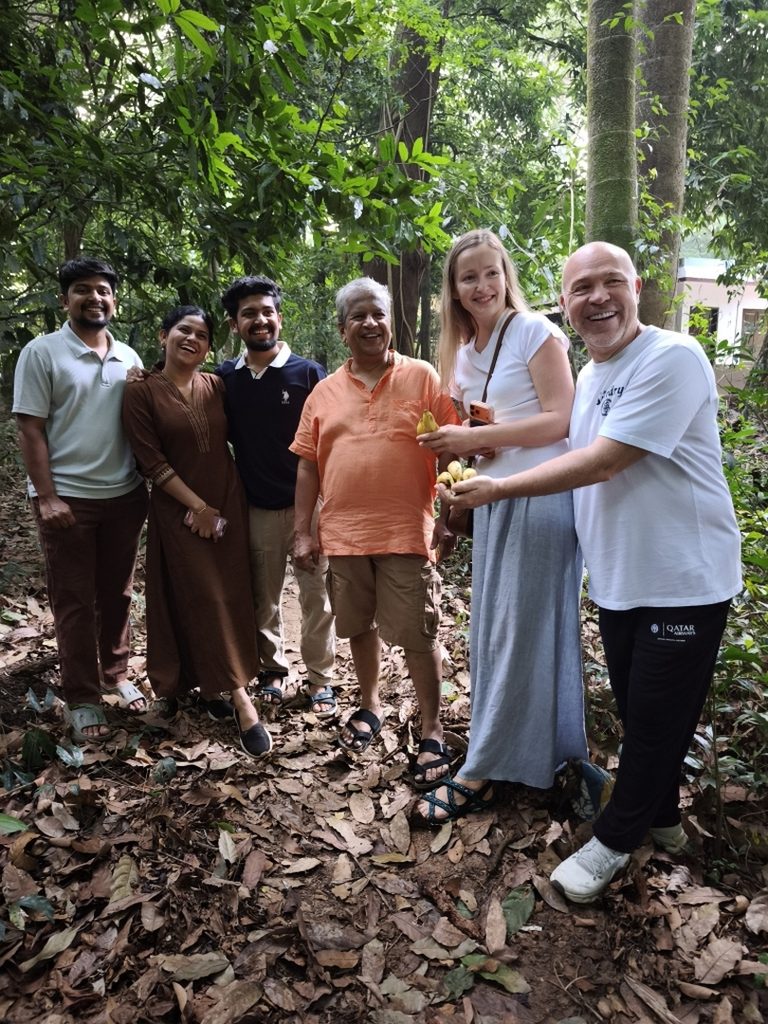
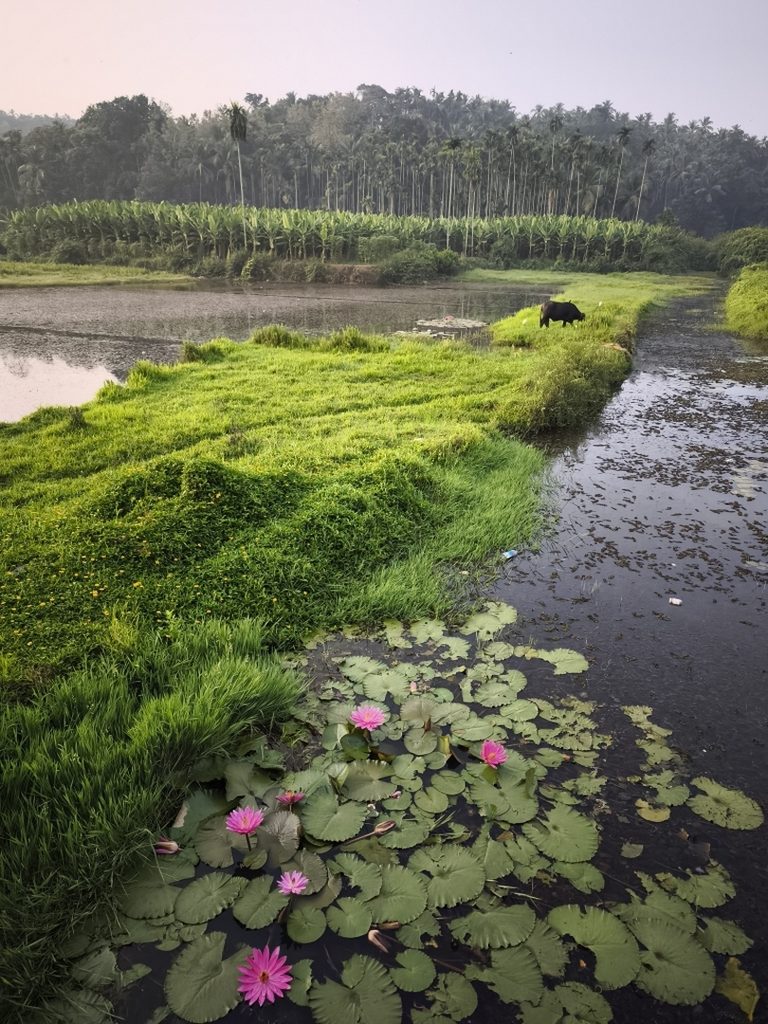
India. Ayurveda Sreenilayam. A walk with Dr. Mali, his sons and healers in the Kerala nature.
It is only then that breakfast arrives. A well-deserved reward before continuing with the treatments. The experienced therapists at Sreenilayam then take over. Here, the rule is simple: the women are entrusted to female therapists, the men to male therapists.
The care, a full-fledged ritual
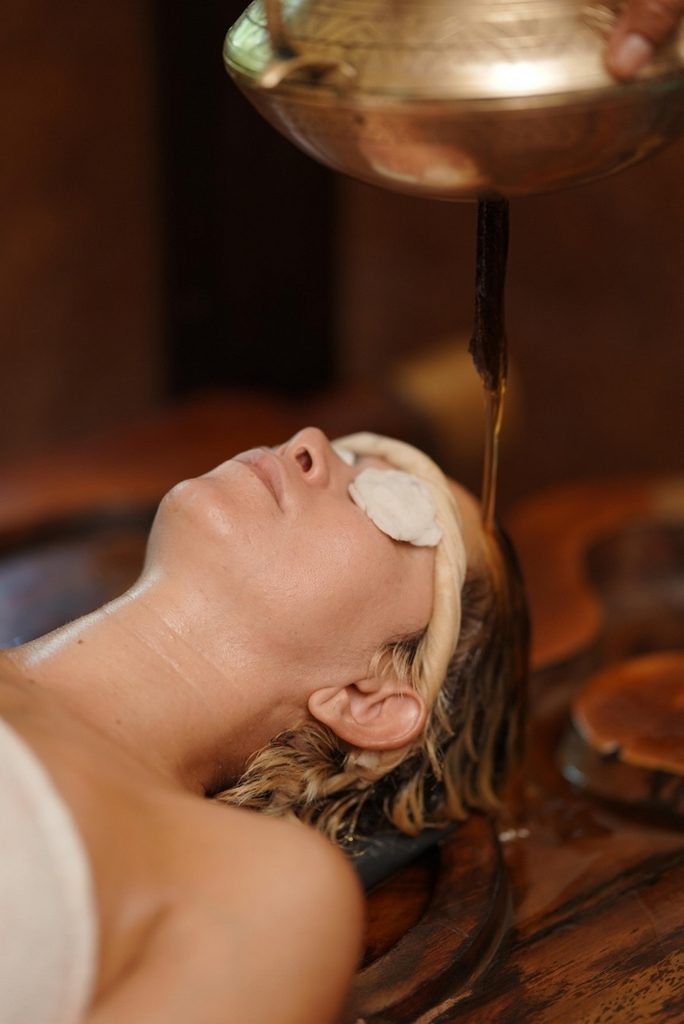
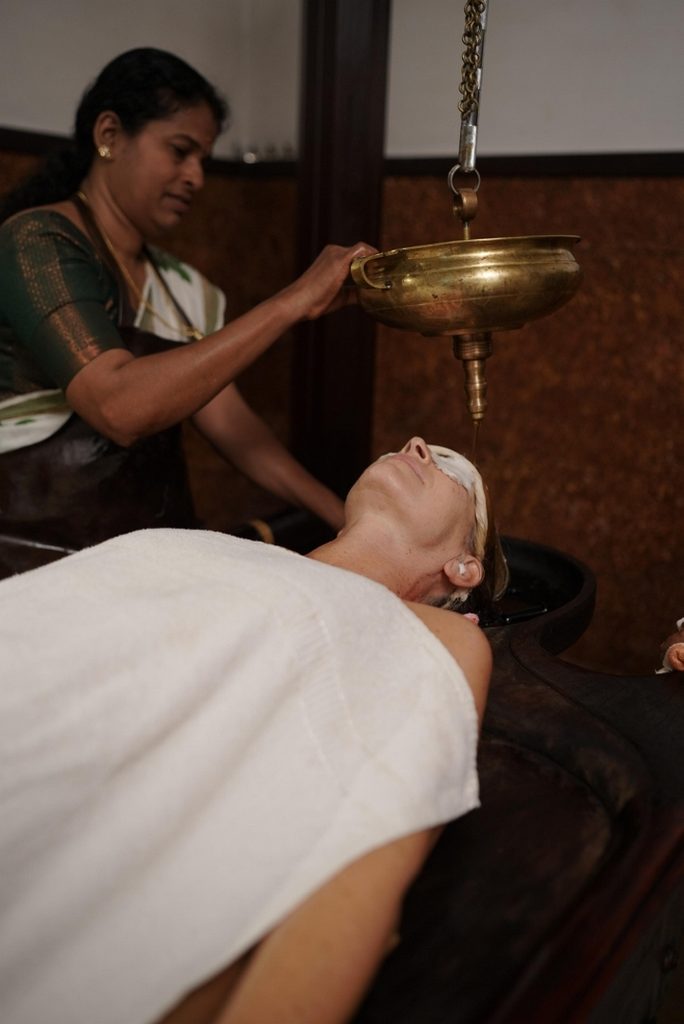
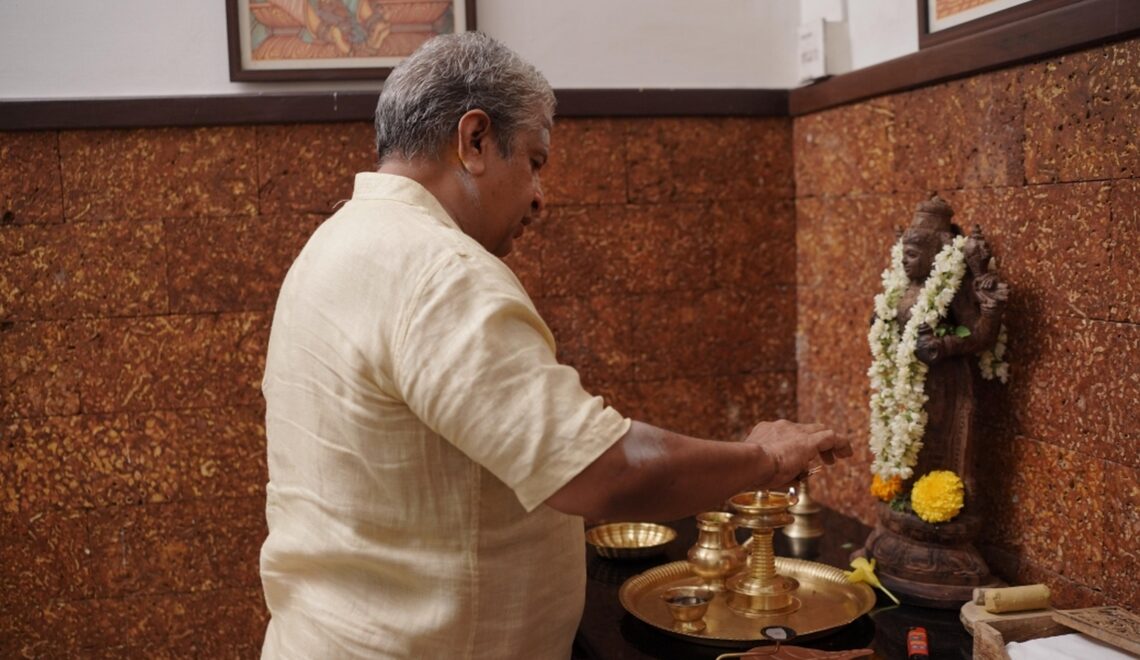
Before each treatment, the same ritual is followed. The therapists join hands and recite a short prayer. Dhanvantari, a deity associated with Ayurveda and healing. A way of placing care under its protection, but also of reminding that, in this tradition, the therapeutic gesture is not reduced to a technique.
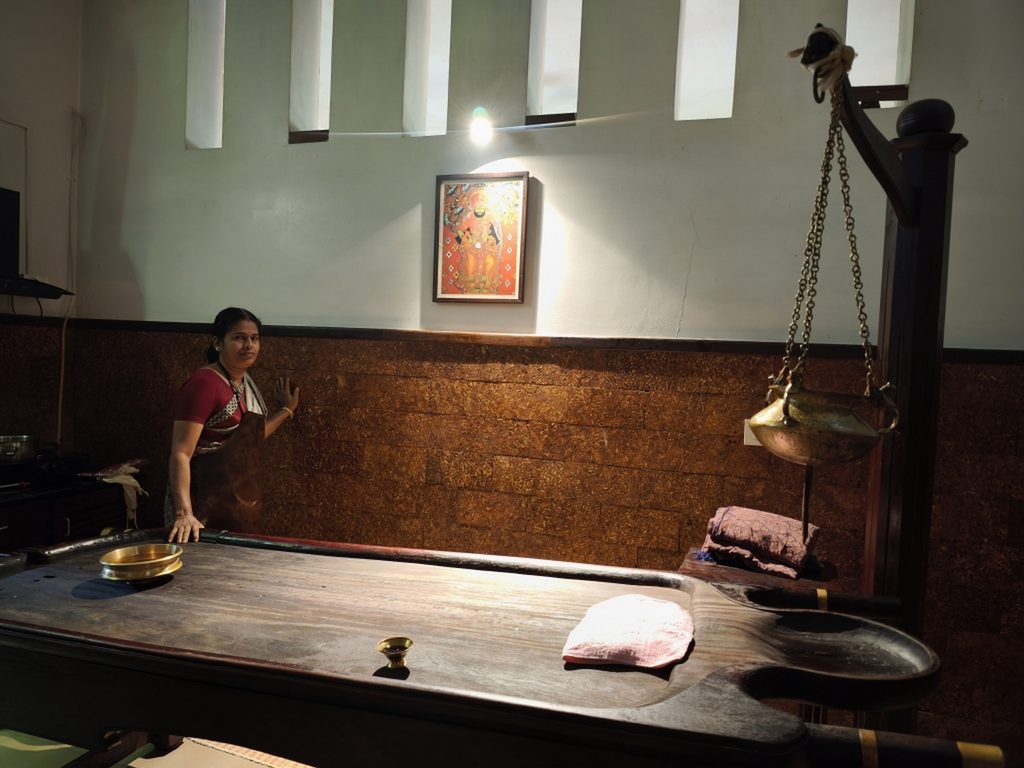
Then comes the moment to sit down, naked, on an imposing teak table, as beautiful as it is hardly compatible with the Western idea of softness. No thick terry cloth or quilted table: the wood is hard, shiny from the oil and designed to withstand years of massages and «heavyweights». The therapist then steps in. Abhyanga, Nasyam, Vasti, Kizhi, Shirodhara… behind these mysterious names to the newcomer lies an entire arsenal of treatments, adapted to the course of the treatment. We had come to rest; we quickly discovered that, in an Ayurvedic treatment, healing oneself is almost a full-time job. Fortunately, rest is part of the prescription.
The medicinal oil, warm, is generously applied to the body before a vigorous, rhythmic, methodical massage of four hands begins, according to the prescribed treatment.
It's easy to understand that the Abhyanga It has little to do with the relaxing massage that one would take between two tourist visits. Here, you don’t ask if the pressure suits you or what kind of background music you prefer. You simply let yourself be guided by the expert hands. And on the teak table, «letting go» suddenly takes on a very concrete meaning.
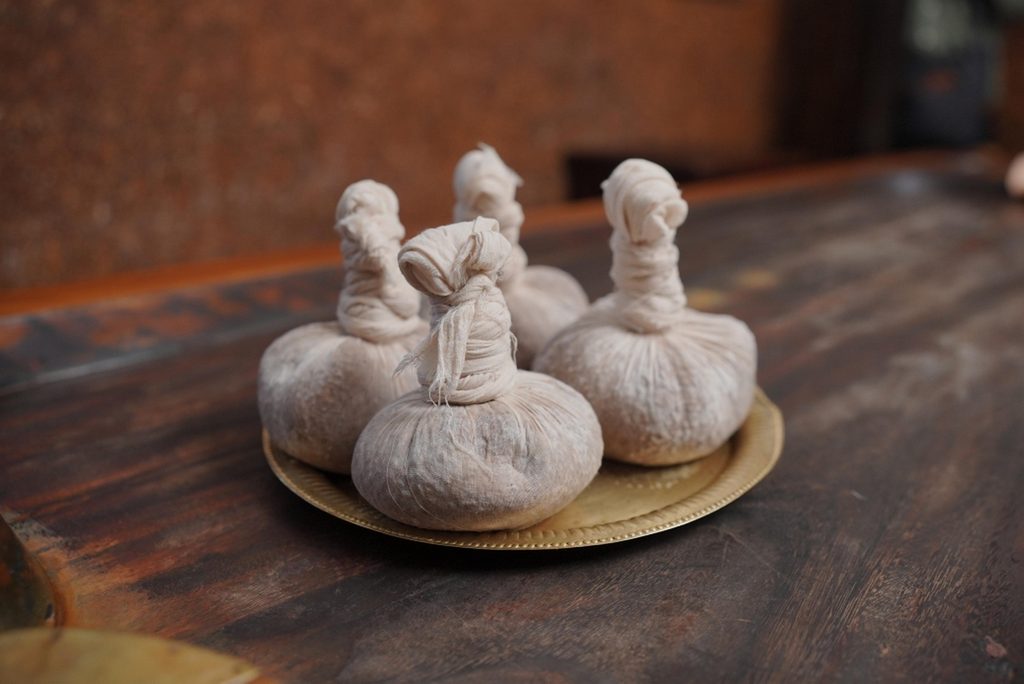
Among the Ayurvedic treatments are the poultice massages, called pinda sweda or Kizhi in Kerala. Small cloth bags are filled, according to the prescribed treatment, with powders of plants, herbs, leaves, or other medicinal preparations. Heated, sometimes soaked in oil or a decoction, they are applied to the body by rhythmic pressure and movements. The heat gradually spreads while the therapist focuses on certain areas. Their composition and method of application vary according to the patient’s constitution and the imbalance the doctor seeks to treat.
After the massage, the therapist will wash you from head to toe, with the same care that one would give to a baby. This cleansing is an integral part of the treatment. Clean, relaxed and somewhat transported back to the delights of childhood, you then return to your room for a well-deserved rest period.
Indeed, depending on the treatment being followed, the shower itself follows certain rules: showers are not recommended and even washing your hair is avoided during certain phases of the treatment. As you have probably noticed, brushing your hair and applying makeup quickly lose their status as a daily priority.
A life governed by the cure
After lunch, a walk of about ten minutes in the patio is mandatory, almost like a ritual. The afternoon is free, but there’s no need to dream of a long nap: it’s not recommended. We read, we check our emails, some of us work remotely…
At 6 p.m., return to the medicines and potions prescribed by the doctor, before dinner. The potions arrive with remarkable punctuality. Some are easily drunk without difficulty. Others have obviously been formulated to verify the sincerity of our commitment to the Ayurvedic path… With a smile, since it is for our own good.
A few rounds of patio dancing and everyone returns to their homes: here, we go to bed early. Except on certain evenings, when performances of traditional Kerala dances and music come to pleasantly break up the rhythm of the days.
When it comes to eating, Ayurveda doesn’t take shortcuts when it comes to good habits. Meals are taken at regular times, slowly, chewing carefully. There’s also no need to drink liters of water at the table or snack between meals: you wait for the previous meal to be digested before moving on to the next one.
As for the list of prohibitions, it’s better not to be too attached to your usual habits: spicy or acidic foods, fish, eggs, refined white flour, refrigerated or reheated products, prepared dishes outside the home, pastries, tea, coffee, sugar (possibly replaced with non-refined cane sugar), not to mention alcohol and tobacco. Needless to say, the first few hours may require some time to adjust to this diet. But very quickly, this eating plan fully integrates into the rhythm of the cure: simply eating slowly, fresh, unprocessed products, and only when hunger returns.
Panchakarma: purifying the body to restore balance
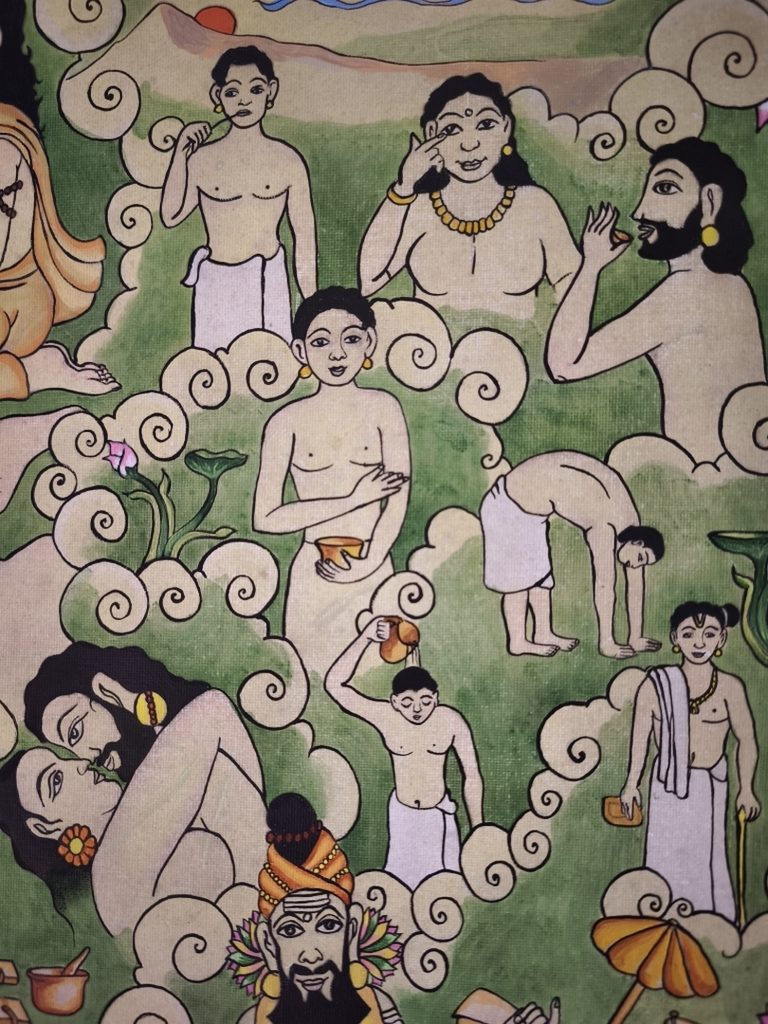
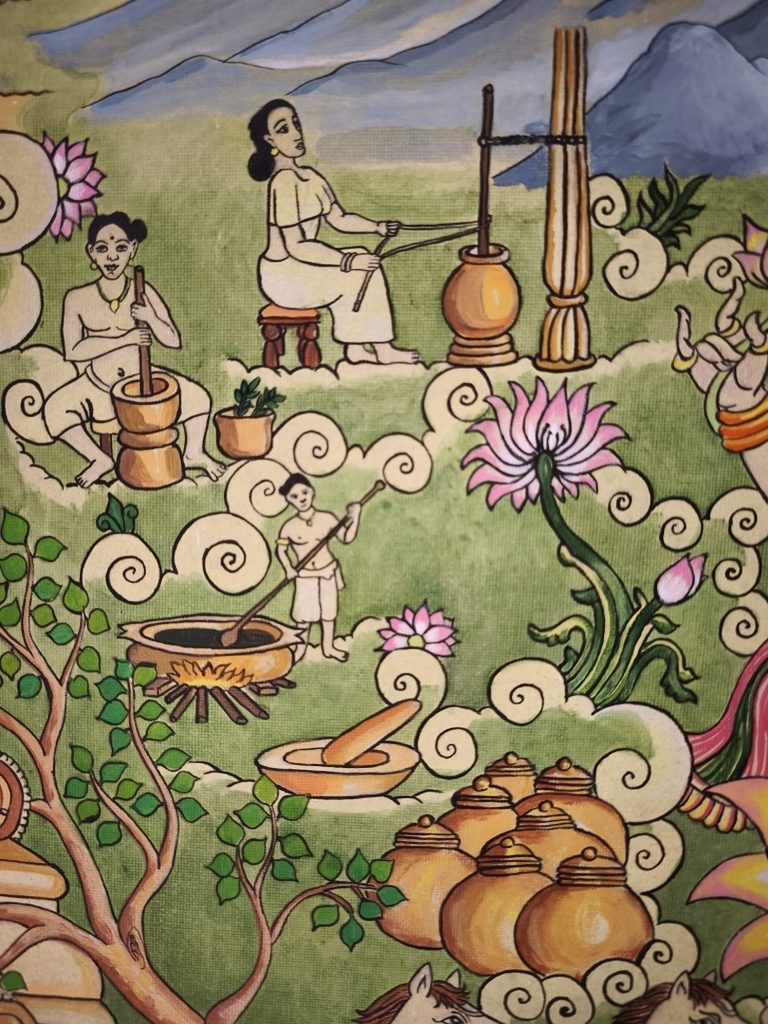
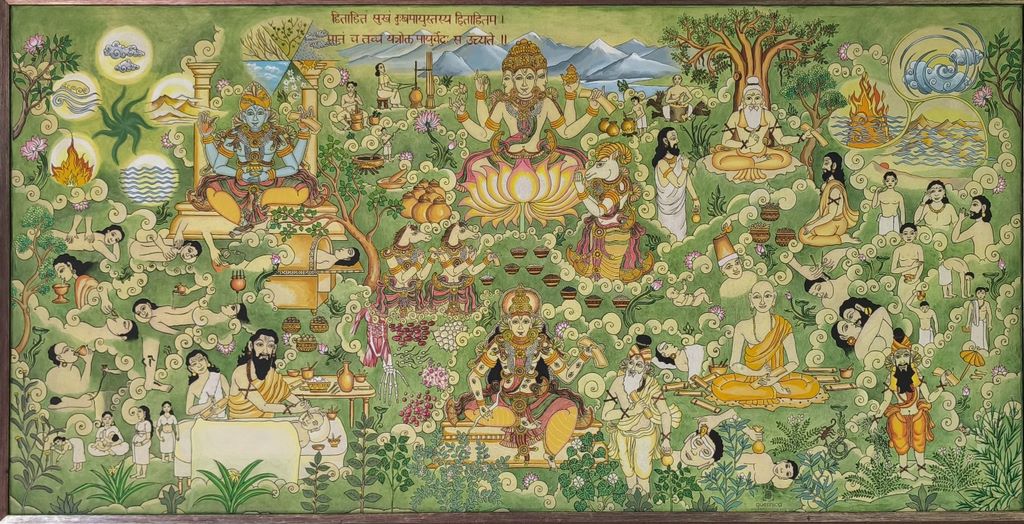
India. Kerala. Details of a representation of the Ayurvedic pantheon painted by Aleksandra Korneeva.
Part of the treatments is based on the logic of Panchakarma (2), a traditional set of five major therapeutic purification procedures. In Ayurvedic conception, any transformation produces waste that the body must eliminate. When these mechanisms are disrupted, their accumulation is considered likely to promote imbalance. The Panchakarma Therefore, within this traditional framework, the goal is to promote elimination and gradually return the body to its equilibrium.
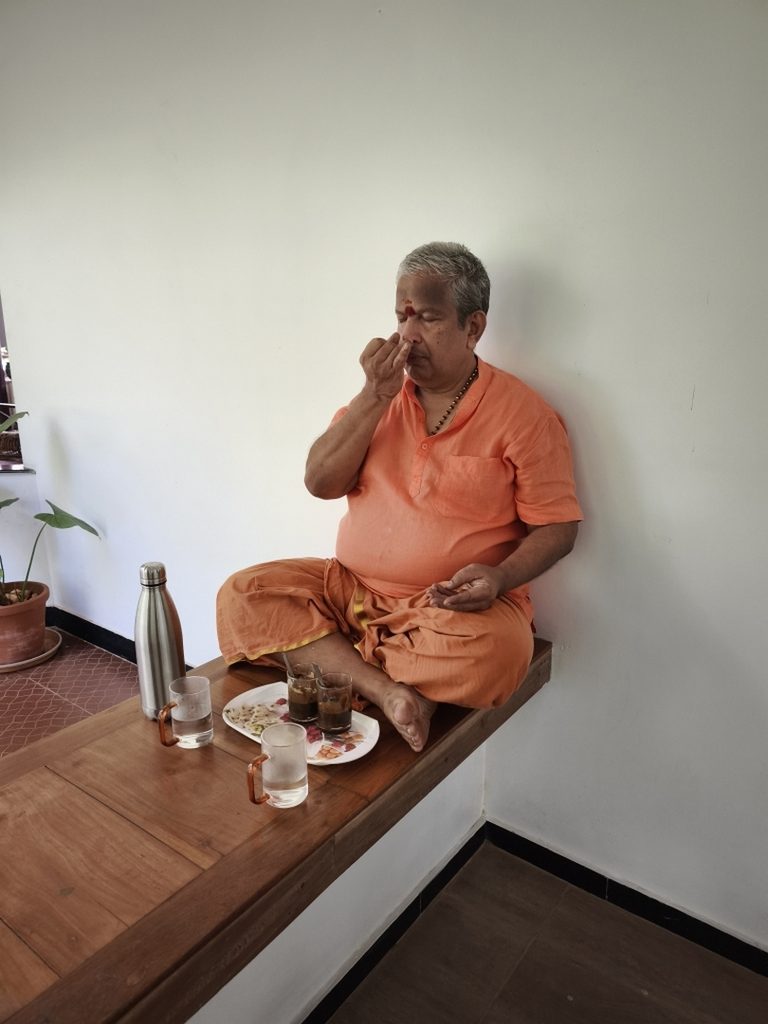
Before administering the purgation, Dr. Mali observes a short ritual. The gesture is not foreign to Ayurvedic tradition: the Charaka Samhita prescribes that before the Virechana, the therapeutic purge of Panchakarma, The treatment is preceded by invocations and mantras. The patient himself is invited to receive the remedy in a calm and focused state of mind. In traditional Ayurveda, the treatment thus engages the body as well as the inner dispositions of the person receiving it.
Here, Dr. Mali practices some breathing exercises. pranayama, This conscious mastery of the breath, derived from the yogic tradition, before continuing with the ritual and giving the remedy to the patient. It is a way to refocus and prepare oneself internally for the therapeutic act.
On paper, the idea of purification is appealing. In practice, it has a very concrete meaning. Because Ayurvedic treatments are not limited to pleasant warm oil massages, which are the subject of brochures for tourists.
In authentic centers like Ayurvedam Sreenilayam, the purging is not an isolated act but a major step in the process of Panchakarma. The body undergoes a week of massages with hot oil (Abhyanga) to mobilize the toxins (Ama) accumulated in the deep tissues and then eliminated through natural pathways (Virechana). Every day, the massage reaches deeper and deeper layers of the body. On the seventh day, it’s the big day: we have to eliminate these toxins. After a small ritual, the doctor gives us a specific purgative substance (medicinal plants or oils adapted to the profile or dosha from the person). This leads to a controlled evacuation aimed primarily at cleaning the digestive system. A phase of gradual refeeding and regeneration follows, along with rest to rebuild the digestive fire.
After the purge, it was thought that the «big maneuvers» were over. Wrong. The rest of the program allows us to experiment with it. vastity or basti, According to the language, Ayurvedic therapeutic enema, administered using medicinal oils or plant decoctions. It is also one of the major treatments of Panchakarma. Not exactly glamorous on paper, to be sure, but perfectly natural and normal here. Our Western dignity teaches us to show flexibility.
A certain complicity between the healers
Among the few patients of Dr. Mali, the bonds quickly form. We meet, observe each other, and exchange our impressions.« What do you have today? » becomes a perfectly natural question. We tell each other about it. We rejoice at an improvement.
A kind of solidarity among the patients forms, gradually transforming the constraints of the cure into shared anecdotes. The days pass rather quickly. Care. Meals. Potions. Regular exercise on the bikes. Rest. And, strangely, something happens: time ceases to be a problem. We no longer really seek to fill it with everything we can.
In many patients, Dr. Mali achieves remarkable results. Several of them that we have met have reported very significant improvements, or even healing. The testimonies we have collected, either in person or through the pages of the clinic’s gold book, are unanimously laudatory. Sometimes with a certain astonishment at the effects of a daily life that is ultimately very simple and entirely centered on oneself. One patient recounts having arrived without great ambition: she simply wanted to lose weight, regain deep sleep, and relieve the stress accumulated at work. She confesses that she left with much more: the experience would have prompted her to change her lifestyle and her way of thinking. Others discover that a day can perfectly be filled with yoga, treatments, a few meals, a walk, and plenty of rest. We come here to heal ourselves and, almost without realizing it, learn to do nothing but take care of ourselves. The place is so peaceful, and the break from everyday life so profound that some have made it an annual appointment and return year after year to see Dr. Mali and Sreenilayam. One certainty, however: here, no one promises to get the body in order in a weekend. Treatments can last several weeks and, in some chronic illnesses, several months.
After a month, it was time to pack our bags again. But we haven’t completely left Sreenilayam. The kindness of this Mali family that welcomed us so warmly remains with us, as do the therapists’ kindness and a sense of peace that we’ve regained. And most importantly, there’s an idea that is almost baffling in our busy lives: health isn’t just about repairing what’s broken; it’s also about maintaining balance. At Sreenilayam, we have time to experience this.
When self-care also means changing your way of life
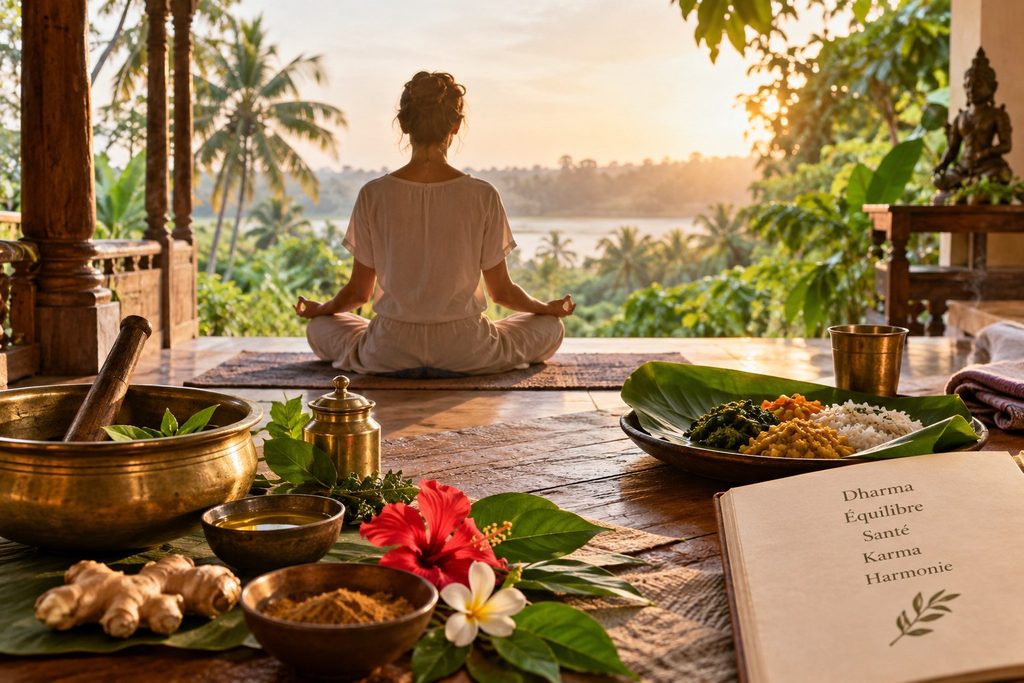
Perhaps it is here that Sreenilayam allows us to better understand Ayurveda. For this traditional medicine does not separate health from the way we lead our lives. Nutrition, sleep, thoughts, words, behaviors, relationships with others, and the environment all contribute to a single balance. This conception aligns with the notion of Dharma, which refers in particular to the idea of a just conduct and of a life aligned with a larger order. Our actions, our words and our thoughts have consequences: this is the principle of Karma. Health itself therefore, in this vision, is part of a way of inhabiting the world. It is no longer enough to take your medication at eight o’clock and resume exactly the same life at eight o’clock five. This seriously complicates things, but also makes them much more interesting…
1 – The Vastu, Indian art of architecture, comparable to feng shui The Chinese architect seeks to harmonize a building with the natural elements, the cardinal points, and the energies of the place, in order to promote the balance and well-being of its occupants.
2 – Recommended duration: For a complete Panchakarma including an effective elimination/purification phase, stays generally last 2 to 3 weeks.
Text and Photos : Brigitte Postel
For more information
Dr Mali, a qualified doctor in Ayurvedic medicine and surgery
Chathamangalam,
National Institute of Technology (Via),
Calicut – 673601
Telephone: +91 9847212309
Email : drkrvmali@yahoo.com
https://ayurmali.com/
Anne Vanackère
MD Vedic Psychology | Senior Ayurveda Consultant
www.ayurvedamodernexperience.in
info.awakemyenergy@gmail.com
www.awakemyenergy.com
+ 33 (0)6 30 34 53 28
+ 91 (0)92078 42992