
From the beaches of the Gargano to the orchards of Palagiano and the calm waters of the Mare Piccolo in Taranto, the Puglia are experiencing a different way of travelling. Protecting loggerhead turtles, safeguarding traditional cultures, and reviving the black mussel: in the face of climate change and human pressures, local residents, producers and tourism professionals are joining forces to preserve the region’s fragile natural heritage. An invitation to discover Puglia in a new light, whilst also playing an active part in shaping its future.
Table of Contents
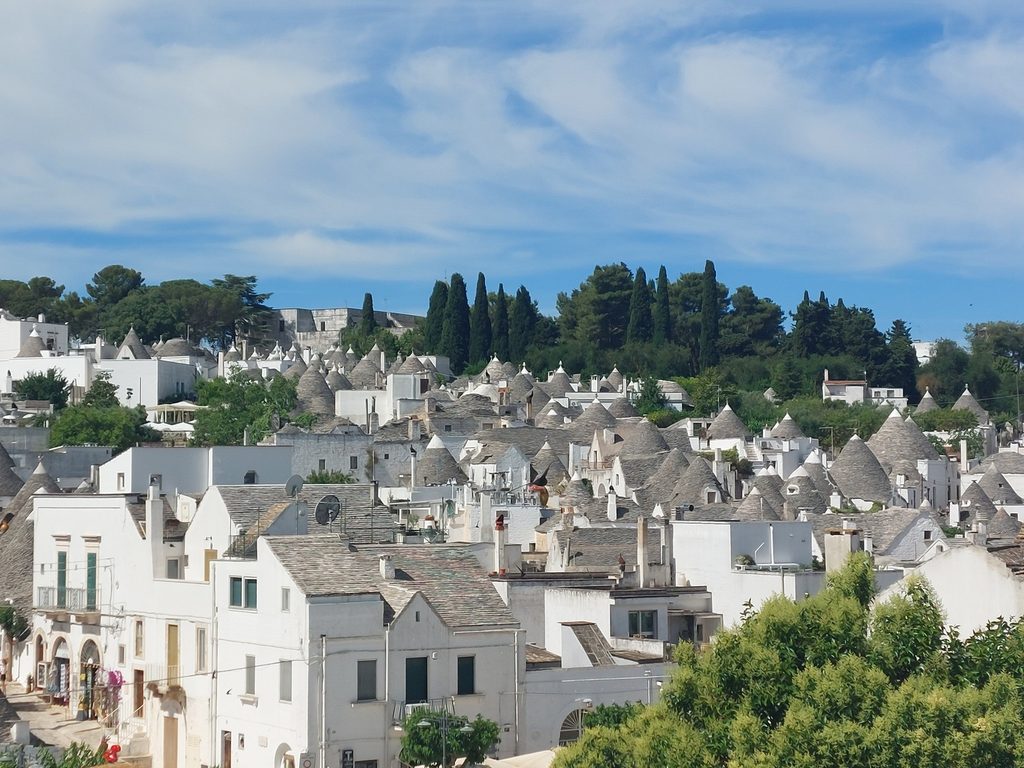
Set amongst lagoons, orchards and unspoilt beaches, the heel of the Italian boot has become a highly sought-after destination, with its iconic villages, fromAlberobello and its famous trulli to Polignano a Mare. On the edge of Puglia, Matera often rounds off the journey. But the region is now pioneering a new way of travelling. Here, tourism is no longer just about admiring the scenery: it also plays a part in preserving it. Rising temperatures, droughts, sea-level rise: the consequences of climate change are affecting Puglia both on land and at sea. To understand how the region is trying to adapt, we first head to Manfredonia, on the Gargano coast.
In Manfredonia, turtles are gaining ground
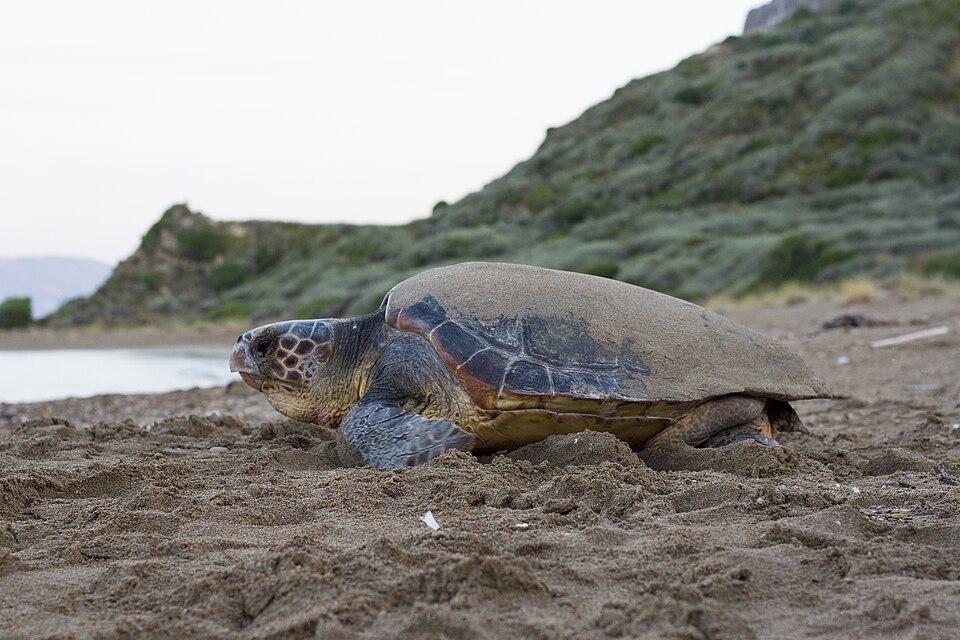
This is where we meet Giovanni Furii, scientific coordinator of the Manfredonia Sea Turtle Conservation and Rescue Centre. Established in 2006, the centre works to protect sea turtles with the support of the environmental organisation Legambiente. More than 2,000 animals have been treated there since it opened. This work is all the more necessary given that, in Italy, tens of thousands of sea turtles are believed to fall victim to bycatch from fishing activities every year.
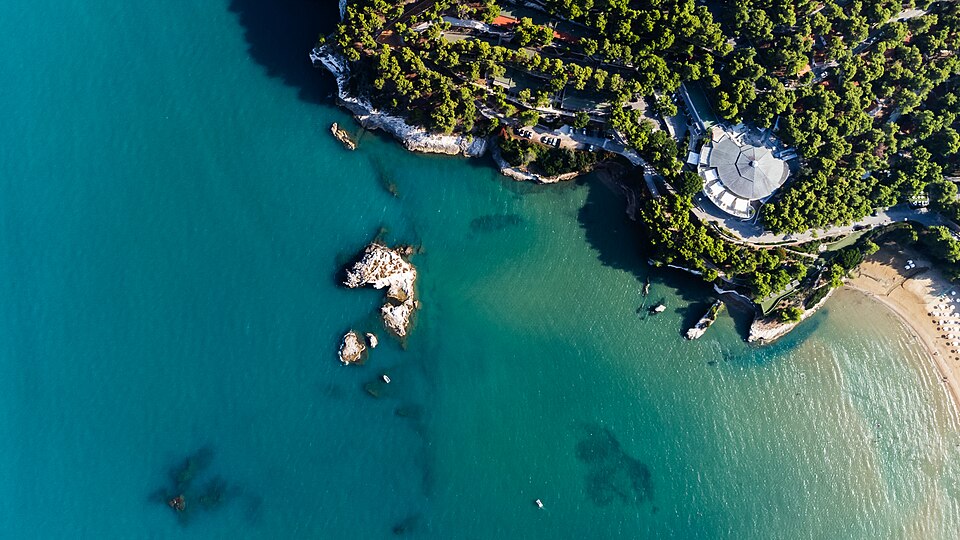
While Puglia attracts thousands of visitors every summer, it has also become a new breeding ground for the loggerhead turtle (Caretta caretta). As the Mediterranean warms, the species is gradually expanding its nesting areas. Beaches where nests were once rare now host more of them, sometimes right in the heart of busy seaside resorts. In addition to these changes, there are other threats: accidental capture in nets or on fishing hooks, plastic pollution, poaching, urbanisation and beach lighting. It is against this backdrop that the programme was developed TUI Turtle Aid, in collaboration with Legambiente, to protect nesting sites and raise awareness amongst local residents, tourism professionals and visitors.
In Manfredonia, where the number of nests is increasing, Giovanni Furii has been observing this trend year after year. "Over the past ten years or so, more turtles have been coming to lay their eggs on our shores. It is essential that we monitor this phenomenon and protect every nest" , he explains.”
When holidaymakers become nest guardians
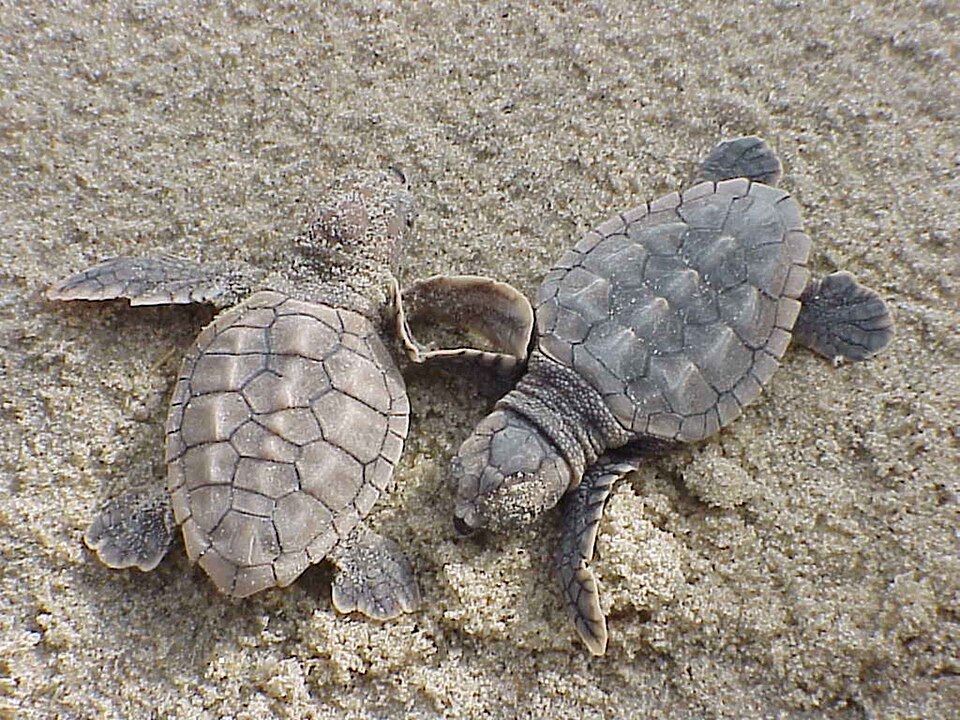
However, we still need to learn to live alongside these new residents. Many holidaymakers are unfamiliar with how turtles behave. « Some people see a female coming out of the water and think she is in distress. They put her back into the sea, without realising that she had come to lay her eggs », says the biologist regretfully. Information campaigns are therefore being organised on beaches, in seaside resorts and among tourism professionals. Several establishments, such as theAfrican Beach near Manfredonia, are taking part in the initiative by becoming « turtle-friendly hotels ». This initiative, supported by the TUI Care Foundation, encourages establishments in particular to take greater account of the presence of turtles and their nests. One of the main problems remains artificial light. Upon hatching, baby turtles make their way towards the sea horizon by following the natural light. Lighting from a hotel, a road or a promenade can disorientate them and lead them in the opposite direction to the sea.
Teams therefore prefer to use red light during certain night-time operations, as it is less disruptive to the animals. Technology is also lending a helping hand to biologists: drones are used to spot the tracks left in the sand by the females and help to quickly locate nesting areas so that they can be secured.
Fishermen and biologists: same struggle
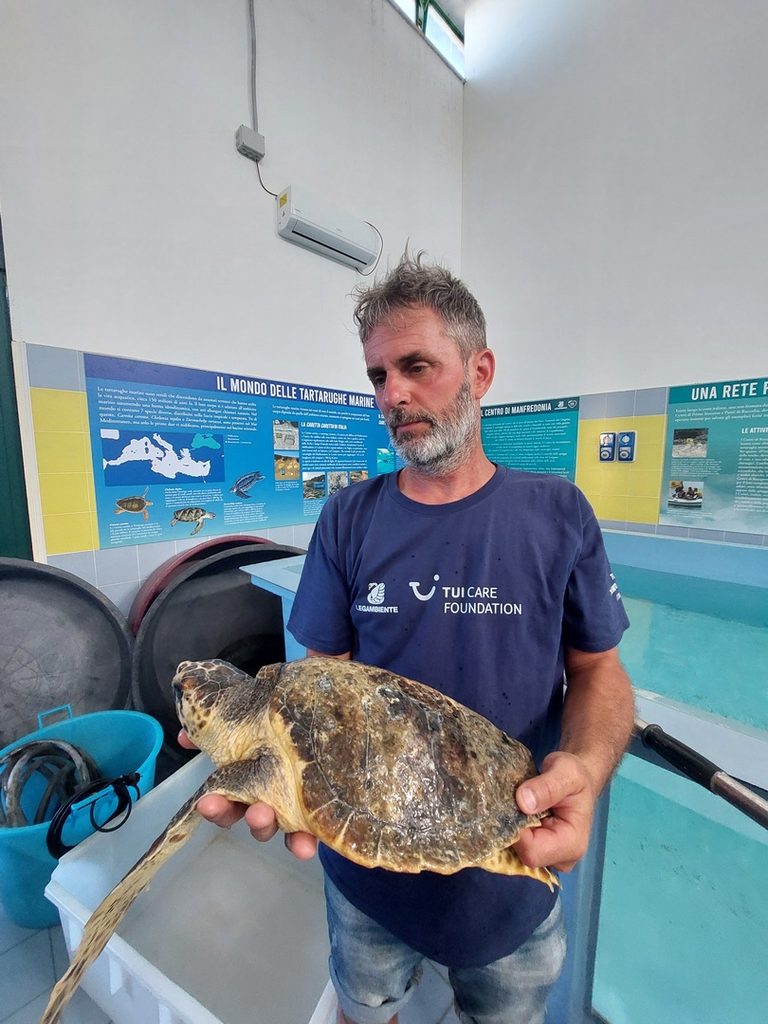
The protection of turtles also relies on valuable cooperation with local fishermen. In fact, it all began with them. One day, the fishermen Michele and his brother hauled a turtle so large in their nets that it barely fit in their boat. They decided to take it to the centre. Today, Michele says he sees more of them than he did about fifteen years ago. Injured turtles – having become entangled in nets or swallowed fishing hooks – are regularly brought to the centre in Manfredonia. There, they are treated, sometimes for several months, before being released back into the sea.
The results are clear to see. In just one year, the programme has protected 31 nests, supported the hatching of 1,490 baby turtles, raised awareness amongst more than 500 people and rehabilitated 120 turtles.
Among them, Vito has become a symbol. This male, aged around twenty years and weighing 36 kilos, was found off the coast of the Gargano with a serious head injury, « probably caused by a fishhook », recalls Giovanni Furii. After several months of intensive care, the animal gradually regained all its abilities.
Vito returns to the Adriatic
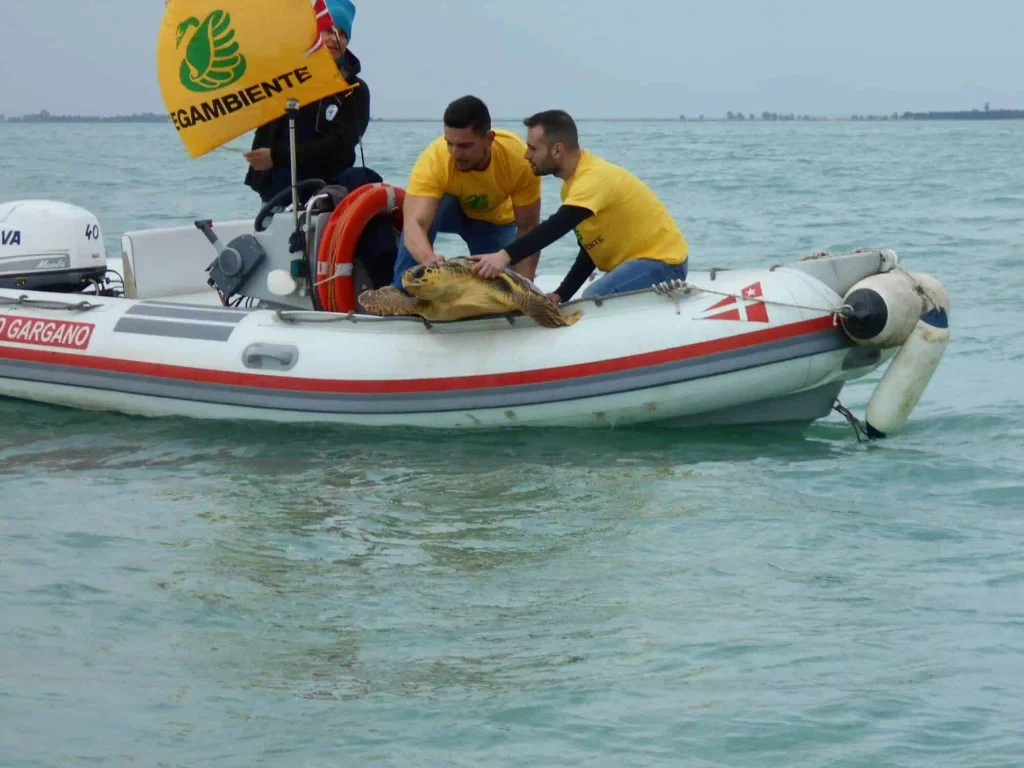
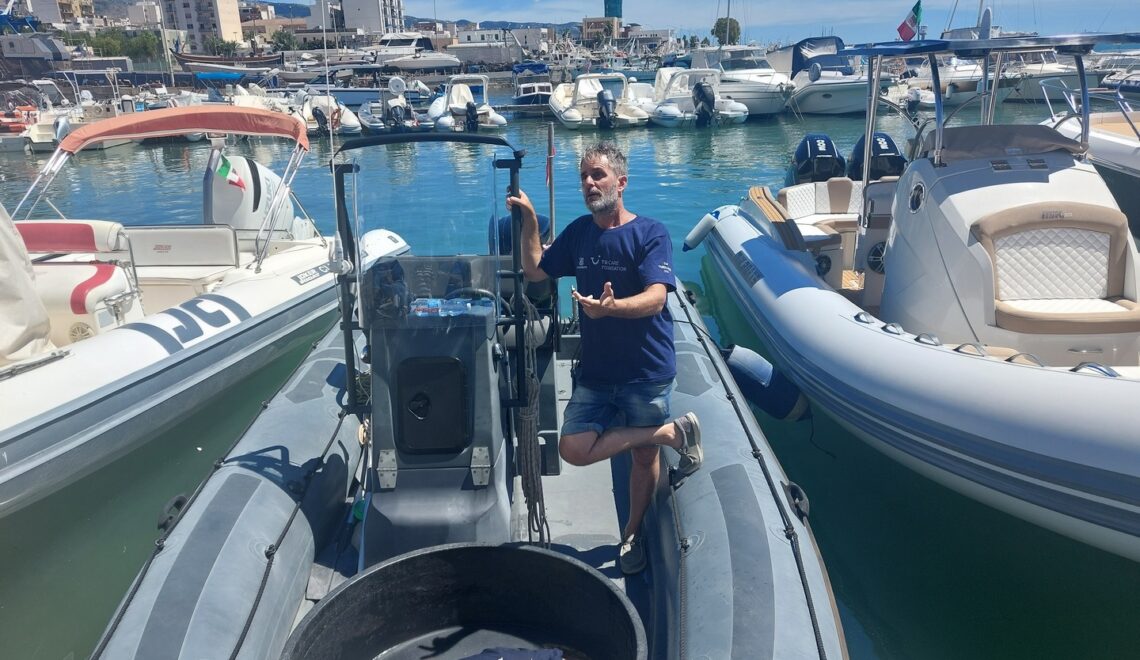
Today is a big day: in a few minutes, Vito will be returning to his natural habitat, the turquoise waters of the Adriatic. That morning, our boat slowly made its way out to sea, away from the karst cliffs of the Gargano. At the bow, Vito waits patiently in a large tank, his shell covered with a damp cloth to protect him from the June sun.
A few miles from the harbour, the boat comes to a halt. Everyone holds their breath. A few more seconds, then Vito plunges into the water. His silhouette remains visible for a moment before disappearing beneath the surface. A rare, almost silent moment, which in itself sums up months of care and the patient work of biologists, volunteers, fishermen and tourism professionals.
Taranto, the city where mussels tell the story of the sea
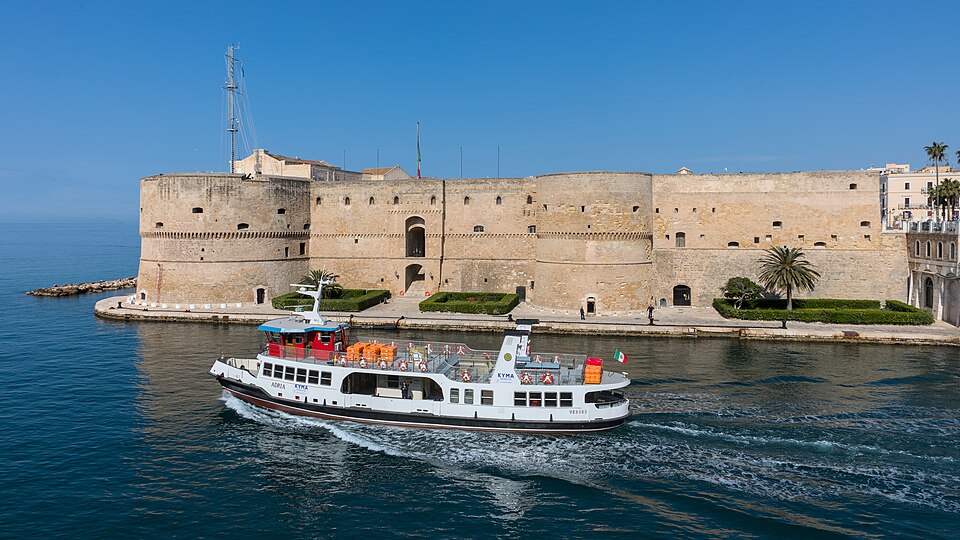
The sun is already beating down on the pale stone of Taranto as our boat gently leaves the quay. To starboard, the ramparts of the Aragonese castle overlook the Ionian Sea. Behind them lies a thousand-year-old city, founded by the Greeks in the 8th century BCE, now seeking a new balance between its industrial heritage, the environment and its traditions.
But this morning, it is not its fortifications that catch our eye. The boat is heading towards a much more unassuming landscape: the peaceful waters of the Mare Piccolo, the inland lagoon which has for centuries contributed to Taranto’s reputation, known as the « City of the Two Seas ".
Soon, hundreds of floats appear on the surface. Beneath these perfectly aligned rows lie the city’s true treasures: Taranto’s famous black mussels.
Expertise passed down from father to son
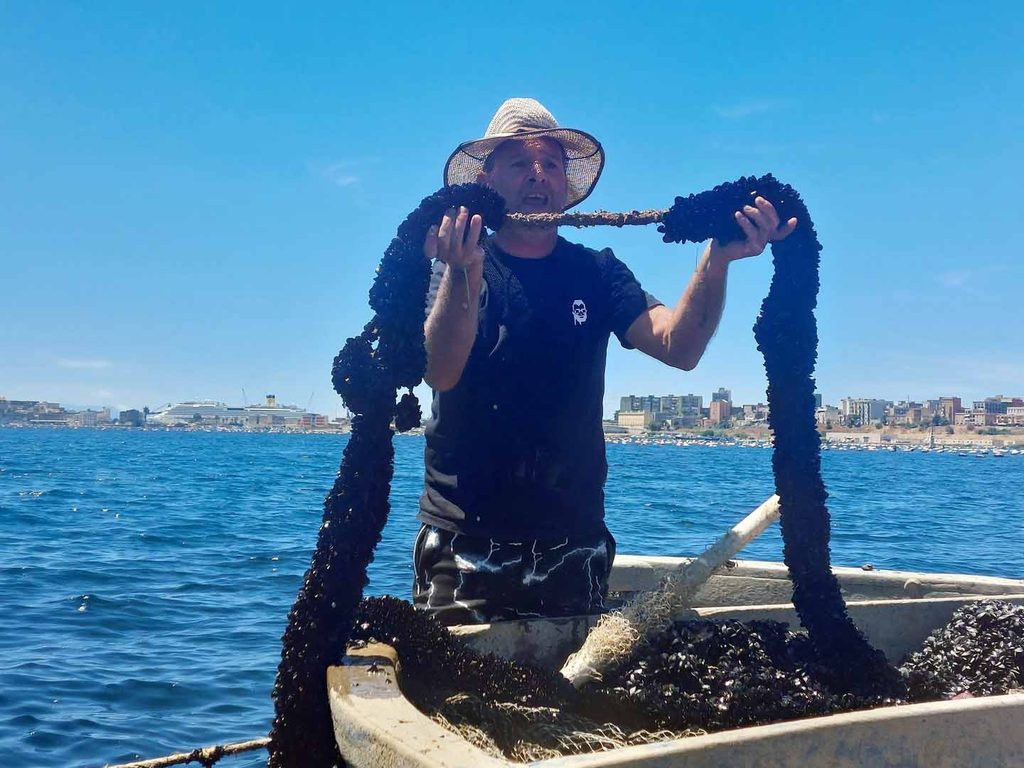
On board his boat, Cesare d’Arcangelo welcomes us with a smile. Wearing a straw hat and with a face weathered by the sun and wind, he is keen to tell his story first. « I started sailing here when I was five, with my father,’ he says, hauling up a rope laden with shells. My grandfather was already in this trade, as was my great-grandfather.’. »
The movement is precise, almost choreographed. In a matter of seconds, he opens a mussel fresh out of the water and invites us to taste it. The flesh is firm, with a briny flavour, and strikingly fresh.
This distinctive flavour owes much to the geography of the Mare Piccolo. Fed by underwater freshwater springs, the lagoon offers unique conditions for the mussel farming, which has been practised here for centuries. Mussels are such an integral part of Taranto’s identity that the locals call them, in the local dialect, cozze gnore, the «black mussels».
A tradition saved from the waters
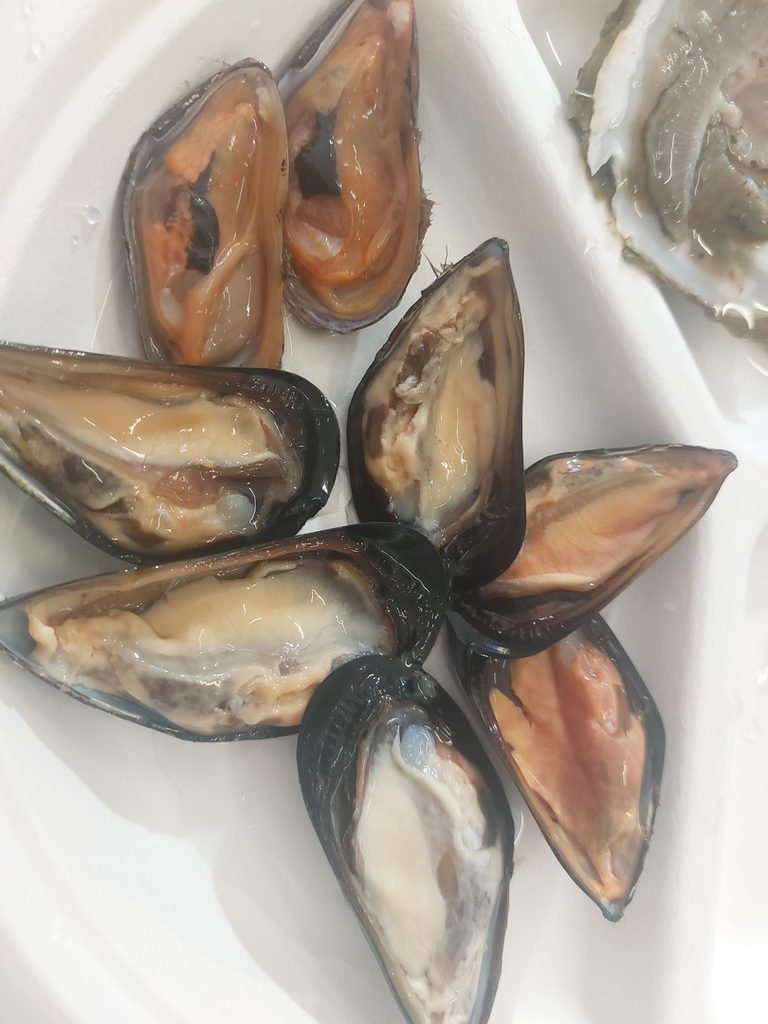
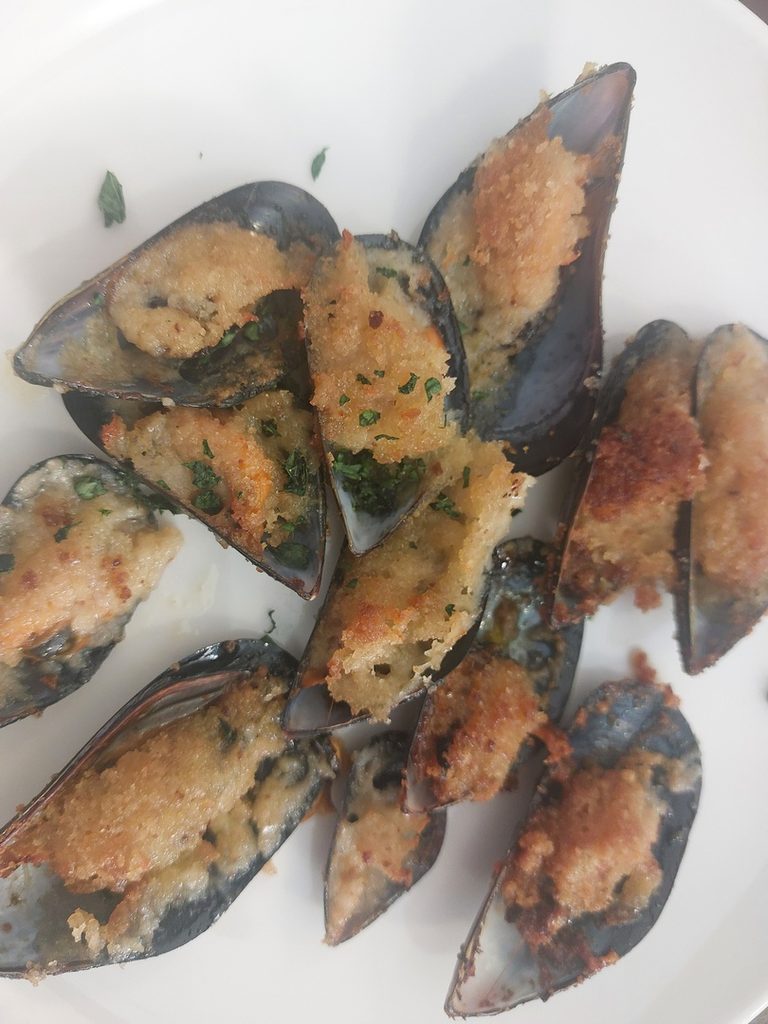
Yet this tradition came very close to disappearing. For several decades, the huge steelworks complex on the outskirts of Taranto took a heavy toll on the city’s environment and its waters. The pollution led to restrictions on production and jeopardised the future of the mussel farmers.
The health and environmental measures put in place have since helped to preserve certain production areas and revitalise the sector. The Taranto black mussel is now supported by Slow Food Italy, which supports small-scale producers and advocates a model that respects this fragile ecosystem. Around twenty mussel farmers have joined this initiative.
Since 2025, it has also been part of the project TUI Field to Fork, developed by the TUI Care Foundation in partnership with Slow Food Italy, in order to support producers and help ensure the long-term survival of this traditional craft.
Here too, tourism can be an ally. By meeting the mussel farmers, visitors do not merely discover an iconic product of Apulian cuisine: they are immersed in a landscape, a family history and a living heritage. A boat dedicated to excursions on the Mare Piccolo will therefore enable travellers to experience the farms and the work of the producers first-hand.
In the orchards of Palagiano, the sweetness of citrus fruits
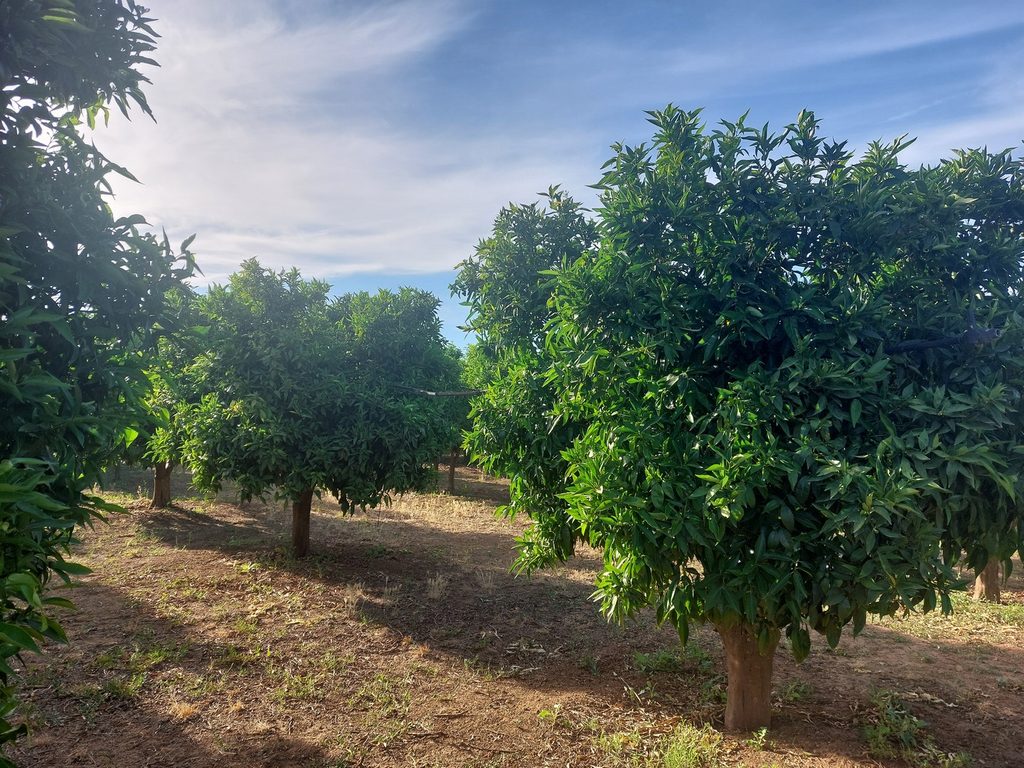
As you leave the coast, the landscape gradually changes. Olive groves give way to vineyards, followed by orchards where the trees bend under the weight of their citrus fruit. Nestled in the heart of this sun-drenched countryside lies Palagiano, nicknamed « The City of Clementines ». This region enjoys a mild climate and ideal sandy soil, which give the fruit a rich sweetness and a quality recognised under the European PGI label.
It is here that Annalisa Palanga carries on a family tradition stretching back four generations. The estate is home to more than 5,000 trees. Sitting beneath the branches, she tells us about her daily life with simplicity. « Some of our trees are over eighty years old », she explains, stroking the bark of an old clementine tree. « The fruit is harvested by hand and grown organically. Here, each fruit benefits from a unique climate, with significant temperature variations in winter and bright sunshine almost all year round. "
You can taste the result straight away
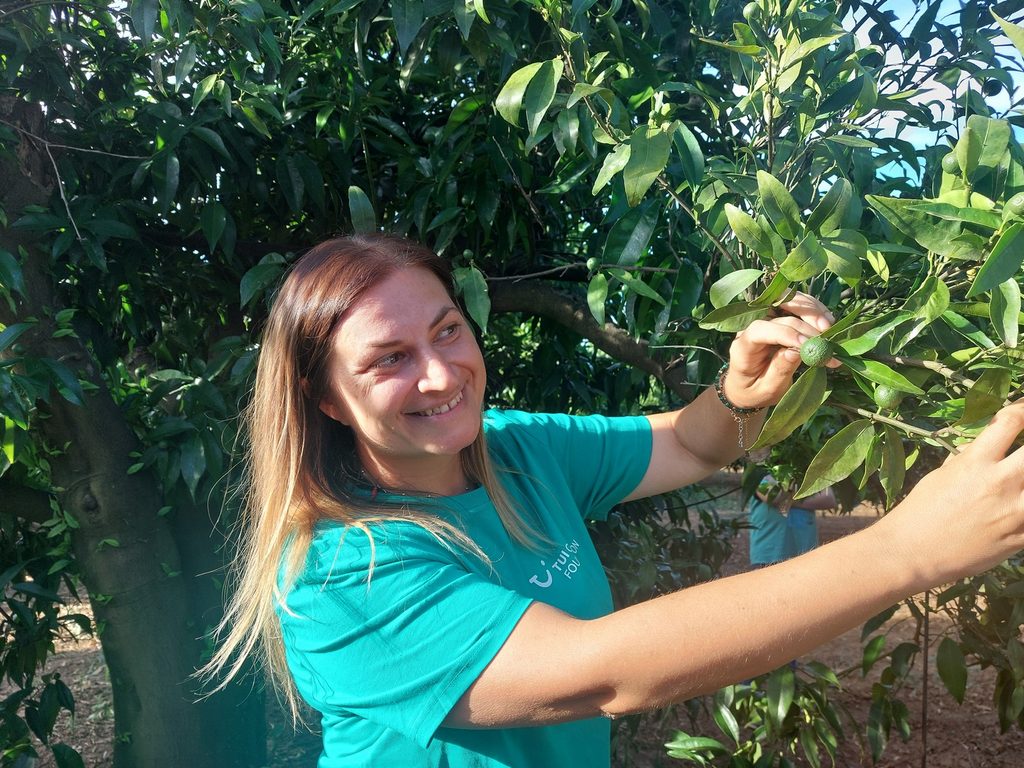
" It is a unique, very sweet clementine that cannot be found anywhere else ", says Annalisa Palanga with a smile. Yet success was by no means guaranteed. Faced with prices that had become too low to ensure the long-term viability of their farms, some producers were considering abandoning this historic crop. In Annalisa’s family, her grandmother then chose her granddaughter to carry on the family tradition.
A turning point came with the inclusion of the scheme in the Slow Food Italy programme. By bringing together a number of producers to promote this local produce, the initiative has enabled Palagiano clementines to gain greater visibility and allowed the growers to better champion the value of their work.
Nowadays, travellers are in turn invited to step into the orchards. They learn about farming methods before sitting down to a generous tasting: warm focaccia, bruschetta, local cheeses, homemade jams, clementine ice cream and Apulian wines combine to create a delicious journey for the senses. Tourism thus becomes another way of supporting local agriculture and keeping alive a tradition passed down from generation to generation.
But behind this abundance lies a very real concern. « Heatwaves are becoming increasingly difficult for trees to cope with, says Annalisa. When it gets too hot, they start to dry out. »Here, too, climate change is no longer an abstract or distant threat. It is clearly visible in the orchards, on the leaves and the fruit, and is already shaping the daily lives of those who make their living from this land."
The journey can also continue towards Matera and its famous Sassi, a few dozen kilometres from the Apulian border.
Check before you set off
Italian Tourist Board
www.italia.it
Find out more about the TUI Care Foundation?
The TUI Care Foundation is an independent, not-for-profit foundation established in 2016 on the initiative of the TUI Group, one of the world’s leading players in the tourism sector. Based in the Netherlands, its mission is to use tourism as a driver of sustainable development by supporting projects that benefit local communities and the environment in tourist destinations.
Where does she work?
The foundation operates in more than 30 countries, mainly in tourist destinations across Europe, Africa, Asia, the Caribbean and Latin America. It works with NGOs, local authorities, businesses and international organisations to tailor its projects to the needs of each region. One example is the Tui Forest, which specialises in tree planting and restoration, the Tui Wildlife, the protection of endangered species, and, of course, the Tui Turtle Aid.
Some results
Since its establishment, the foundation states that it has, in particular:
• has developed more than 60 projects worldwide
• planted several million trees
• helped to protect millions of sea turtles
• supported tens of thousands of young people and women through training and employment integration programmes.
Text : Laurence Grémy-Flamand
Photos : Laurence Grémy-Flamand and as indicated